Passau
Christmas Traditions Tour
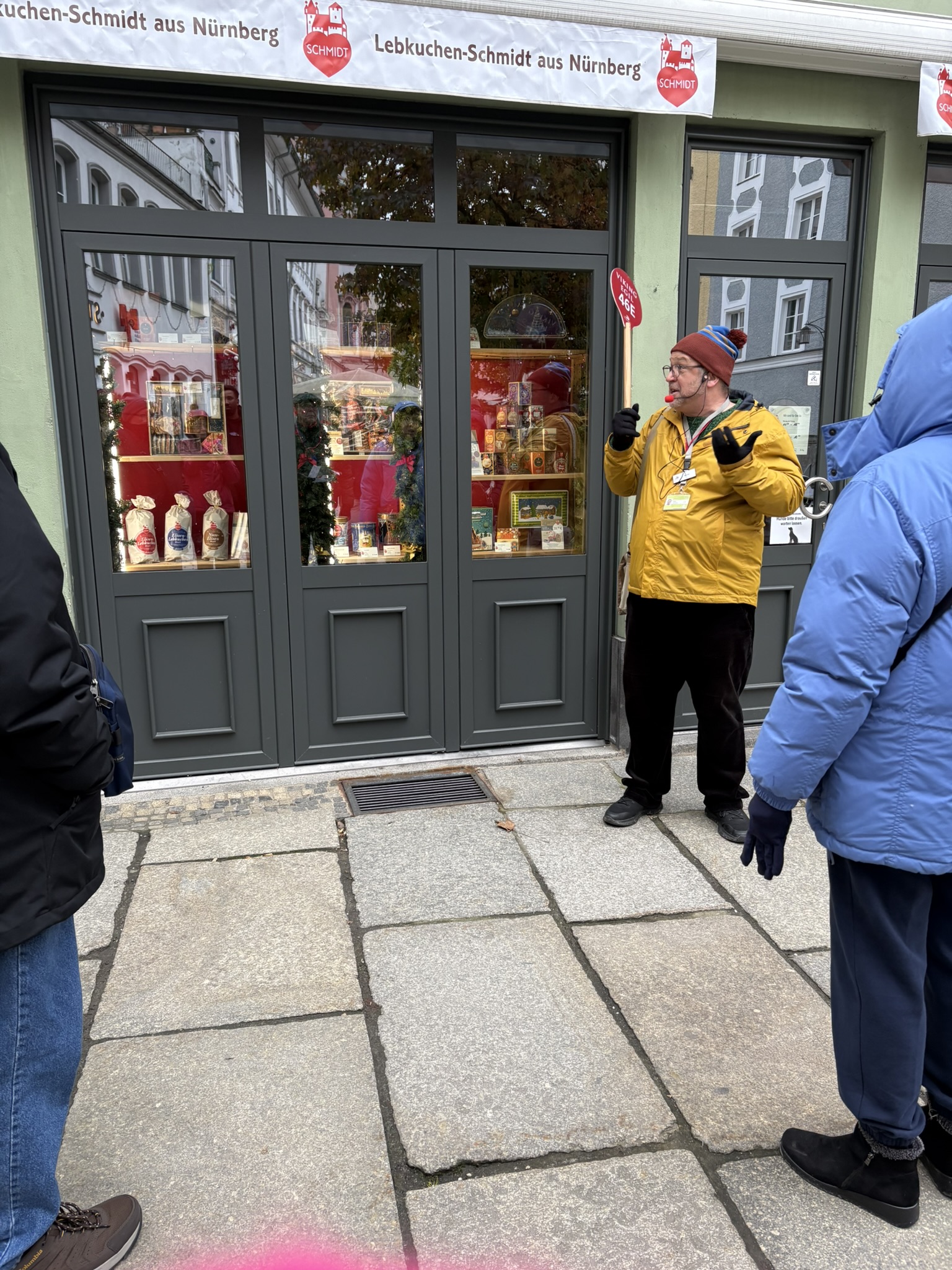
We docked in Passau in the morning and joined our walking tour, “Christmas Traditions in Passau.” The route began in a pedestrian area where our guide pointed out practical stops like grocery stores and banks. Our guide was knowledgeable and funny. He pointed out this shop specializing in traditional Nürnberger Lebkuchen and joked that he should invest in Lebkuchen-Schmidt — he spends so much money there.
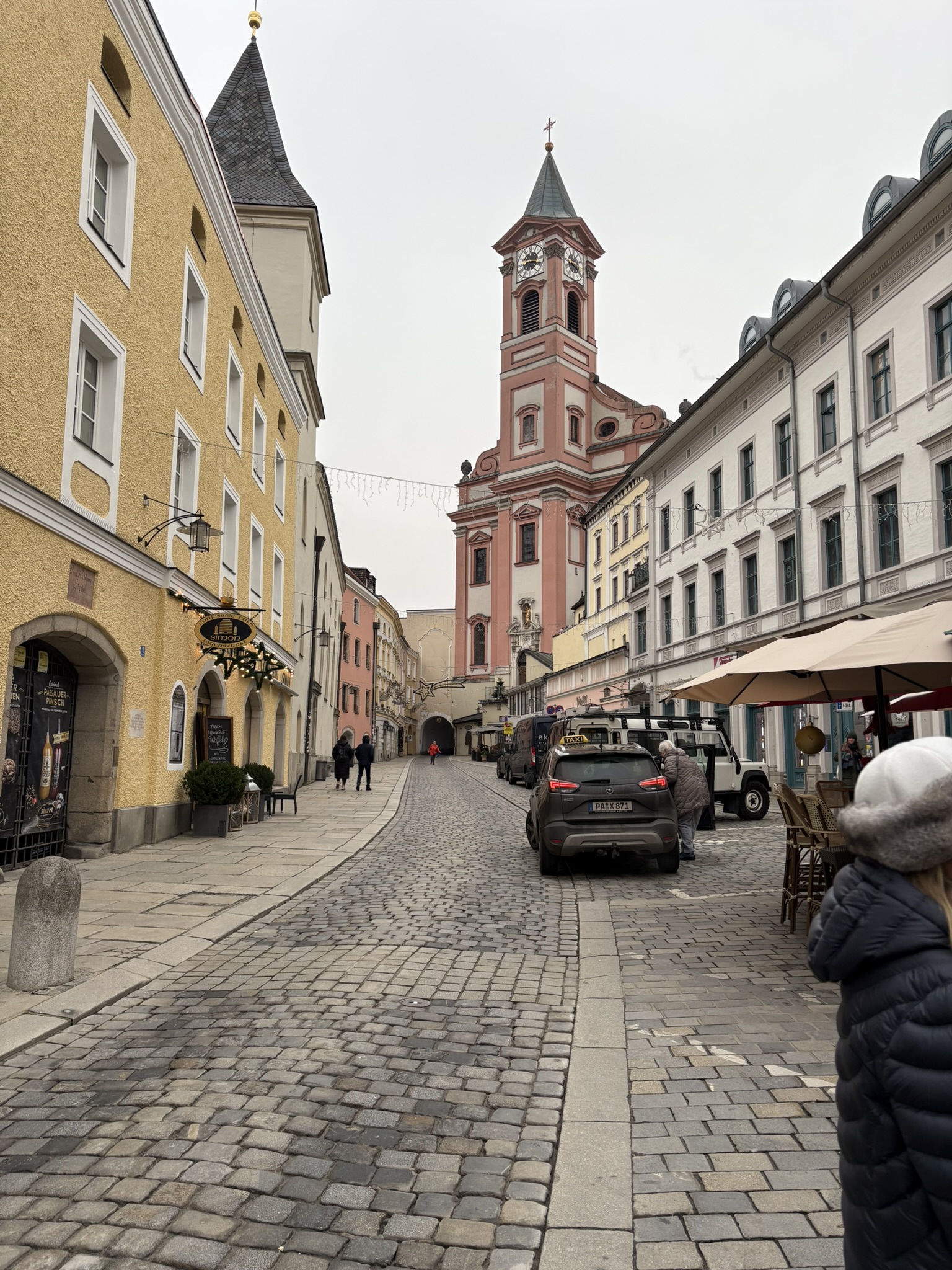
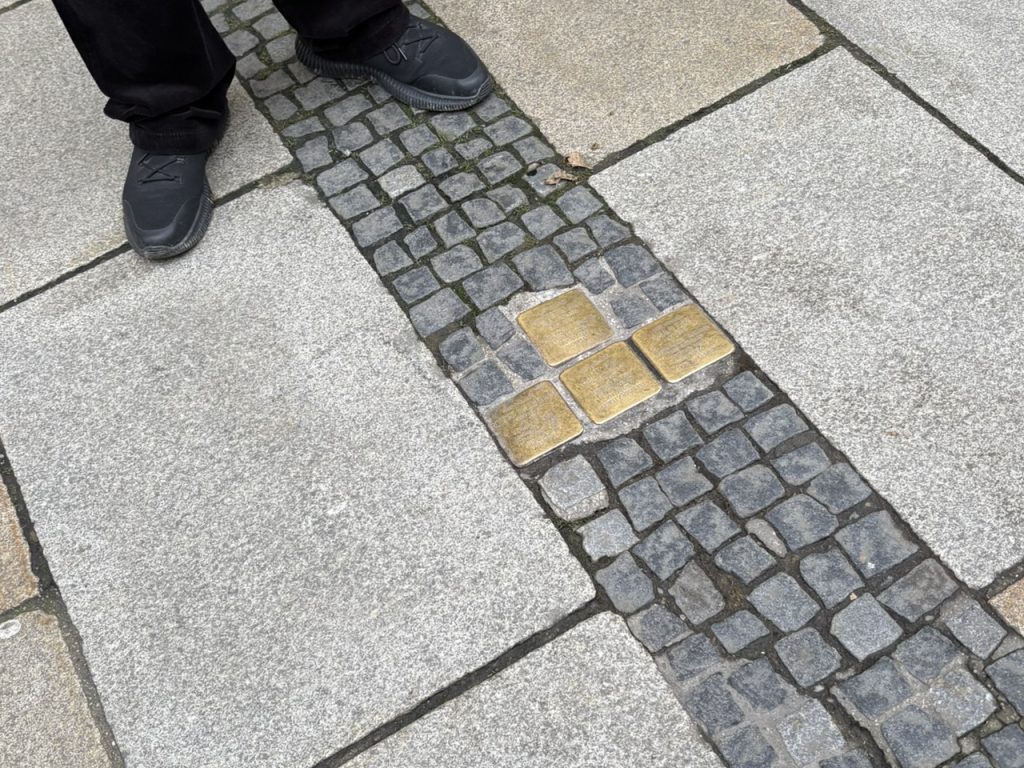
Farther along the way, we came across a bronze Stolpersteine set into the walkways. Our guide spoke about their purpose and how they remember the Jews from Passau who perished in the Holocaust.
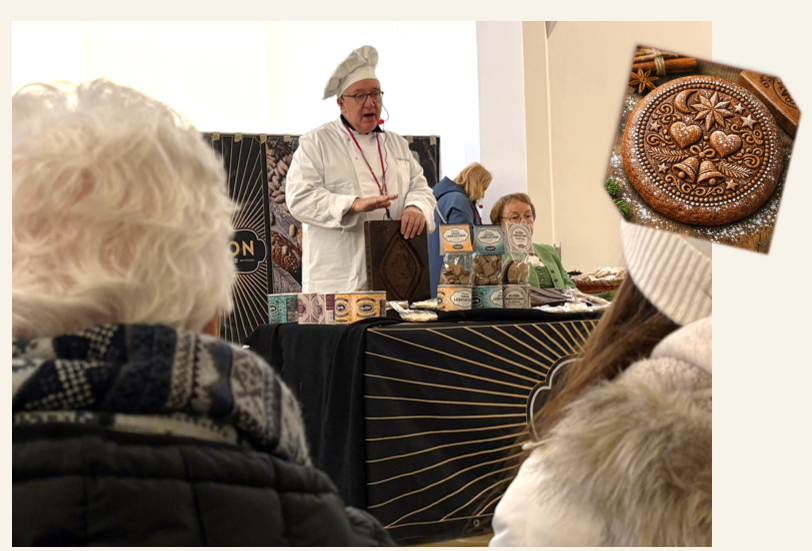
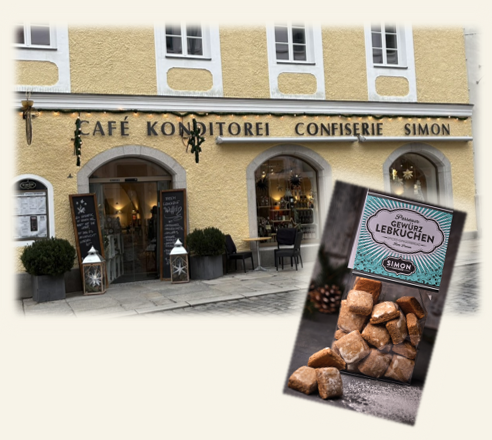
Next on the agenda was a cookie‑making demonstration hosted by Café Konditorei Confiserie Simon — a local shop known for its traditional sweets. Molds, some dating back centuries, were passed around for the audience to see. The presenter clearly explained the process of shaping and baking, and we sampled the results. Of the three varieties offered, the Gewürzlebkuchen was the best — richly spiced and wonderfully fragrant.
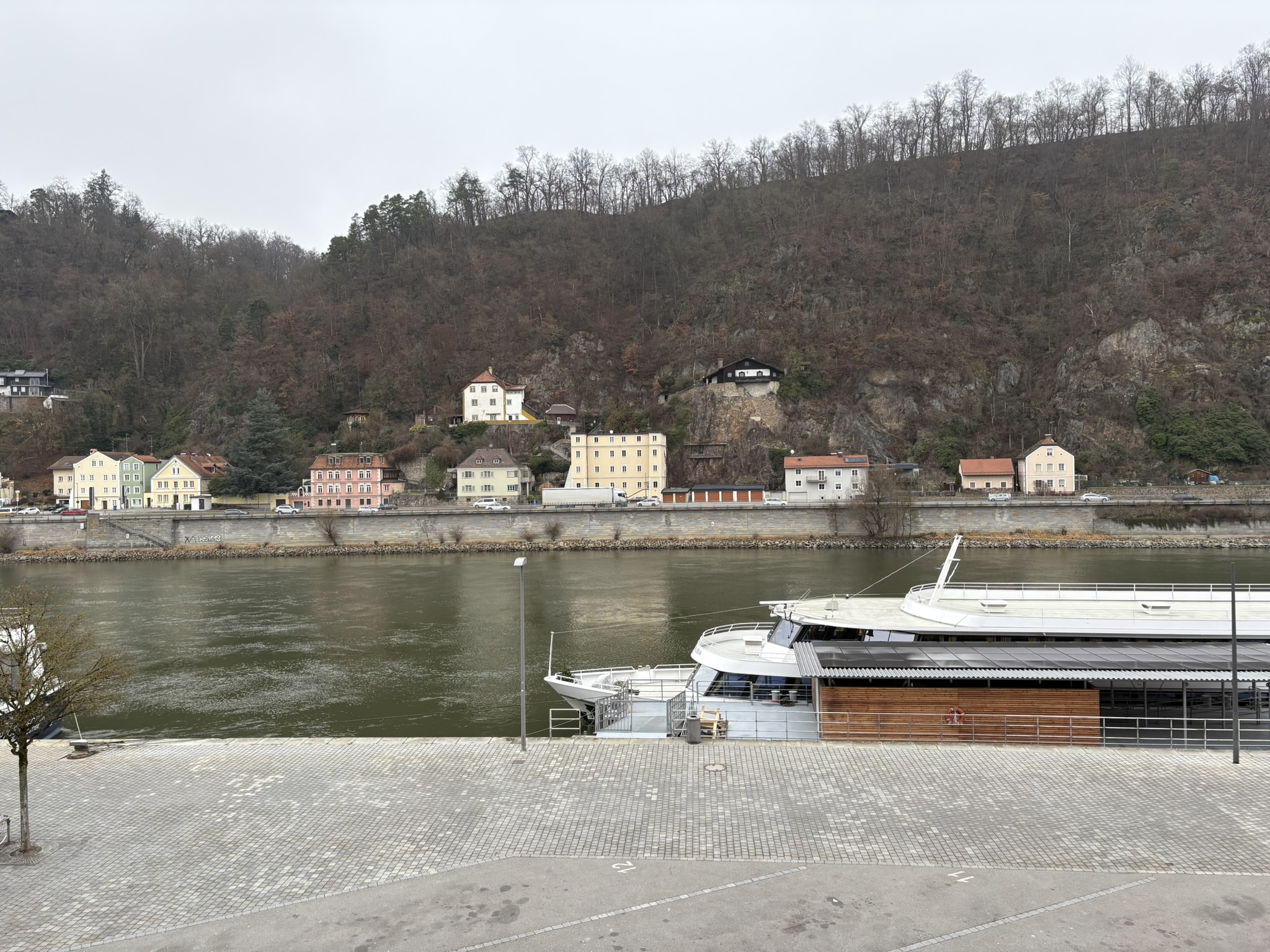
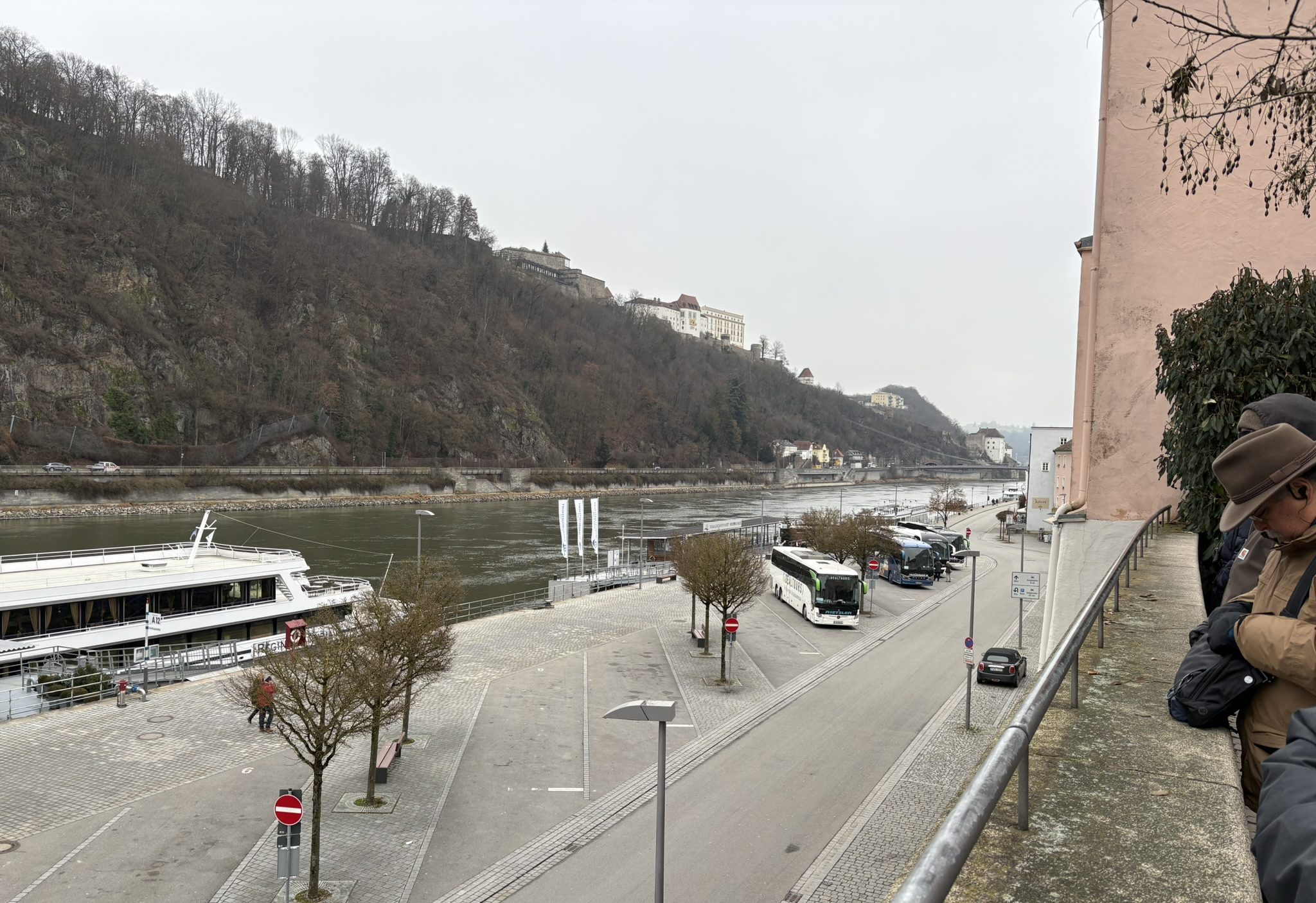
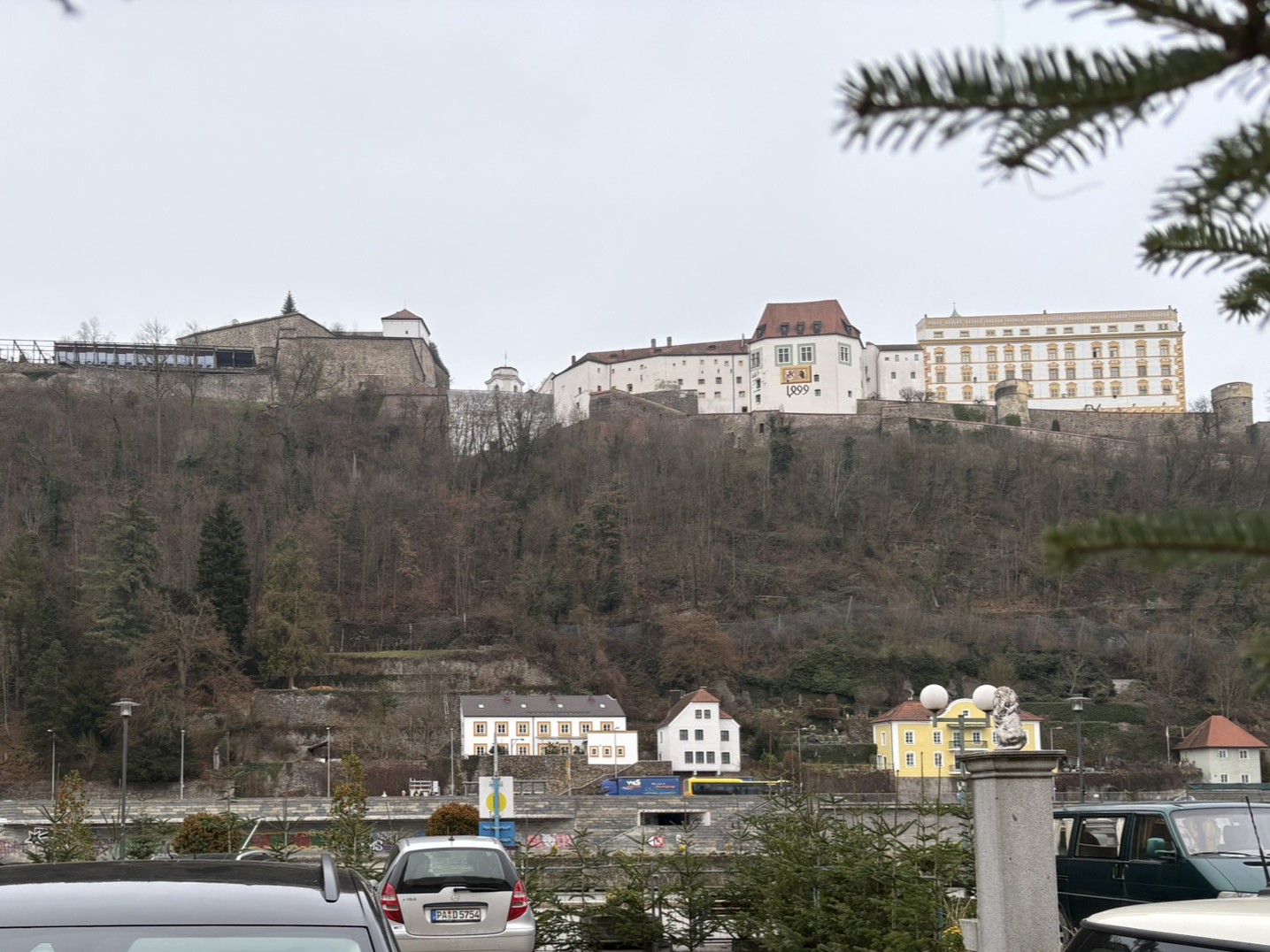
Our tour continued to an overlook just a few minutes from Old Town. From this vantage point, we could see the Inn River and the hillside homes our guide said were surprisingly expensive — the tiny white one tucked into the trees costs more than a larger house in town. The fortress, now a youth hostel, museum, and restaurant, was originally built in 1219, with extensions continuing into the early 19th century. It served as a bishop’s stronghold, a Renaissance residence, and later a military prison.
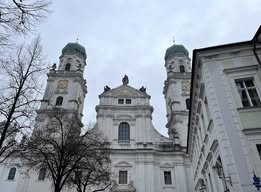
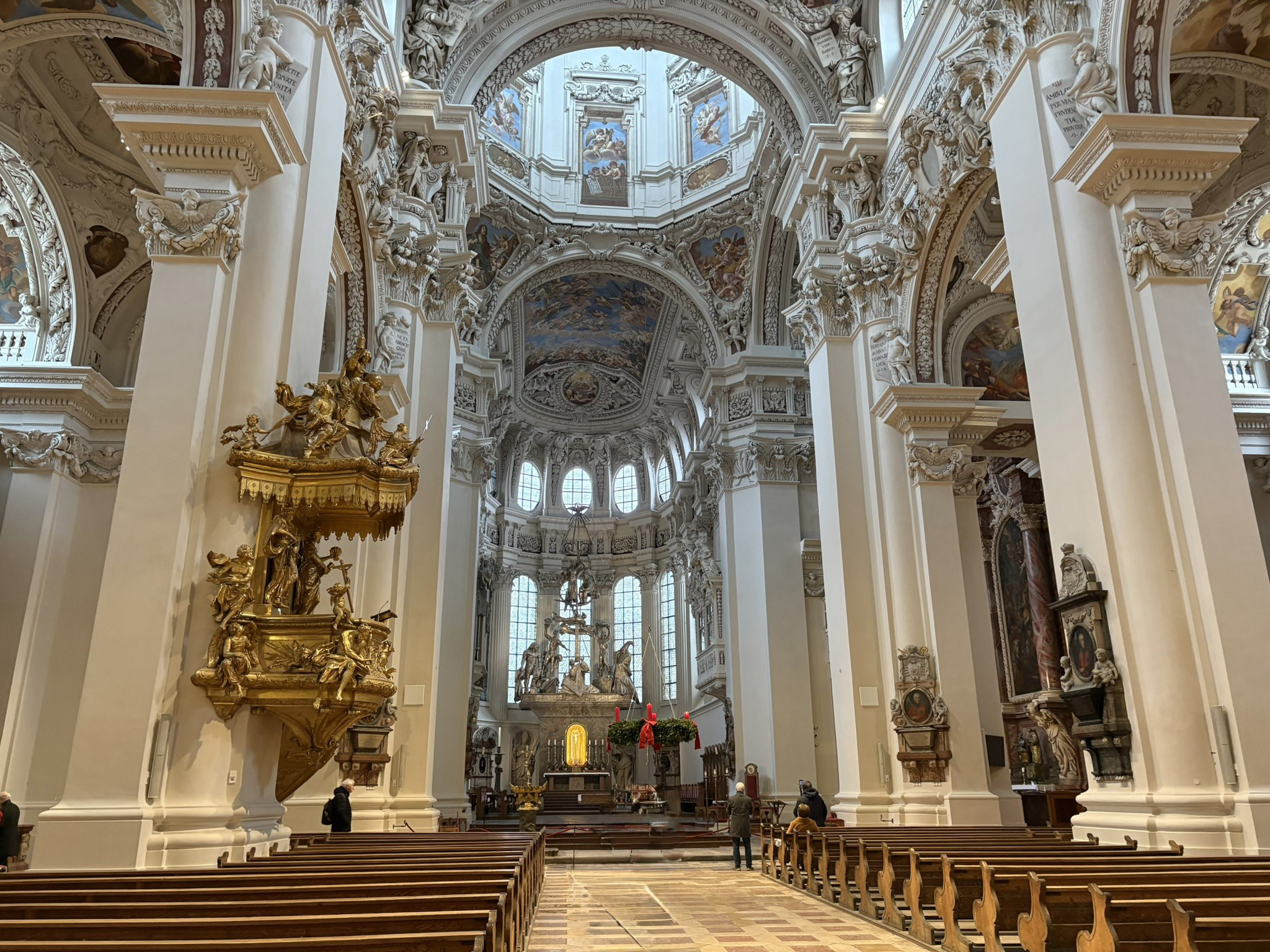
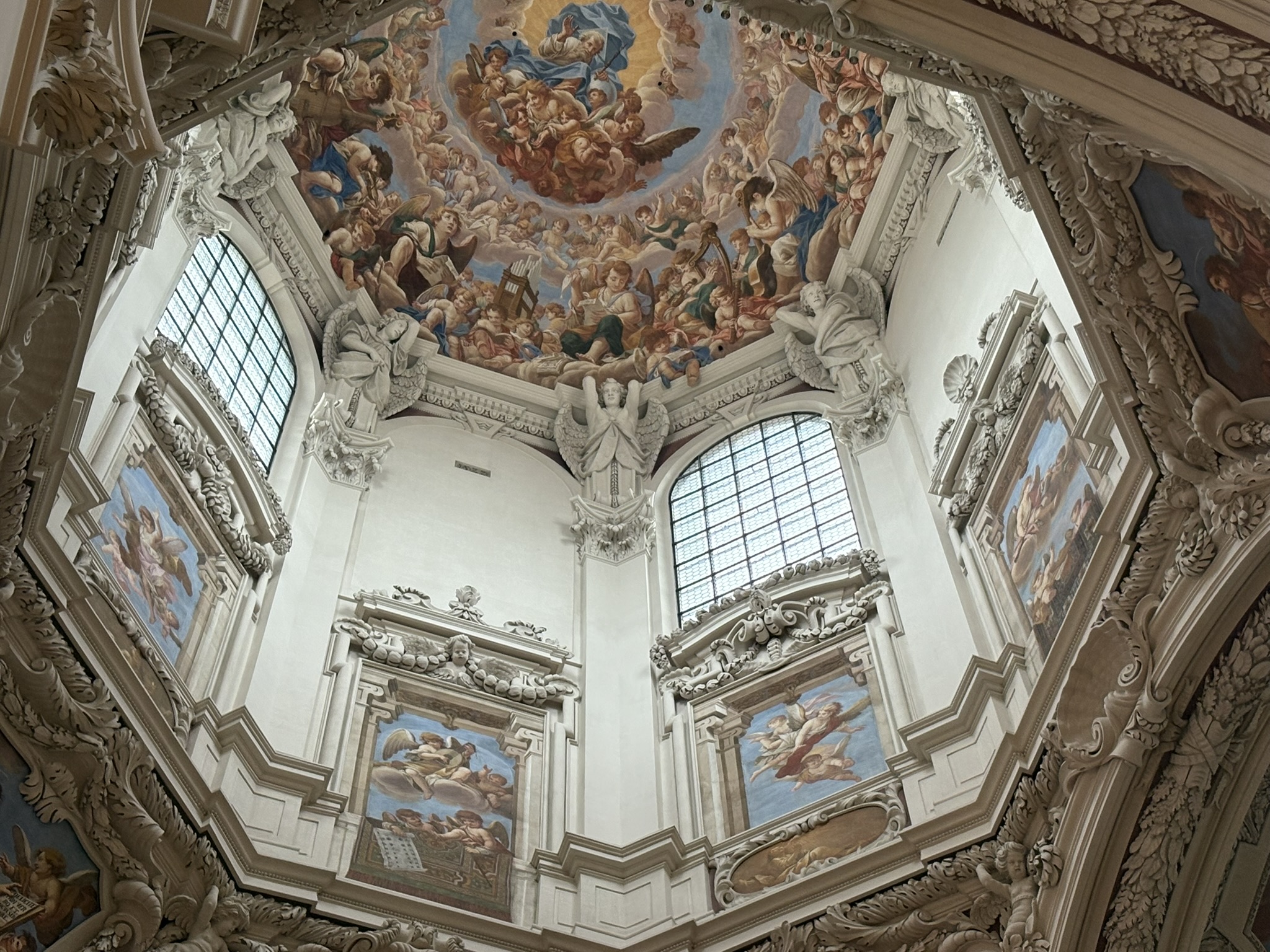
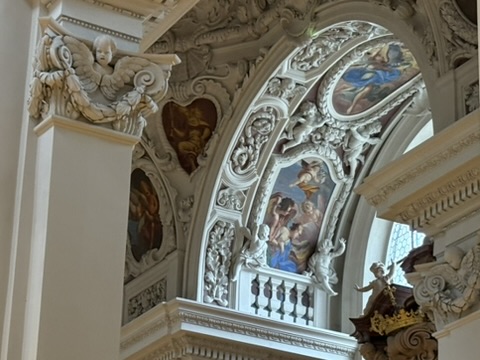
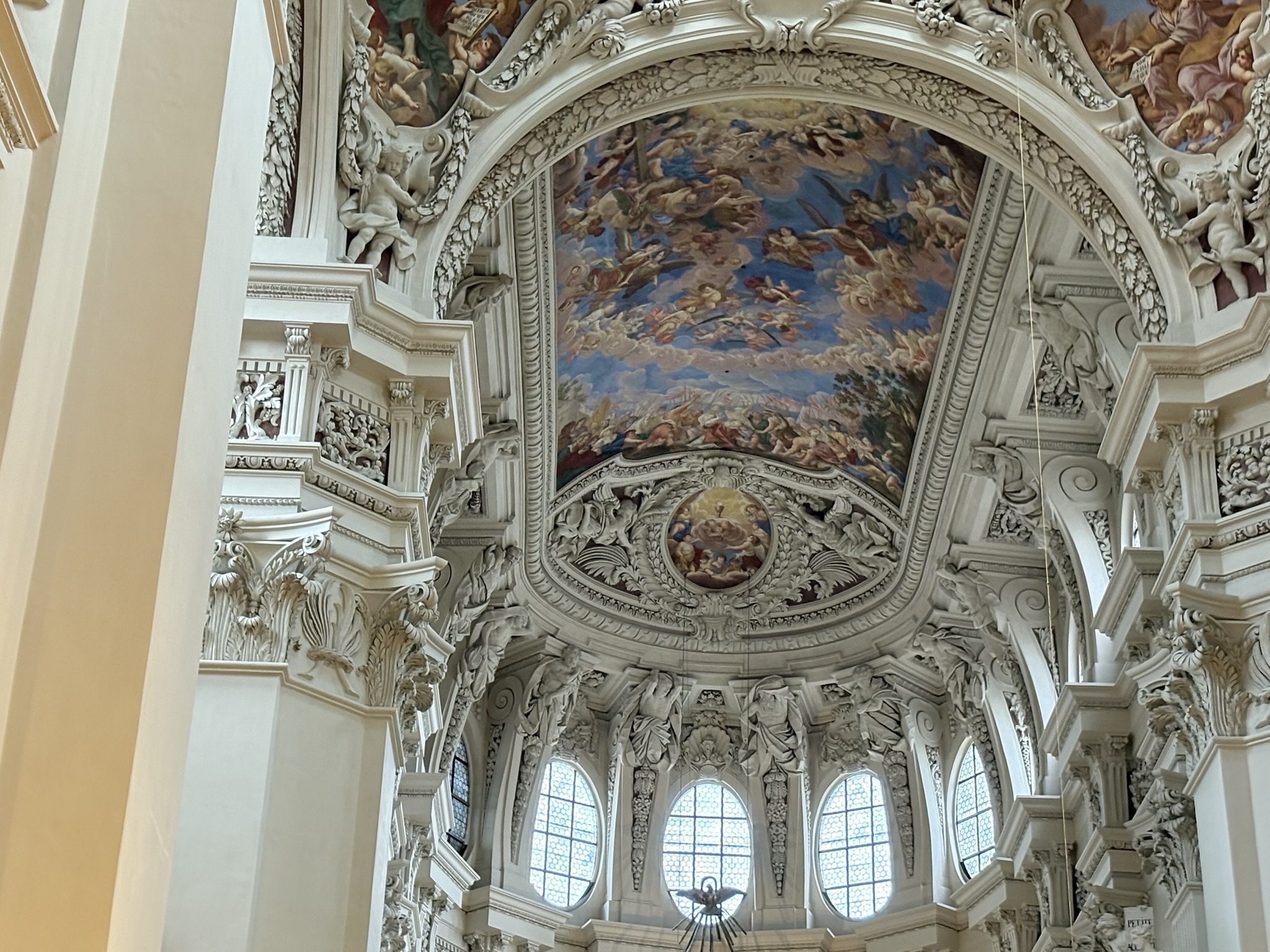
Our next stop was St. Stephen’s Cathedral. It was magnificent both inside and out. Within it, the frescoes and detailed stucco work create a soaring, light‑filled space. The ceiling scenes seem to float above you, adding to the grandeur. It was simply beautiful.
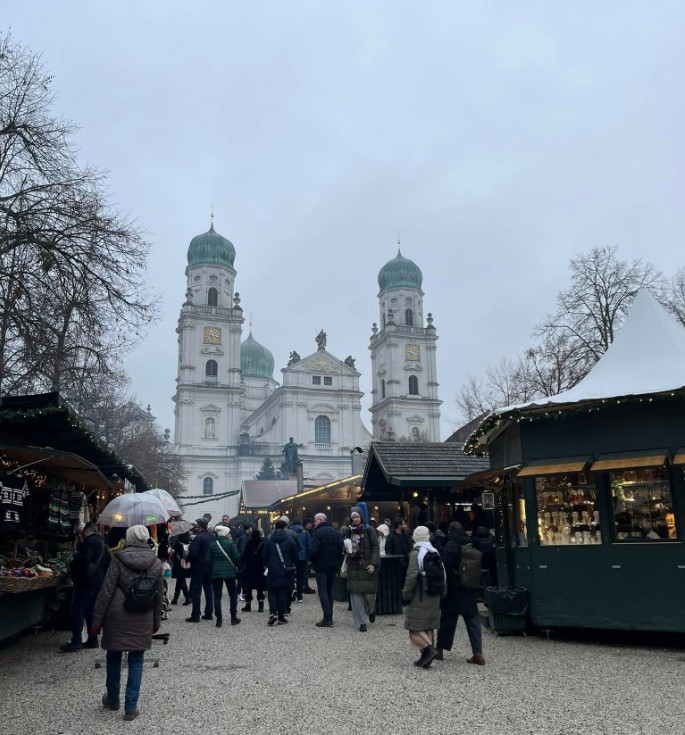
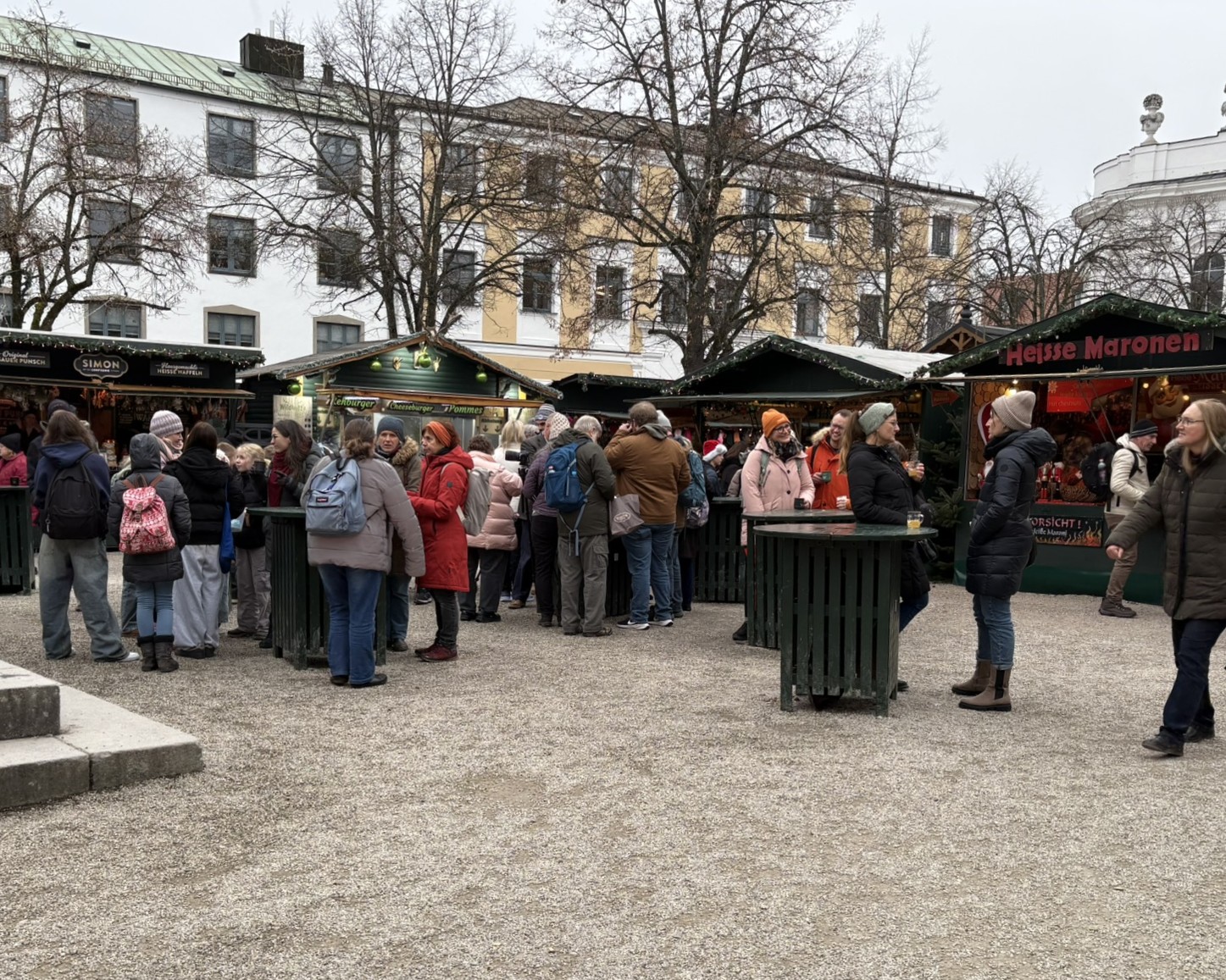
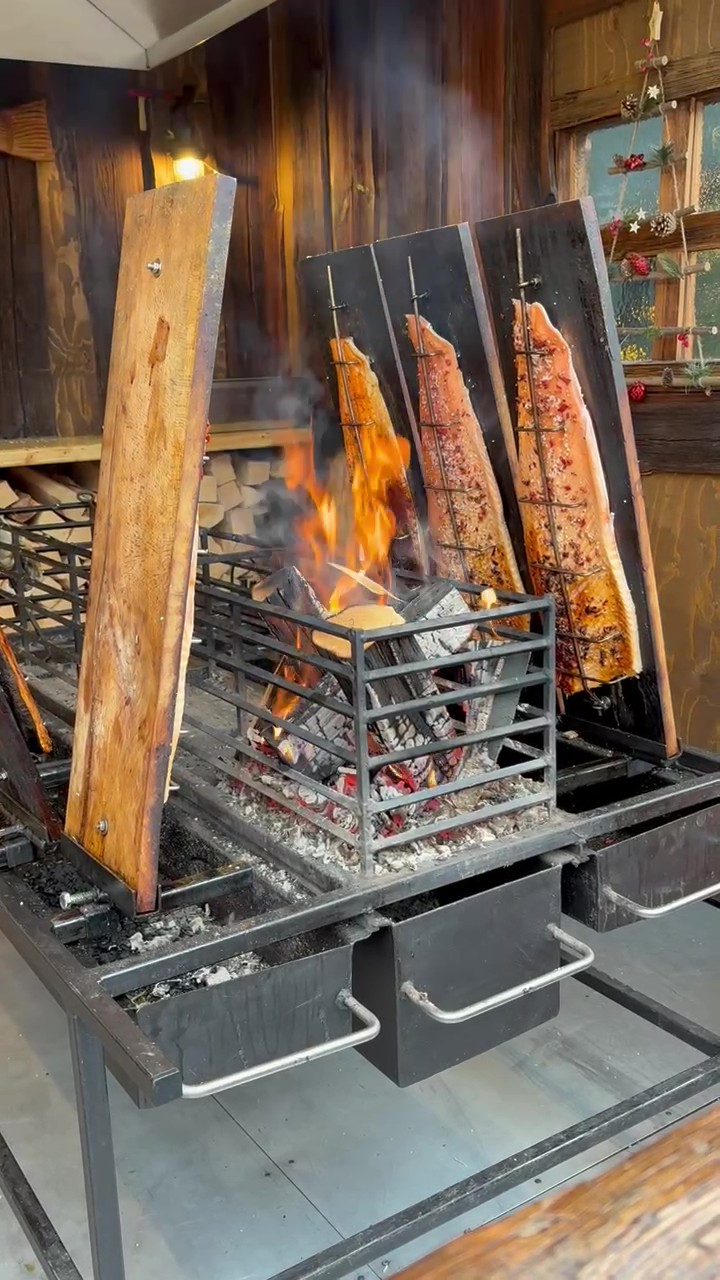
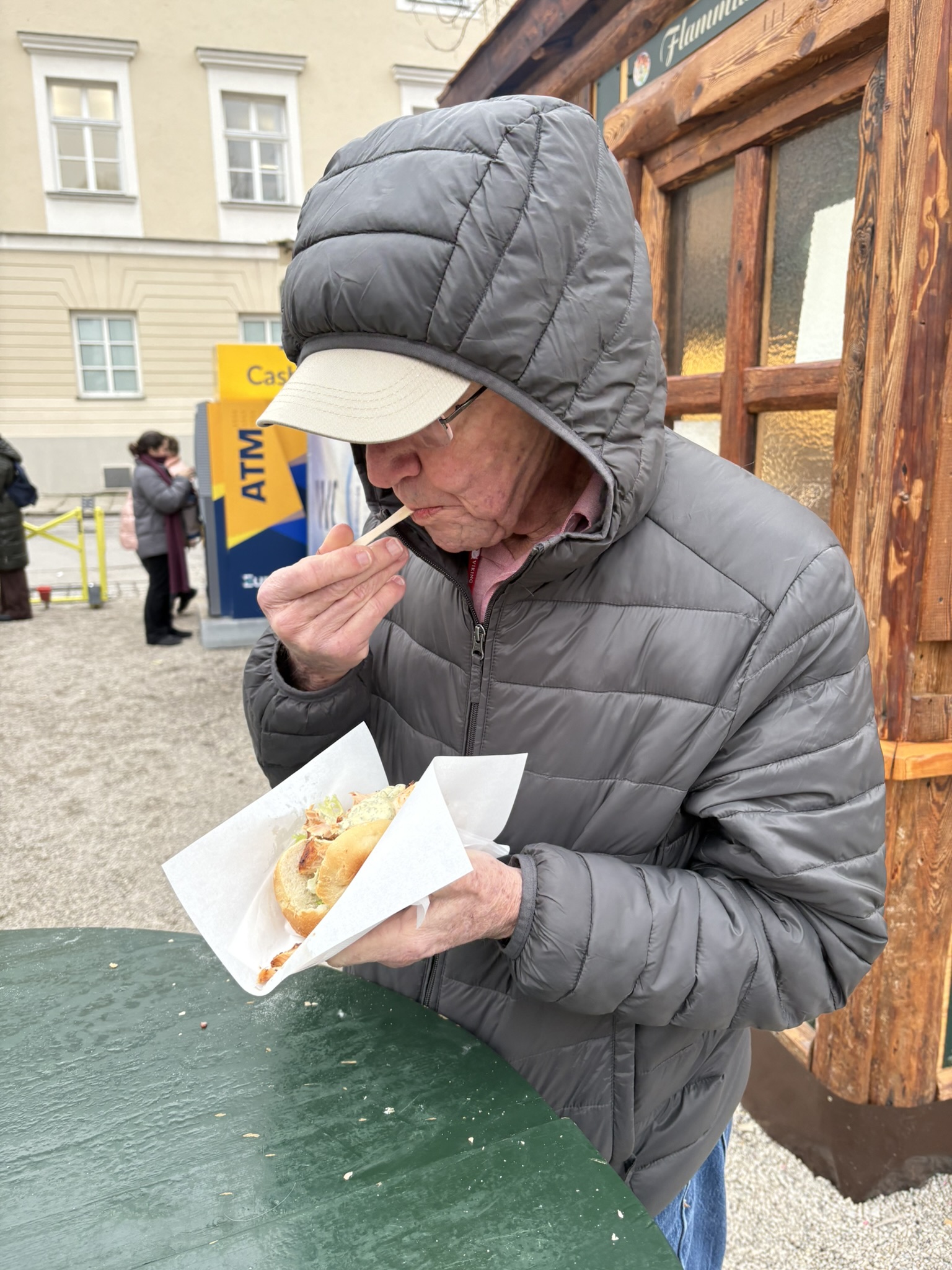
It was only a short walk to the Christmas market set up in the square beneath the Cathedral. The market was already busy but not overly crowded. Before the tour ended, our group enjoyed warm Glühwein served in souvenir cups. Once we were on our own, the salmon cooking over the open fire looked too good for Gary to pass up, so he tried it. The fish was good, though the bun was a bit dry, and he was still glad he’d tried it. After another look around the market, we wandered until we found Café Konditorei Confiserie Simon and bought a tin of the Gewürzlebkuchen Dorothy had enjoyed at the gingerbread demonstration. We were back at the ship for lunch and a short break before heading out on our own for the afternoon.
Our Afternoon in Passau
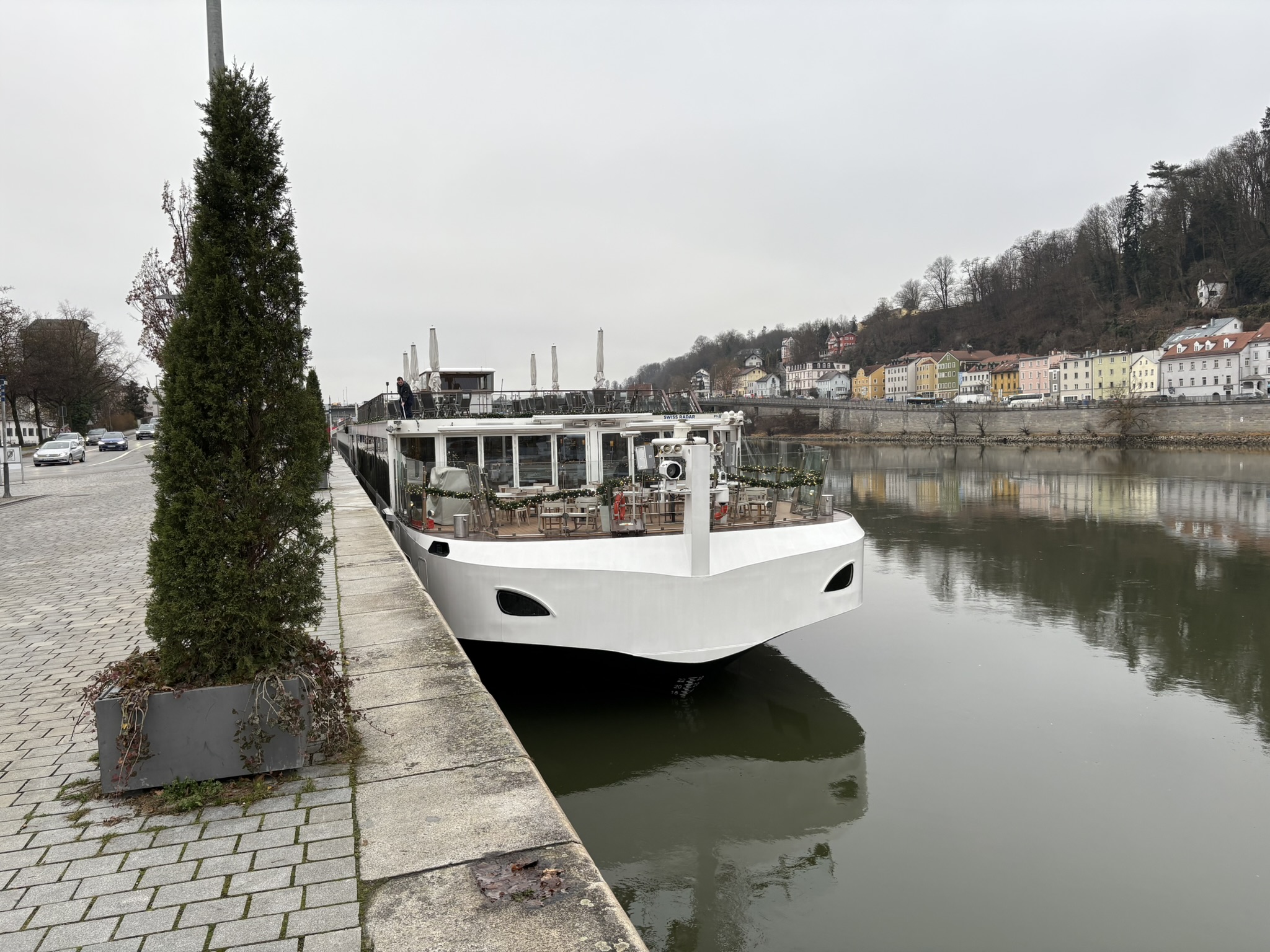
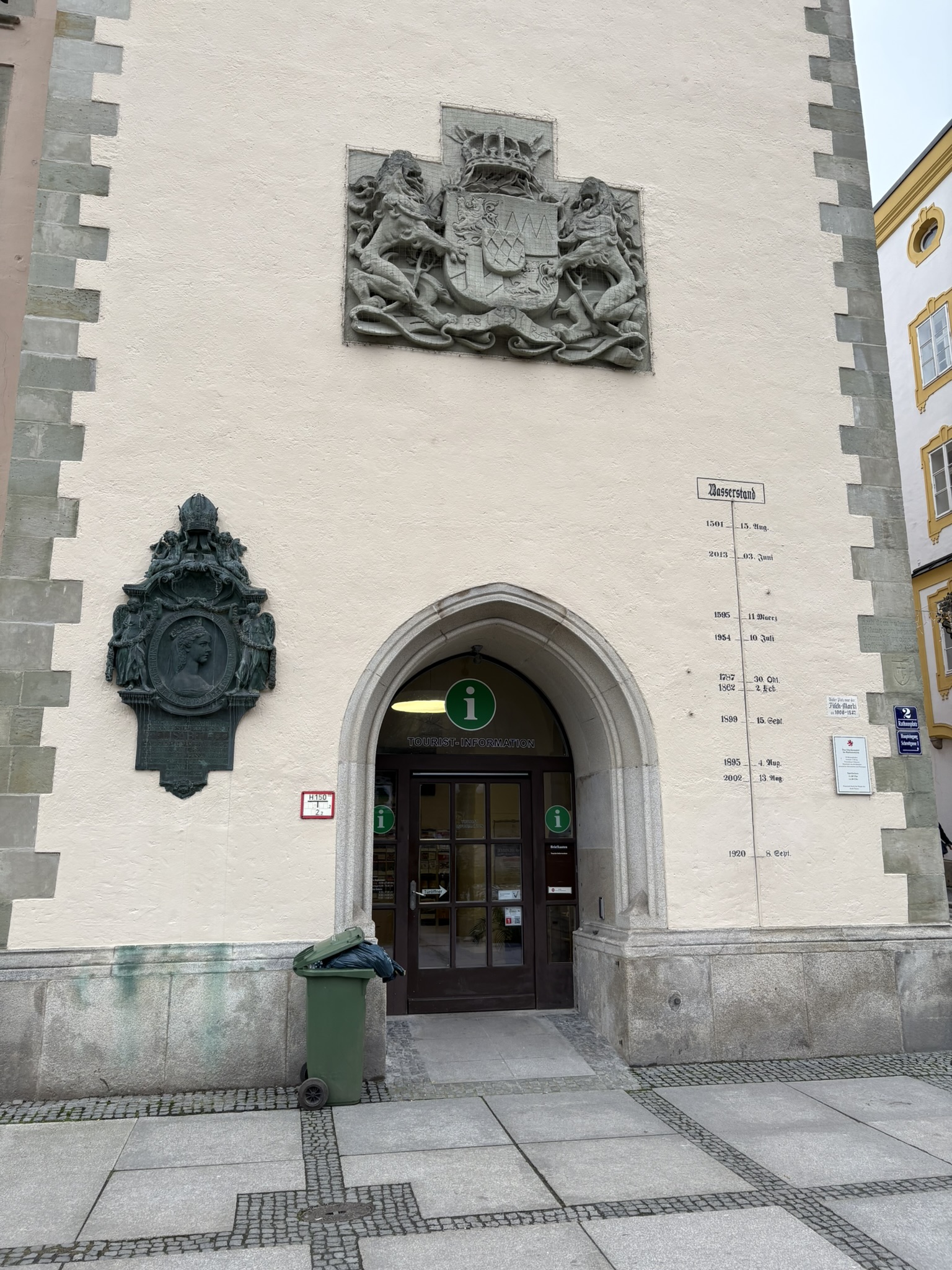
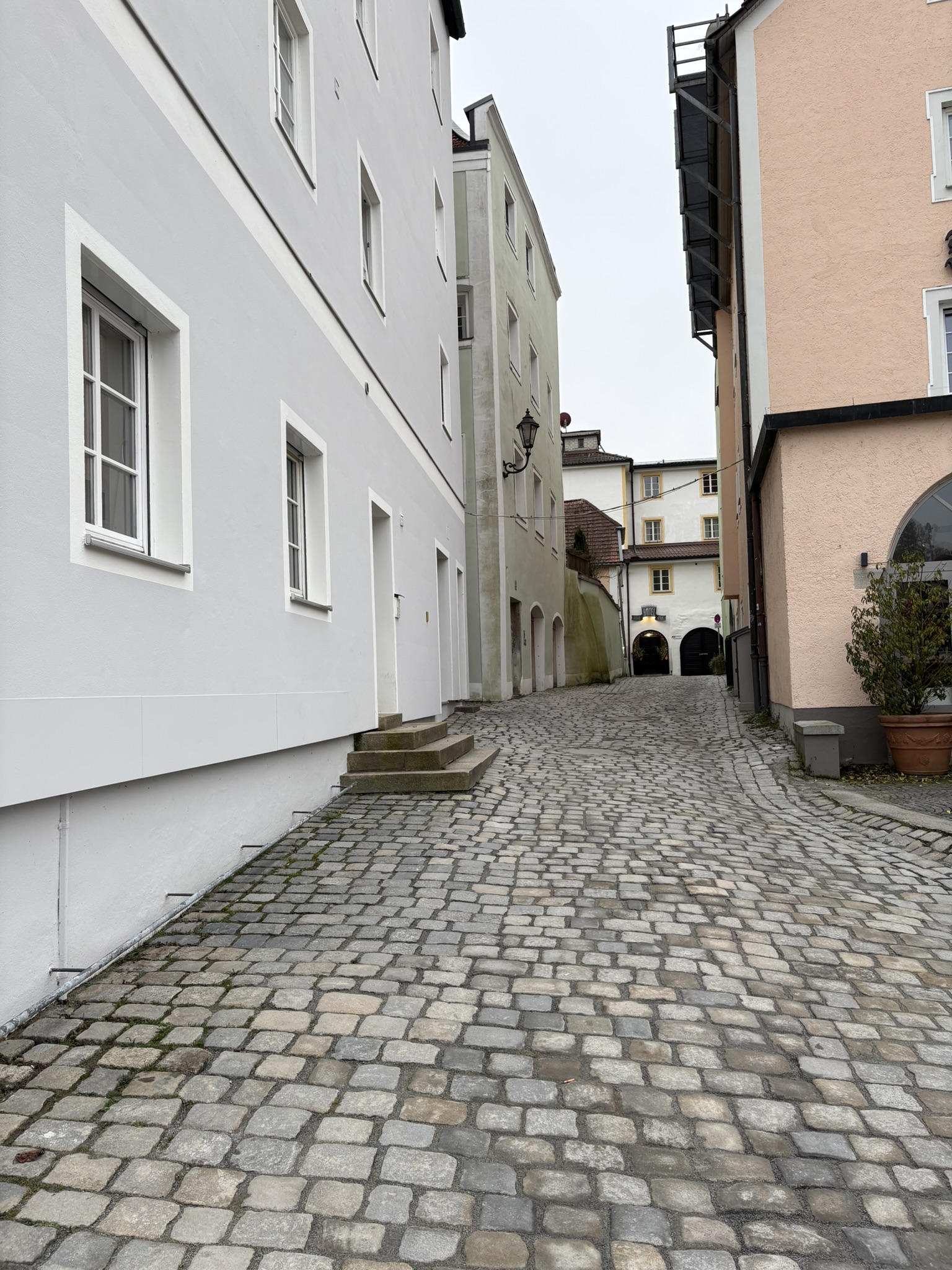
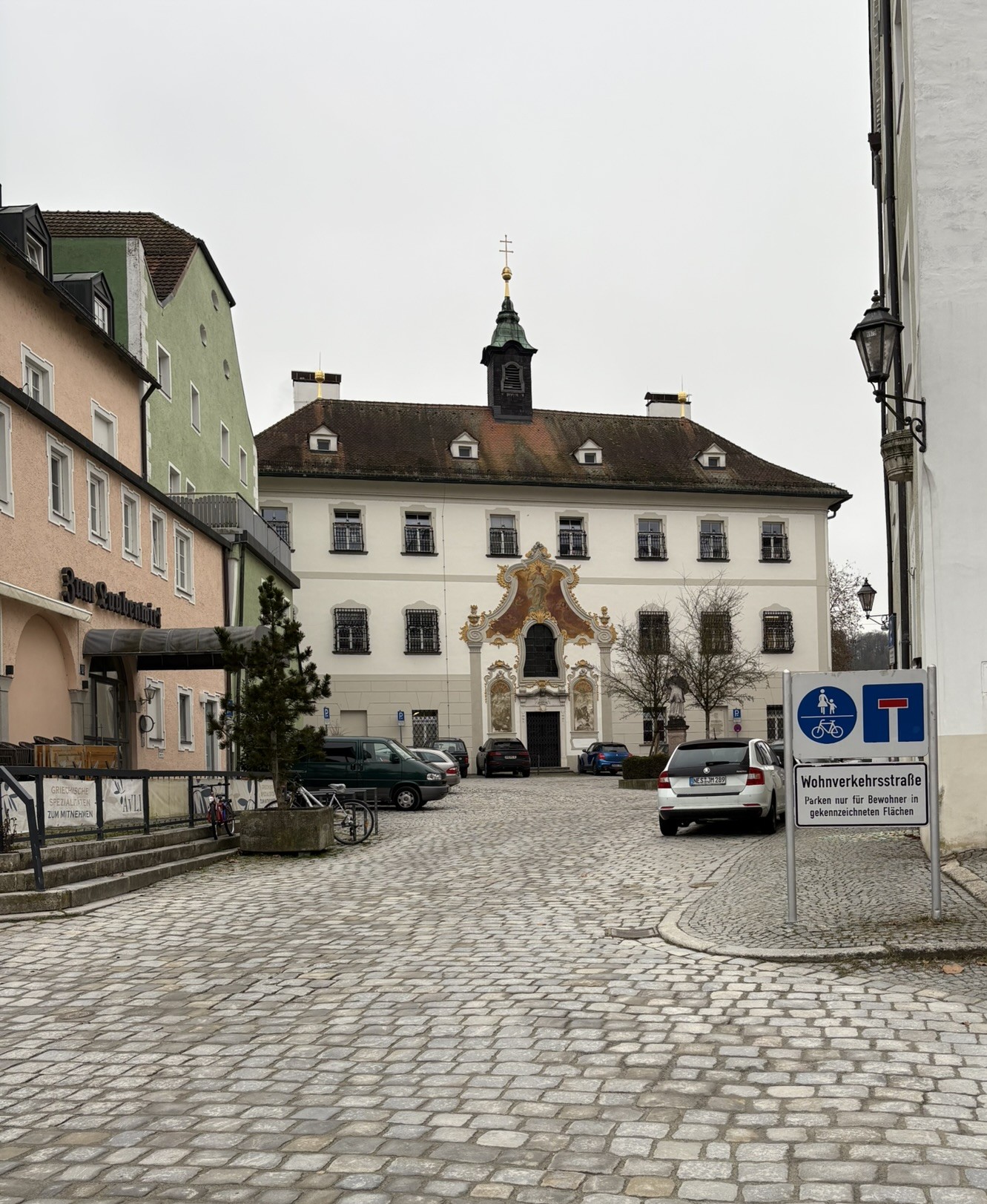
Our afternoon adventure began with a walk along the River Danube. We stopped for a few minutes at the Passau Visitor Center, where marks on the wall show how high the Danube has flooded over the centuries. The oldest dates back to 1595, and the latest was in 2013. It was flooding when we were here in 2019, but the water levels then were nothing like these. We wandered further down the river, passing residential areas with pretty buildings along cobbled streets and walkways. It was refreshing to see that in Passau the older buildings were being used rather than torn down. We kept following the river, letting the path guide us toward our destination.
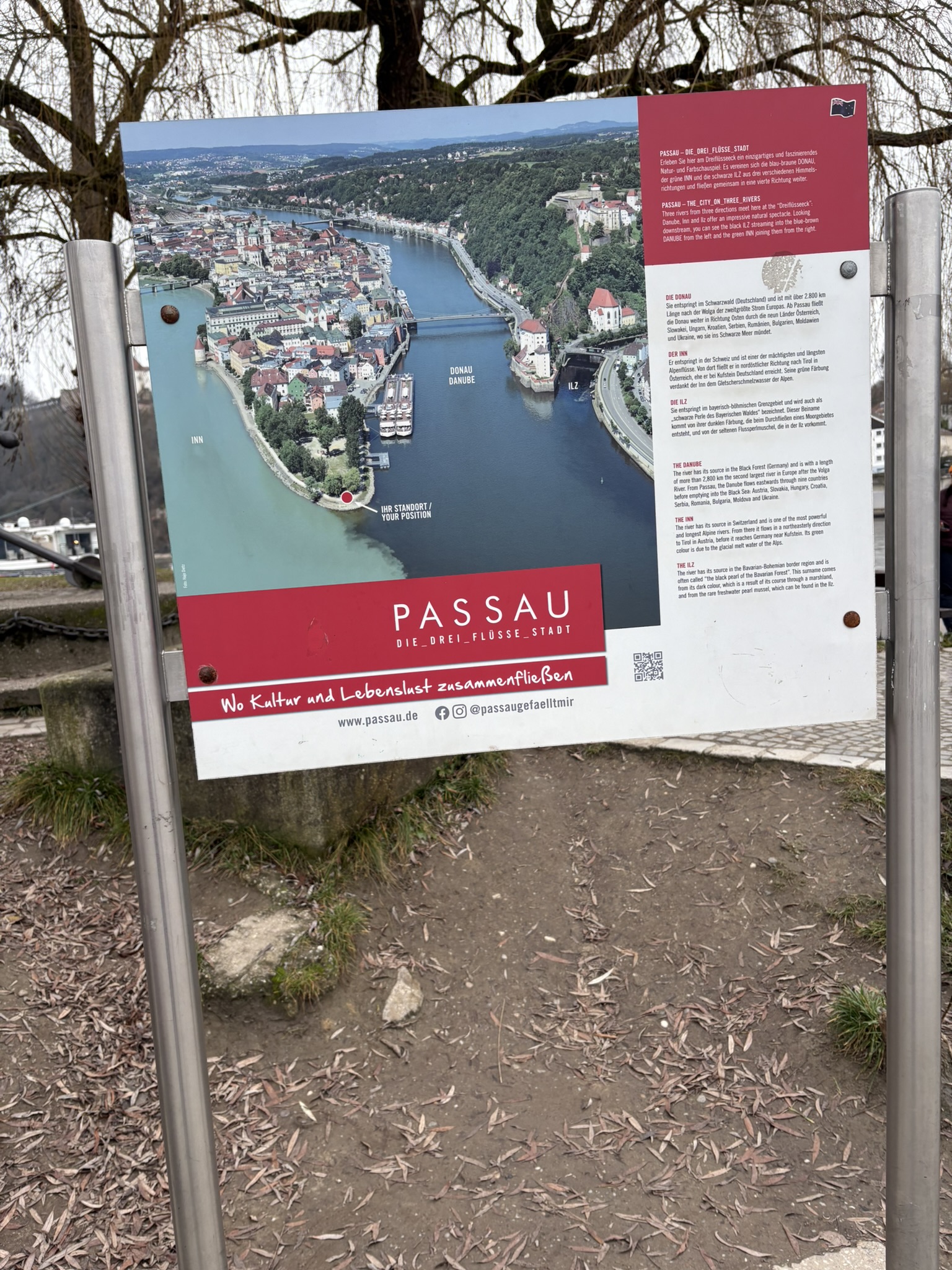
Our primary destination that afternoon was the point where the Danube, Inn, and Ilz converge. Seeing the three rivers coming together was fascinating, even if the cloudy skies hid their different colors. Ortsspitze Park, at the point where the rivers meet, felt peaceful and a bit removed from the rest of the city. The only people there were a mother and child on the swing, and the quiet was a welcome break from the crowds.
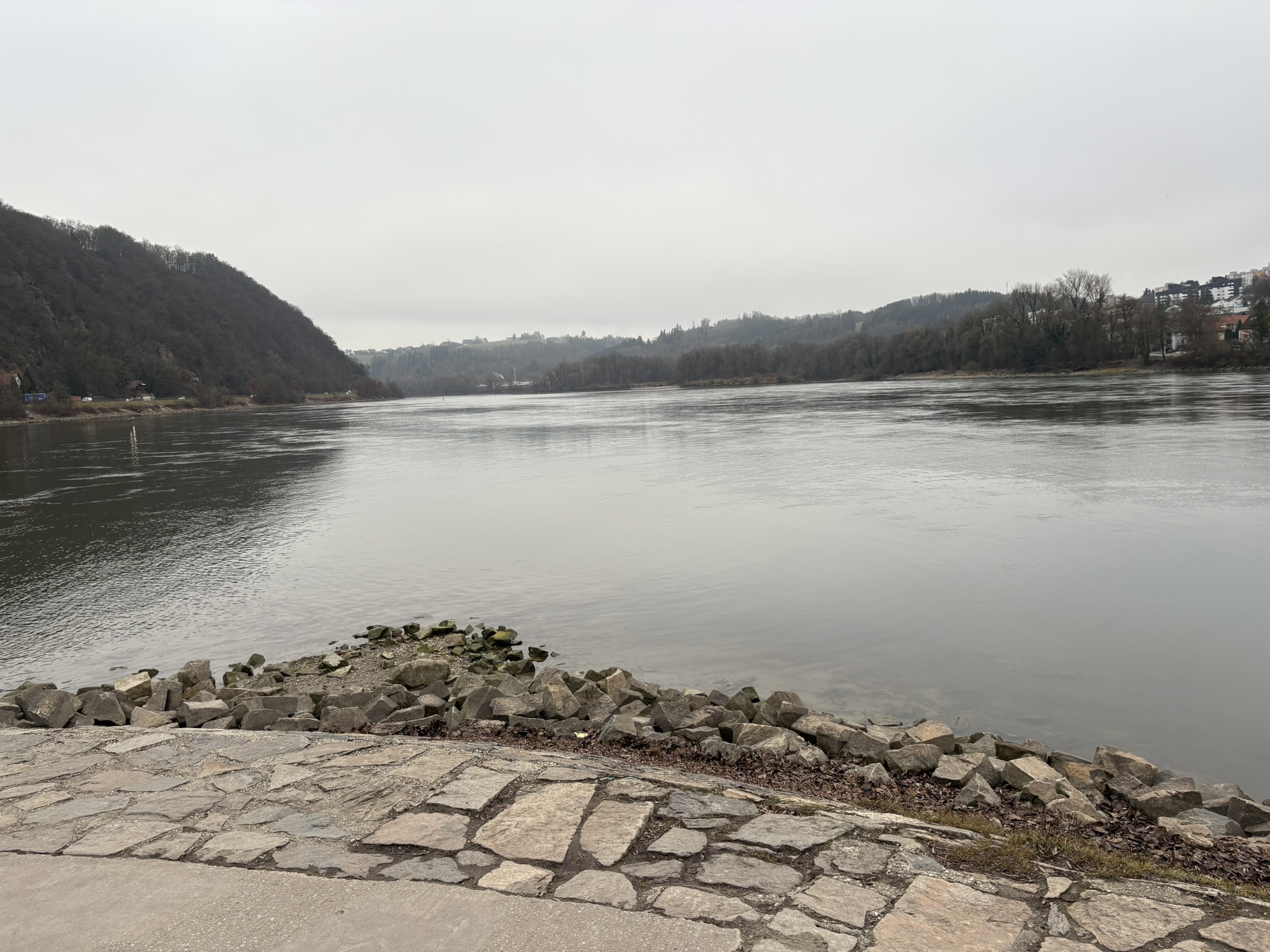
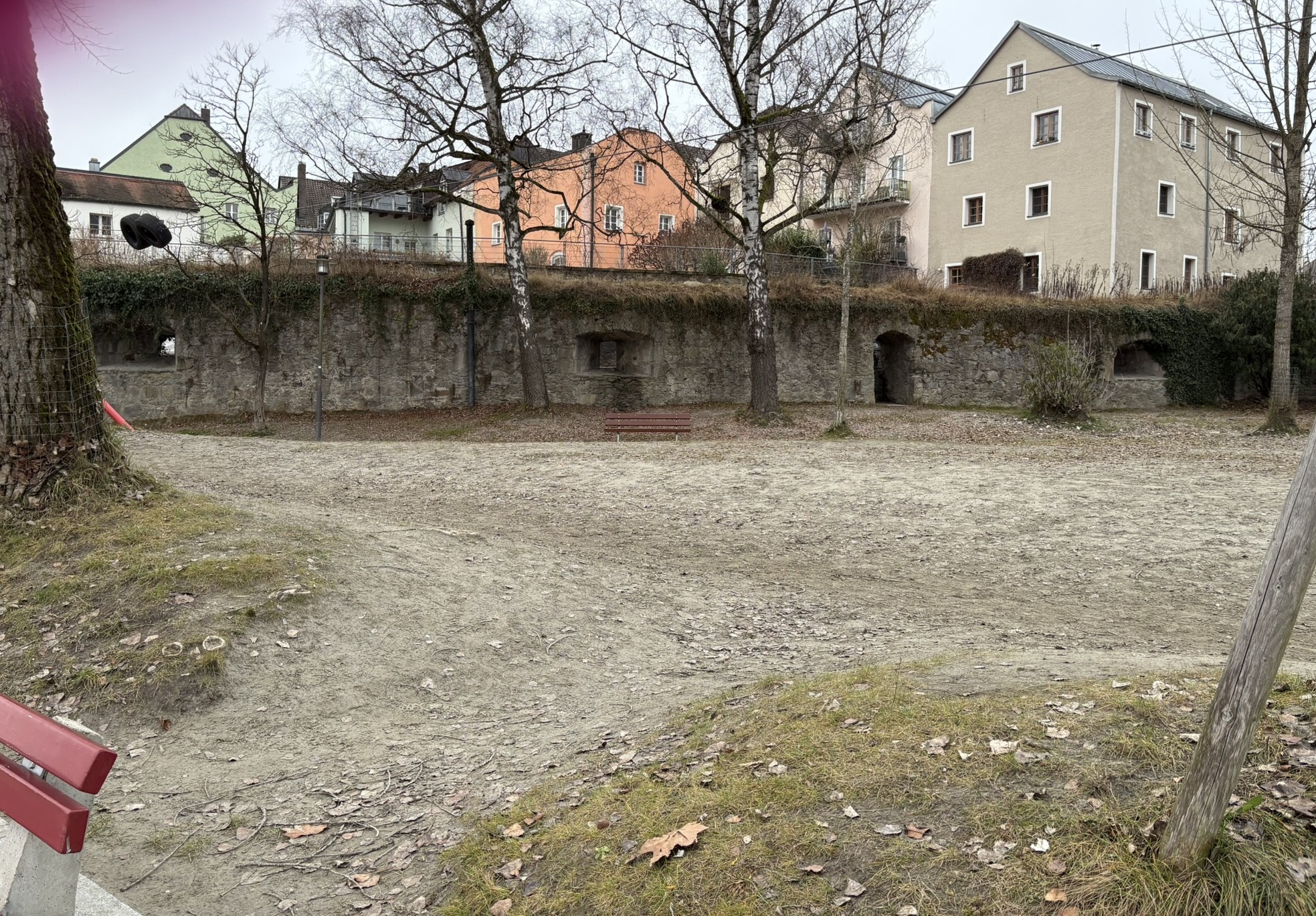
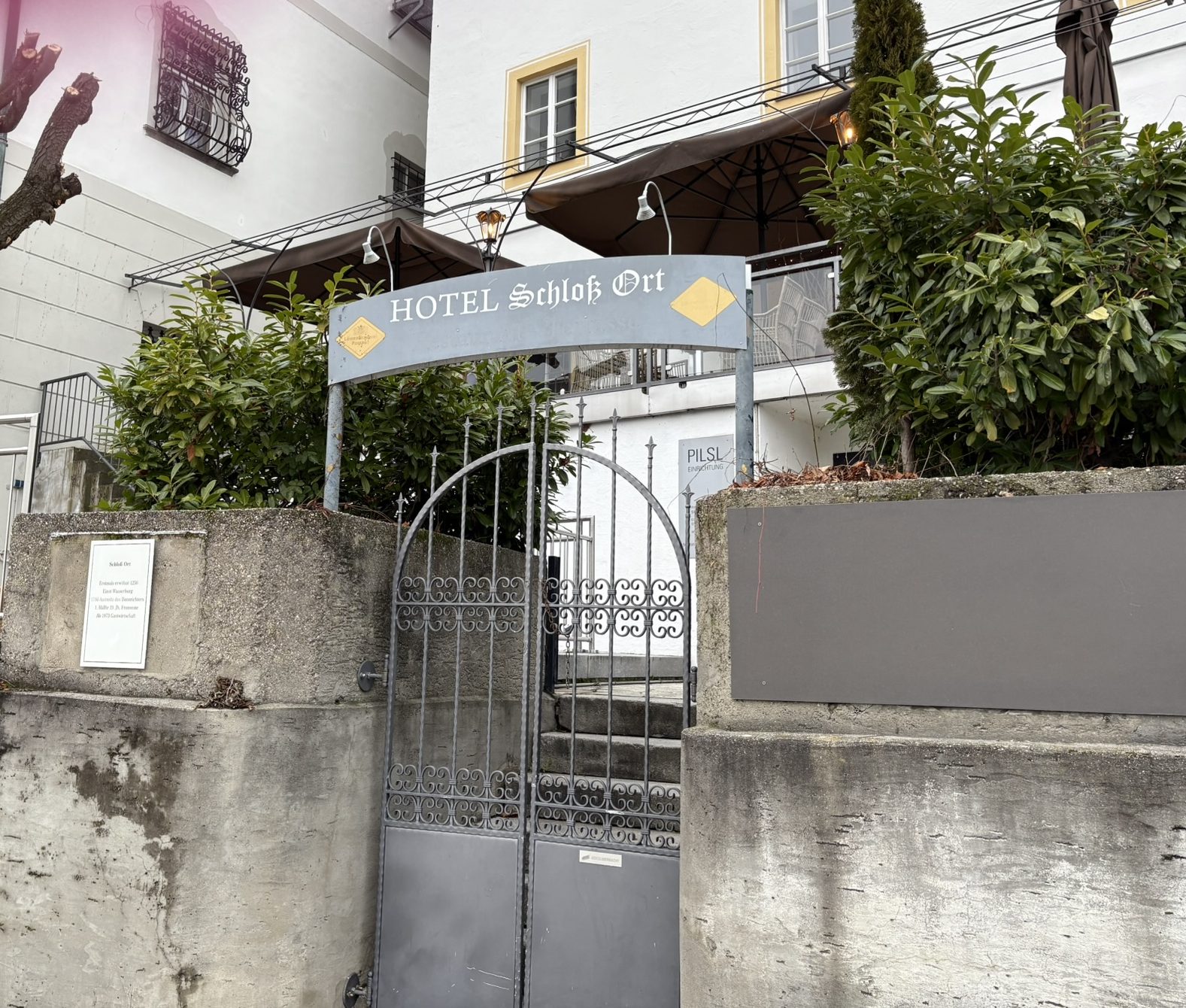
We continued our walk along the Inn River toward Old Town. We passed Schloß Ort, a quiet hotel whose long history, dating from around 1250, includes time as a fortress, a courthouse, a prison, and later a guesthouse.
Across the Inn we could see the white twin‑towered Church of St. Michael. Built in the late 1600s, it was the Jesuit college church and is now the study church for the nearby Leopoldinum school. It’s another example of how much of Passau’s history quietly goes unnoticed. The covered stairway between St. Michael’s and the school is part of the hillside’s daily rhythm, used constantly as students move between the old Jesuit rooms and the classrooms above. It’s a simple passage that has carried people up and down this slope for hundreds of years.
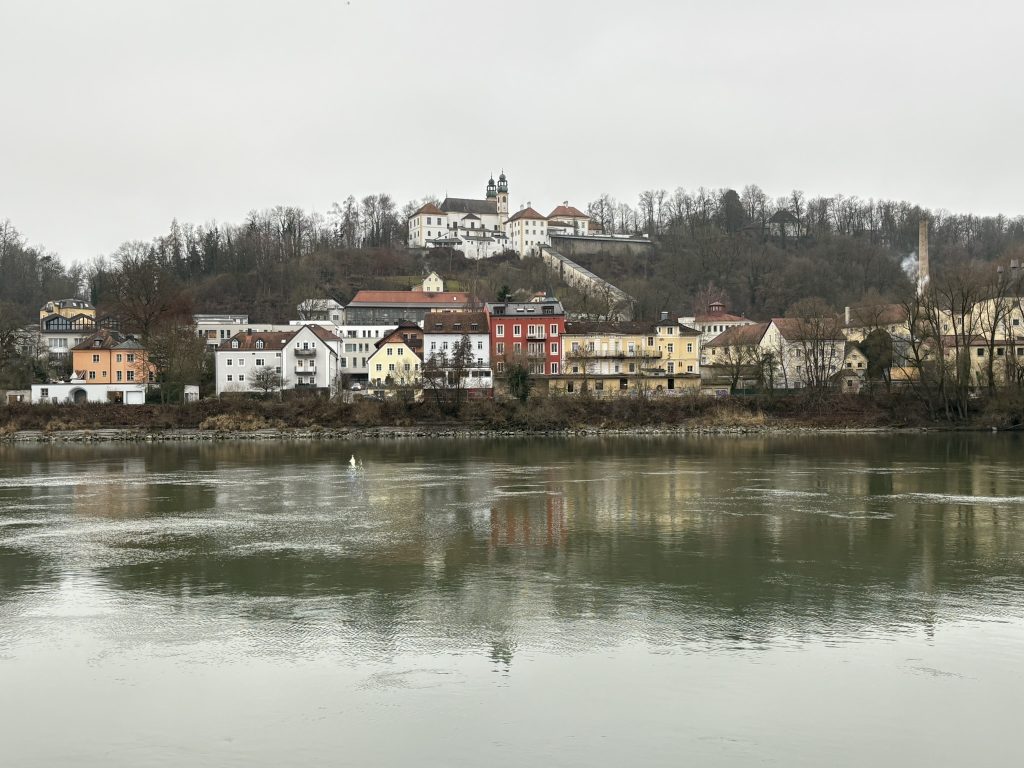
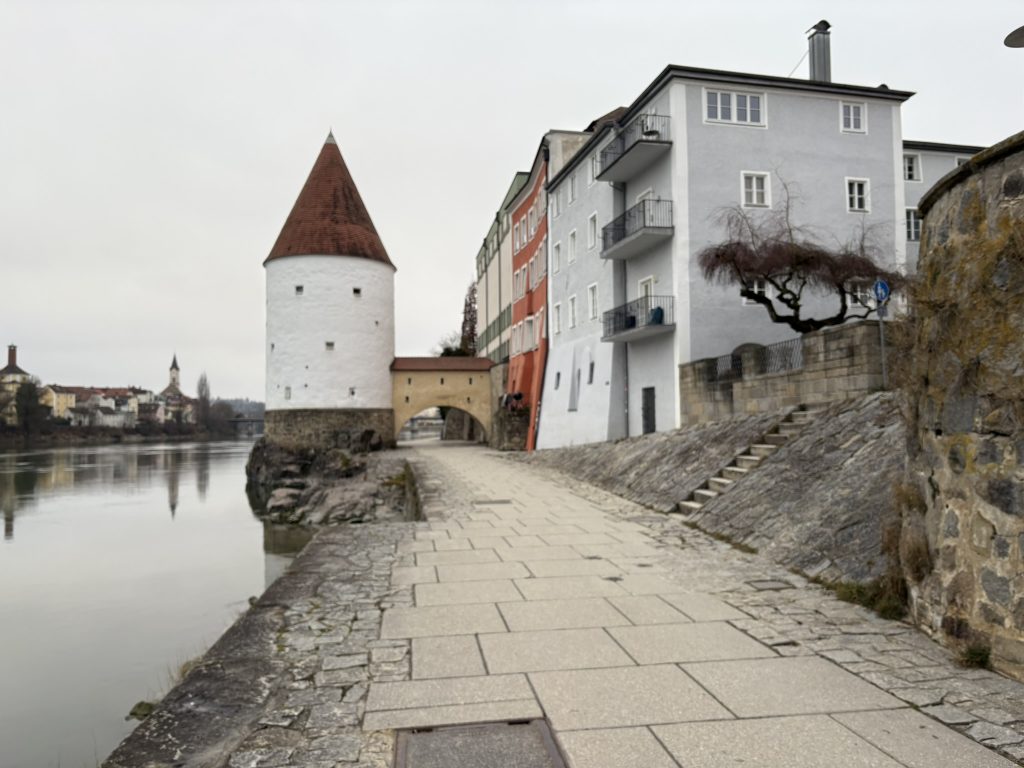
Further along we reached Schaiblingsturm, a medieval defense tower built in 1250. It once guarded Passau’s riverfront and later served as a powder store, boat landing, and even a residence. The houses beside it have outward‑slanting lower walls, a practical design that helped protect them from the river’s frequent flooding.
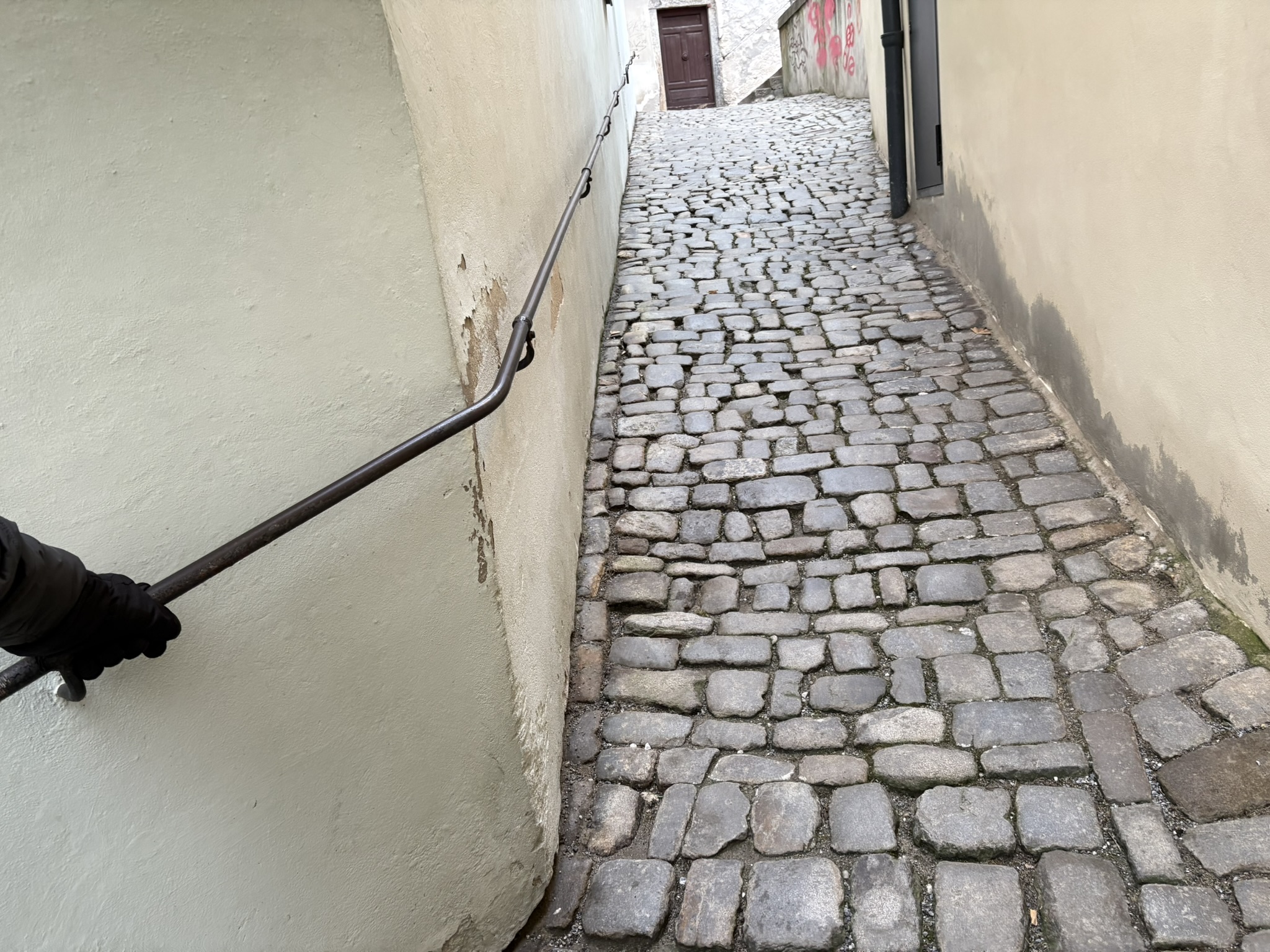
When it was time to return to the ship, we had to work our way back to the Danube side of Passau. We passed up a couple of options because they were too steep, finally settling on one we thought we could manage. The first stretch had stairs beside the street, and the second was so steep we used the handrails to pull ourselves up. By the time we reached the top, we were certain we’d earned the night’s dessert.
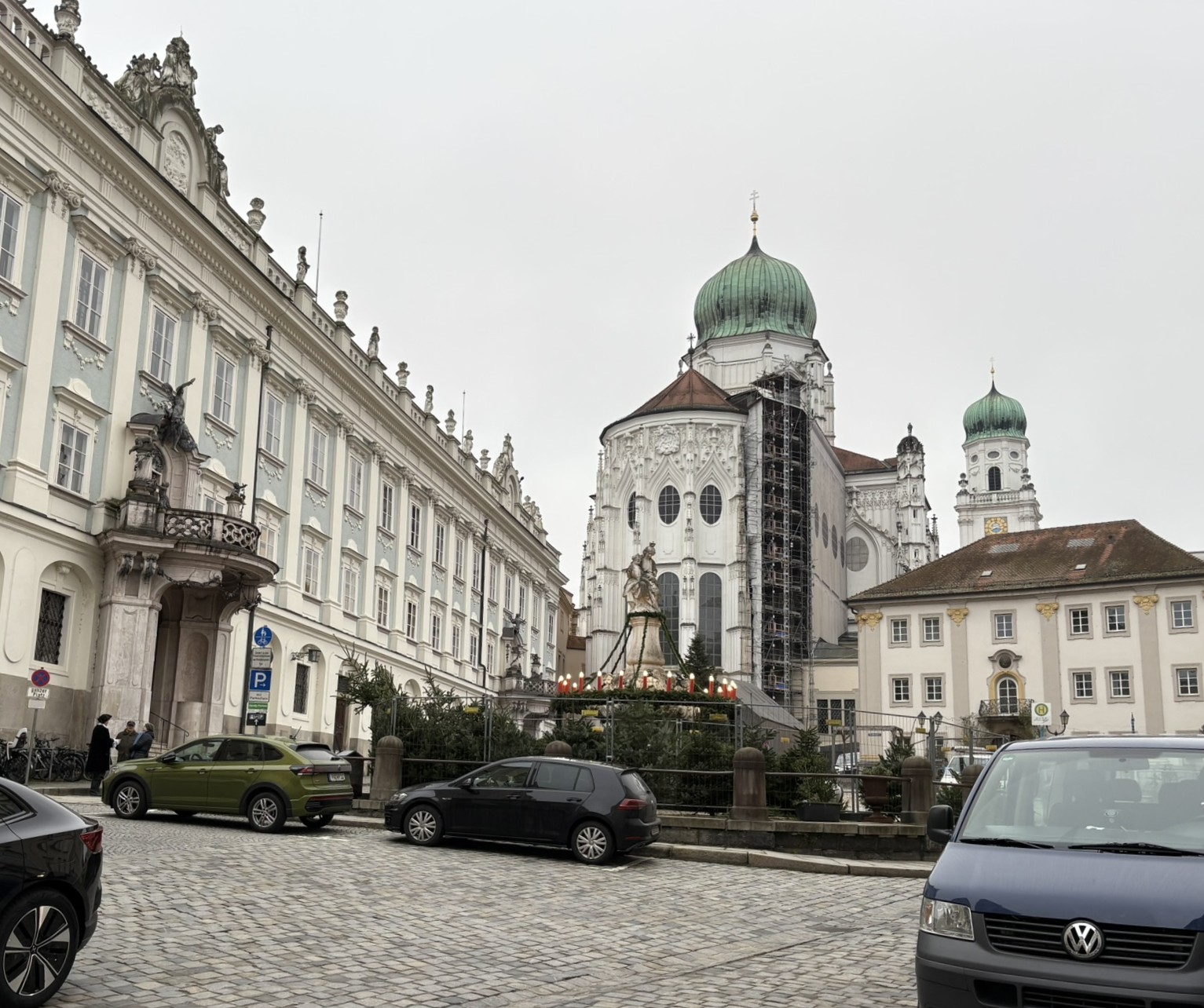
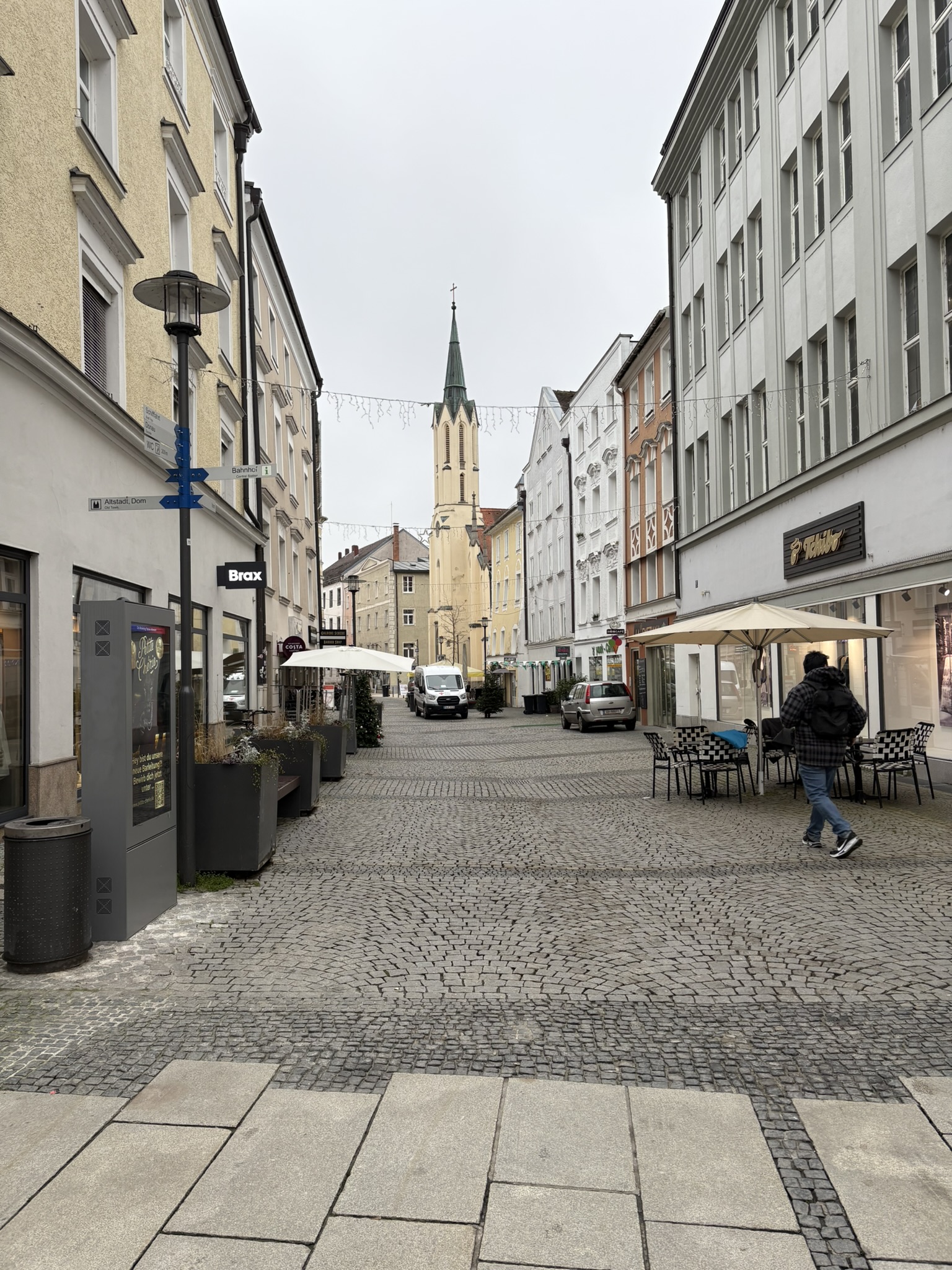
Our climb ended near the cathedral on a bustling street that we hoped would lead to the Viking dock.
There were routes that might have taken us to the river more quickly, but if they didn’t, we’d be facing another long climb. We weren’t taking that risk, so we stayed on the flat commercial street.
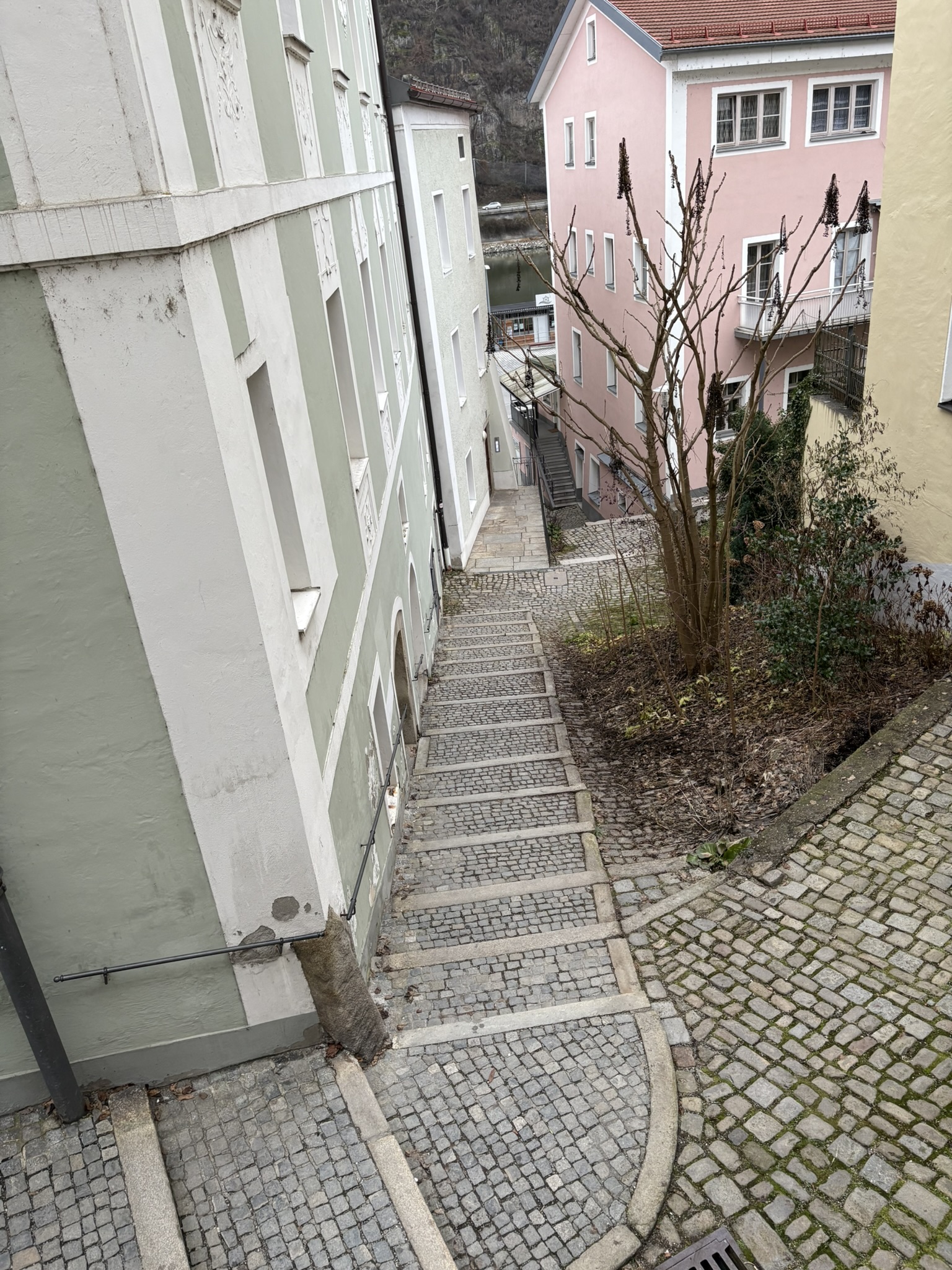
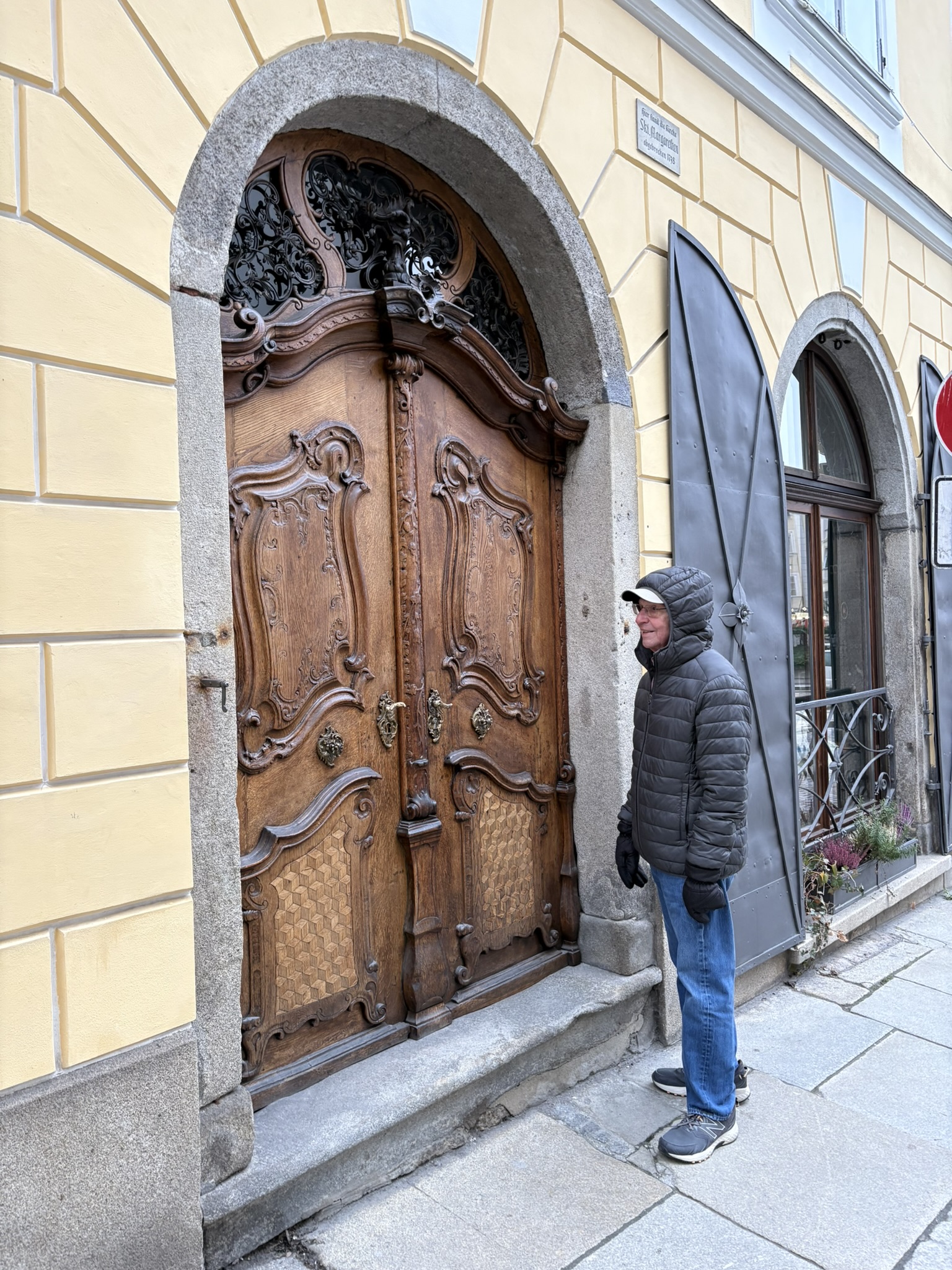
We stopped to admire a beautiful door—the intricate wood carvings and ornate hardware were incredible to see up close. Only later did we realize it was a doorway into the cathedral.
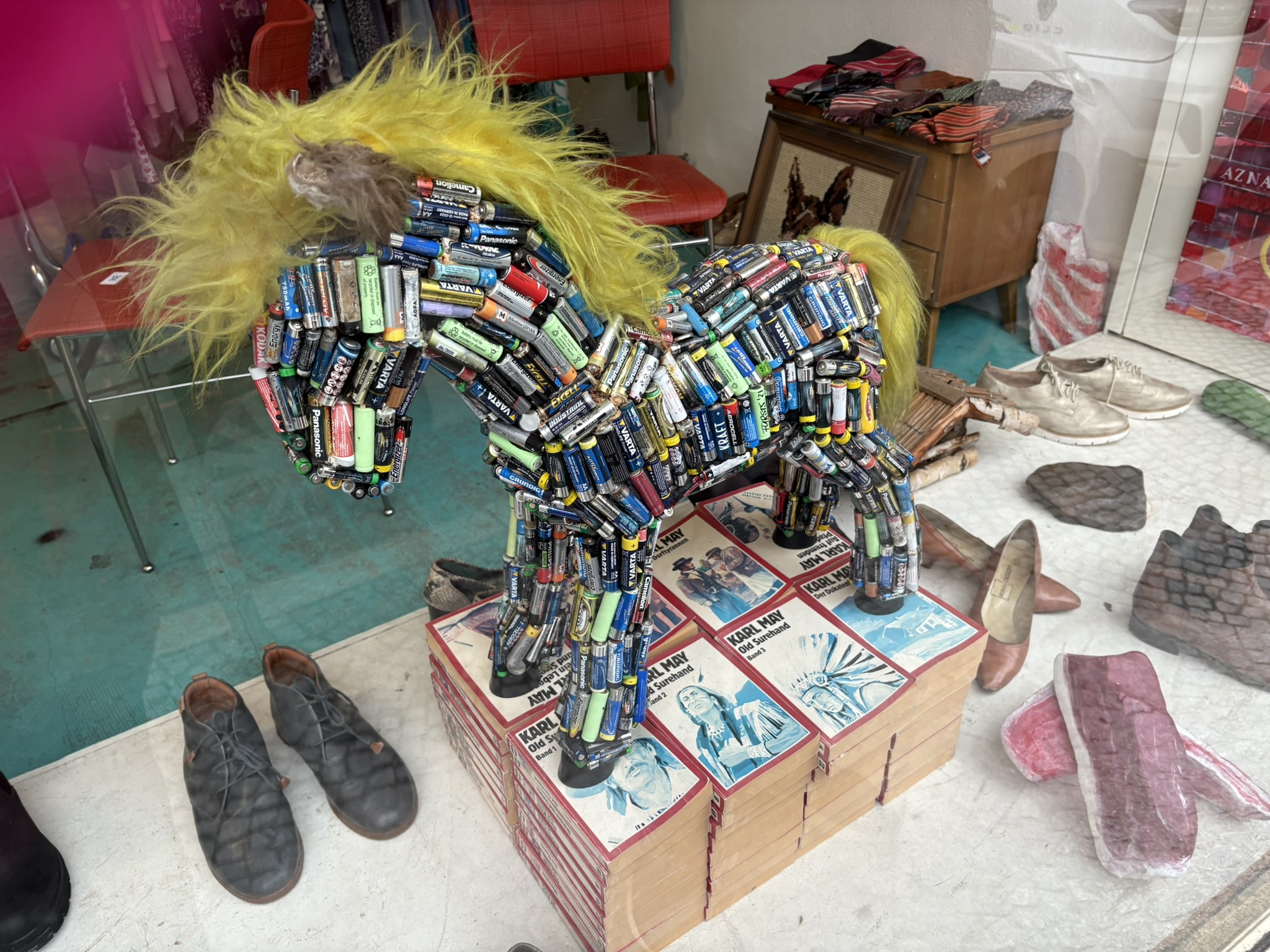
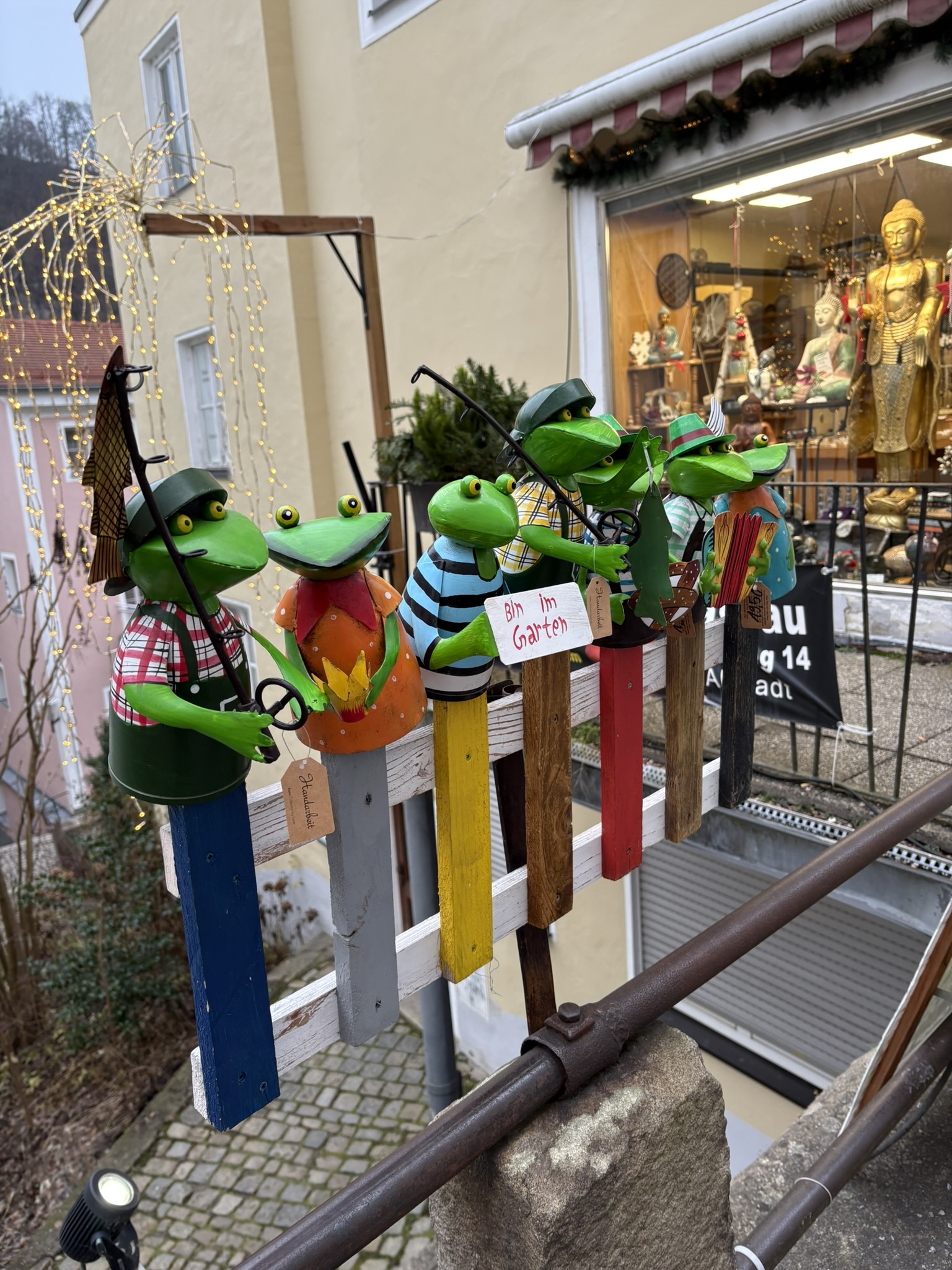
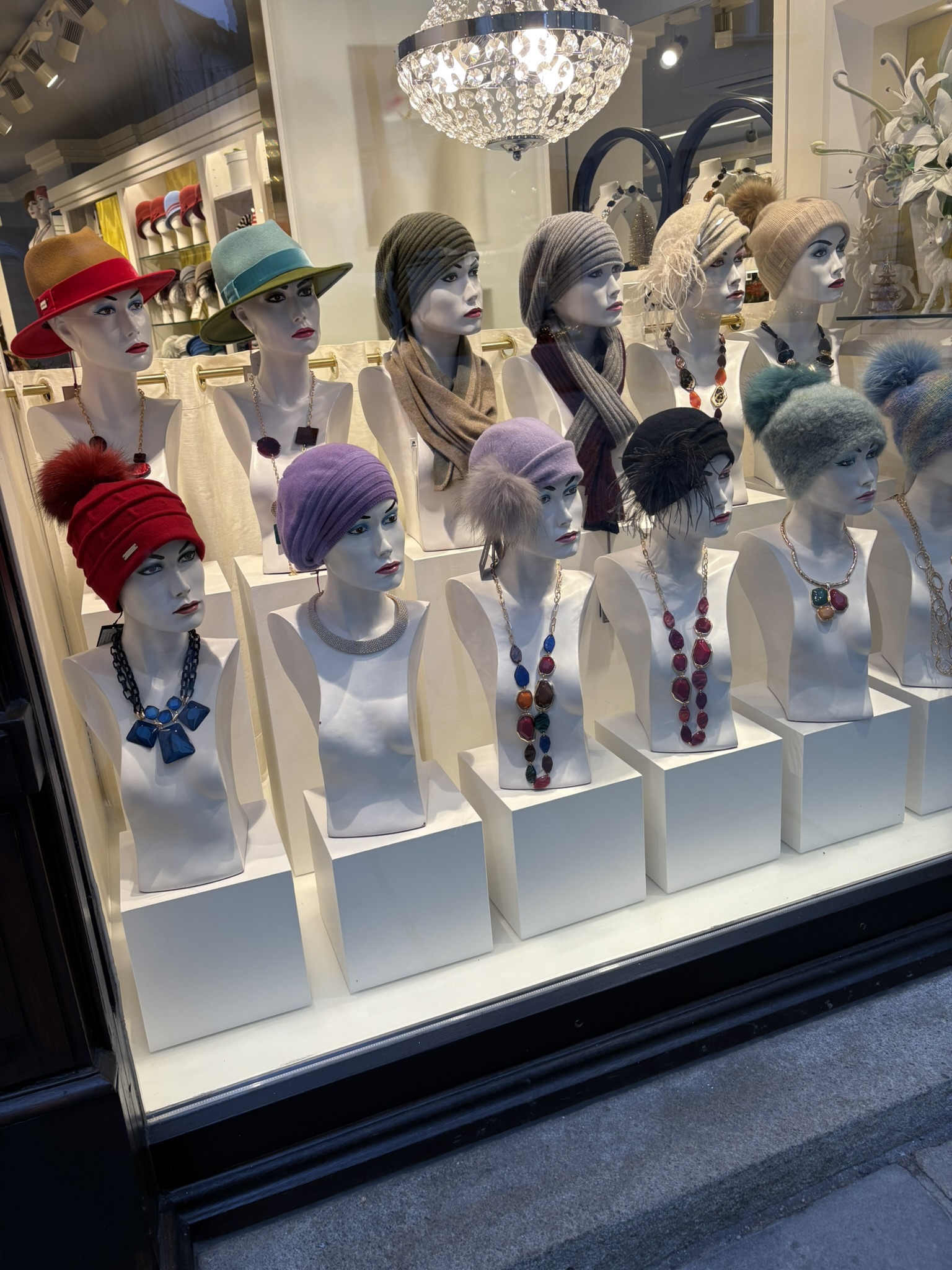
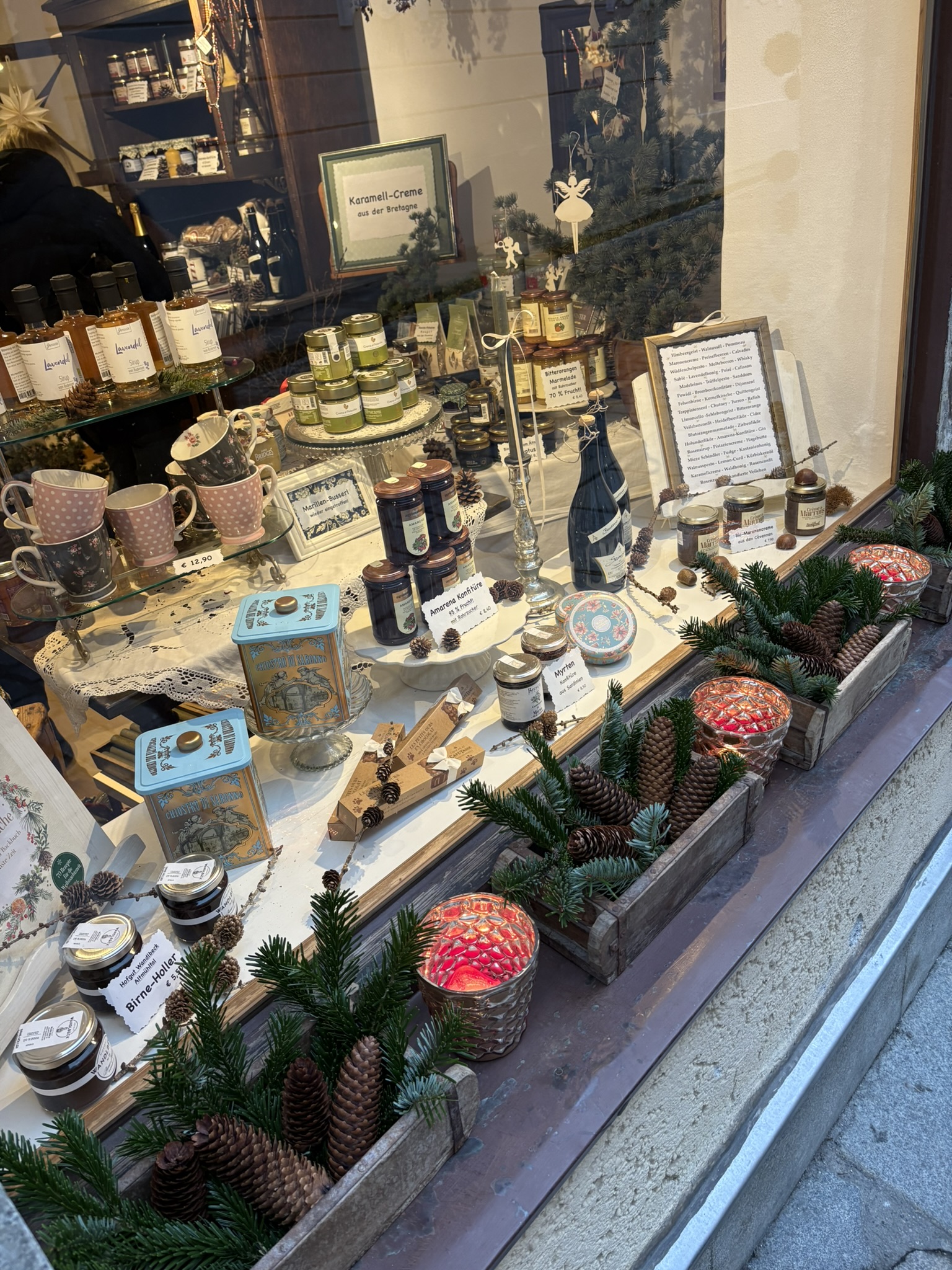
There were interesting shops along the way. Who knew you could make a horse out of batteries? Holiday decorations in this part of Passau felt simple, and it was fun walking through an area that seemed mostly for locals.
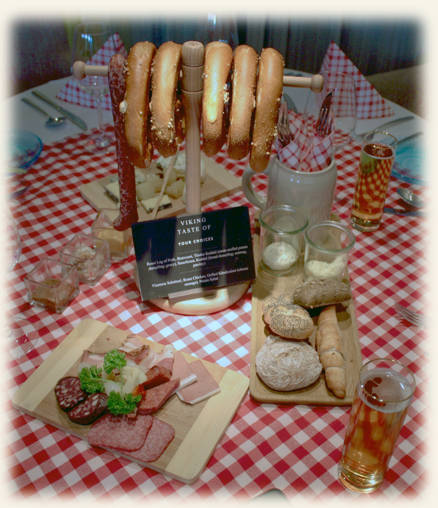
It was German night at dinner. Dorothy had sausages, red cabbage, sauerkraut, and potato salad. Gary chose char and said it was wonderful. We weren’t sure our climb had earned the desserts of cakes, German pancakes, and ice cream, but we ate them anyway.
What began as a simple way to fill an afternoon ended up being one of the real highlights of the trip, cold and all. It had been a very nice day.