
Vienna

Day 1: A Morning Tour in Vienna
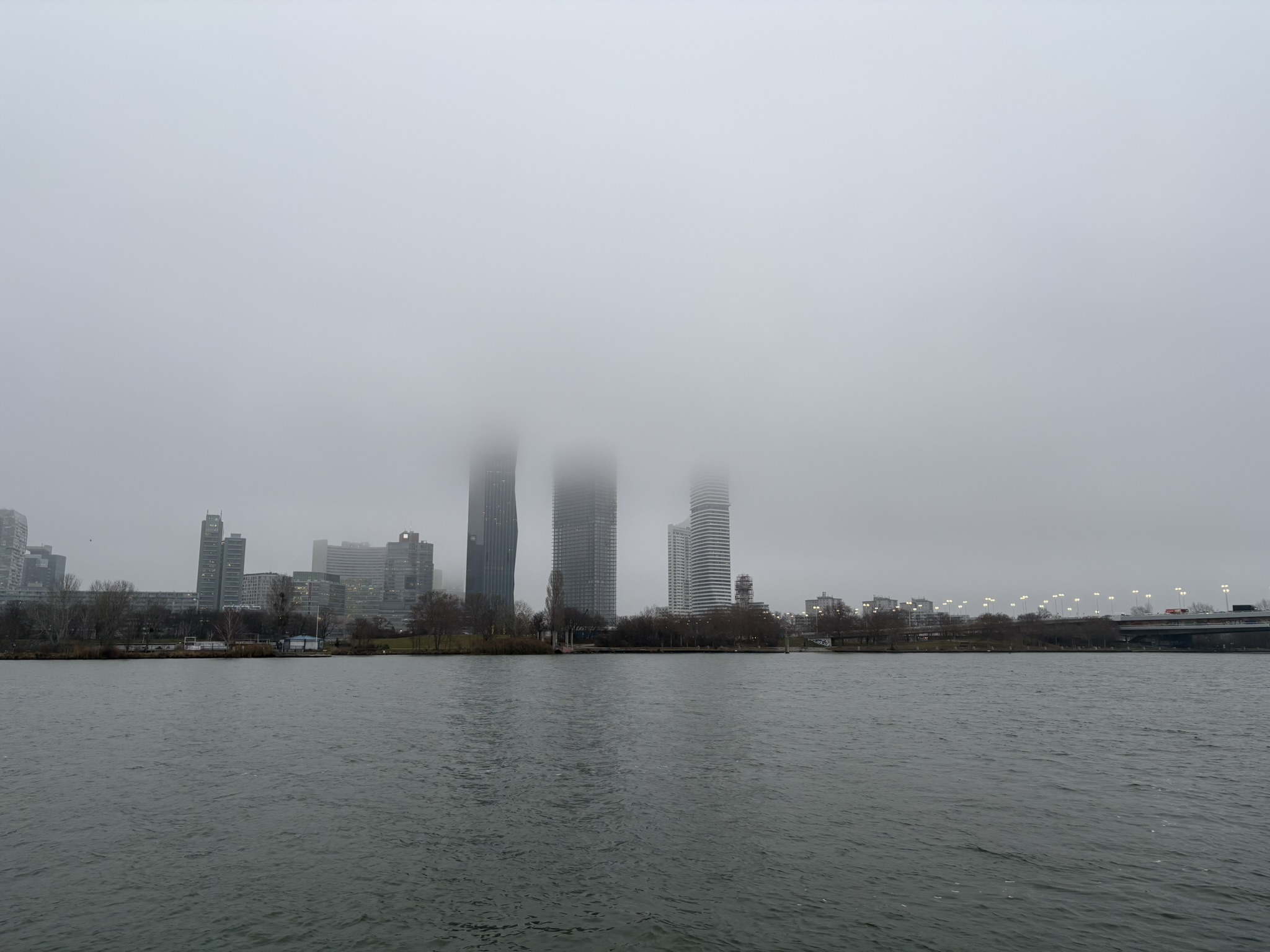
We awoke to another cloudy day, but the view from our stateroom at the dock in Vienna was still nice. The clouds were low, yet the visibility was better than the day before, and we were eager to begin exploring the city.
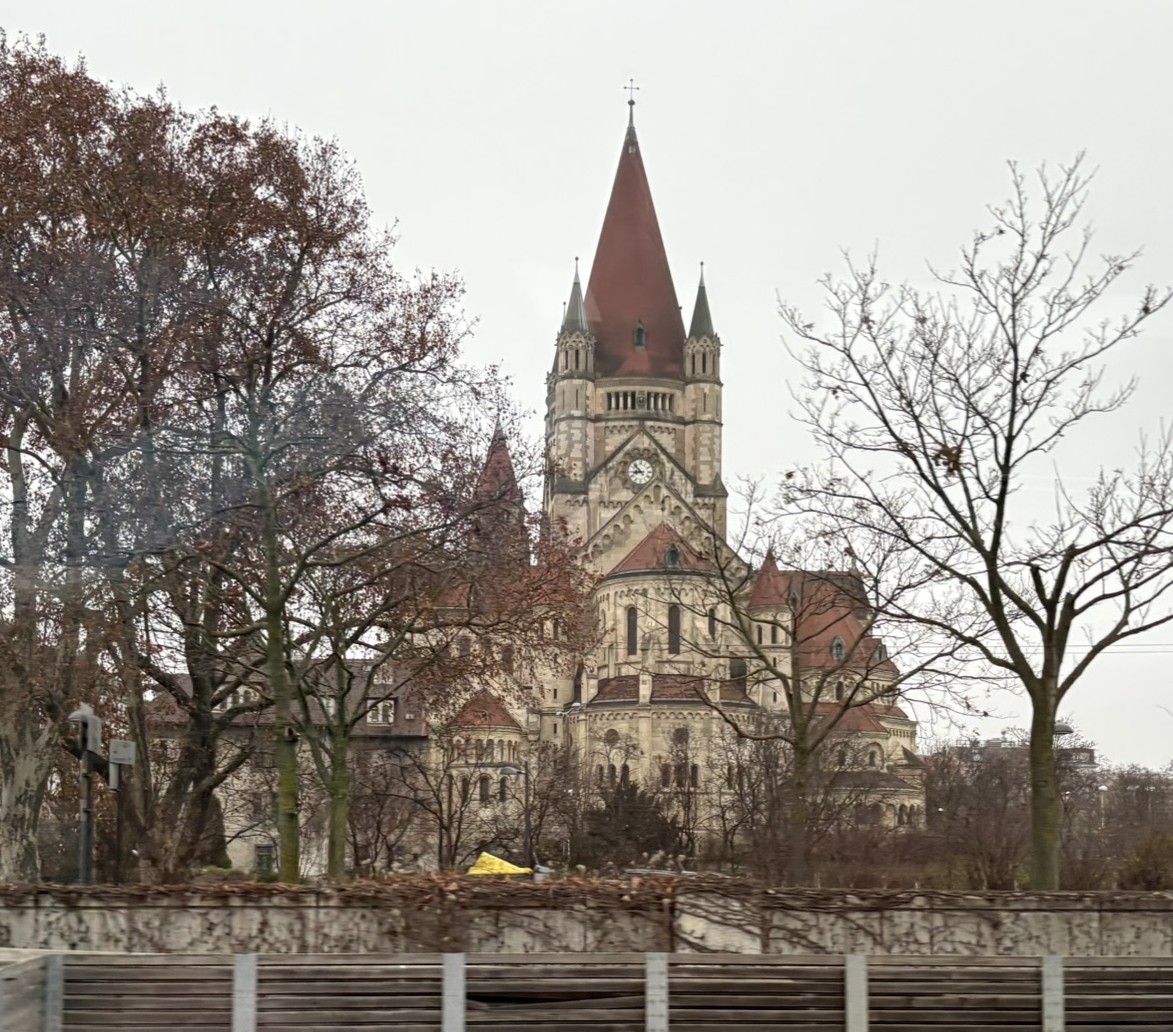
As we began our panoramic tour of Vienna, we almost immediately passed the St. Francis of Assisi Church (1898–1910) before continuing toward the Ringstraße and into the historic center.
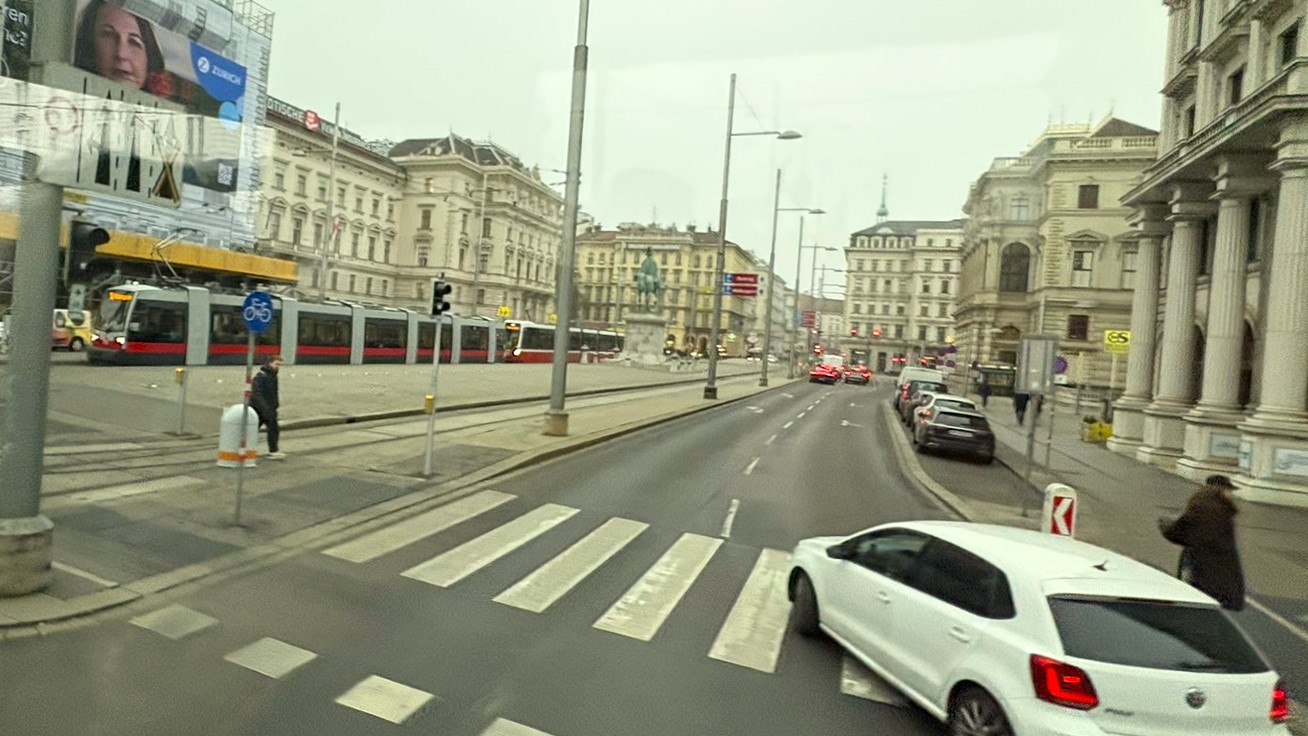
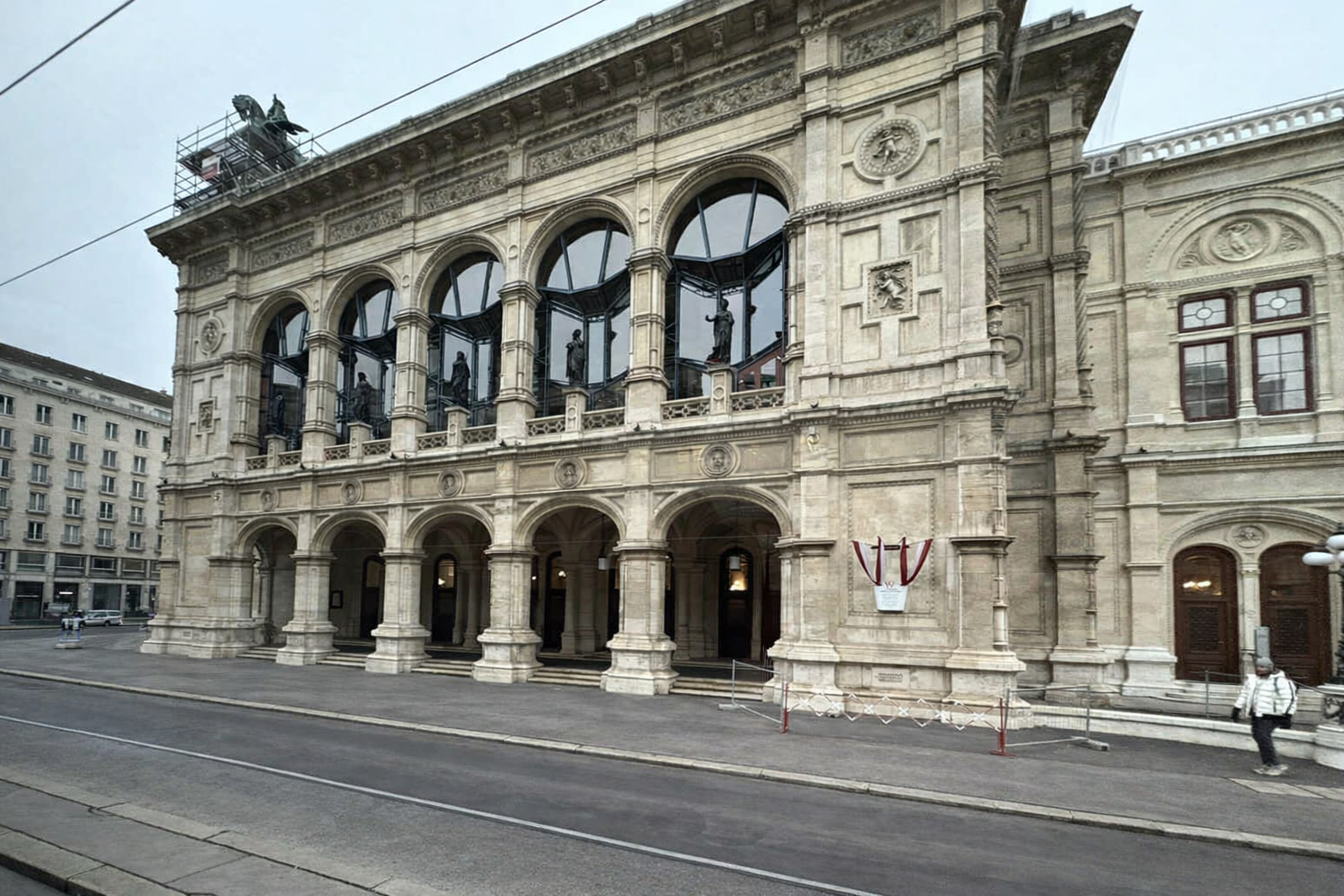
Taking photos from a moving motorcoach is difficult, but Vienna was too pretty not to try. On the Ringstraße, we passed the Hotel Imperial (built in 1863) and the Schwarzenberg Monument from 1867. We passed the Vienna State Opera (1861–1869), one of the most famous opera houses in the world. It is a beautiful building. The Academy of Fine Arts (built 1872–1877), with its grand façade and rooftop statues, is too. We passed one impressive building after another—each remarkable in its own way. Although the guide shared commentary throughout the drive, there was simply too much to see and hear to absorb.
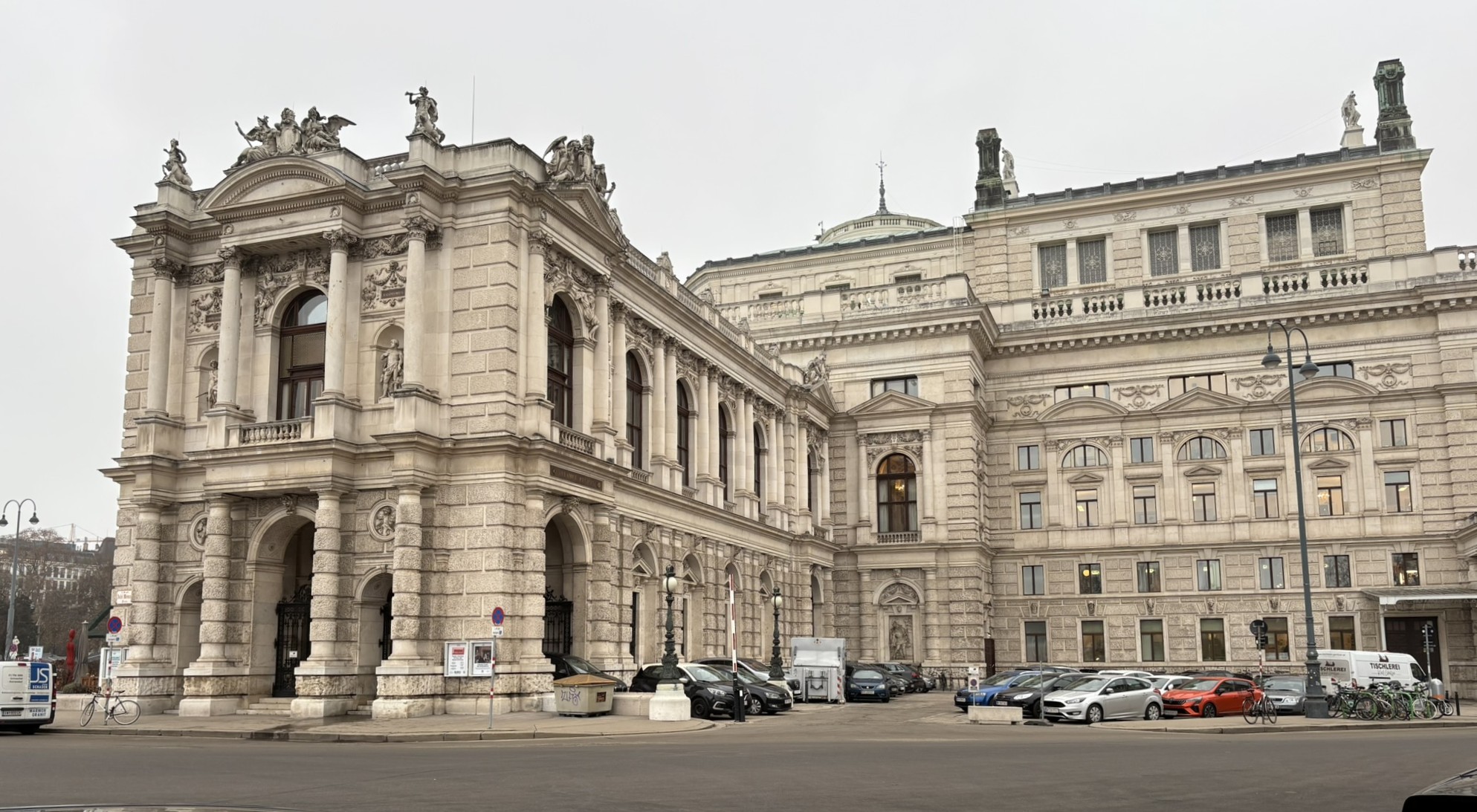
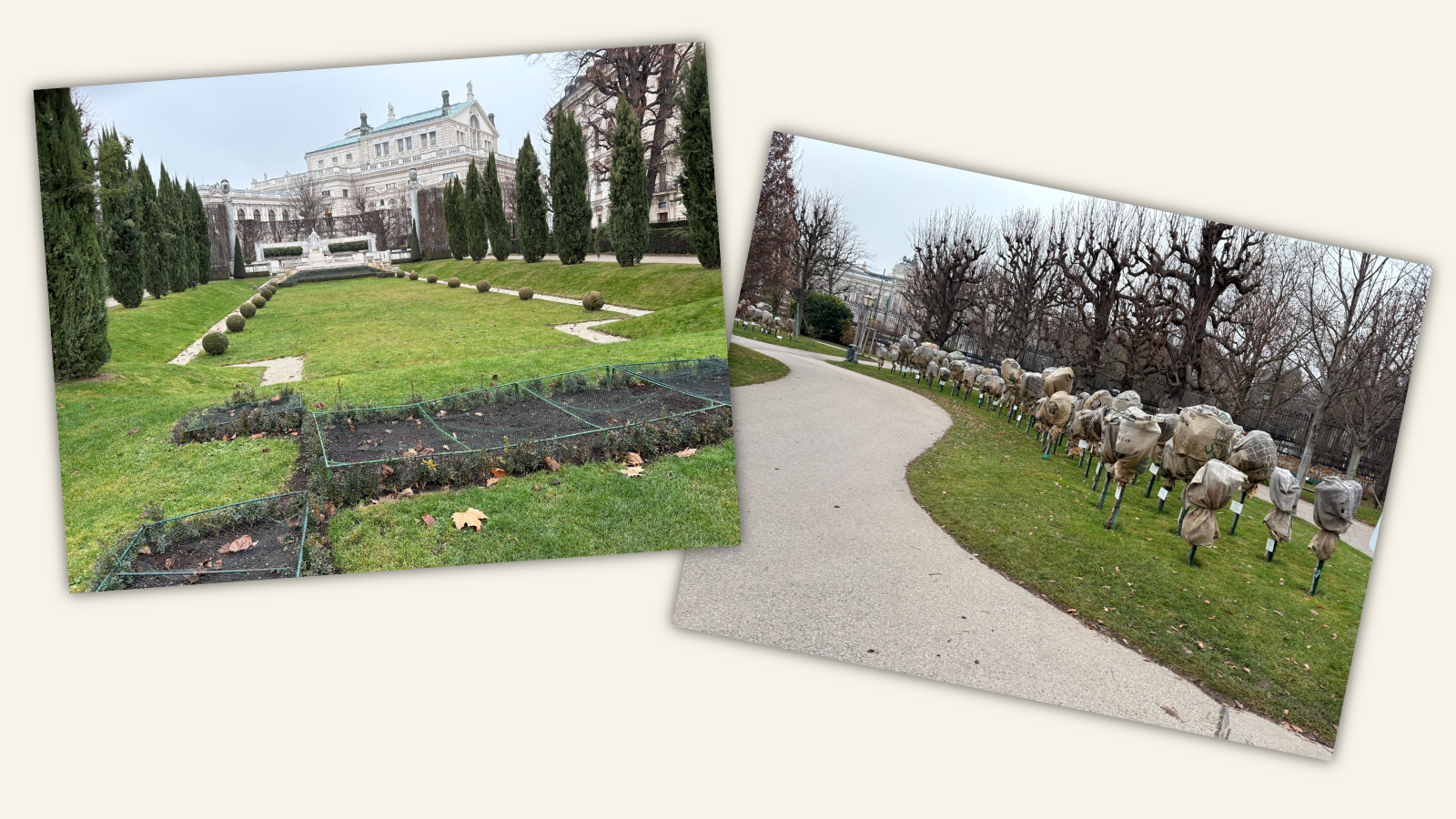
We left the motorcoach near Hofburg Palace (1881–1913) to begin for the walking portion of the tour. We passed Burggarten that was all tucked in for the winter, preparing for warmer weather. Nearby was the Federal Chancellery of Austria (1717). The building houses Congress Hall (Kongresssaal), where the Congress of Vienna was held in 1815 after the defeat of Napoleon Bonaparte, and it has served as the seat and official residence of the Austrian Federal Chancellor since 1945.
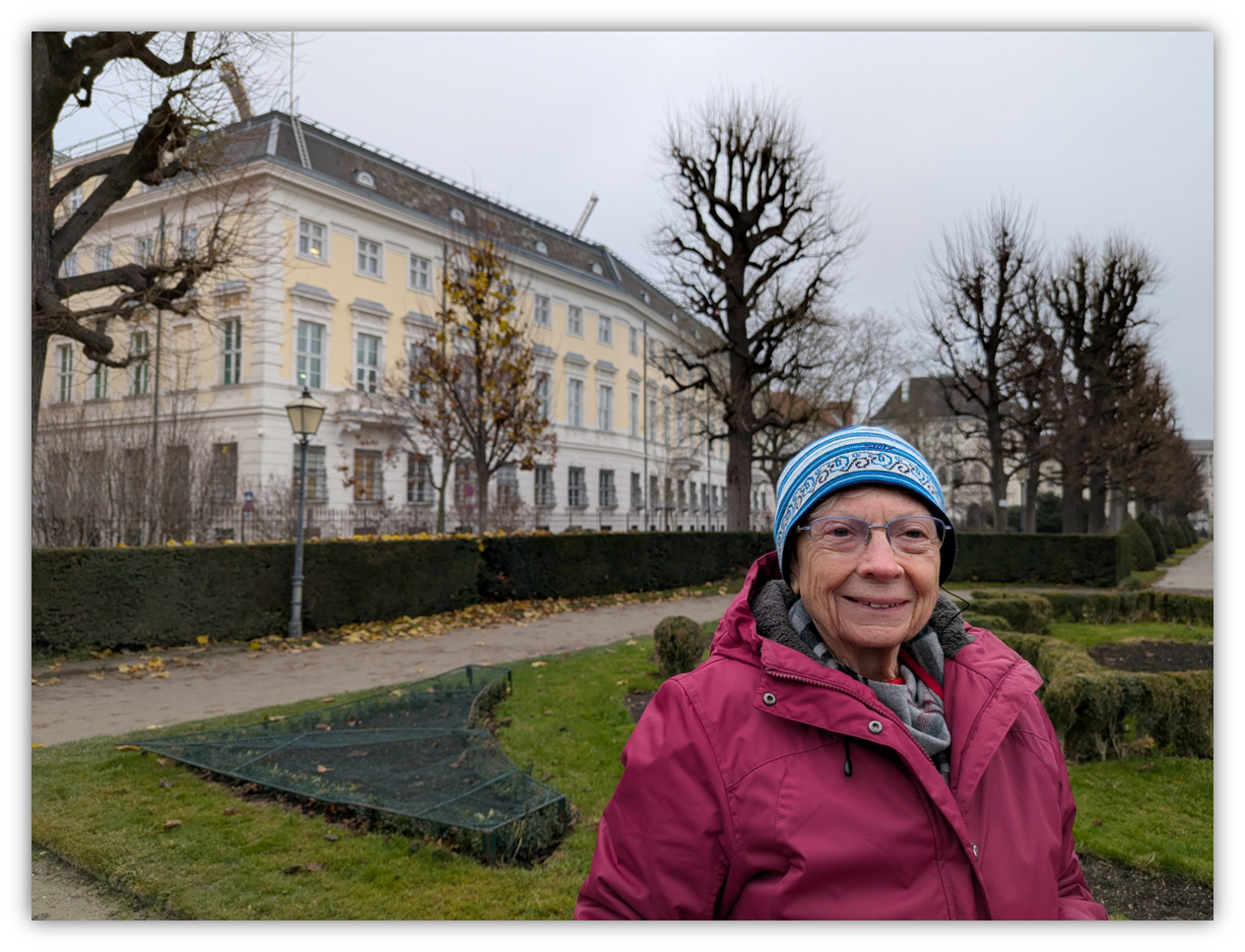
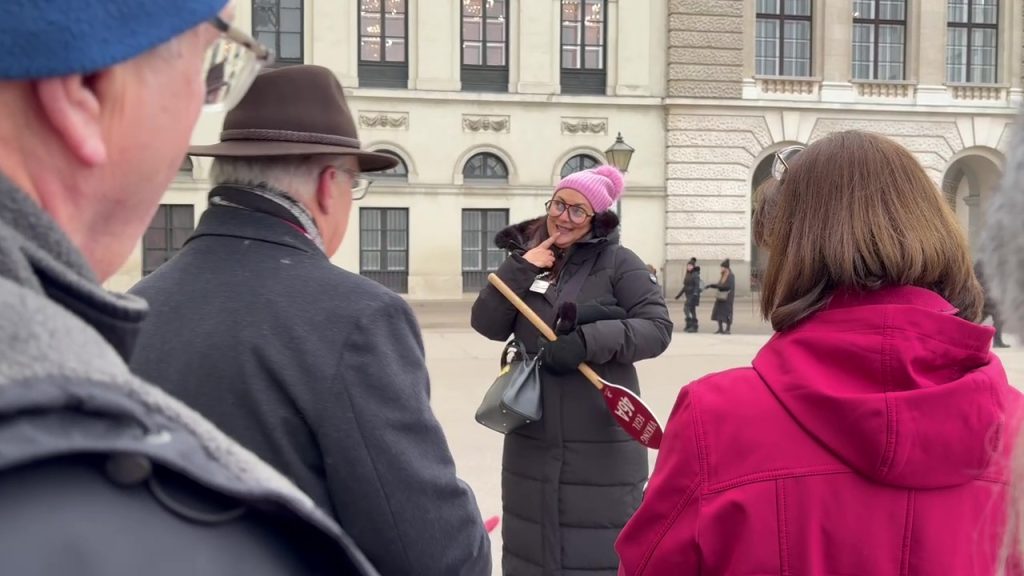
Our guide gathered our group for our walk through the Hofburg, and we were ready to go. Her energy and enthusiasm made us look forward to what was ahead.
We passed through this ornate gate into the Swiss Courtyard, one of the main passages in the Hofburg. Just inside the Swiss Gate, we entered the first domed interior space before continuing deeper into the palace. In an inner courtyard, we paused briefly to see the 1846 statue of Emperor Franz I. Outside the entrance to the Sisi Museum, our guide told us about Elisabeth, Empress of Austria — her longing for freedom, the sorrow that marked her life, and how difficult it was for her to live within the rigid expectations of the imperial court.
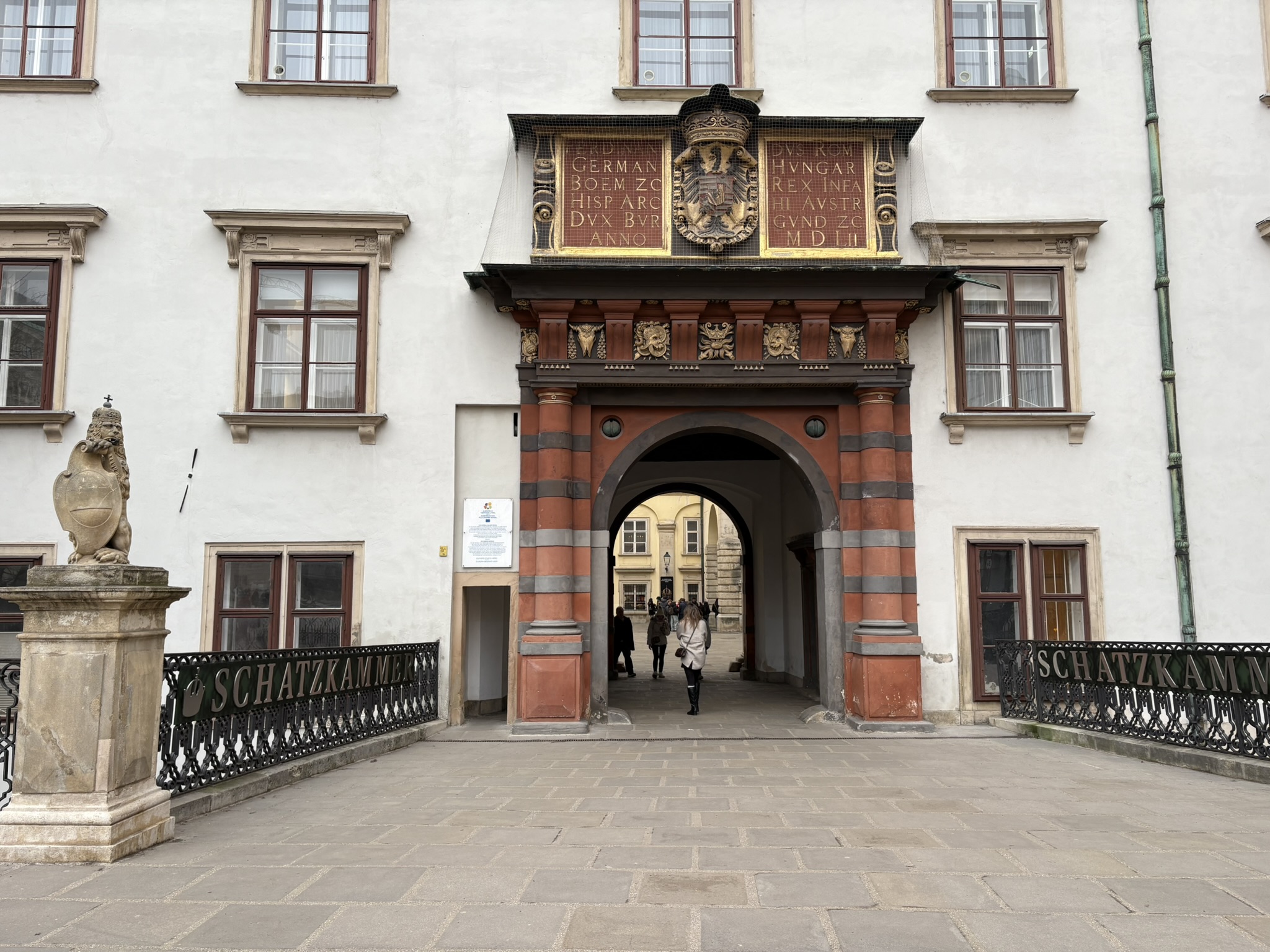
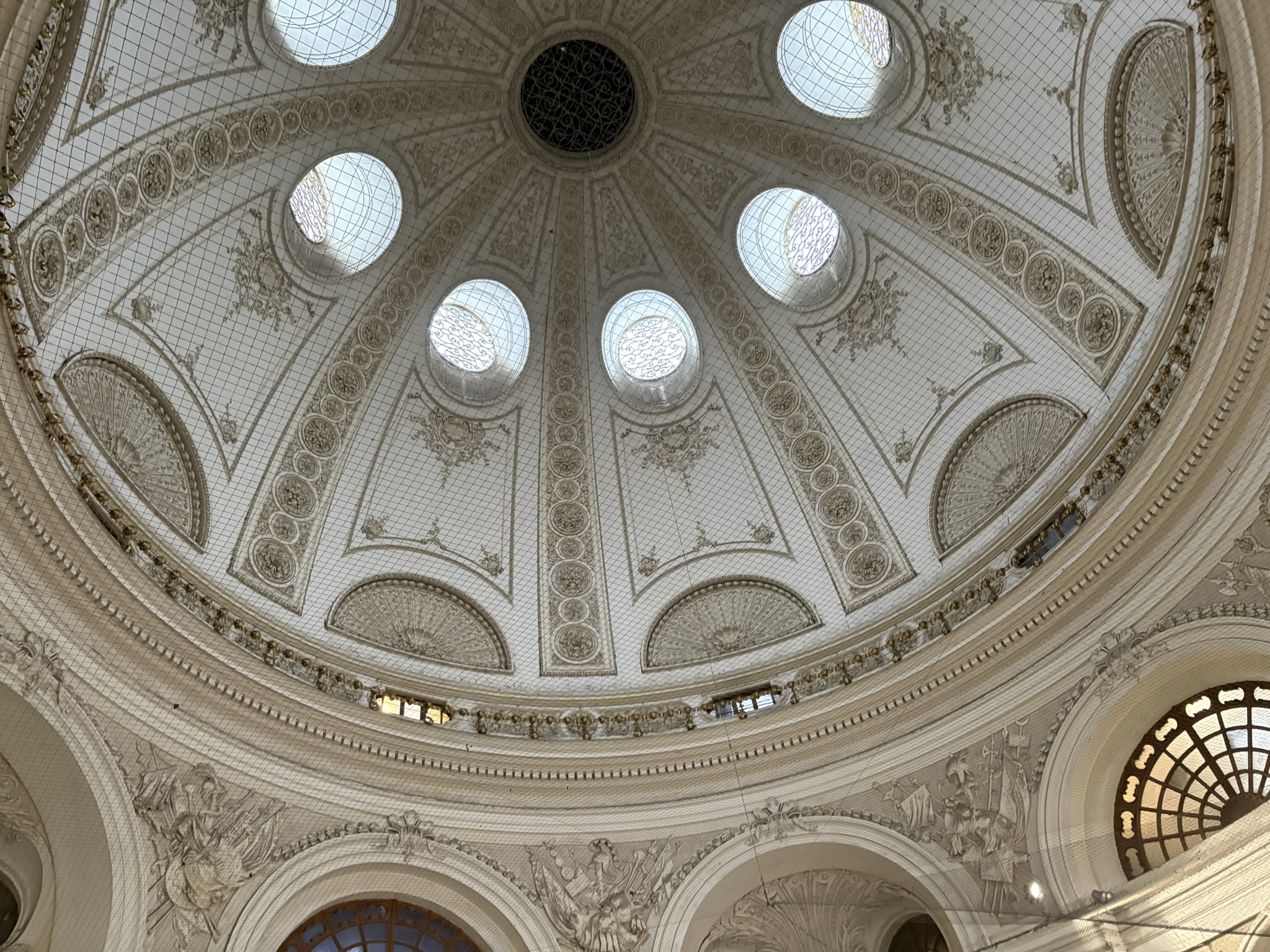
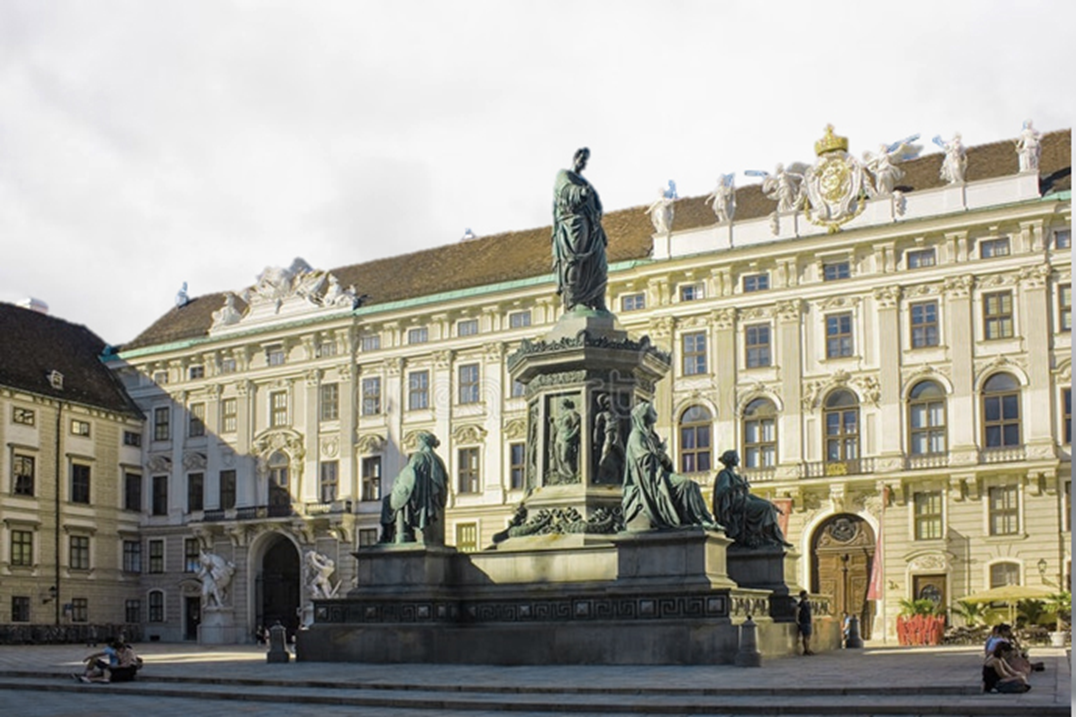
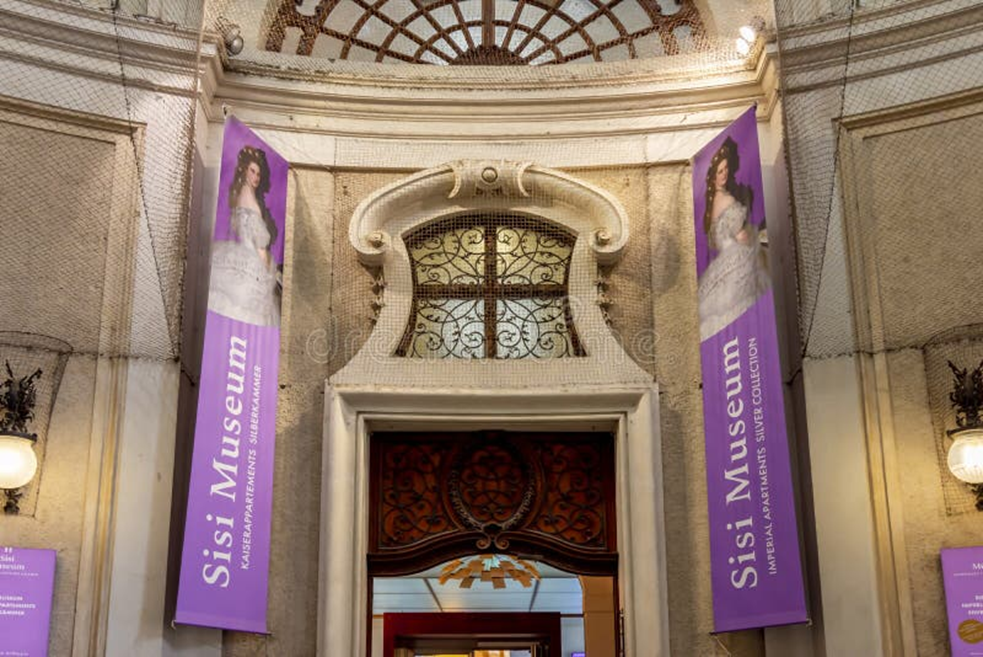
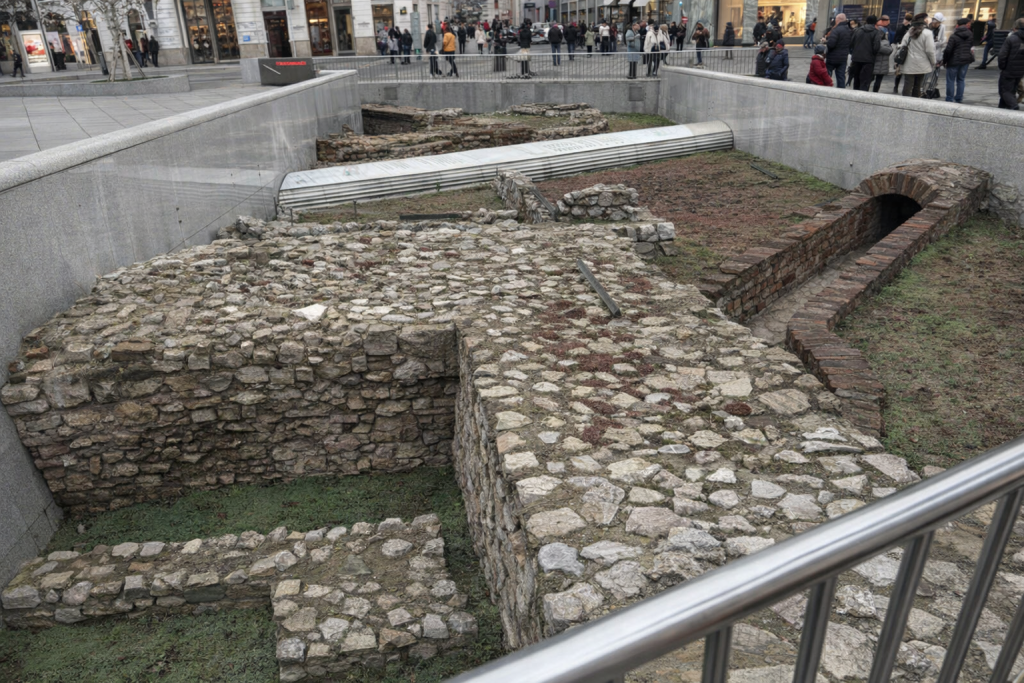
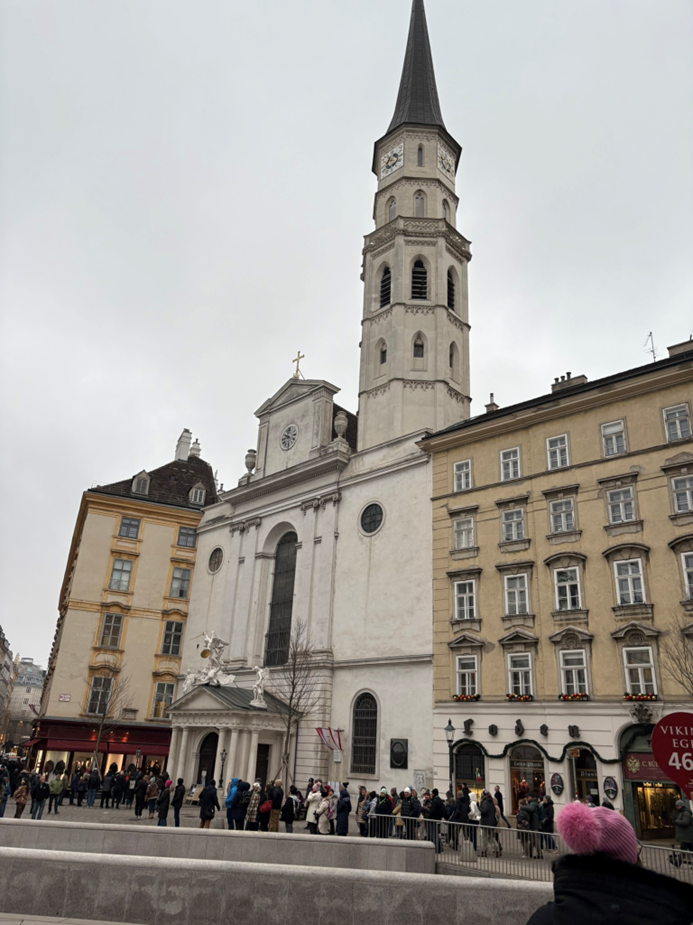
After leaving the Hofburg, we walked past the Roman ruins of the ancient military camp. The oldest remains date to the 2nd–4th centuries, and additional traces of the legionary outpost and a crossroads were uncovered here in 1990. A little farther along, our guide pointed out St. Michael’s Church, one of the oldest in Vienna. Built in the 13th century, it’s known for its crypt, where many of the burials remain remarkably well‑preserved.
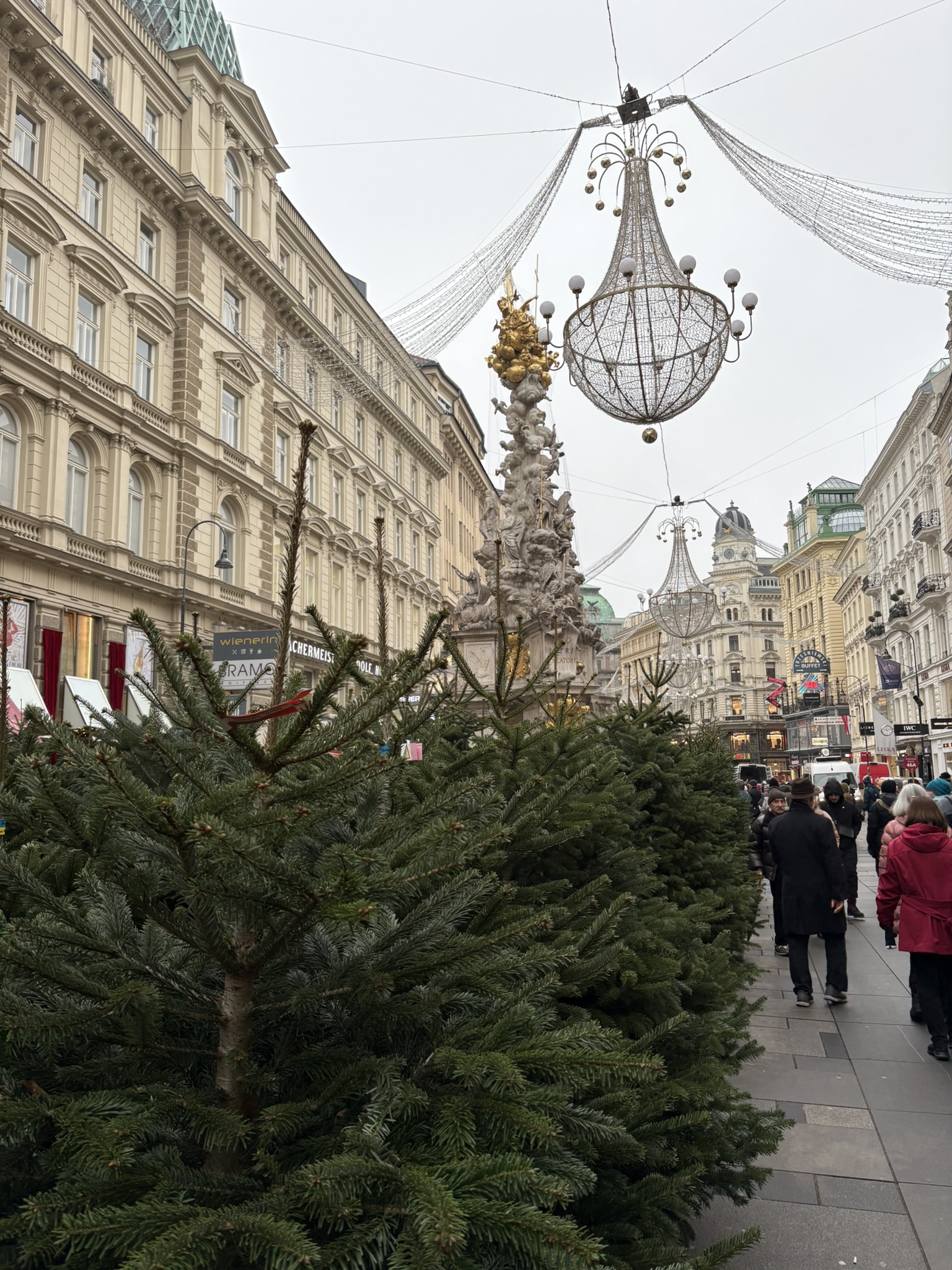
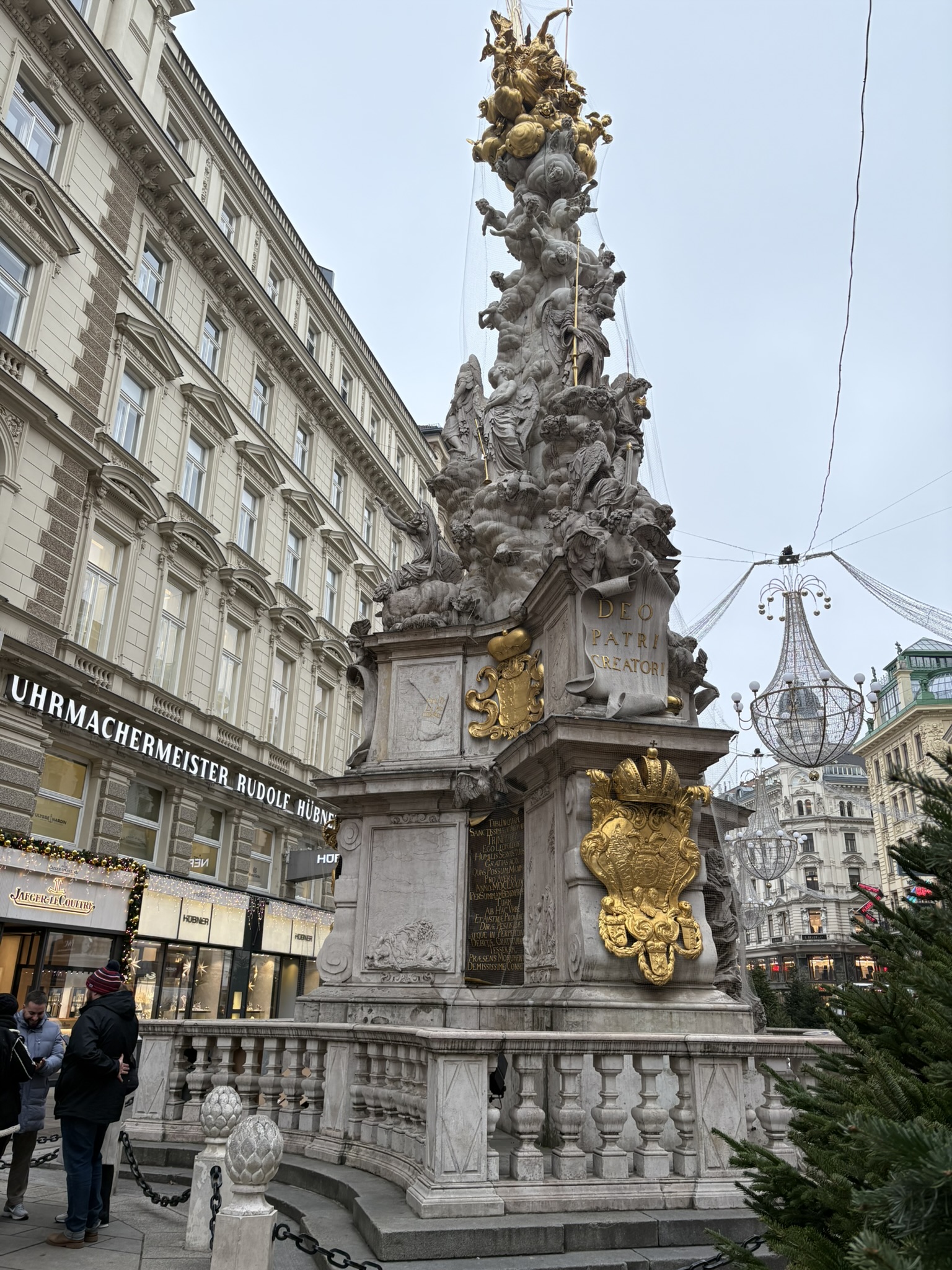
Holiday spirit came alive as we walked down the Graben shopping street that known for its sparkling, elaborate overhead Christmas decorations, including large, wire-frame chandeliers. Various stalls, including those selling Christmas trees, line the street, offering a traditional market experience. The Plague Column, while not festive is also located on the Graben shopping street and commemorates the end of the Great Plague epidemic of 1679.
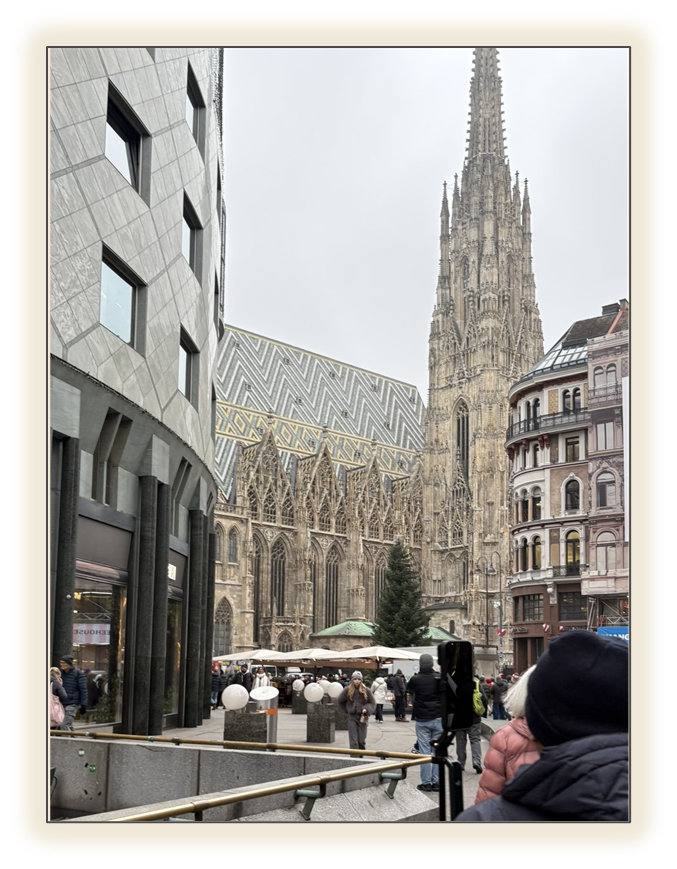
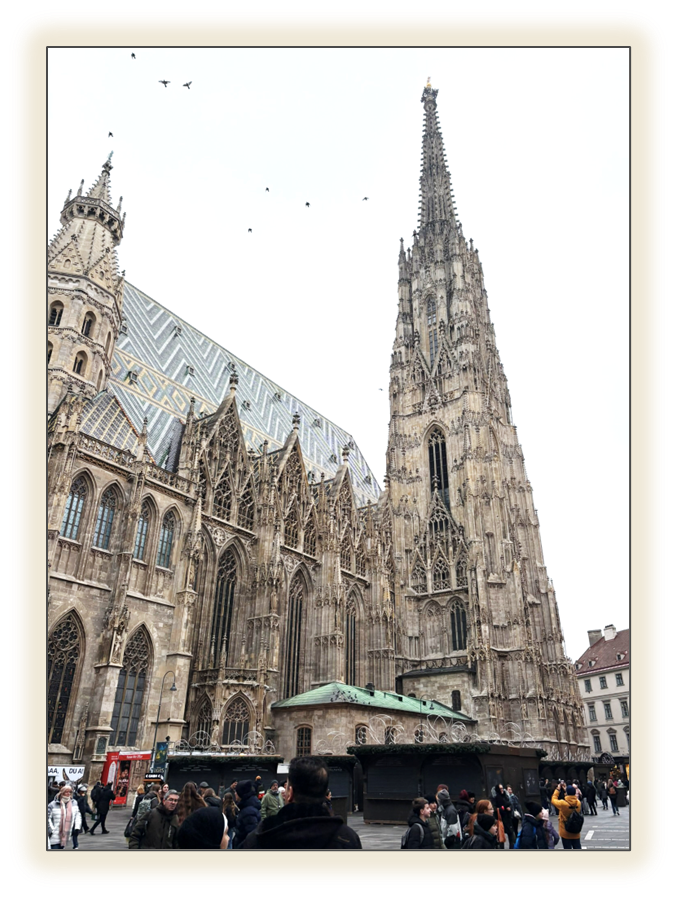
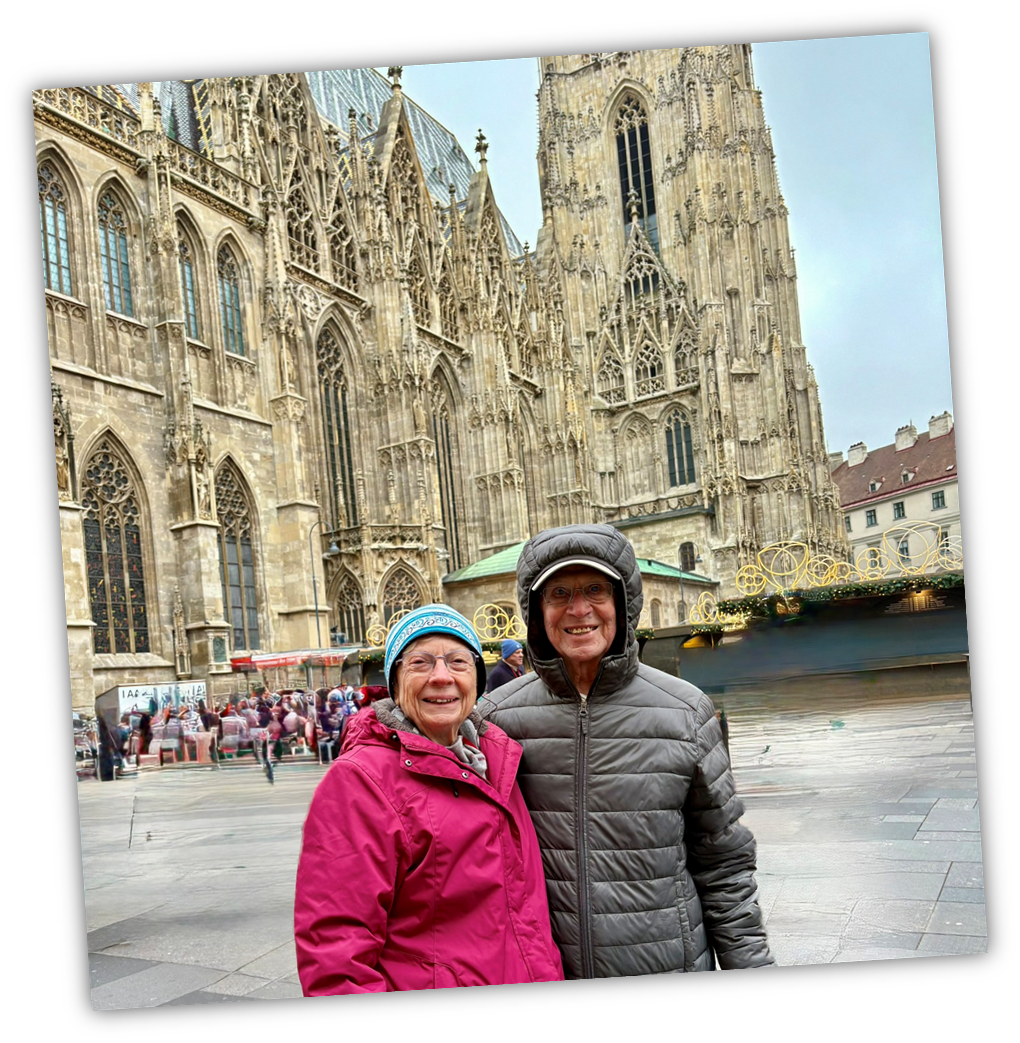
As we continued, we could see St. Stephen’s Cathedral (1137). The South Tower, visible in the photo, rises about 450 feet and is the tallest church tower in Austria. Below it, a Christmas market filled the square, adding color and activity to the scene. As we drew nearer, the cathedral’s height and detailed stonework were even more striking.
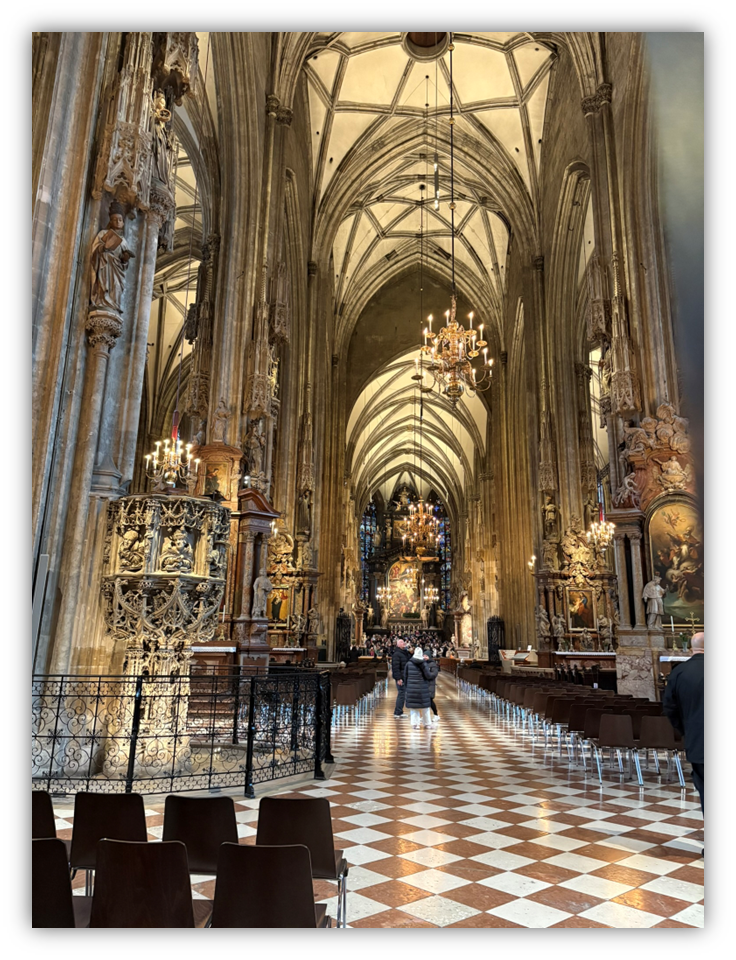
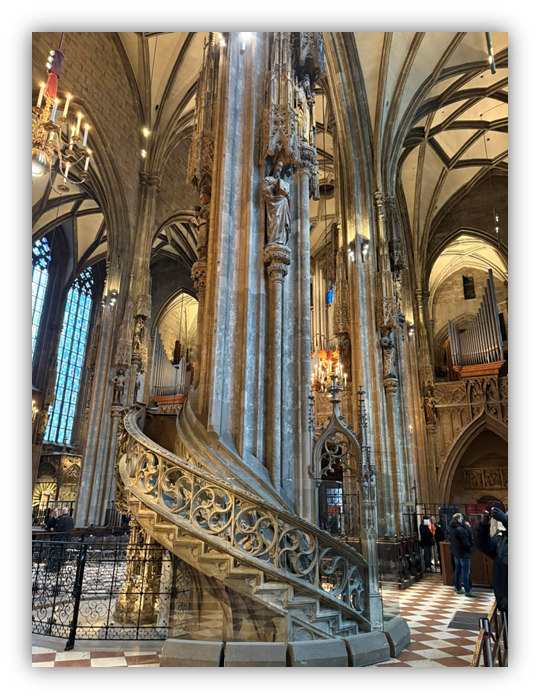
The nave inside the cathedral was beautiful. The tall 14th‑century arches and long aisle created a sense of vastness and grandeur. The stone pulpit, carved around 1510 from a single block of limestone, is one of the cathedral’s treasures.
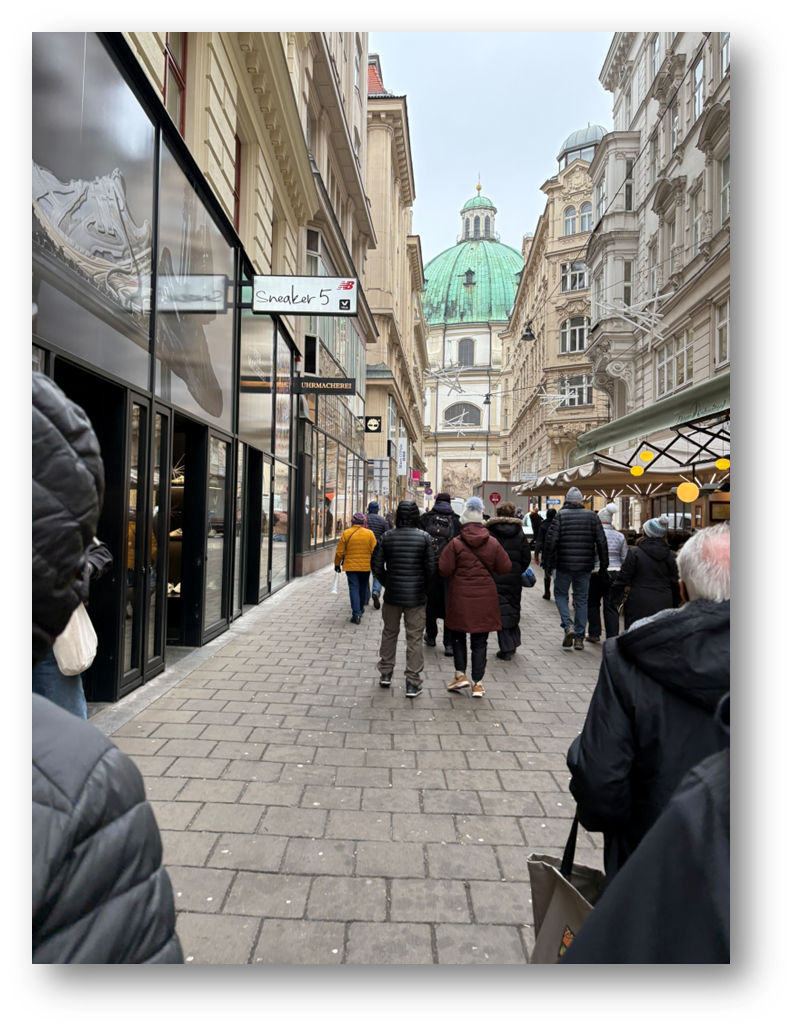
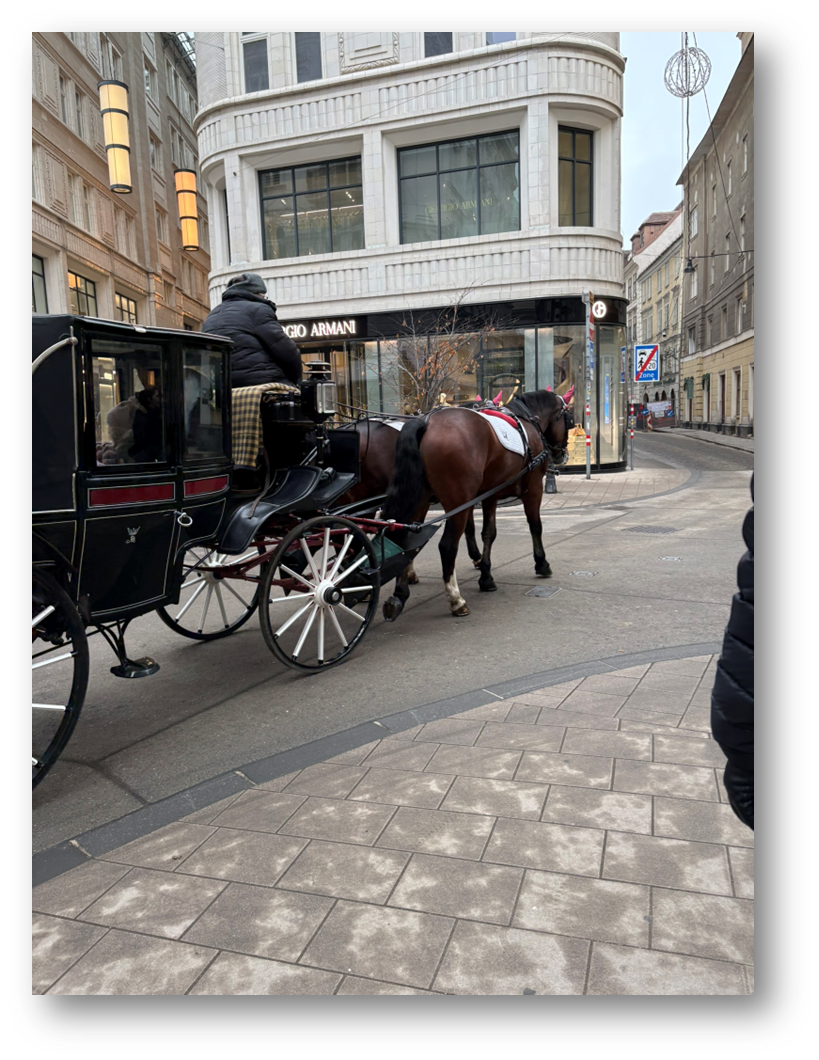
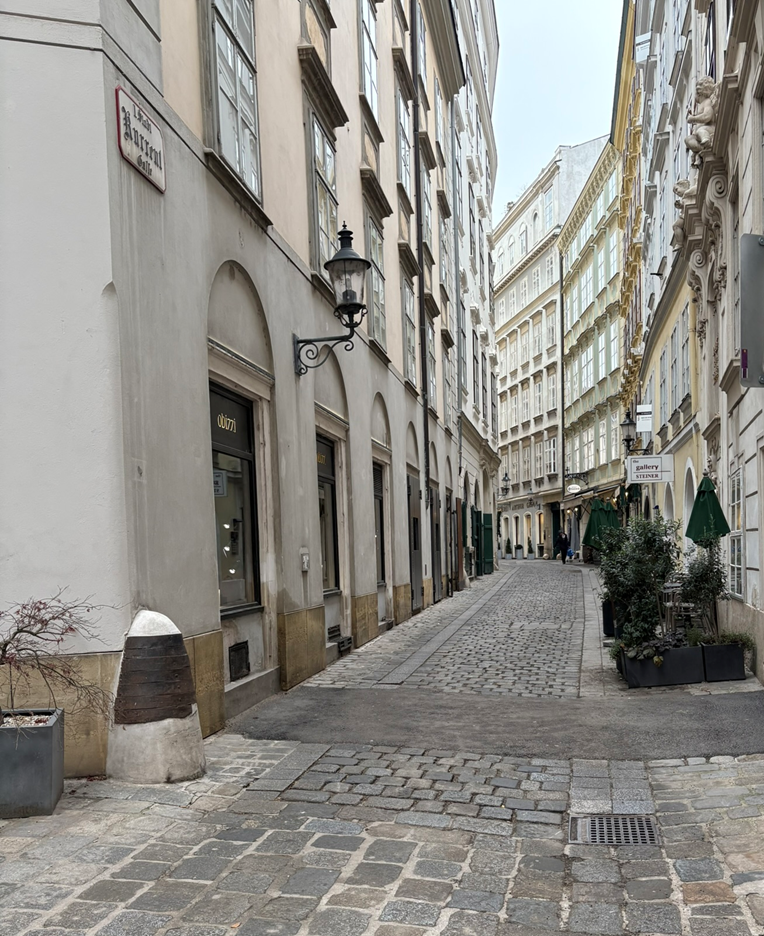
After our visit to the cathedral, we were on our own until it was time to meet the bus back to the ship. We browsed the Christmas market, pausing for a warm drink before setting out to explore a bit more of Vienna. We strolled along Goldschmiedgasse, a narrow street lined with shops and cafés. St. Peter’s Church was visible at the end of the street, and upscale storefronts continued along both sides. Horse‑drawn carriages clip‑clopped past us. We would have enjoyed a ride, but we didn’t know where to catch one, and our time was limited. There was simply too much to do and not enough time. We spent the rest of our free time wandering the quieter streets around St. Stephen’s — the ones away from the crowds were the ones we enjoyed most. All too soon, it was time to return to the ship.
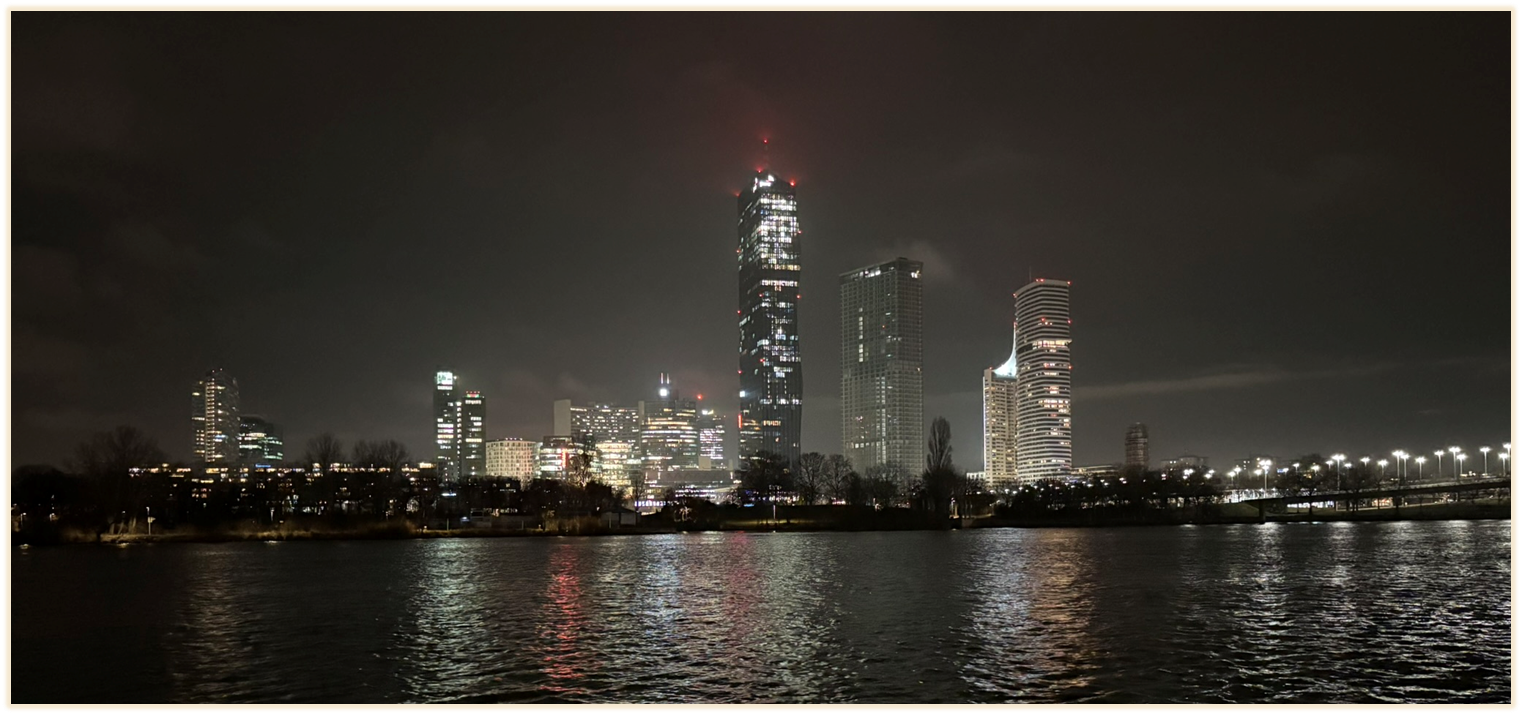
After returning to the ship and a late lunch, we decided to skip the shuttle back to town and simply relax. A lazy afternoon was exactly what we needed. After dinner, we were content to enjoy the lights of Vienna from our window. It’s a beautiful city — more to come the next day.

Day 2: A Day on Our Own in Vienna
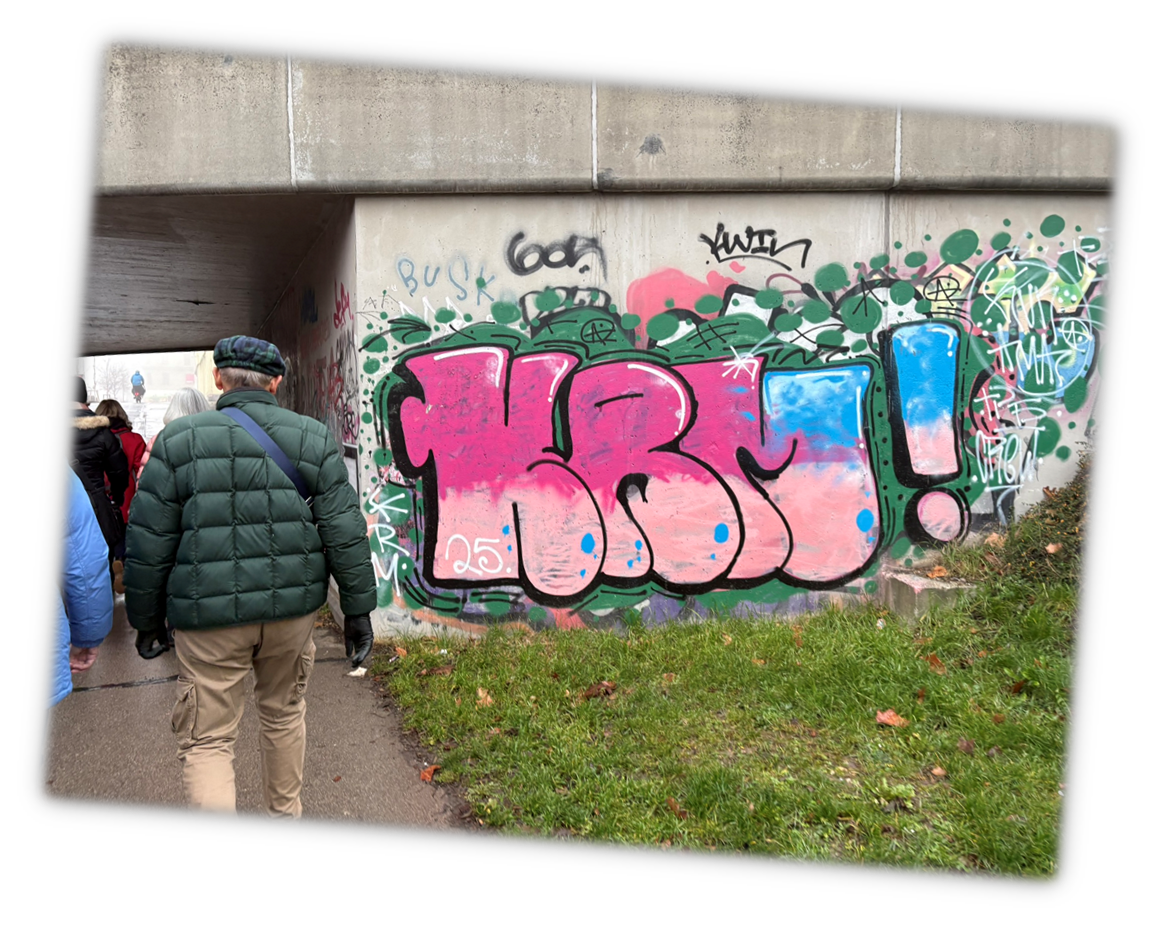
The next morning, with a free day ahead, we had to decide how to get into Vienna’s Old Town. A shuttle was available, but we chose to be a little adventurous and take the subway instead — mostly to prove we could. Getting to the subway wasn’t difficult. Marianne, our program director, led a group of us along a path with graffiti-covered walls toward the station. She showed us how to buy tickets and guided us through the turnstile — then we were on our own.
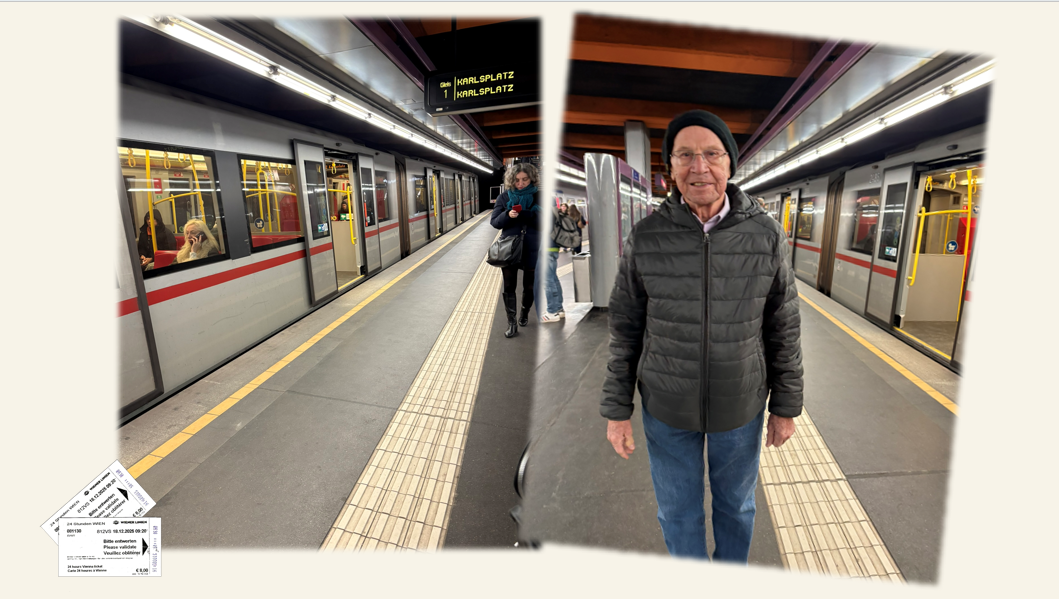
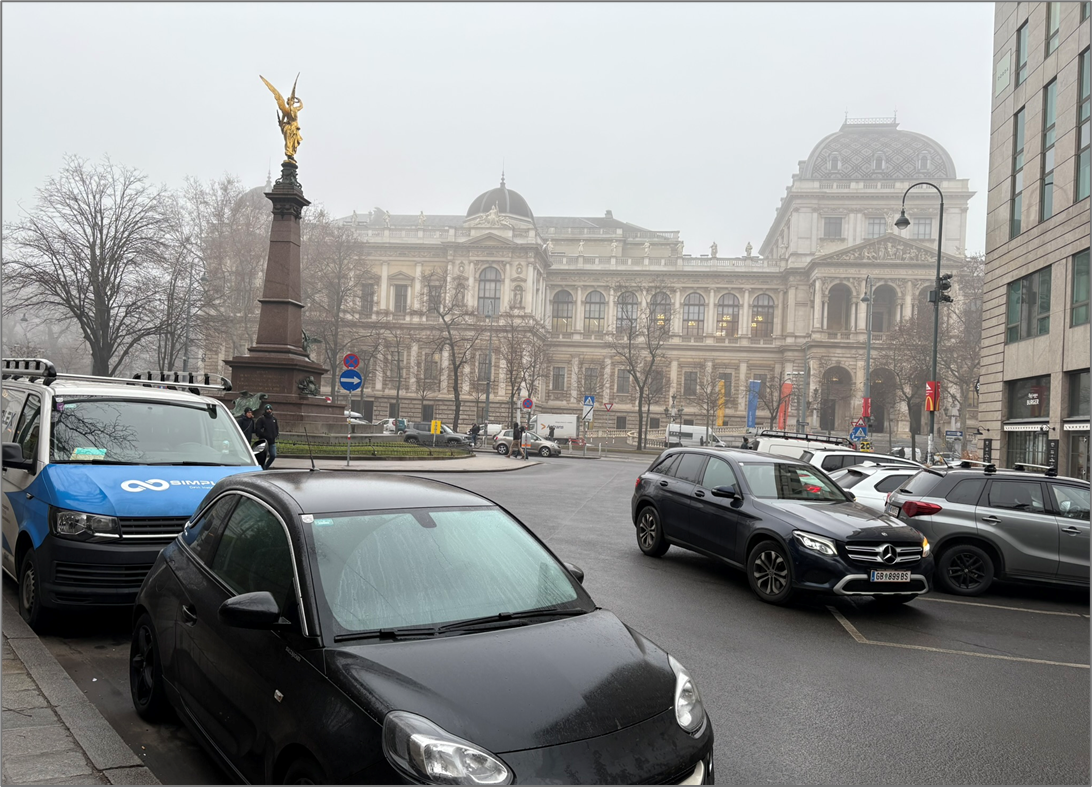
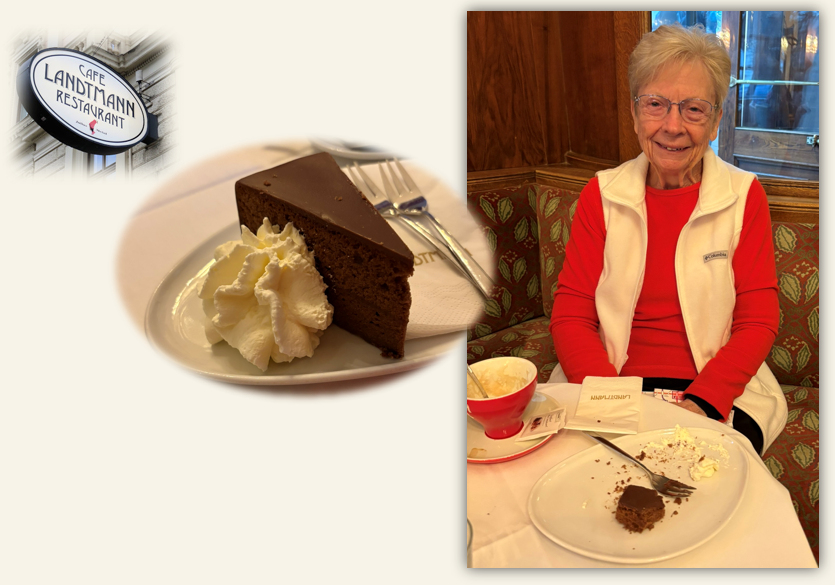
After we exited the subway at Stephansplatz, we walked along the busy, foggy Ringstrasse toward the Palace of Justice — our first real glimpse of Vienna on our own. The Christmas market wasn’t open when we arrived, so we looked for a warm spot for coffee. We ended up at Café Landtmann, enjoying Sachertorte and a Melange. Not the Sacher Hotel, but still a Vienna classic.
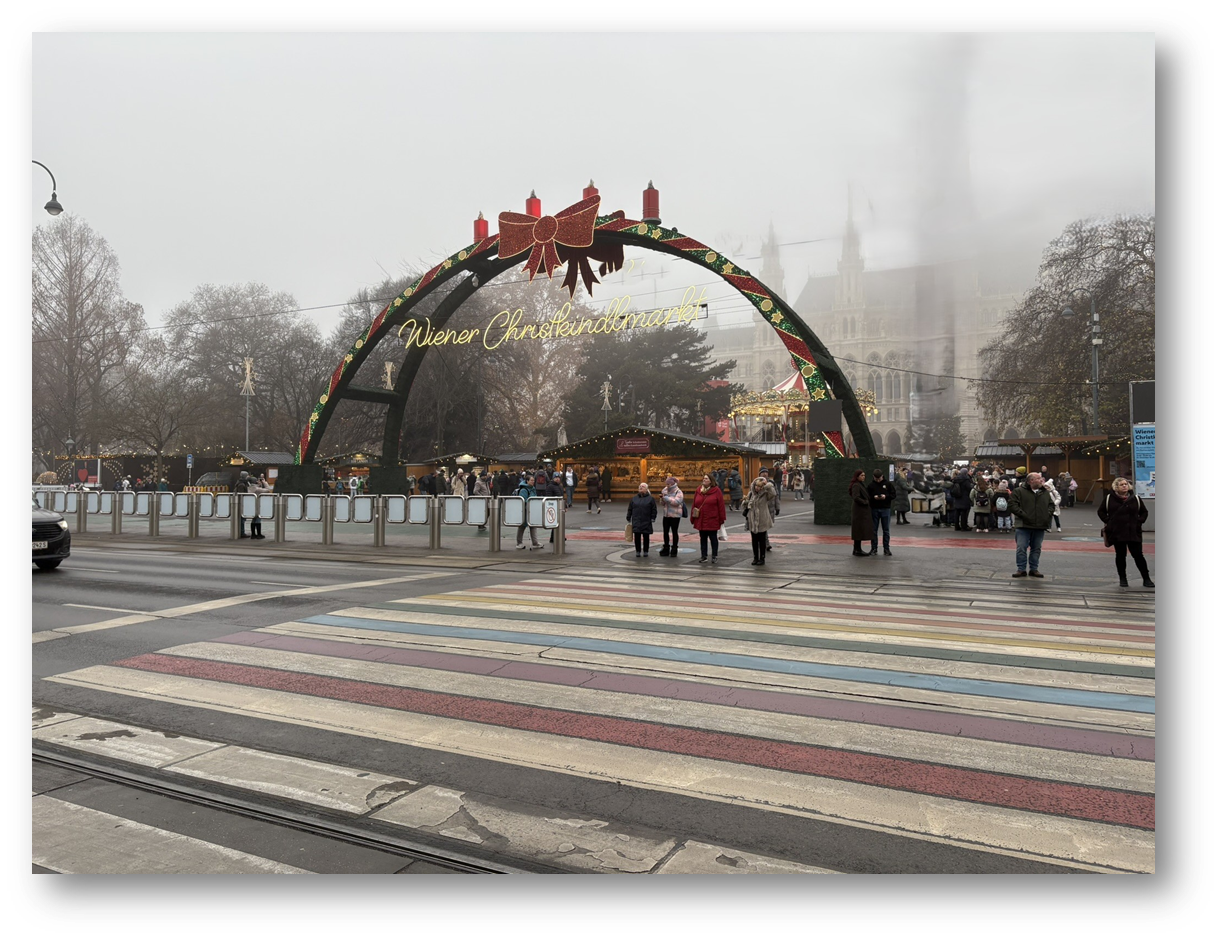
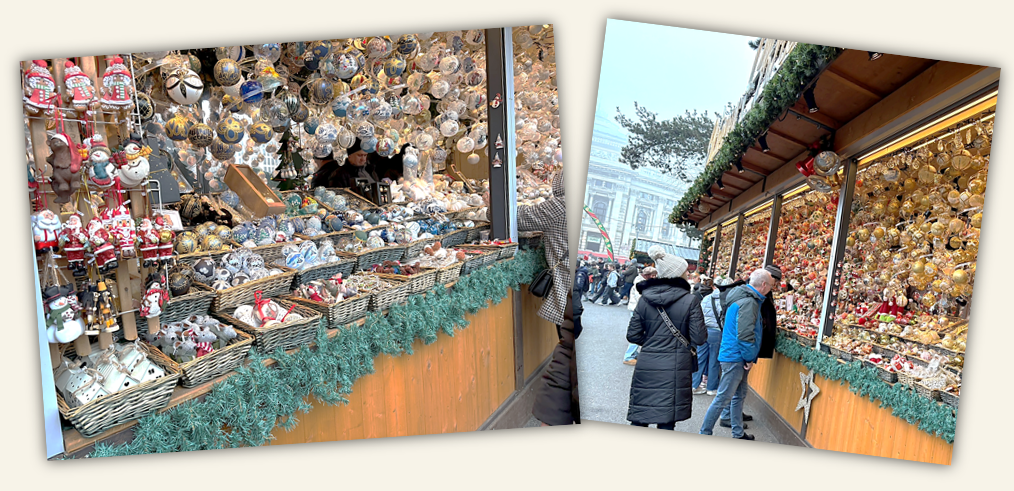
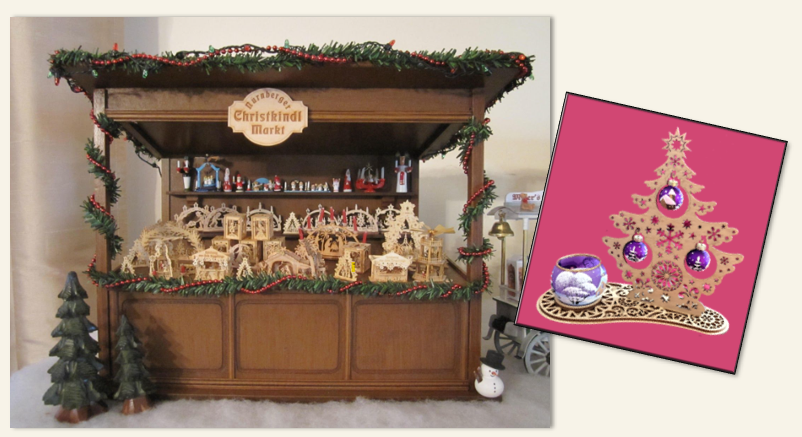
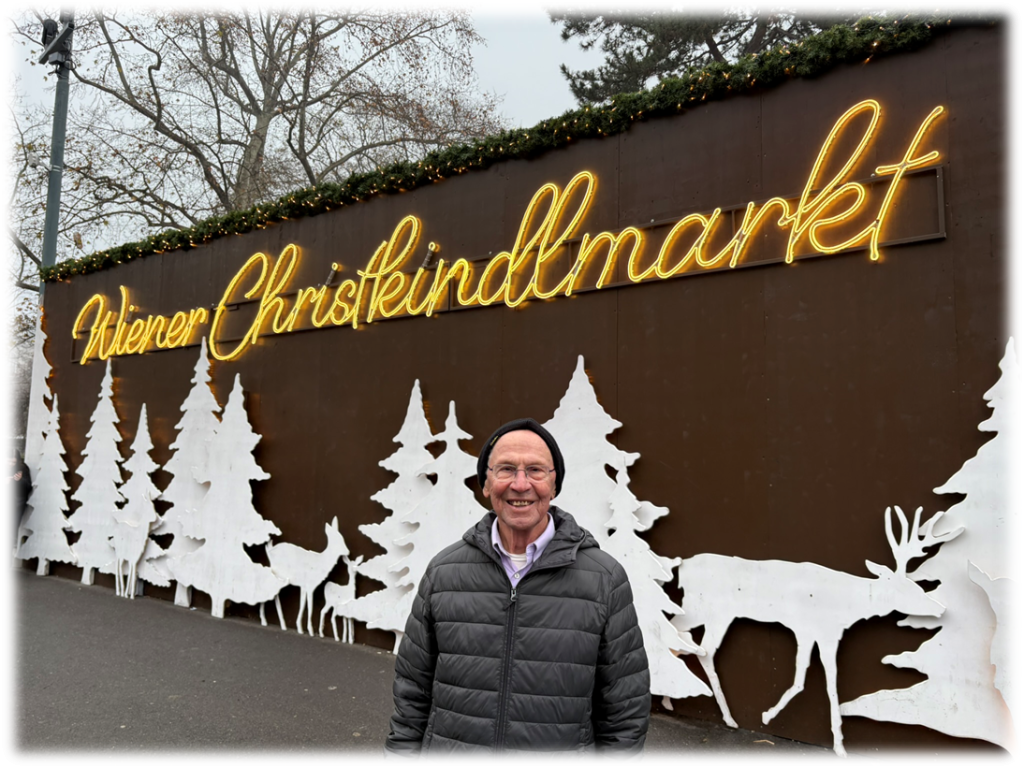
Then it was the Christmas market. Even with the fog, the entrance felt lively and welcoming — and this one quickly became our favorite. The sleepy market we had walked through early yesterday was alive and bustling today. There were stands with food and others with mulled wine, and ornaments of every kind imaginable. One stall had wooden ornaments, and one of our very few souvenirs was purchased there.
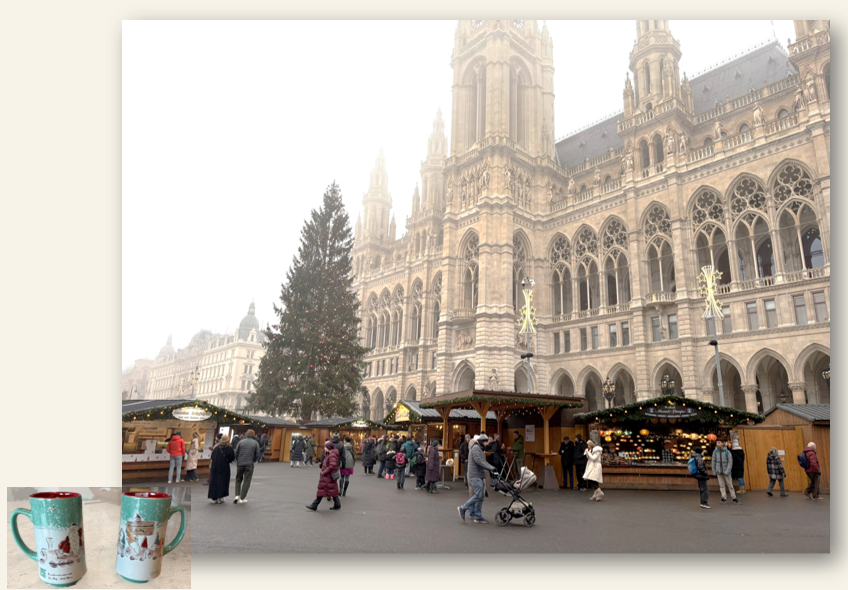
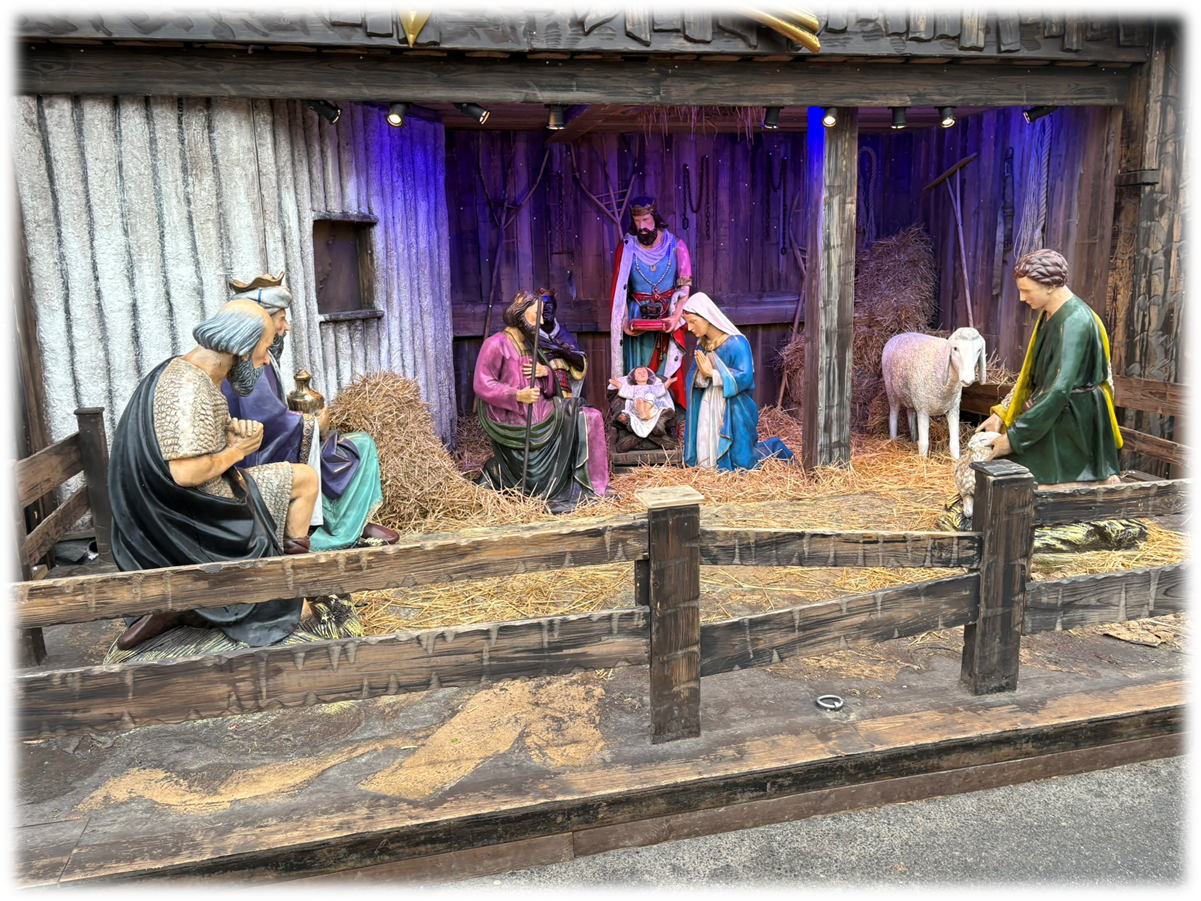
A nativity scene reminded everyone it wasn’t just about mulled wine. The skating area was the most impressive rink we had ever seen. And there was a bench for Gary to wait while Dorothy wandered through the stalls and enjoyed a hot chocolate — which made him happy.
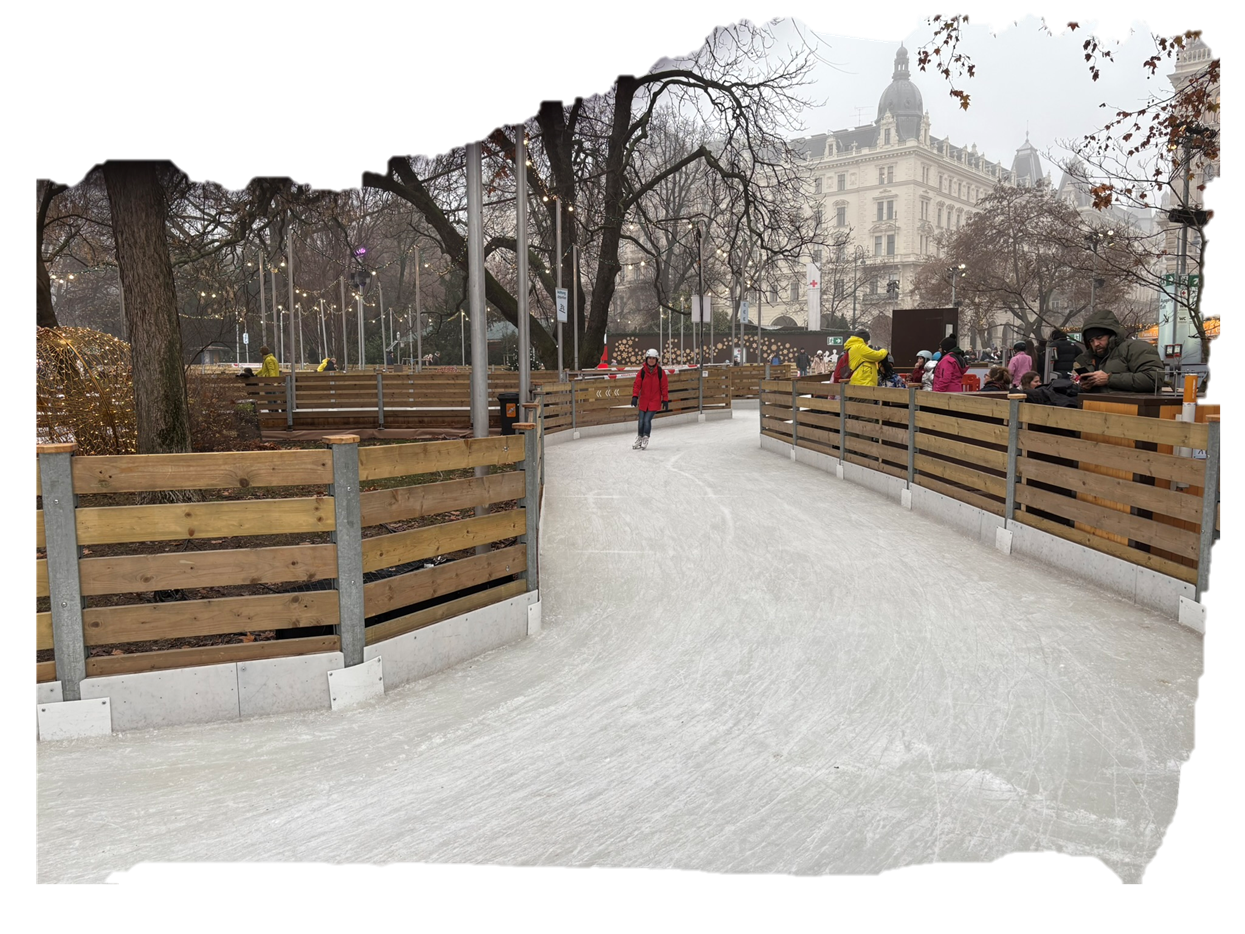
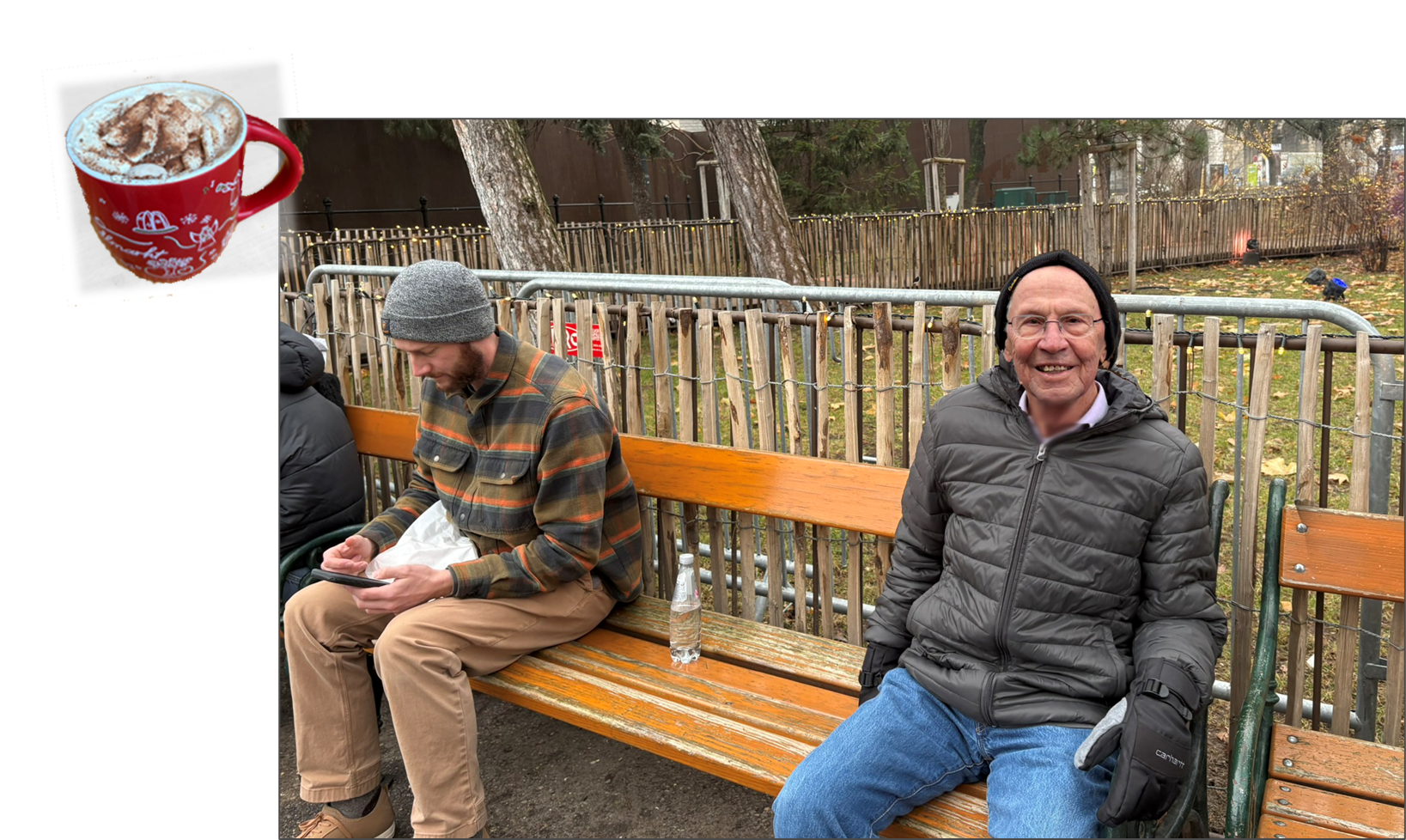
We enjoyed the Vienna Christmas market. The multitude of ornaments, the busy skating area, and the overall feeling of excitement made it a standout. The hot chocolate was good, too.
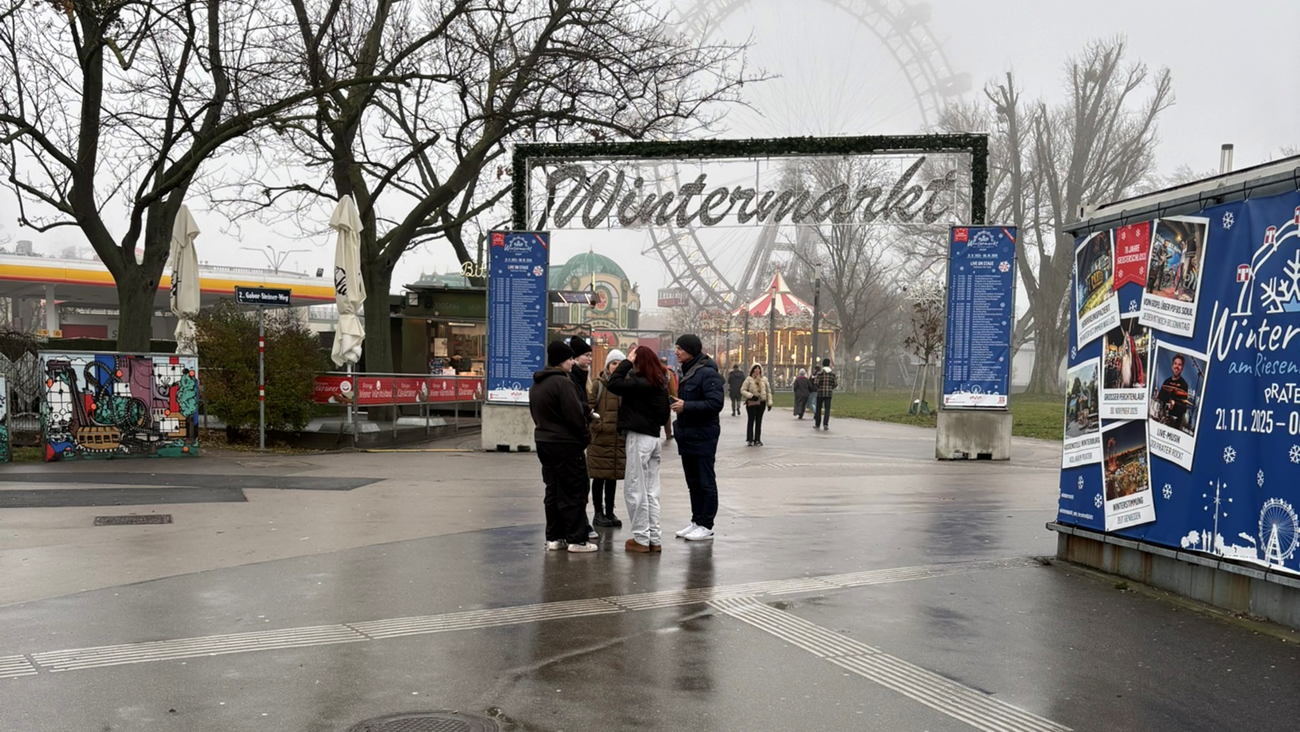
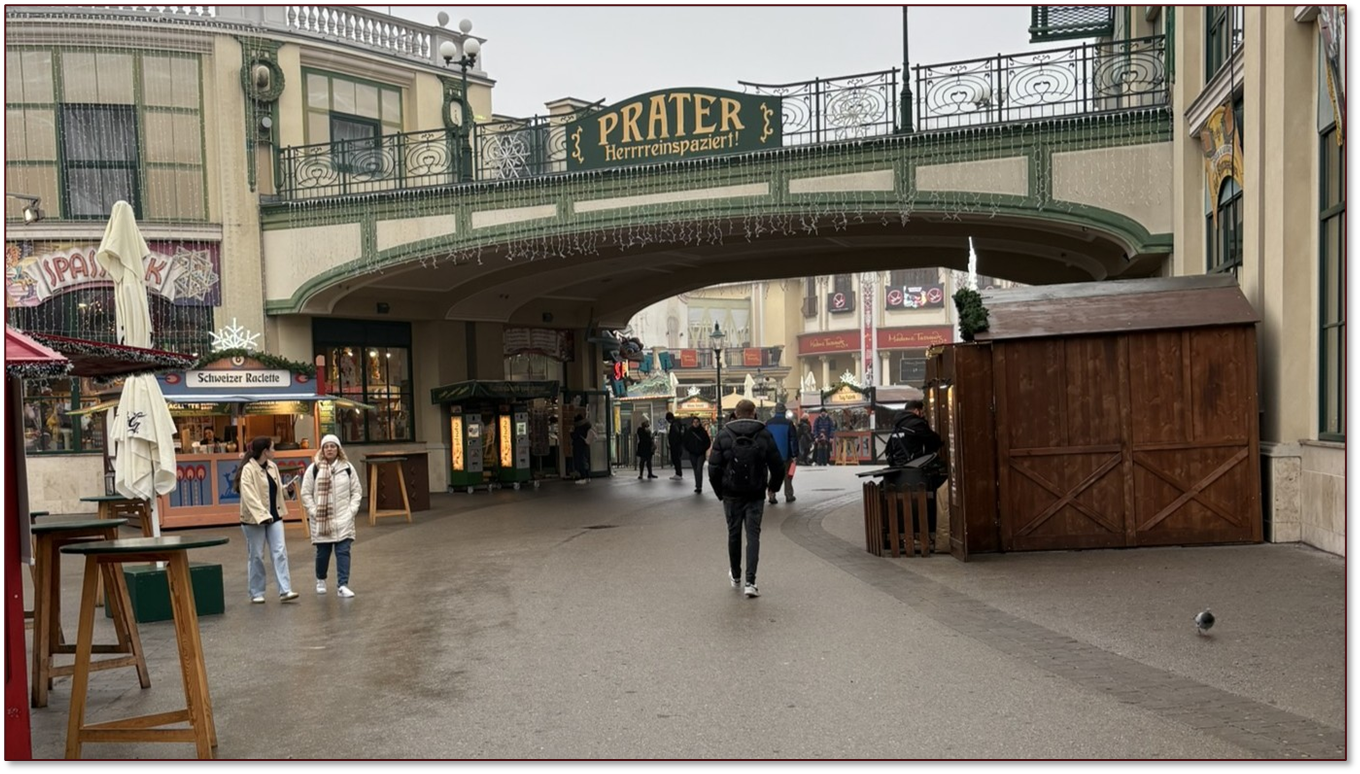
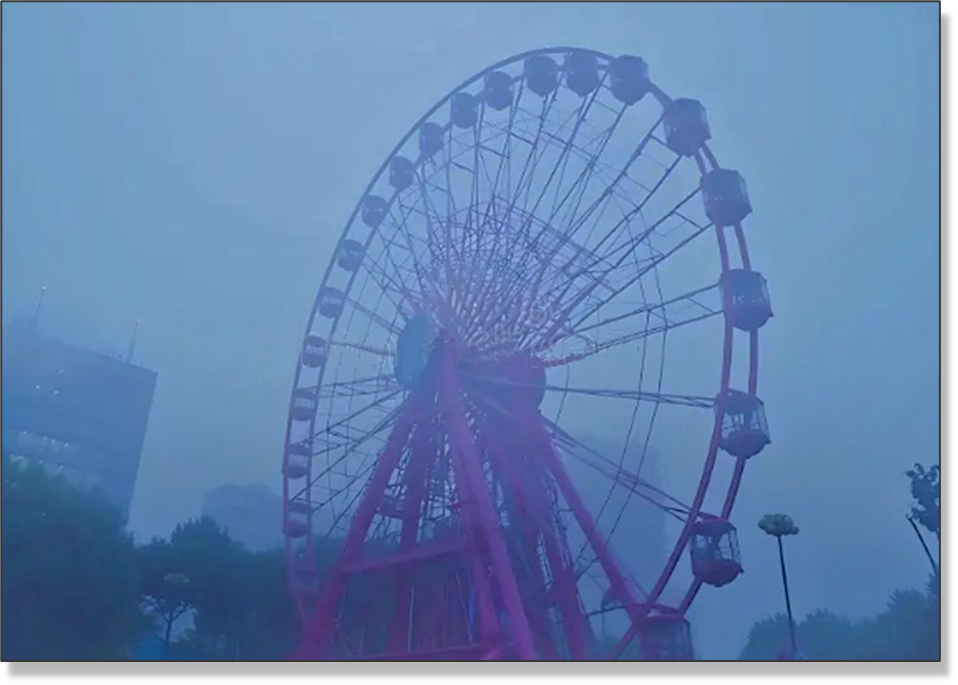
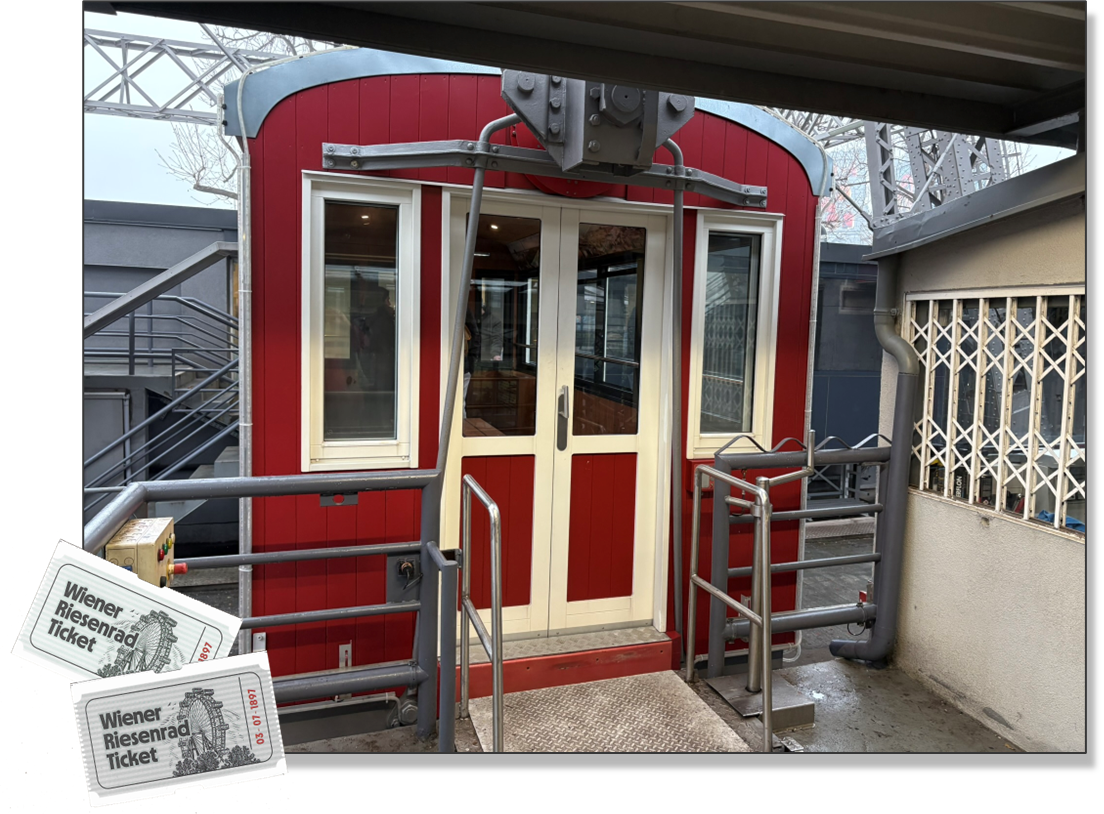
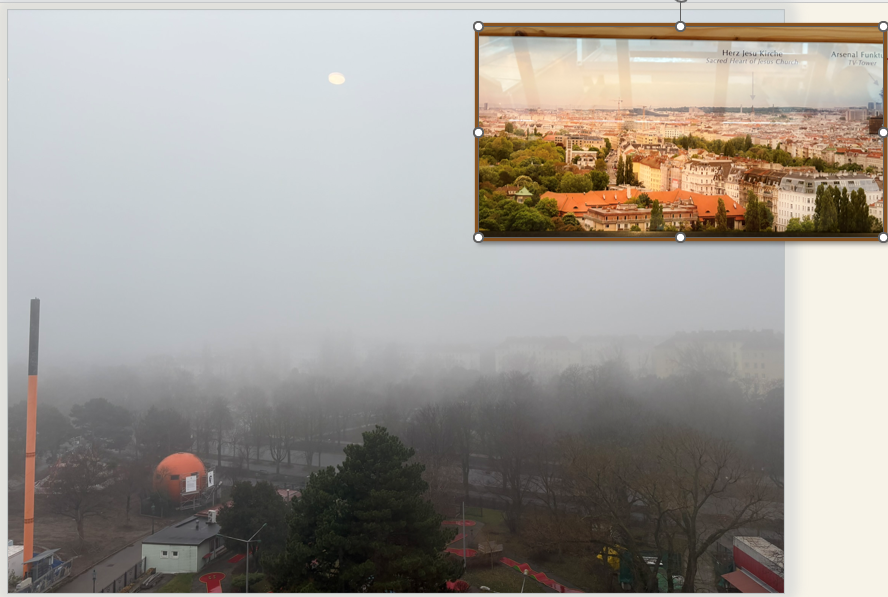
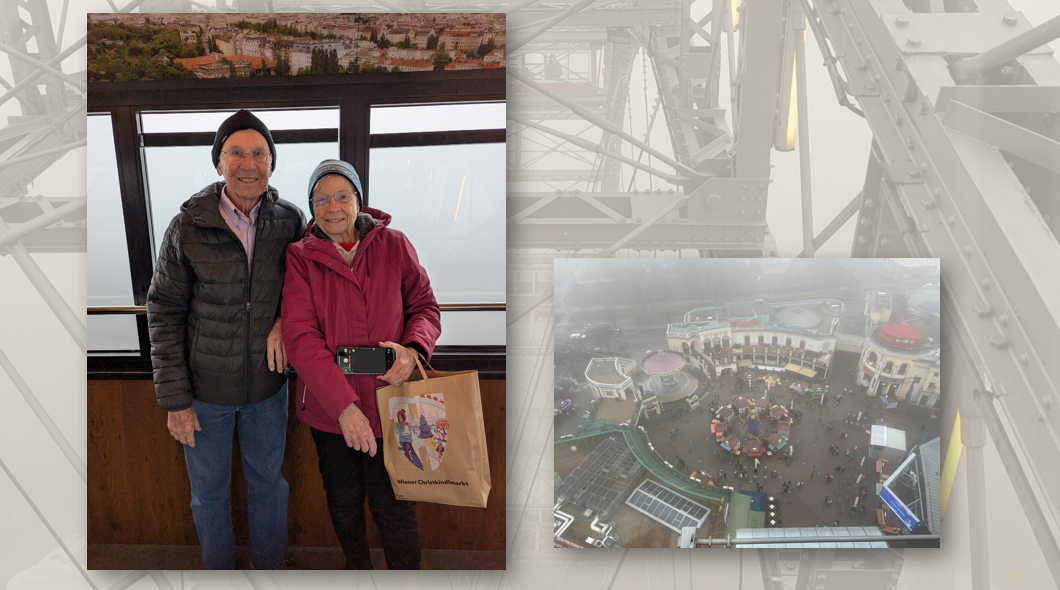
After leaving the market, we made our way back to the subway and then on to Prater Park — all without getting lost. The winter market there offered only food stalls, so we continued on. It was just a few steps to the entrance of the Prater amusement park, our intended destination. We had come to ride the Wiener Riesenrad — something Dorothy had been wanting to do for a long time. It was really foggy, but we rode anyway. First opened in 1897, the wheel survived war damage and near‑demolition, and it remains one of the oldest operating Ferris wheels in the world. With tickets in hand, we loaded into the large cabin that would take us up on the ride. Our view was limited, and about all we could see was the amusement park below us. Above the windows, a picture showed what we might have seen on a clear day. The fifteen‑minute ride went quickly. Coming down, we could see the amusement park again, surprisingly busy for such a cold, damp day.
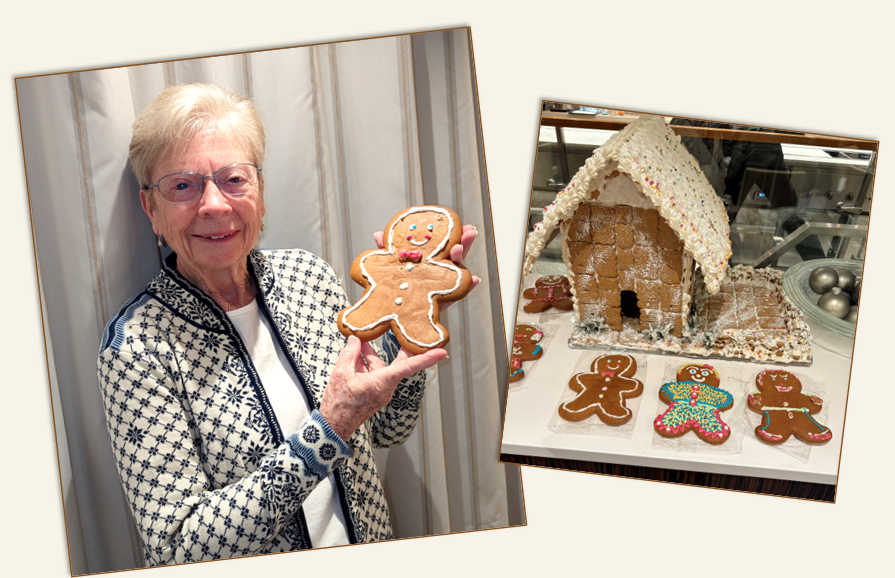
The trip back to the Viking Egil was uneventful. That afternoon, Dorothy attended a gingerbread‑man decorating event, and her gingerbread man ended up fully iced and ready for his close‑up. He was carried back to the cabin for safekeeping.
That evening we were sailing toward Budapest. The day in Vienna had been filled with adventure, a long‑awaited thrill, and a bit of creativity. It had been a great day.