Whittenberg
Whittenberg was a pretty town with lots of history. It is where Martin Luther lived and worked. Information about his part in the Protestant Reformation was the focus of our tour there. We enjoyed some time there before returning to our ship for an afternoon of sailing.
Later that day, we docked in Torgau for the night. Our tour director took us into town for an evening stroll. His knowledge and presentation were impressive. The streets were quiet, and our group had the town to ourselves. It was nice to be away from the crowds for a while.
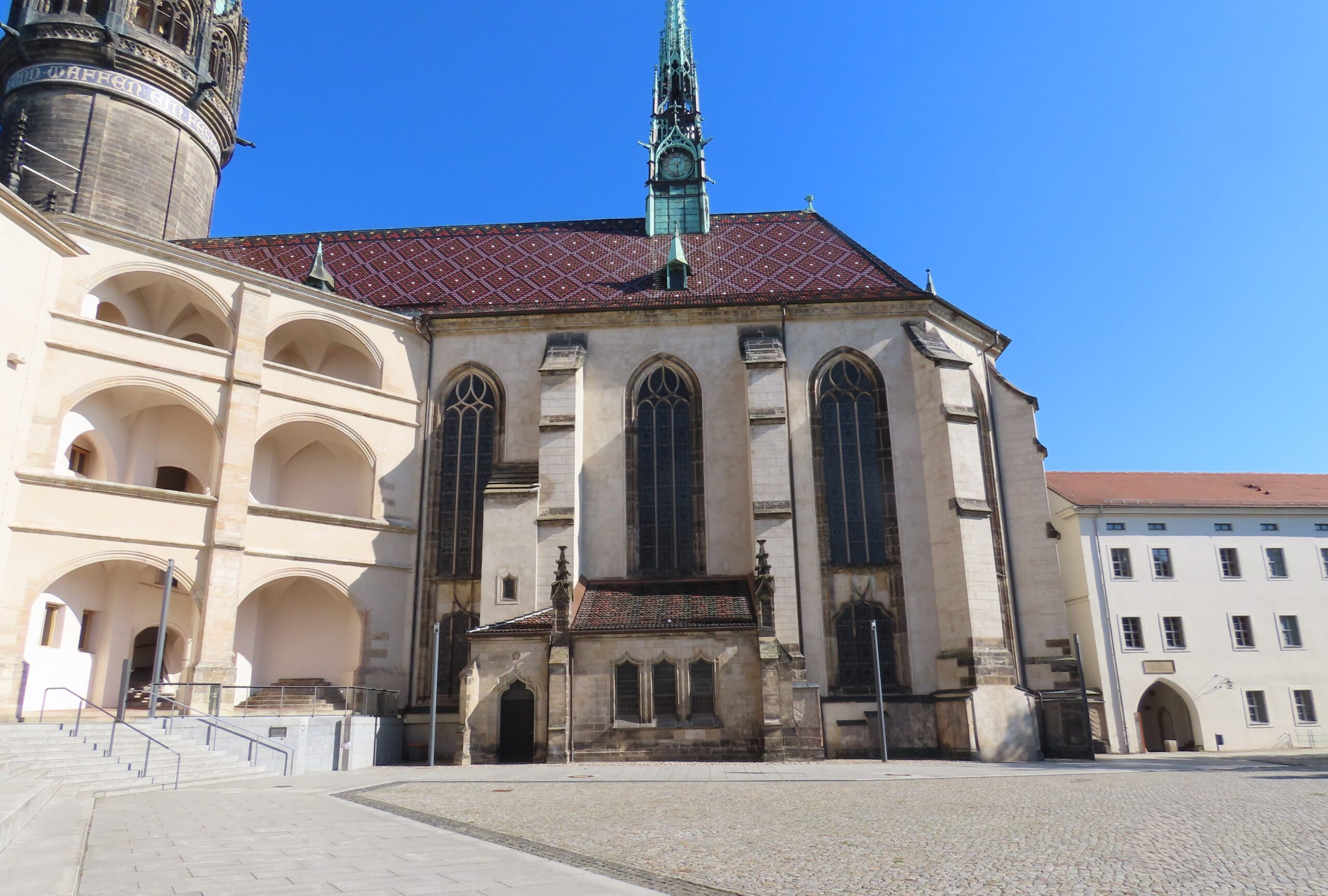 Schlosskirche (Castle Church), built between 1489 and 1509, is believed to be where the Protestant Revolution began.
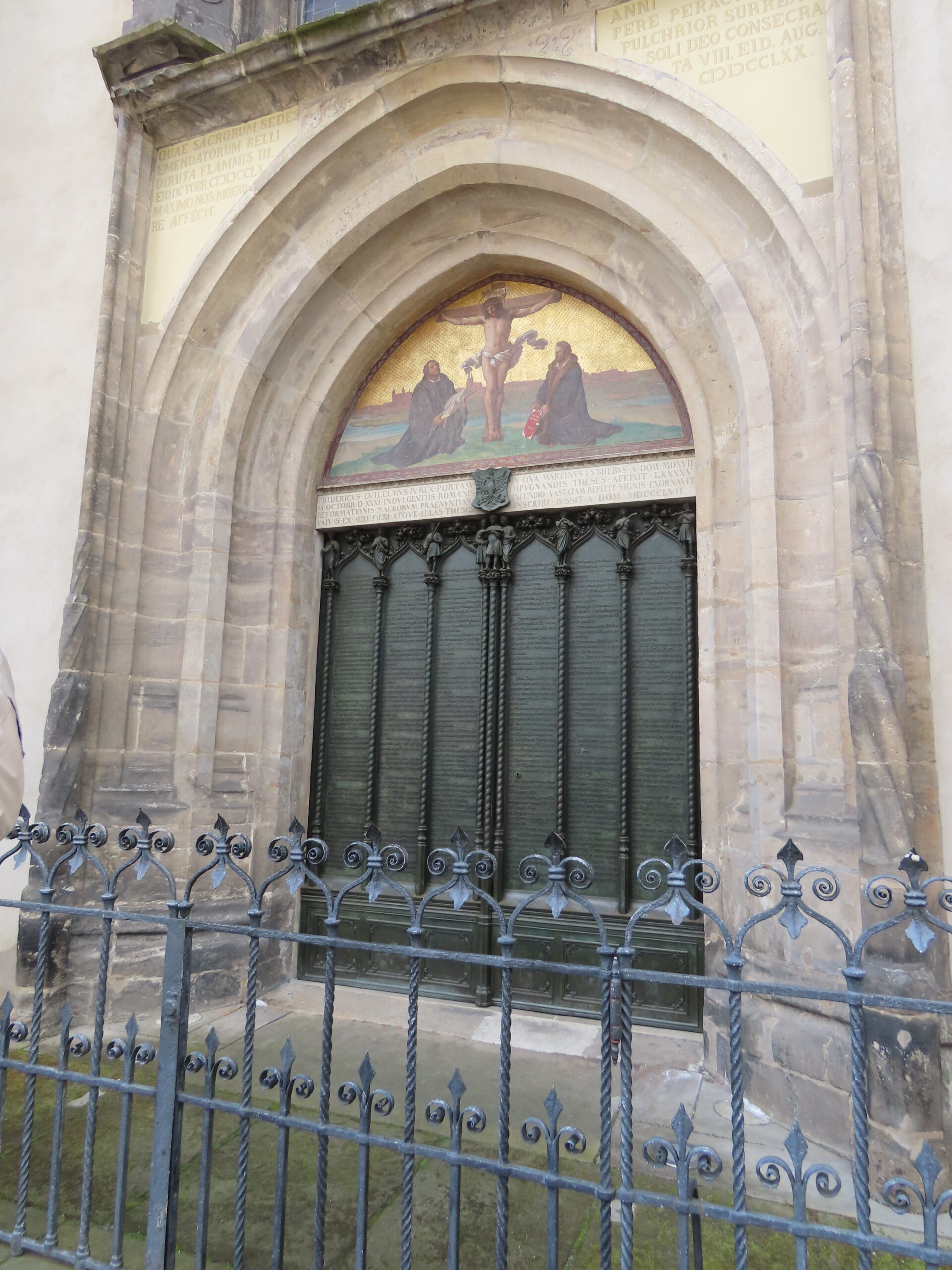 Martin
Luther's Ninety-five Theses, which led to the Protestant Reformation, was posted here in 1517.
Martin
Luther's Ninety-five Theses, which led to the Protestant Reformation, was posted here in 1517. 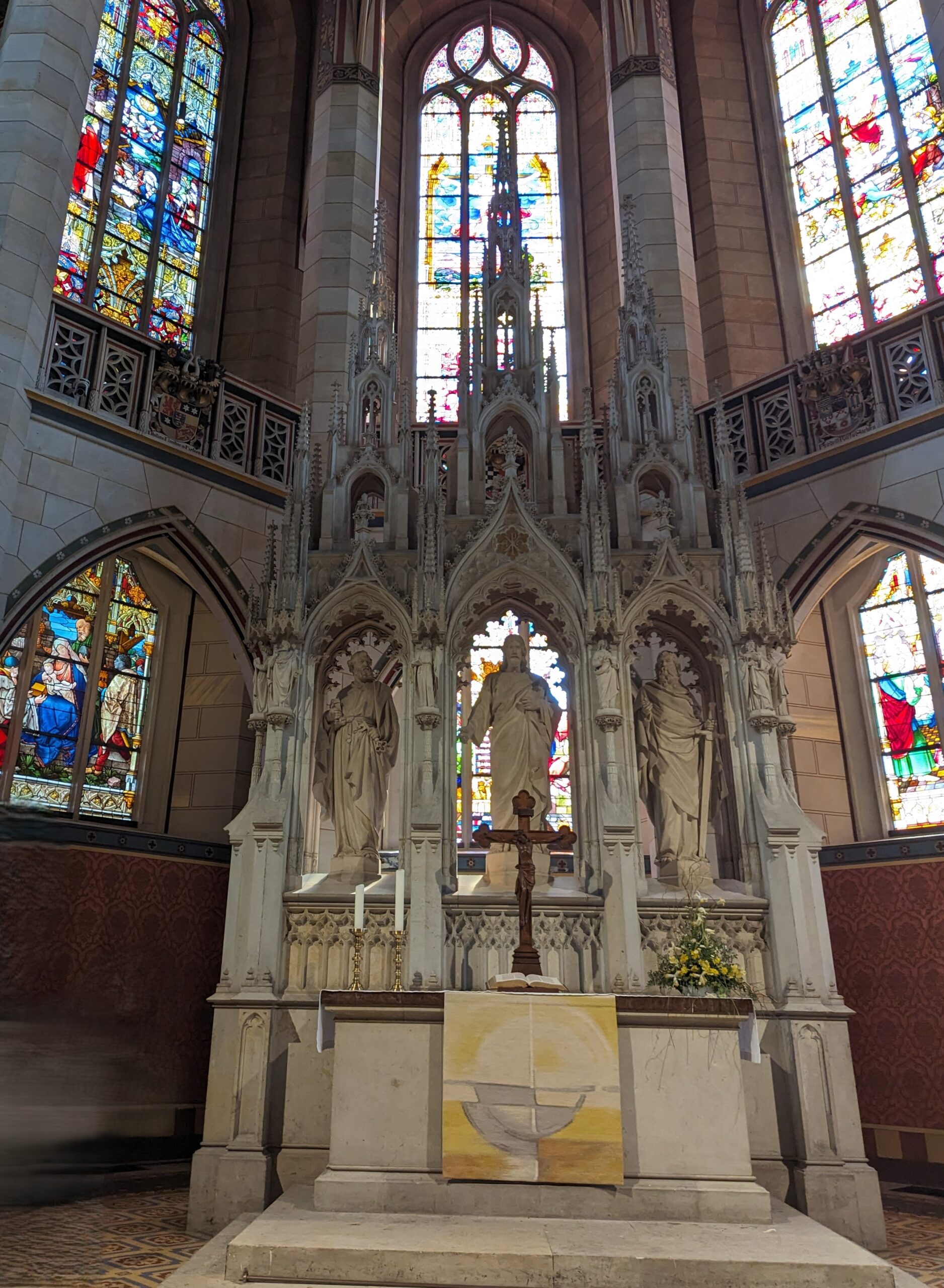 Martin Luther’s tomb
is located beneath the
pulpit in the Nave.
Martin Luther’s tomb
is located beneath the
pulpit in the Nave.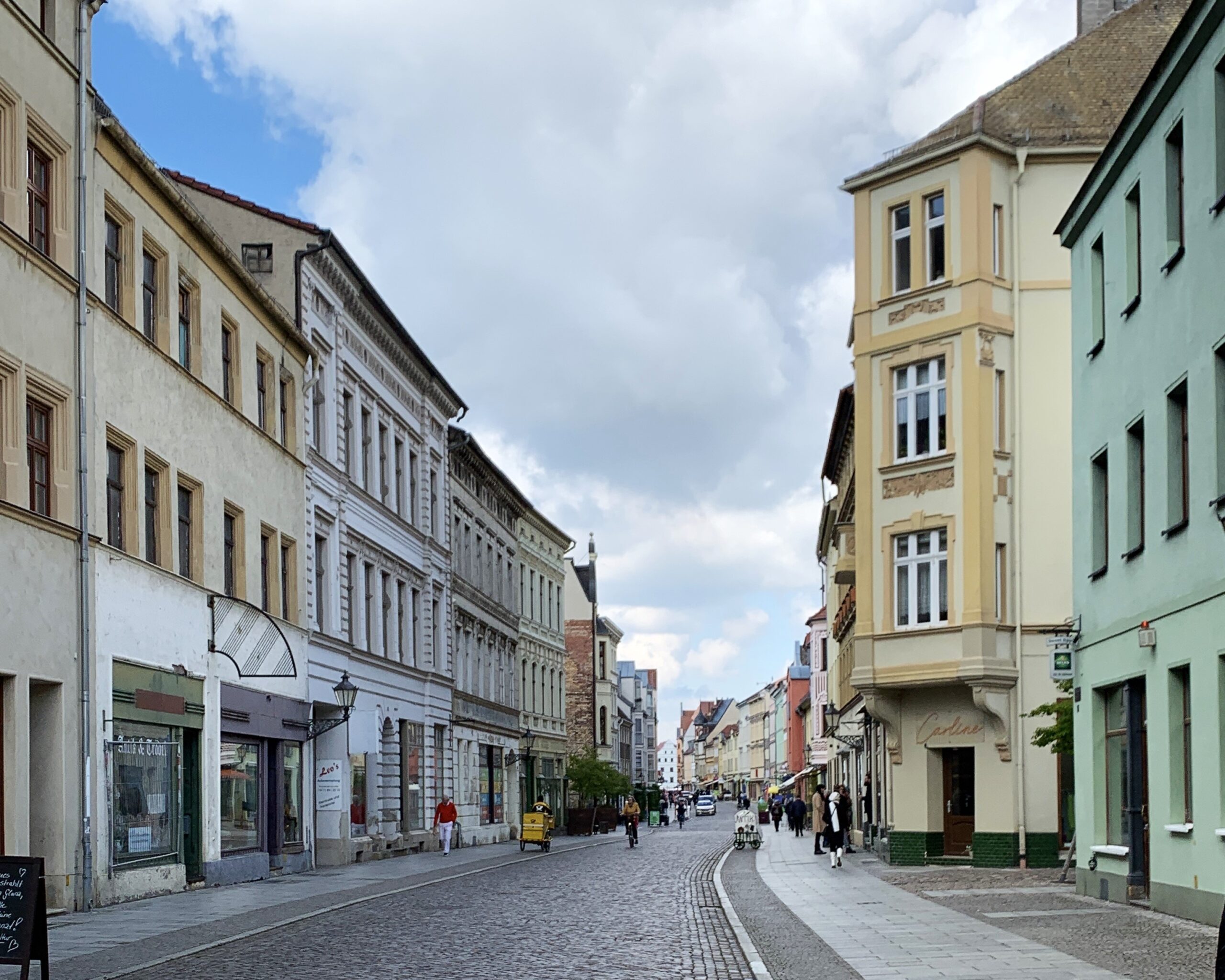 A street in Whittenberg
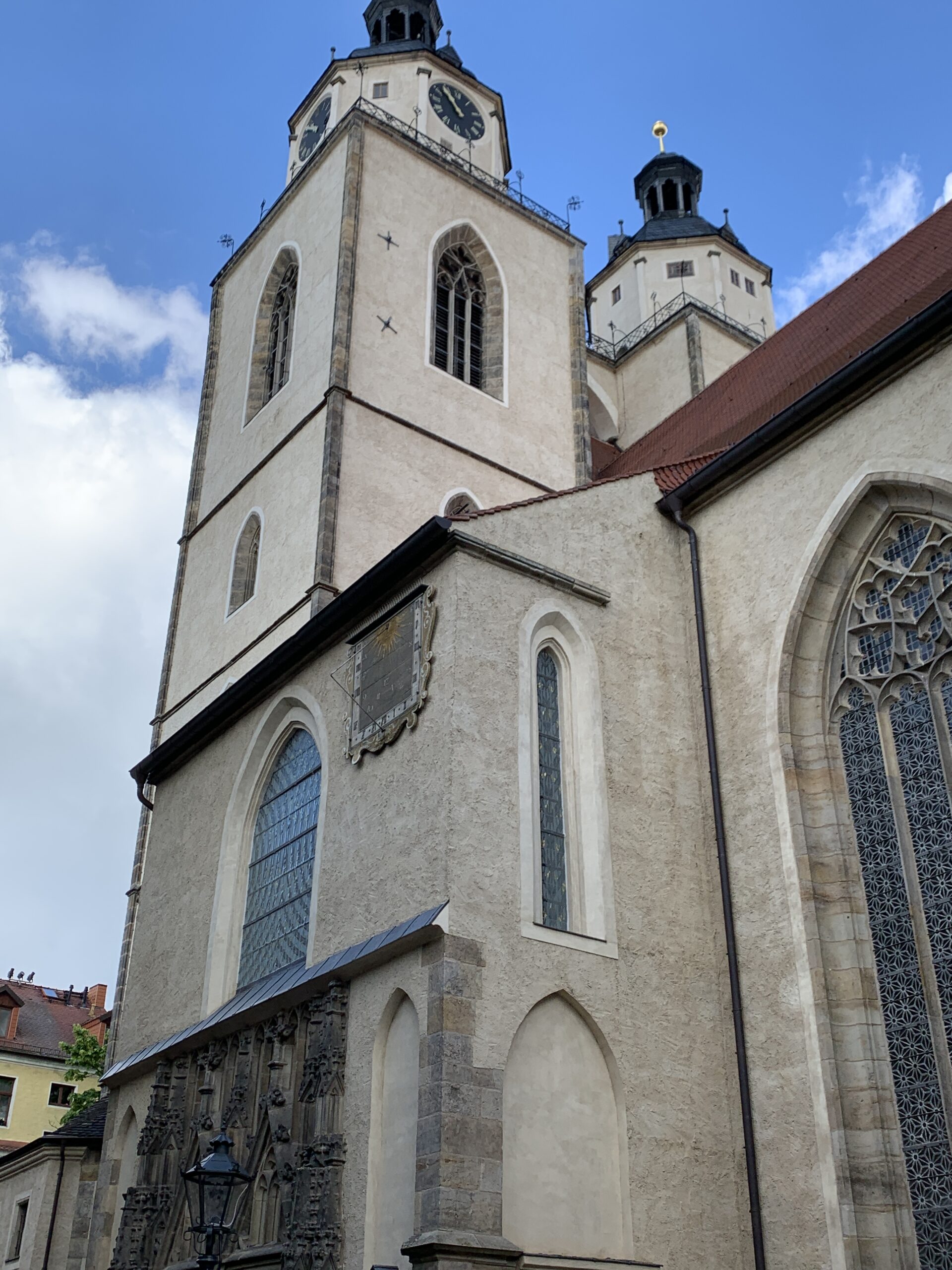 St. Mary’s Church where Martin
Luther preached. The first ever distribution of
the bread and wine to a
congregation happened here.
St. Mary’s Church where Martin
Luther preached. The first ever distribution of
the bread and wine to a
congregation happened here.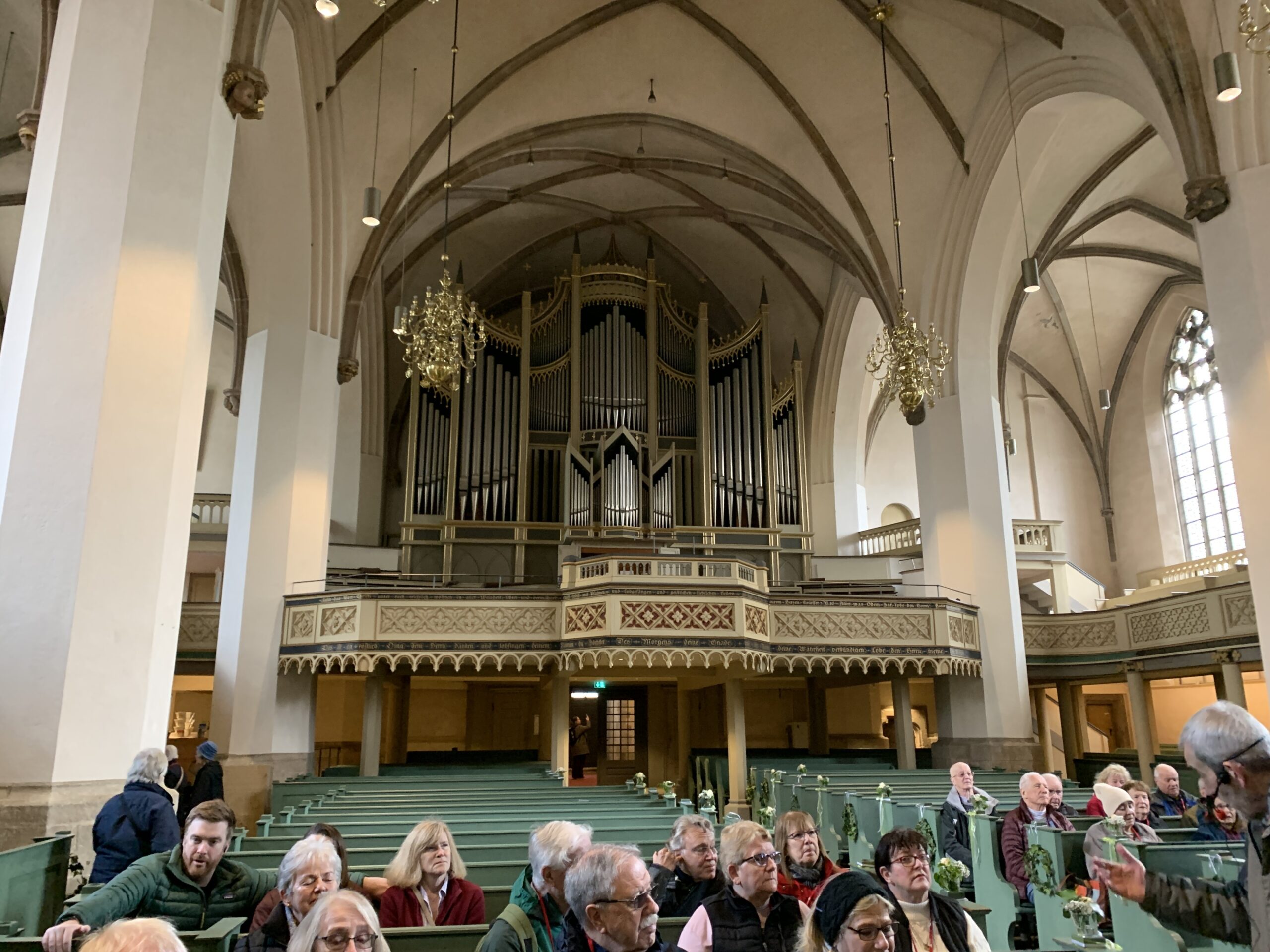 The interior of St. Mary's is less ornate - another change in the Protestant Reformation.
Torgua
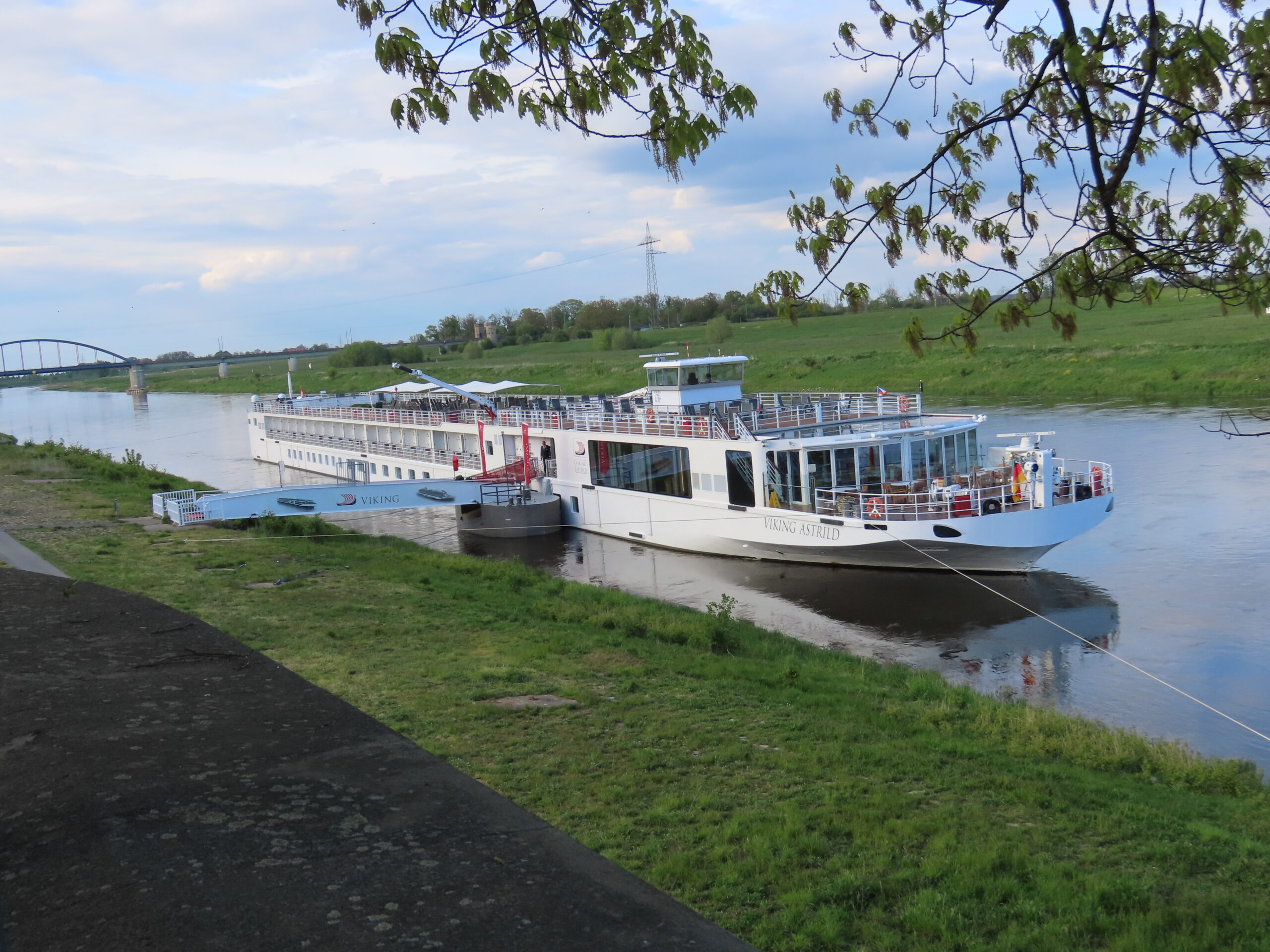 Docked in Torgua
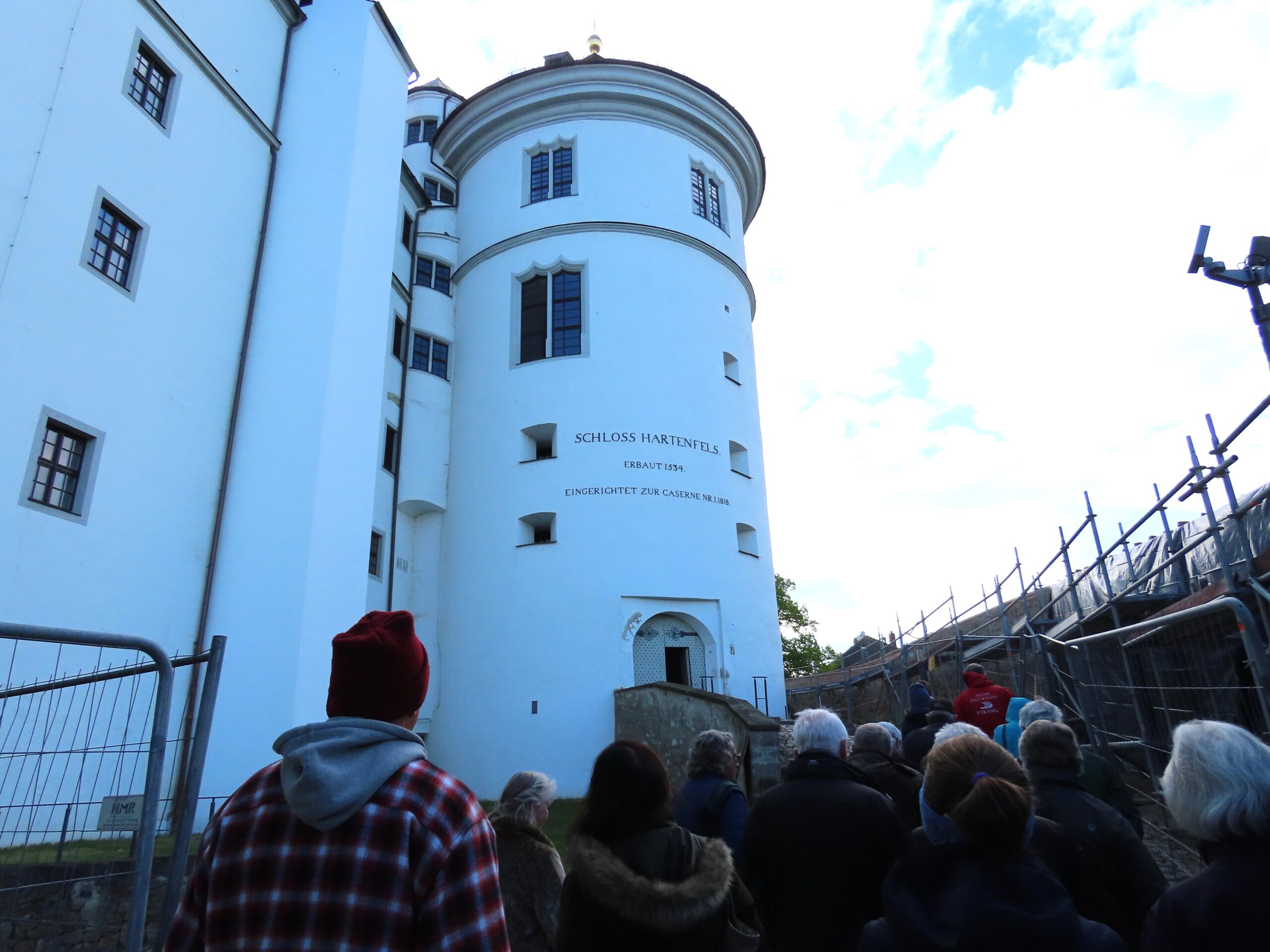 The Torgau-Schloss
Hartenfels (Chapel Church)
was inaugurated by Martin Luther
in 1544 and is
the earliest building constructed
as a Protestant place
of worship.
The Torgau-Schloss
Hartenfels (Chapel Church)
was inaugurated by Martin Luther
in 1544 and is
the earliest building constructed
as a Protestant place
of worship.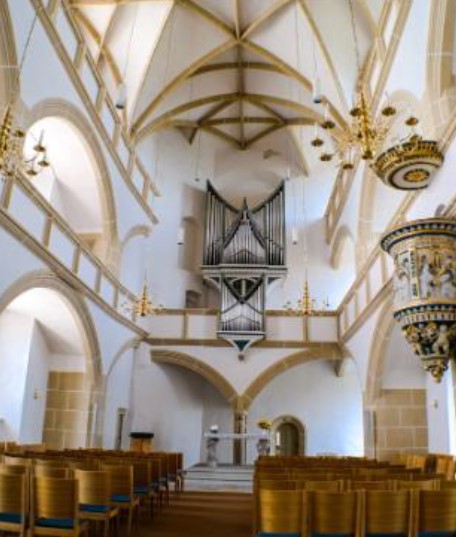 The interior of the The Torgau-Schloss
Hartenfels (Chapel Church) is beautiful in its simplicity.
The interior of the The Torgau-Schloss
Hartenfels (Chapel Church) is beautiful in its simplicity.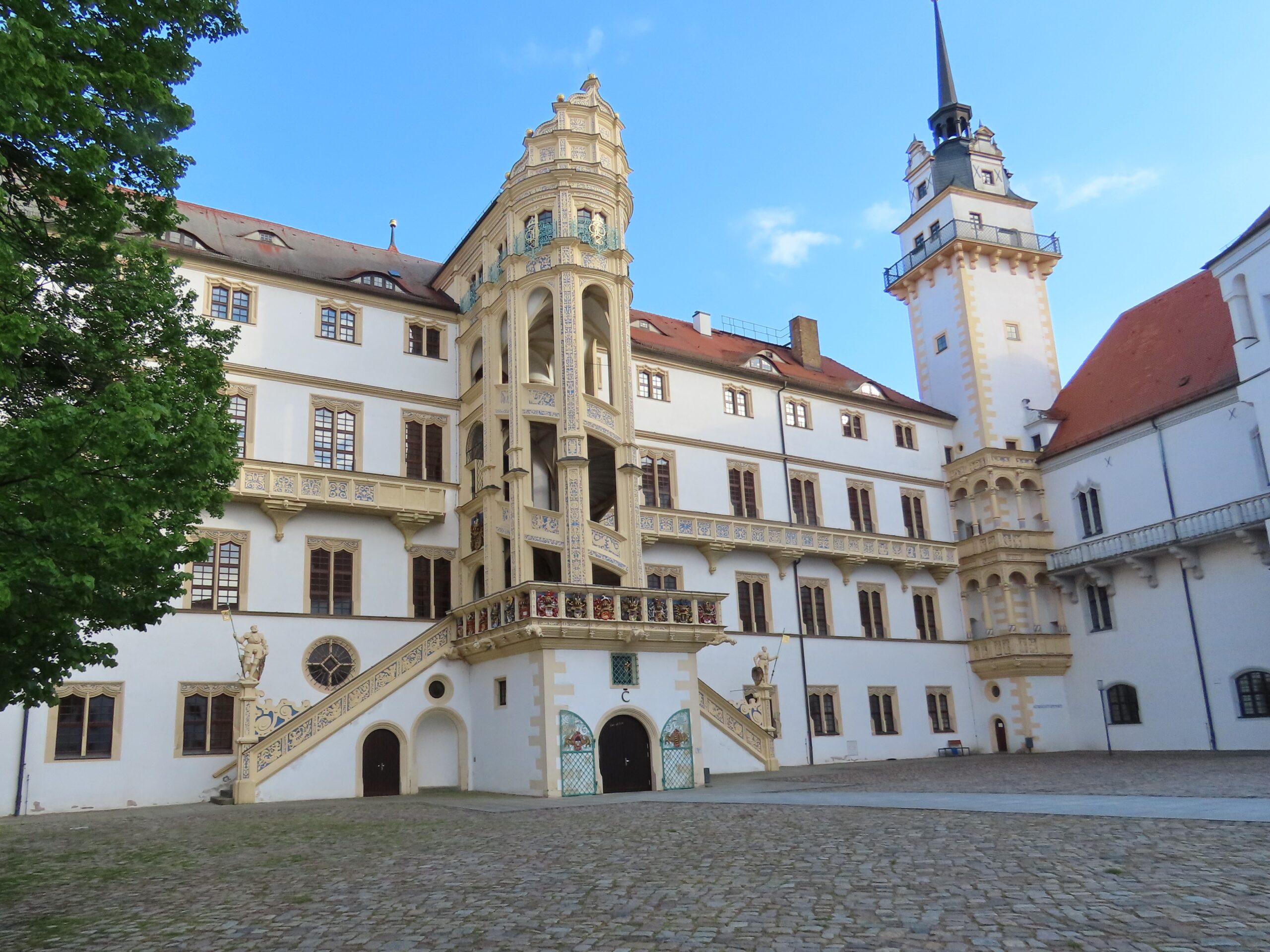 The exterior of the Castle was very
ornate.
The exterior of the Castle was very
ornate.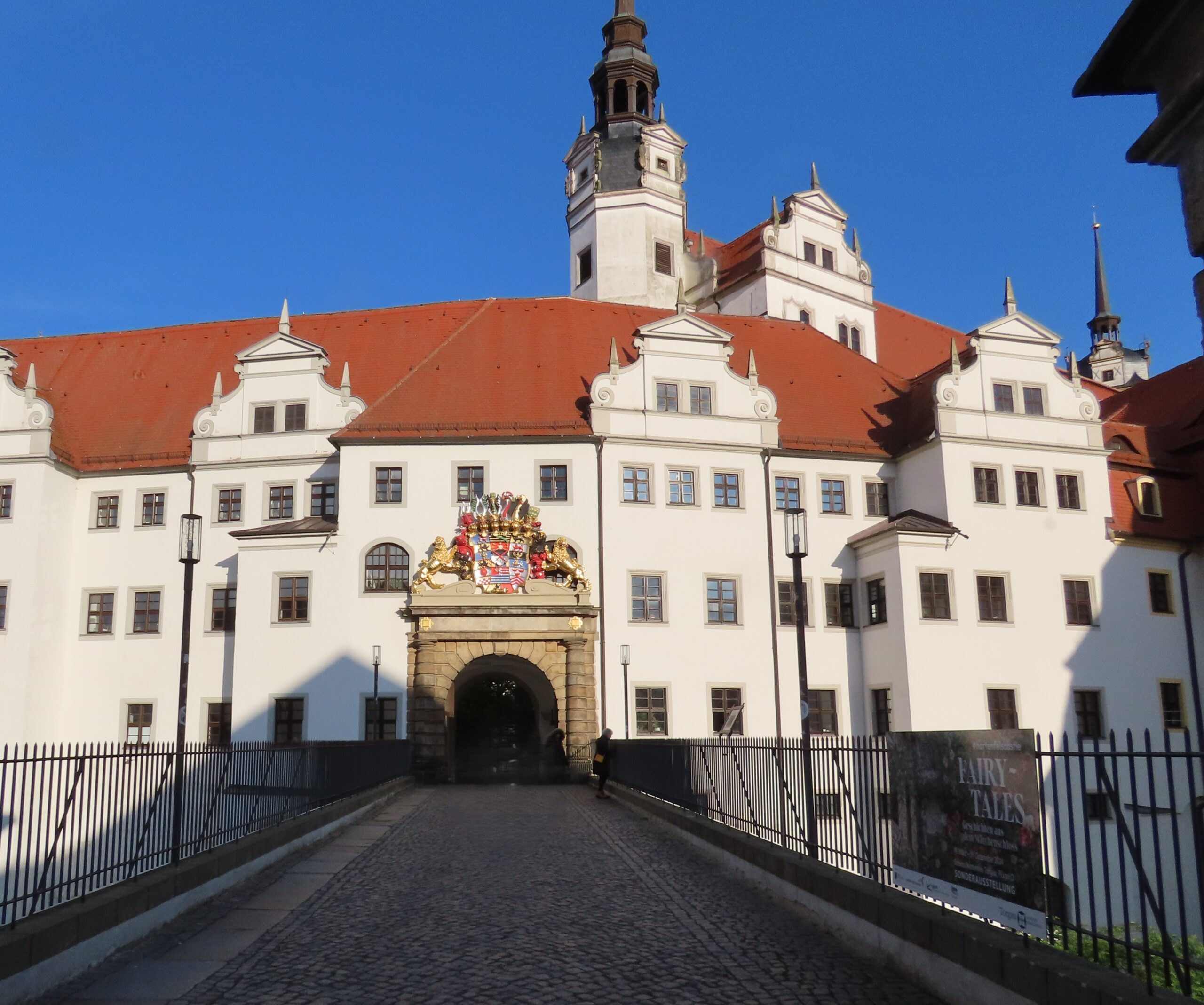 The gate of the castle bore a gold-encrusted coat of arms.
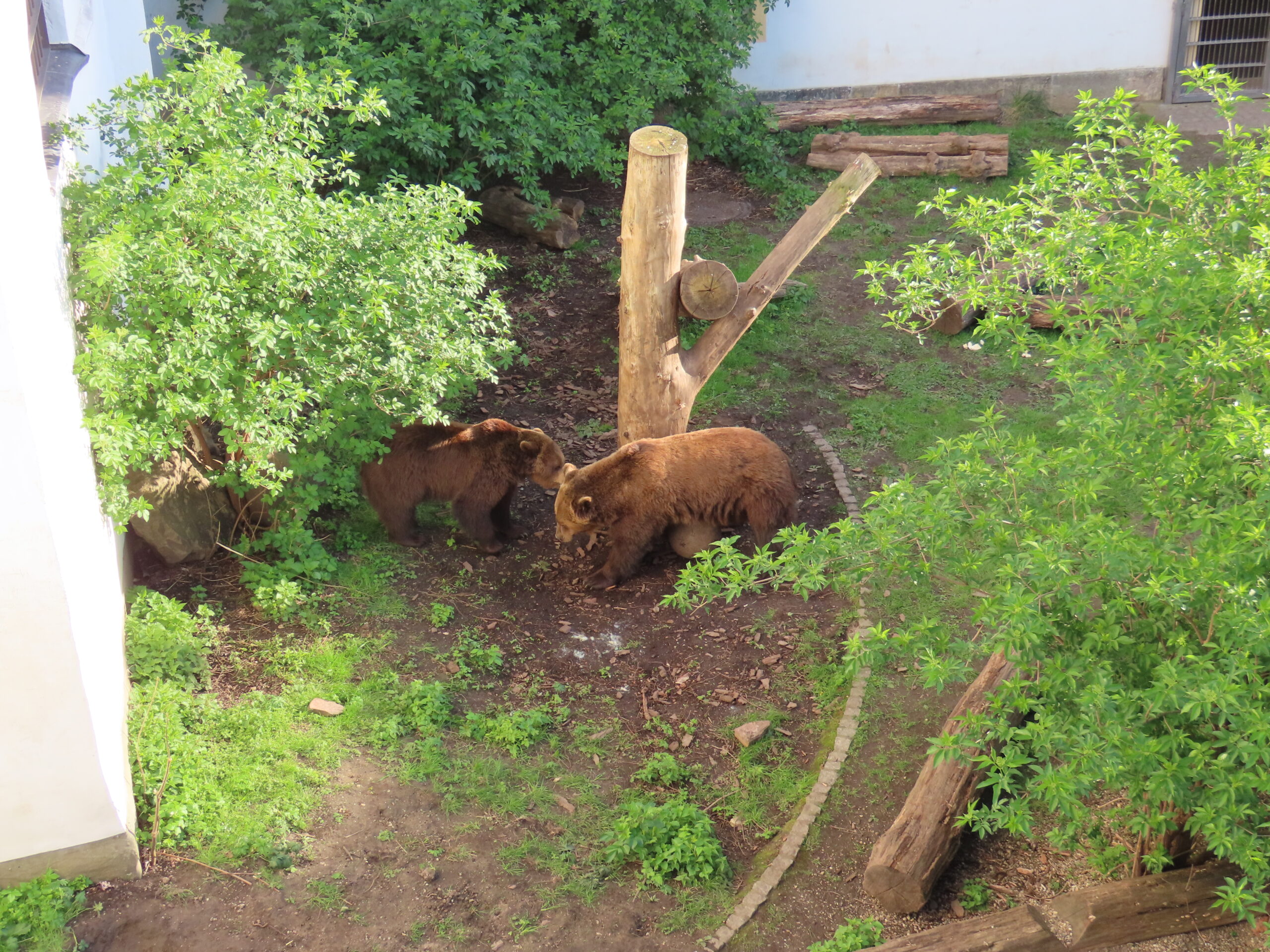 A tradition of keeping bears began in 1425, and there were bears in the moat just beyond the gate.