Estonia
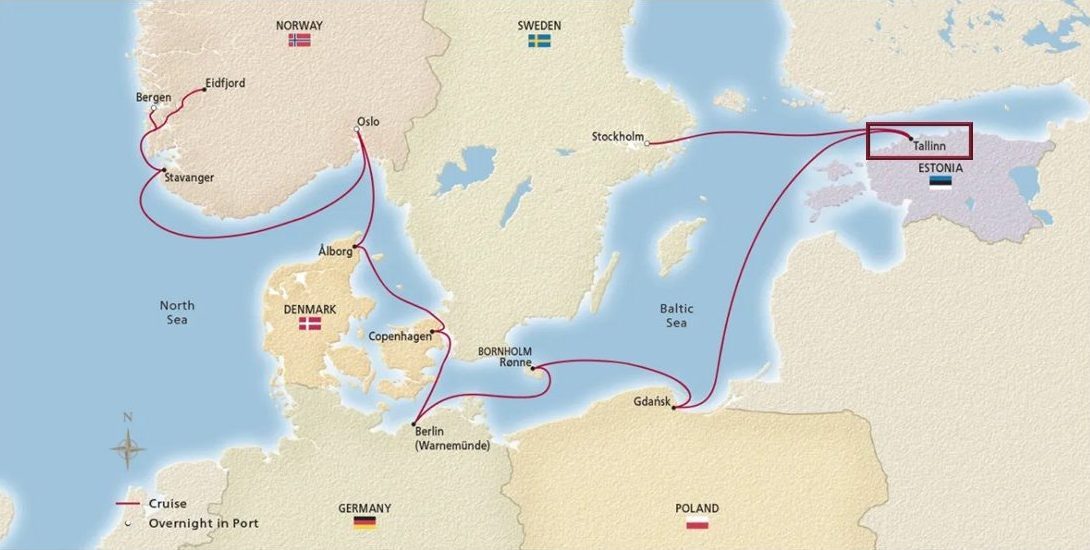
Tallinn, Estonia - Old Town
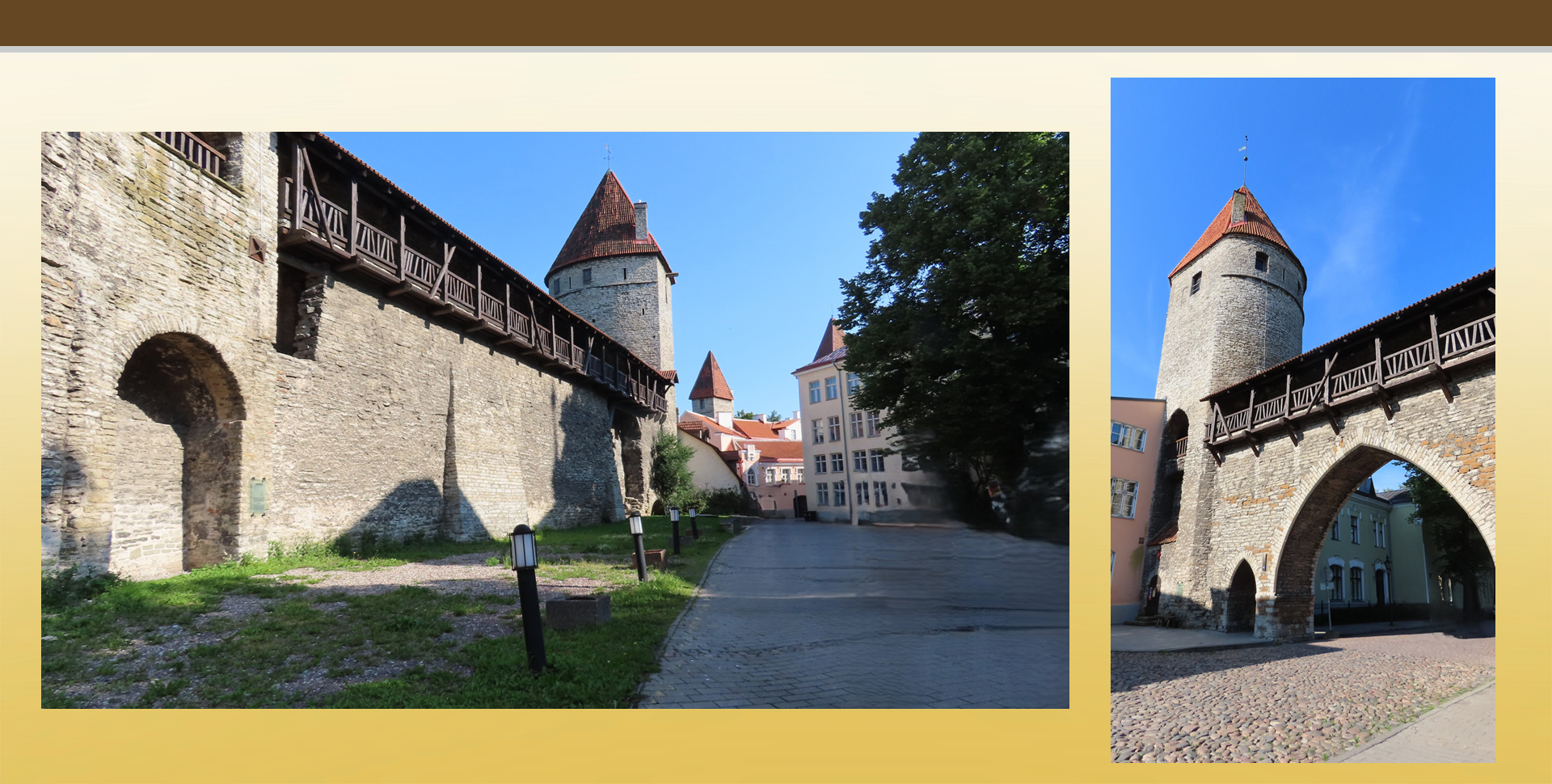
We visited only one city in Estonia — Tallinn, the capital. Our guide led us into Lower Old Town, where medieval walls rose above us as we walked along cobbled paths and passed beneath stone arches dating back to the 14th century.
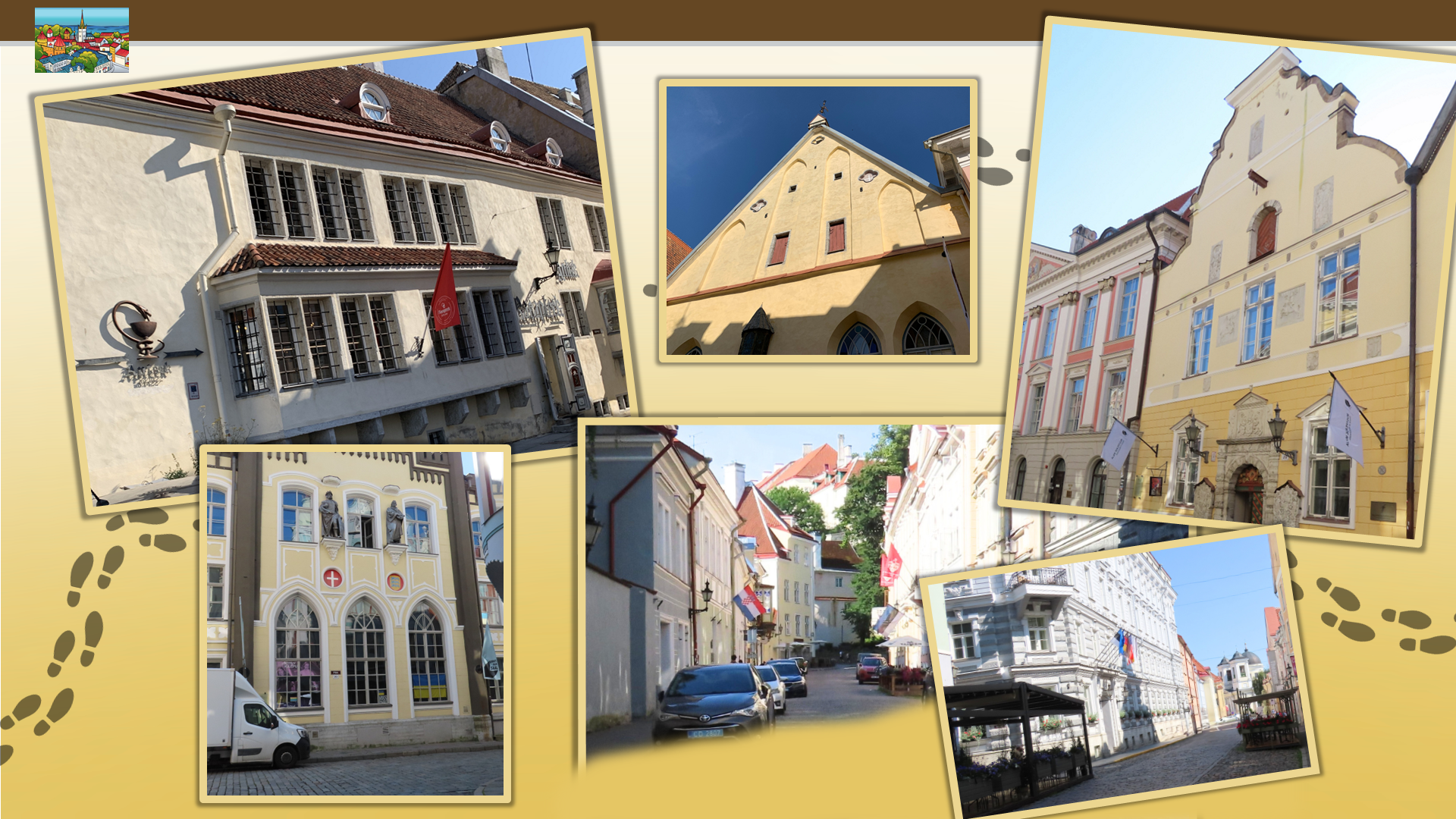
Tallinn’s Old Town is a UNESCO site known for its history and resilience. As we walked through the city, we passed embassies housed in buildings once damaged during World War II but now carefully restored. Historic structures from the 15th century stood throughout the area — former merchants’ houses, guild halls, and the ornate home of the Brotherhood of Blackheads, whose symbols and craftsmanship reflected the prosperity of Tallinn’s trading past.
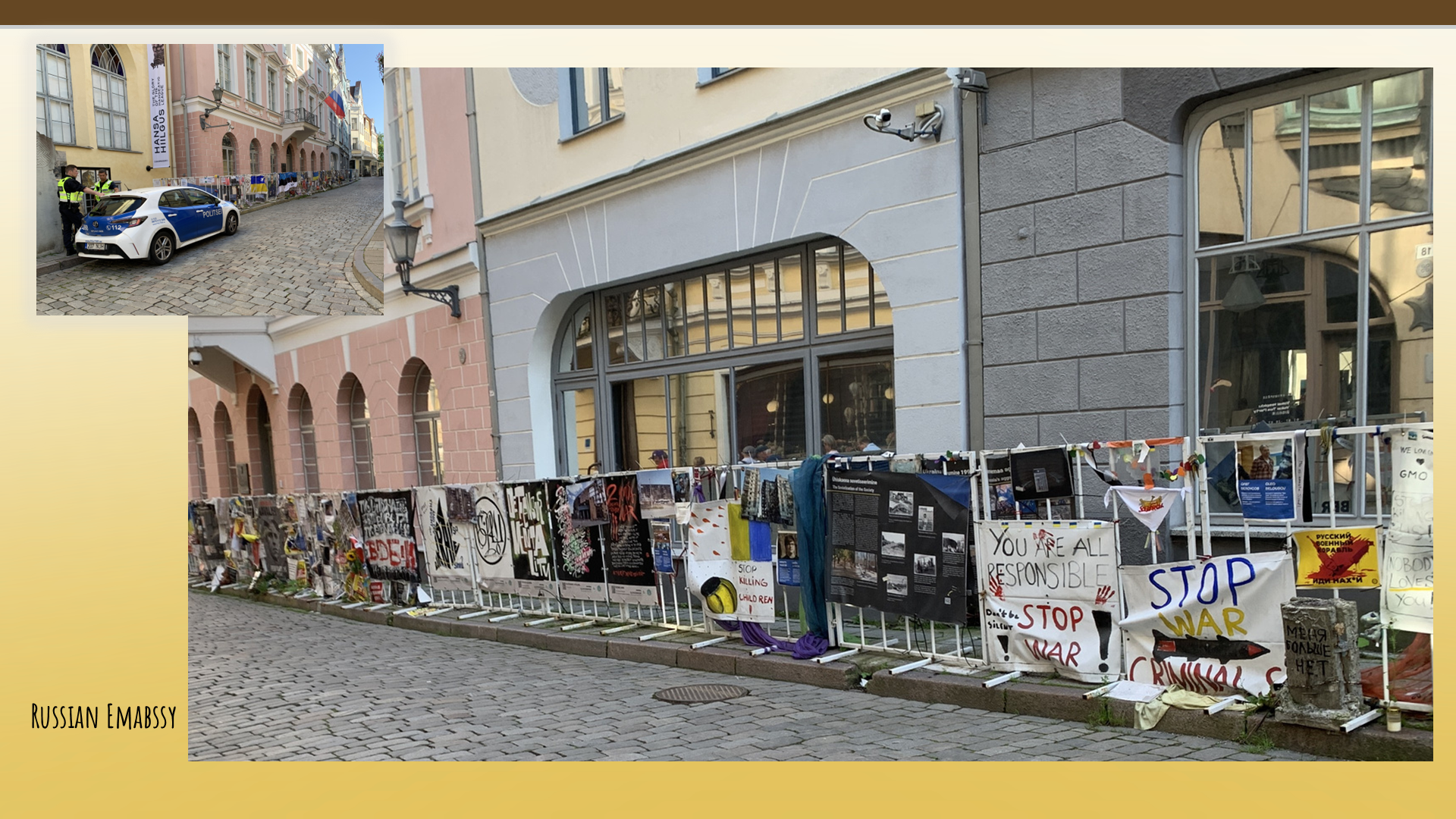
Outside the Russian Embassy, a quiet but powerful protest lined the street — flags, signs, and symbolic displays expressing solidarity with Ukraine. A police presence stood nearby, keeping the area calm and ensuring the messages remained undisturbed.
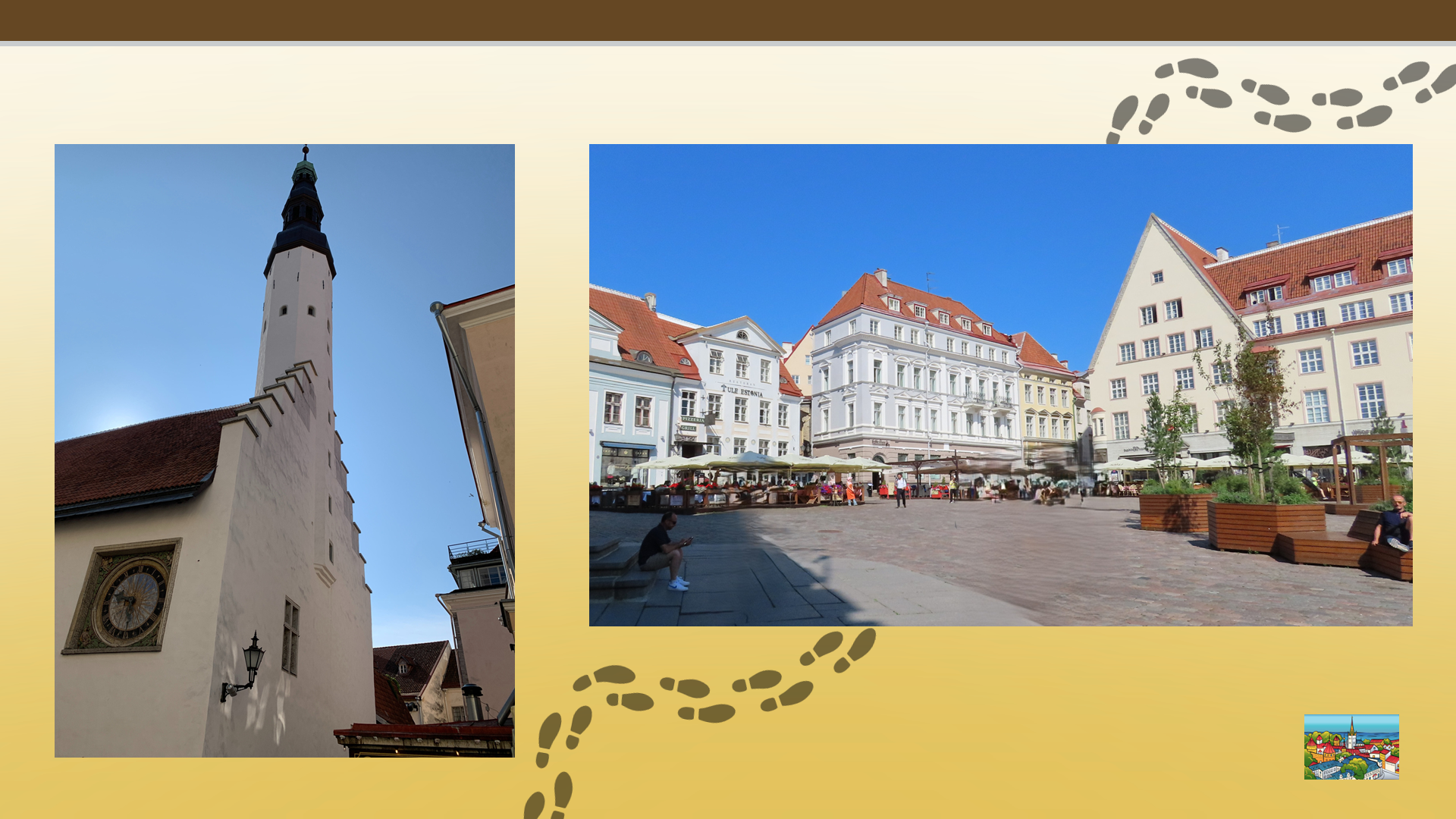
We passed the Church of the Holy Spirit, whose construction likely began in the 1200s. A 17th‑century clock still hangs on its outer wall, quietly marking time. Just around the corner was Town Hall Square — the lively center of Tallinn’s Old Town.
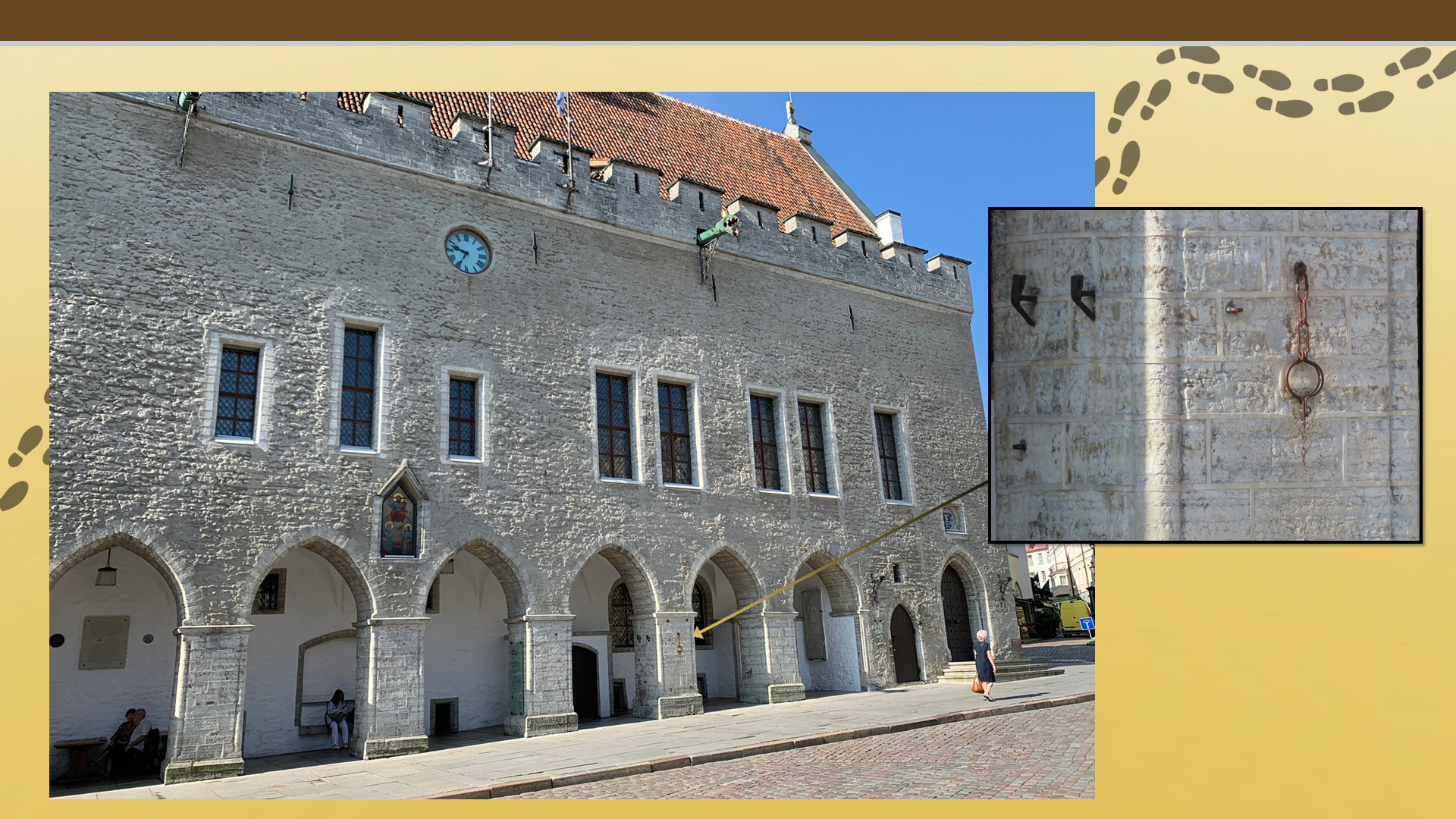
Our next stop was Tallinn’s Town Hall, the oldest surviving Gothic town hall in Northern Europe, anchoring the square since the early 1200s. Although government decisions are no longer made here, the building still hosts ceremonies and special events. Beneath its arches, we noticed a set of iron shackles—reminders of the public punishments once carried out in this very spot.
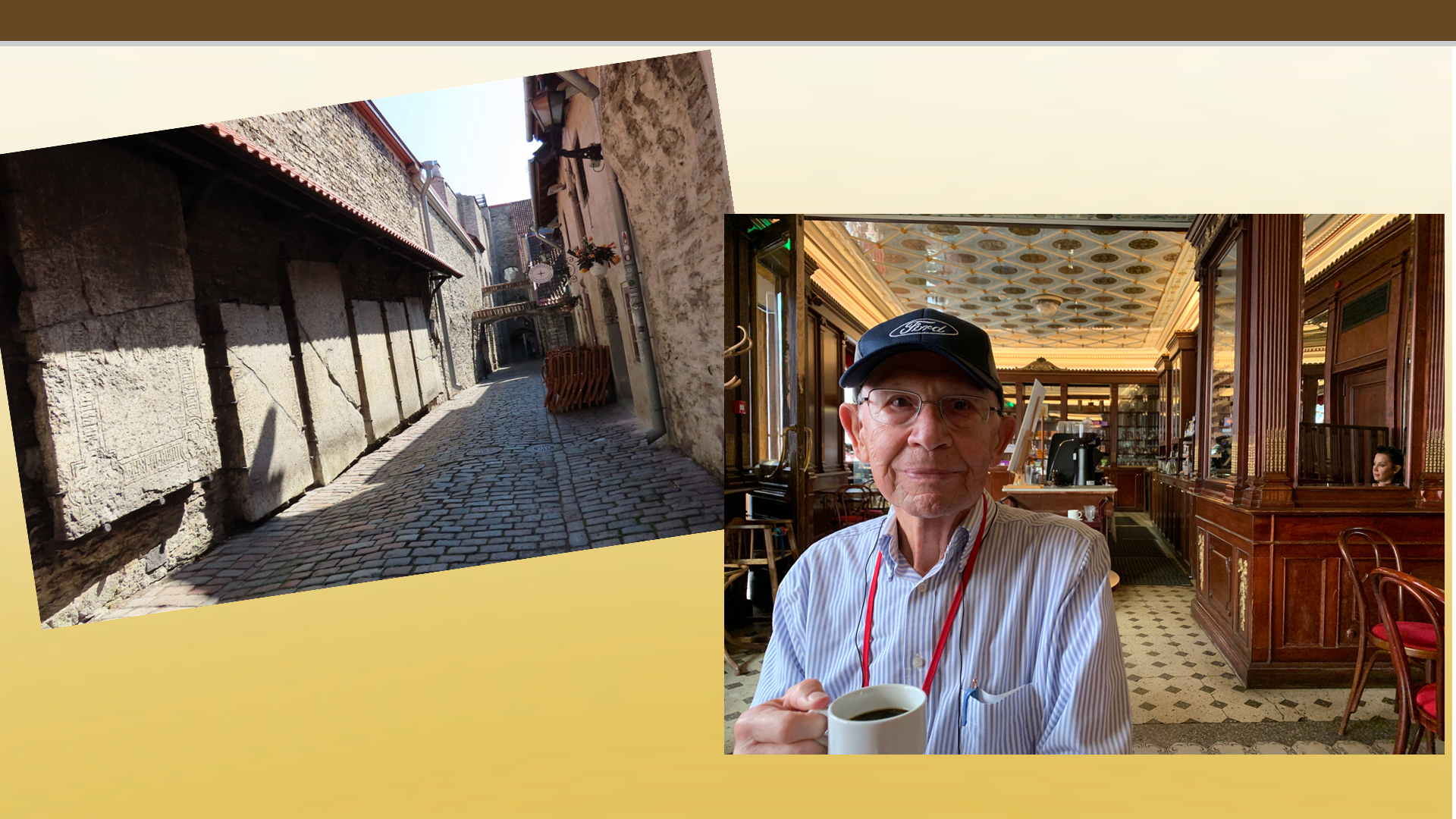
Next, we spent some time exploring Tallinn on our own. Our first stop was Maiasmokk Café—the oldest café in the city, operating since 1864. Its cozy interior felt like stepping into another century. Afterward, we wandered through the narrow streets of Old Town, taking in the quiet corners and historic buildings.
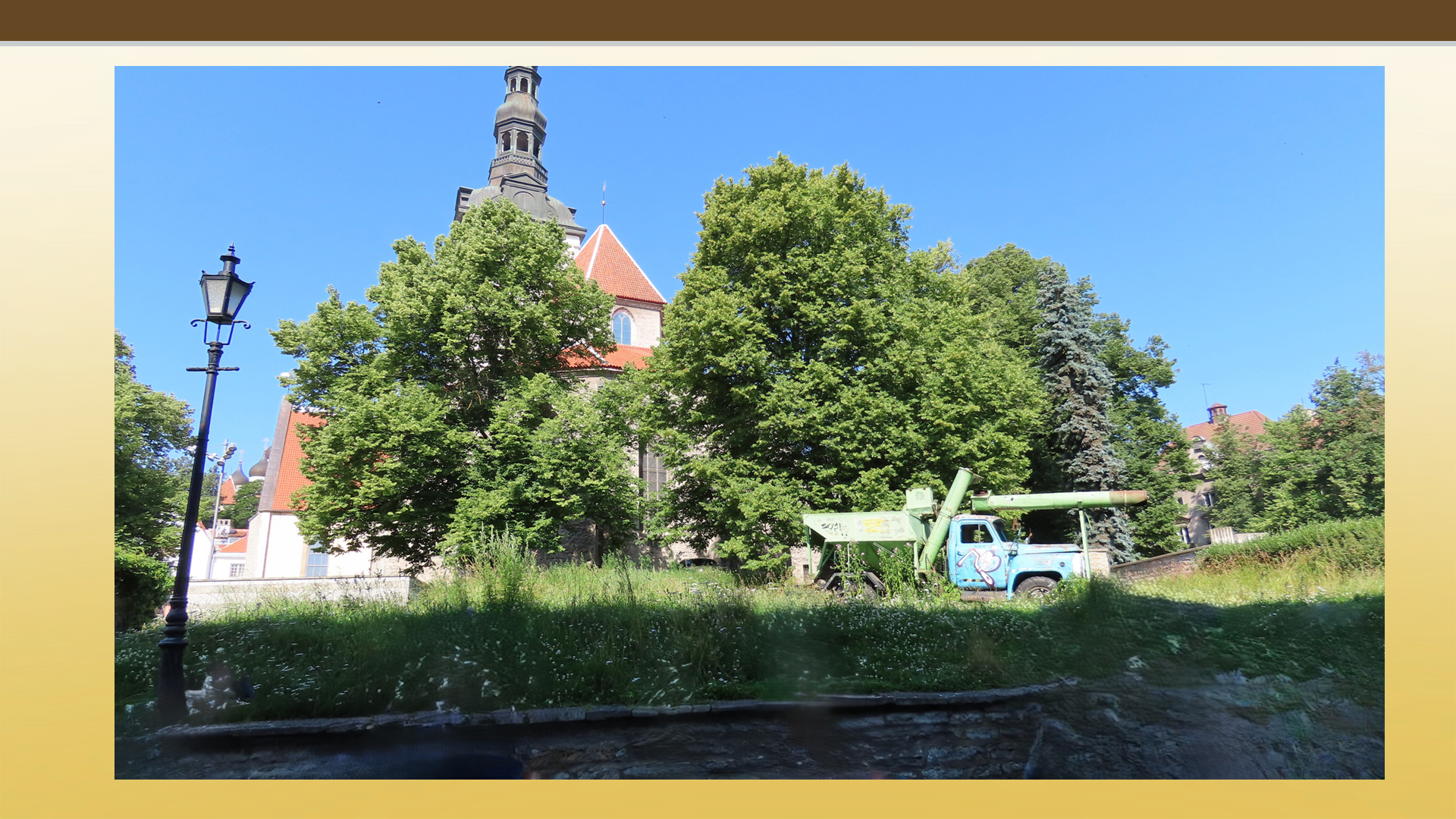
On our way back to our motorcoach, we passed something out of the ordinary. Alongside St. Mary’s Cathedral, a row of pristine lawns—part of the city’s park beautification—stretched neatly down the street. All but one. There, tall grass grew in quiet rebellion. Our guide explained the owner had refused to sell to the city, instead declaring the plot agricultural. He now bales hay and parks his equipment there to meet the rules— clever defiance.
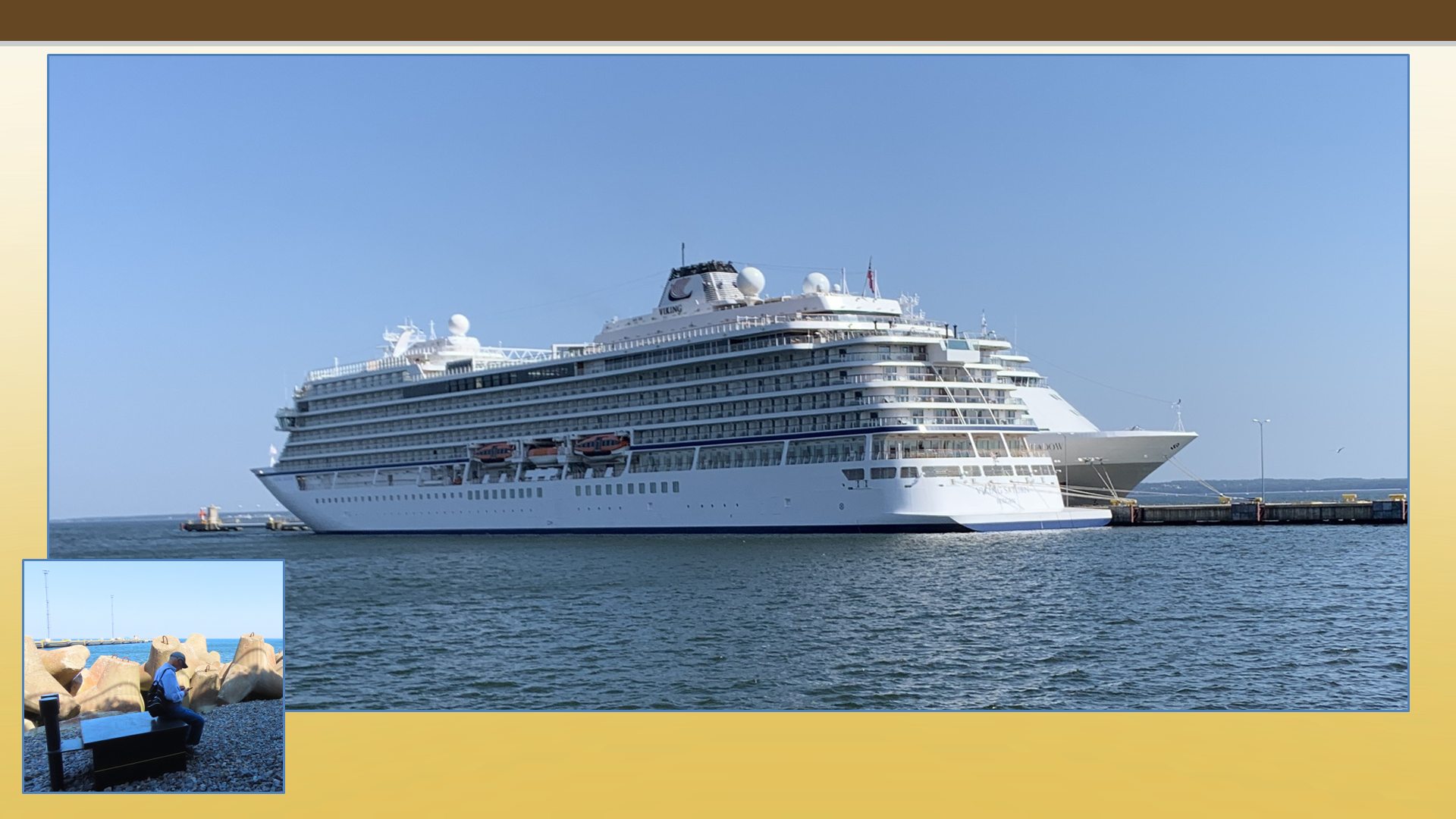
When we returned to the ship, the wharf beside us was open and quiet—perfect for a photo of the Viking Saturn. Dorothy took a few shots while Gary waited nearby patiently nearby. Tallinn was a beautiful city, and the day had been full and memorable. Too bad there hadn’t been time to see more.