Norway
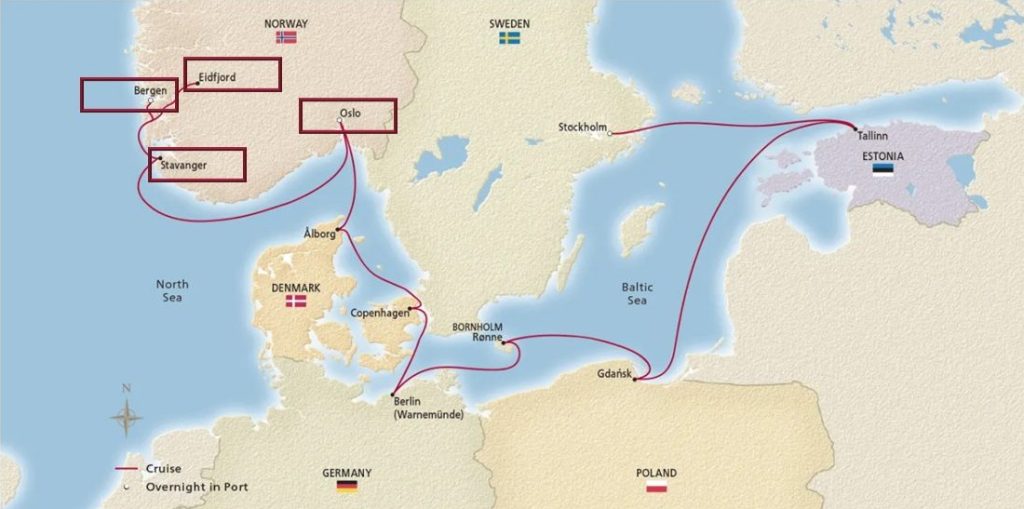
Norway was the last destination for our cruise. There, we visited Oslo, Stavanger, Eidfjord, and Bergen. Oslo was on our cruise route, and we returned there later in our land extension following the cruise. Click on each city to experience our time there.
Oslo, Norway - A Glimpse of the City
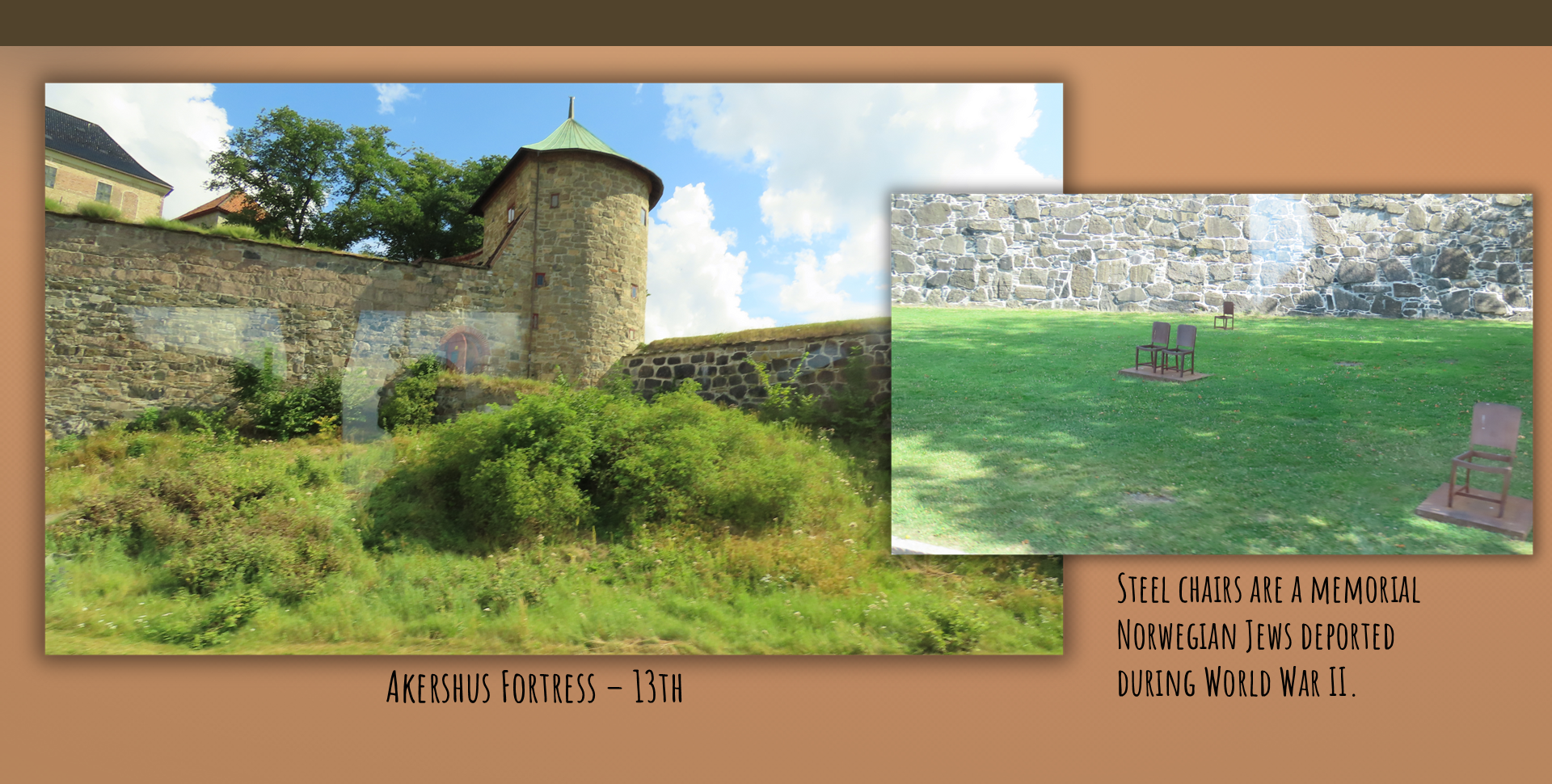
Our first visit to Oslo was a cruise port of call, and our panoramic tour offered a wonderful introduction to the city. The sunshine was welcome, though reflections on the bus windows sometimes made photography a challenge. On the left, the medieval stone tower belongs to Akershus Fortress, a 13th‑century stronghold that has anchored Norway’s defenses for centuries. On the right, steel chairs form a quiet memorial to the hundreds of Norwegian Jews who were deported during World War II.
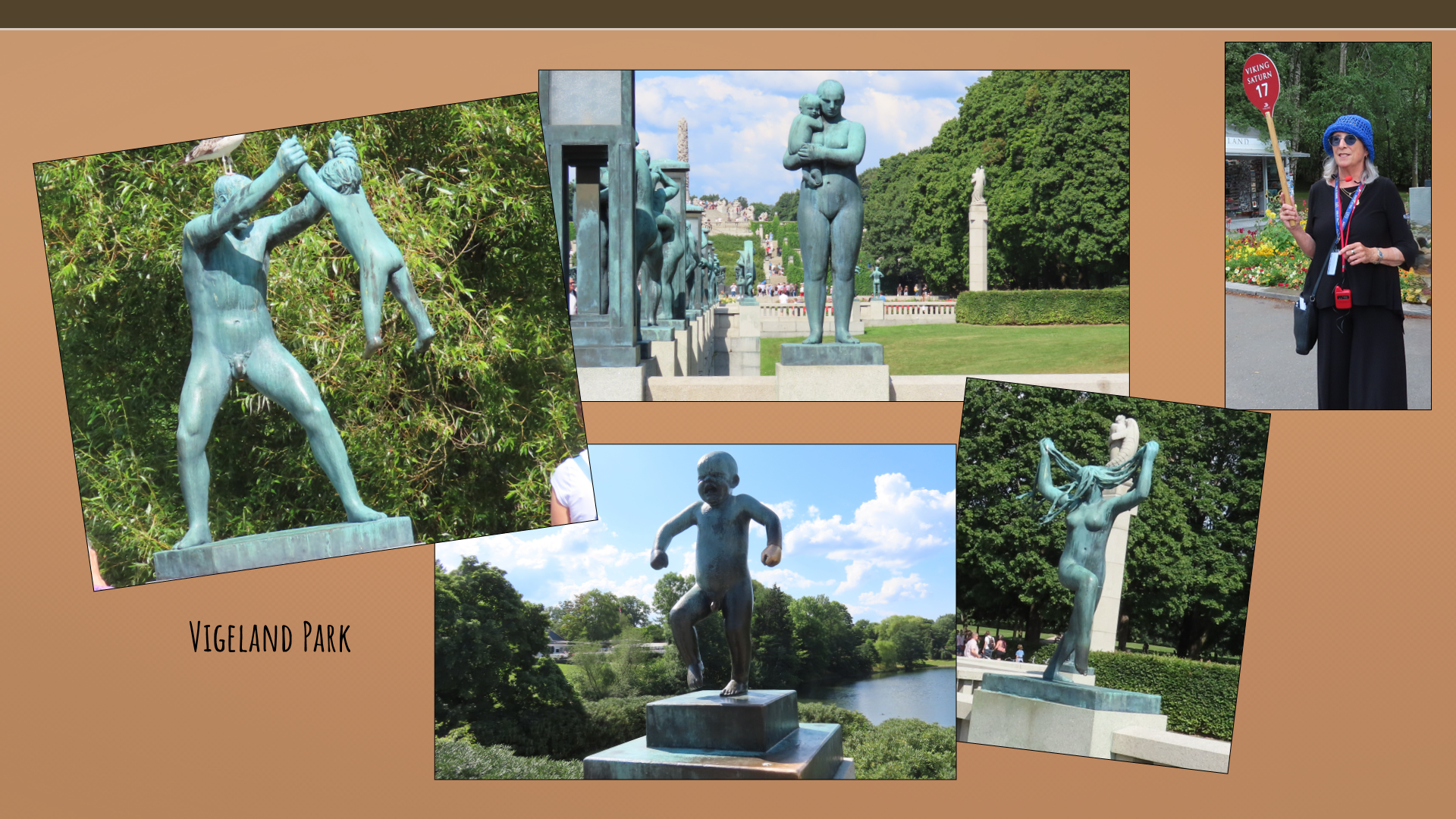
Our tour included a stop at Vigeland Park, where our guide shared the history behind the more than 200 sculptures Gustav Vigeland created to explore human emotion, relationships, and the cycle of life. Probably the best‑known figure is The Angry Boy, a small bronze toddler mid‑tantrum. Often mistaken for “The Screamer,” it is one of the most photographed sculptures in the park.
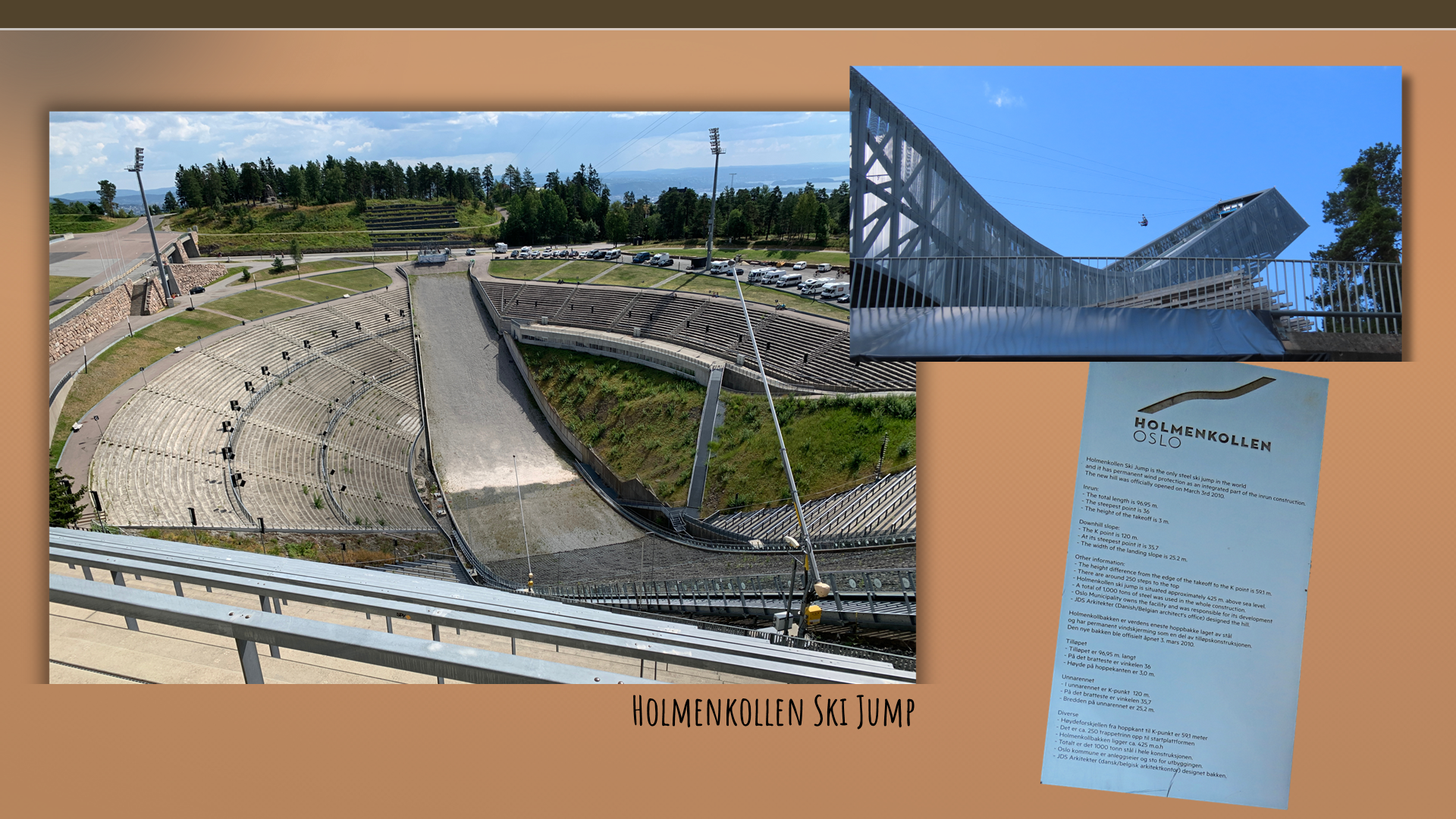
Our next stop was the Holmenkollen Ski Jump, a towering landmark used as ski venue in the 1952 Winter Olympics. Up close, its scale was even more striking. Even without snow, the place had an energy of its own. We had no inclination to try the ski simulator or the zip line — imagining them was enough — though neither seemed as daunting as launching off the top on skis.
We spent the afternoon relaxing before enjoying another wonderful meal in the Restaurant. Taking in the view of the fjords from our balcony was a perfect way to end the day.
A View from the Water
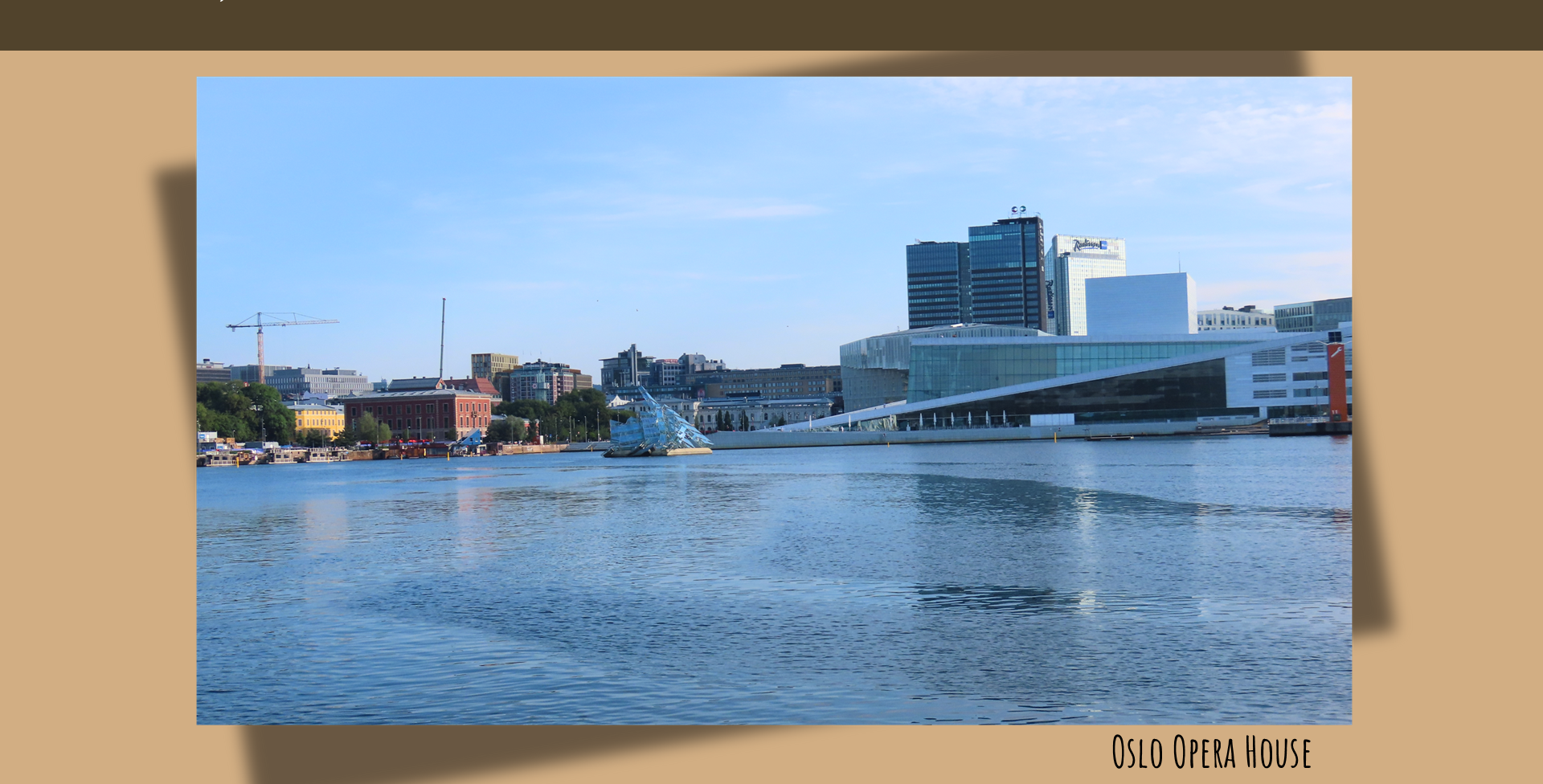
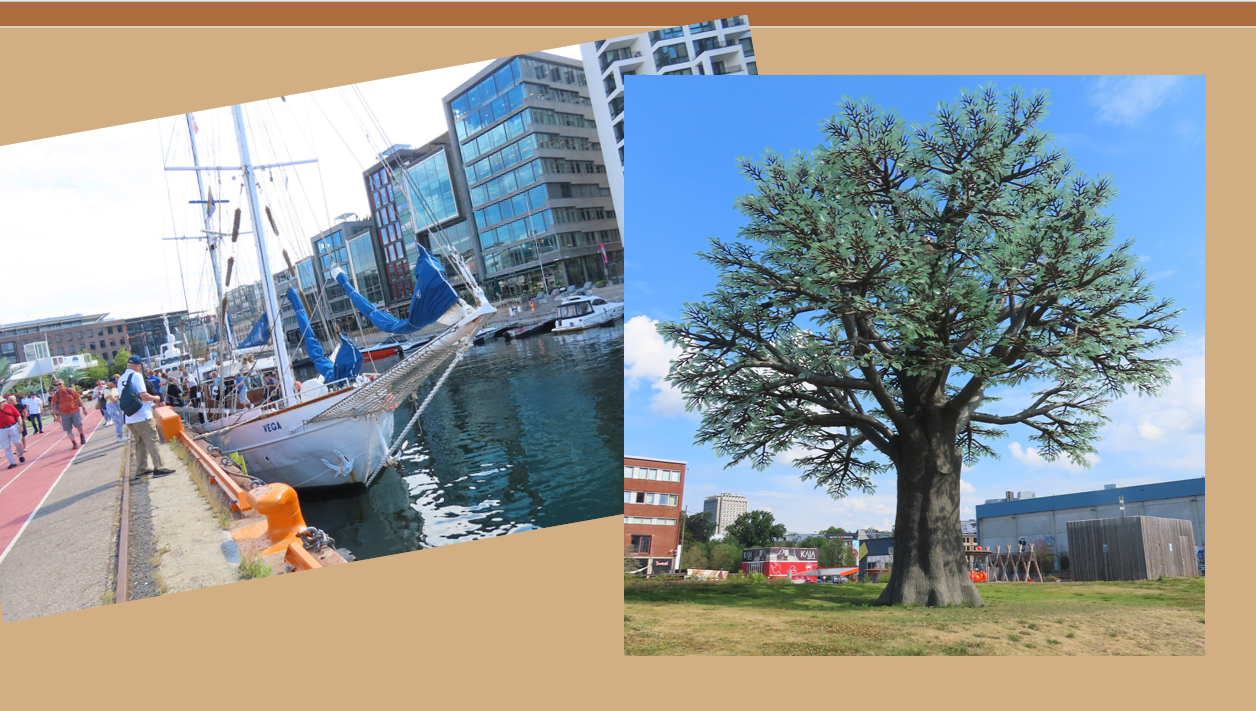
The day began with an early room‑service breakfast, followed by the 8:00 AM Oslofjord by Boat excursion. The sailboat Vega was waiting at the dock as we walked down the wharf to board. The sail took us past the Opera House with its glacier‑like sloping roof and the floating iceberg‑shaped sculpture beside it.
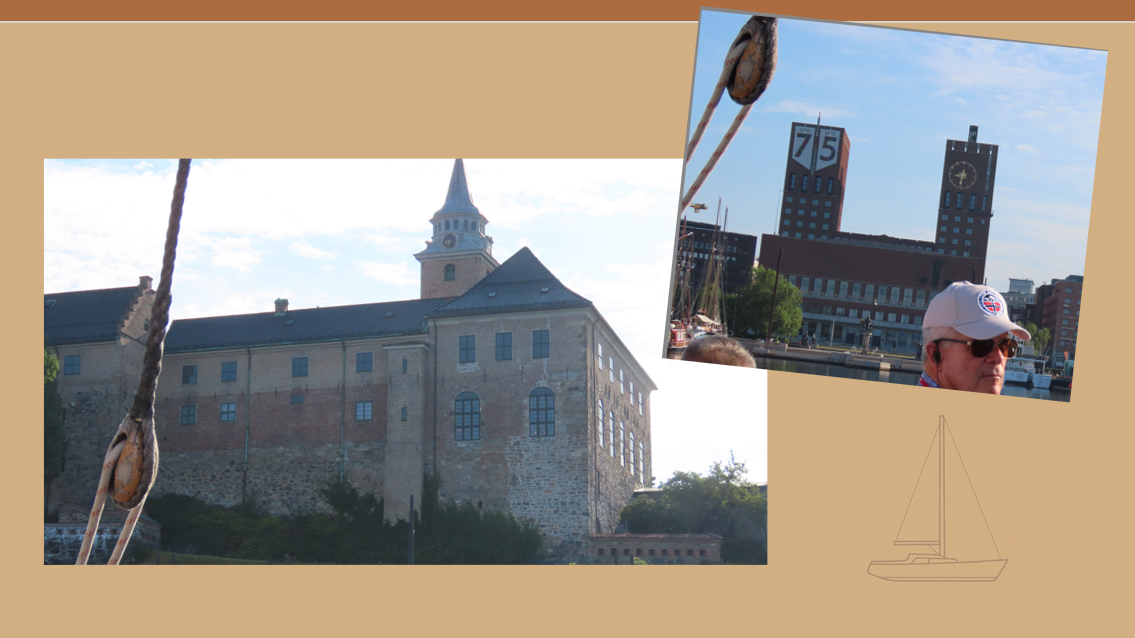
From the Oslo harbor, there was a different perspective of Akershus Fortress and Oslo City Hall—landmarks we’d seen the day before during our panoramic drive through the city.
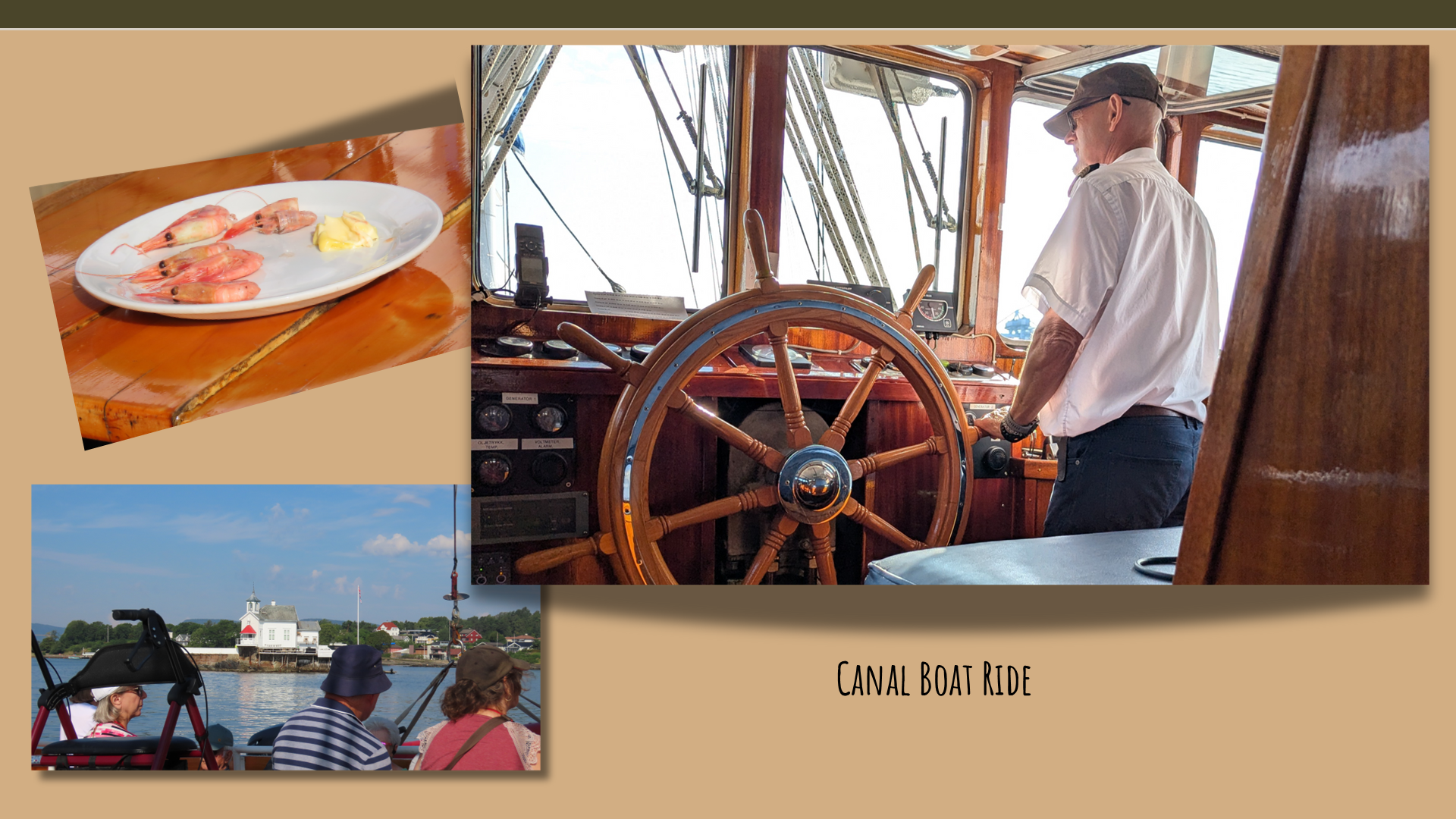
As we sailed through the fjord, a snack of shrimp—said to be freshly caught—was served with mayonnaise. It was quite tasty, if a bit messy to peel and eat.
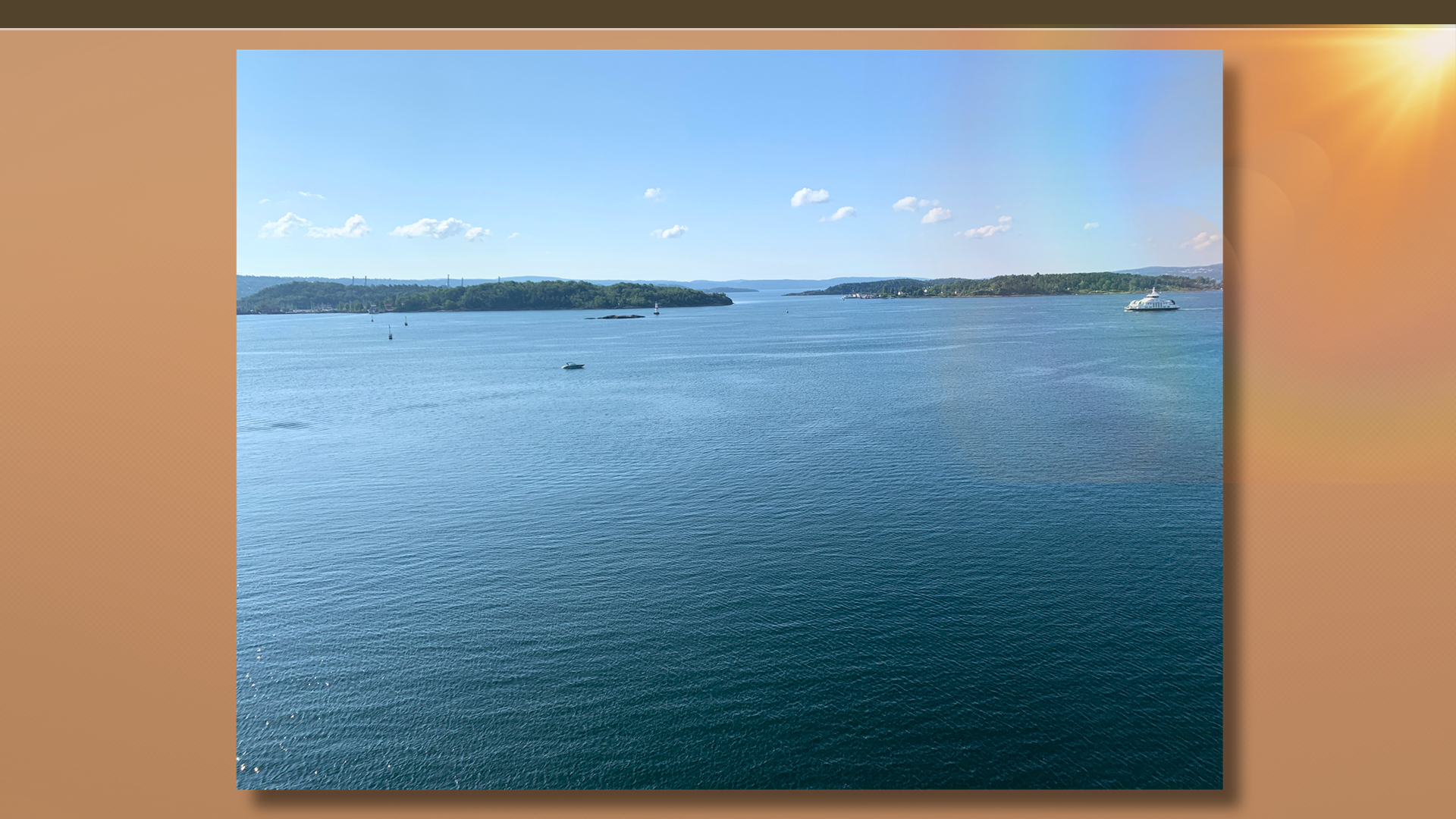
The boat ride carried us out of the harbor and into the fjord, where houses dotted the shoreline—some tucked into the trees, others perched just above the water. We saw Dyna Fyr, a small lighthouse set into the Oslofjord that serves as a navigational aid and is also used for private events. A buoy rocked gently nearby, giving the fjord a classic nautical touch.
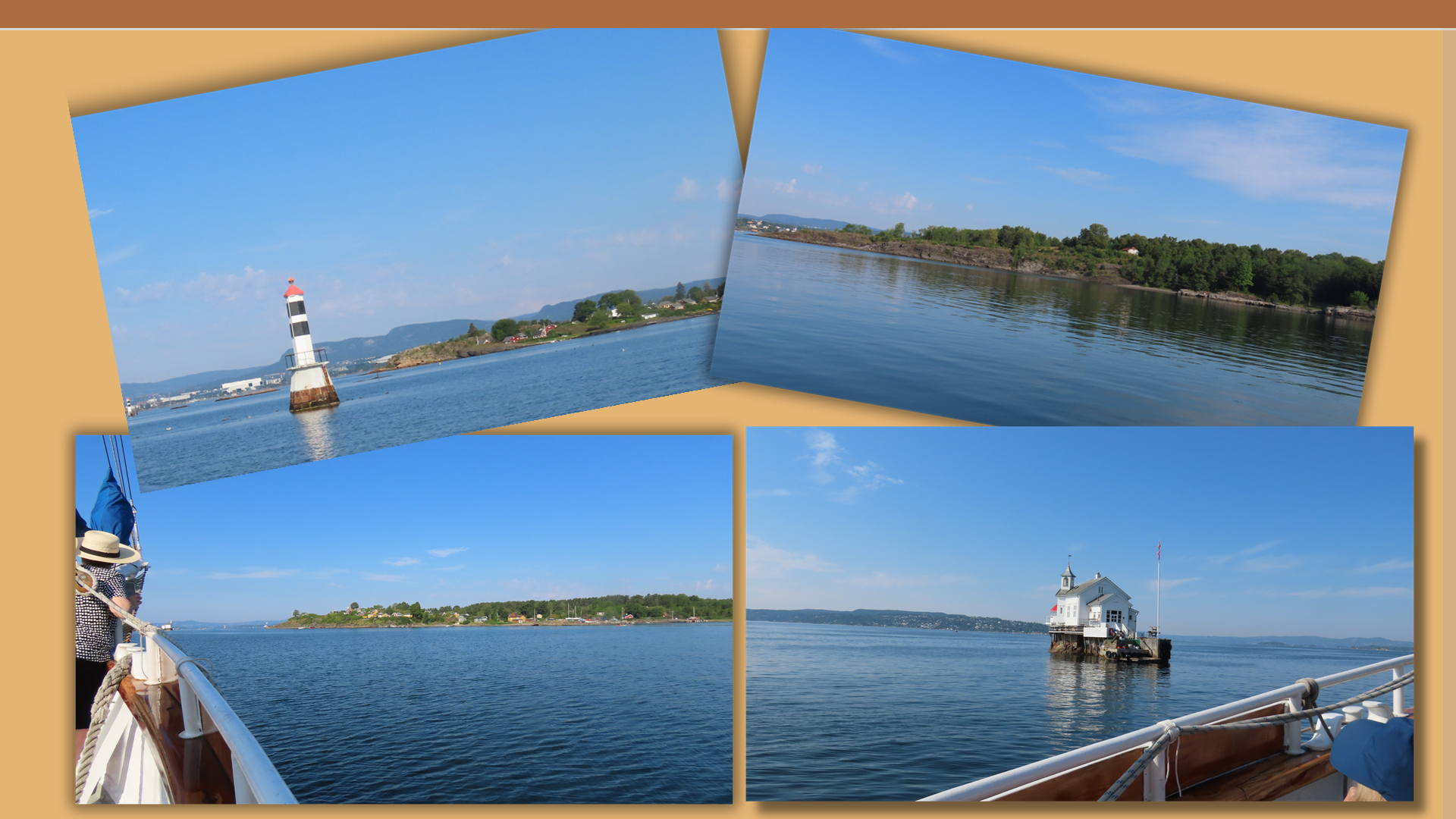
The boat ride carried us out of the harbor and into the fjord, where houses dotted the shoreline—some tucked into the trees, others perched just above the water. We saw Dyna Fyr, a small lighthouse set into the Oslofjord that serves as a navigational aid and is also used for private events. A buoy rocked gently nearby, giving the fjord a classic nautical touch.
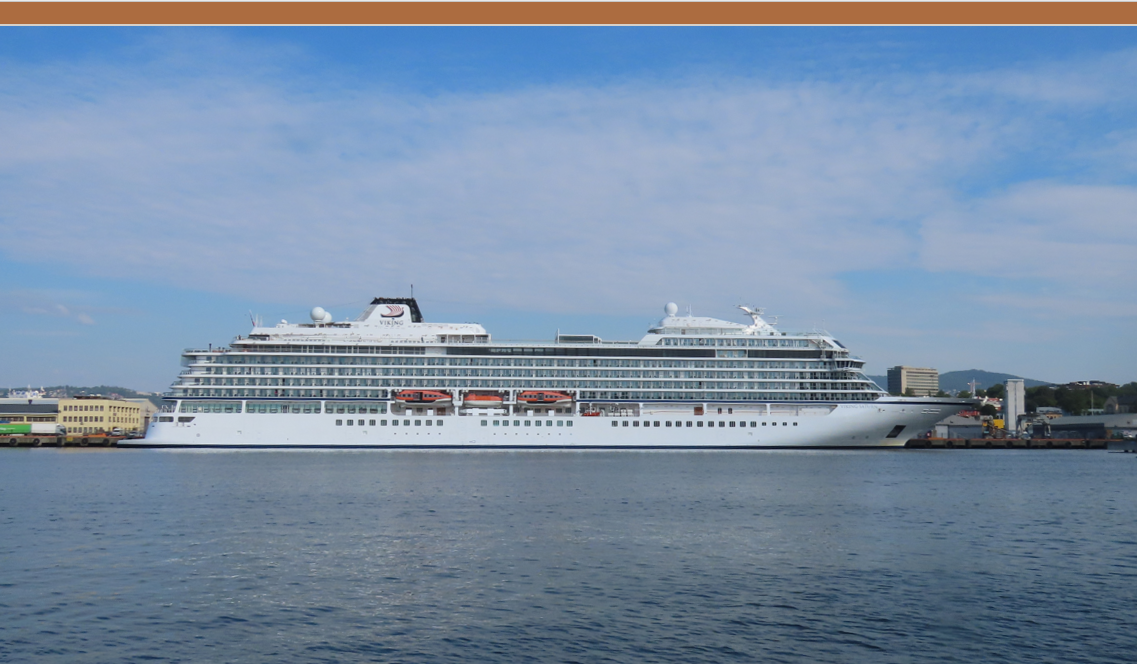
We left the Vega a short distance from the Viking Saturn. On the walk back to the ship, we passed the Oslo Tree, a 14‑meter sculpture made of 150,000 LED lights. It would have been wonderful to see it illuminated at night, but our ship was scheduled to depart at noon.
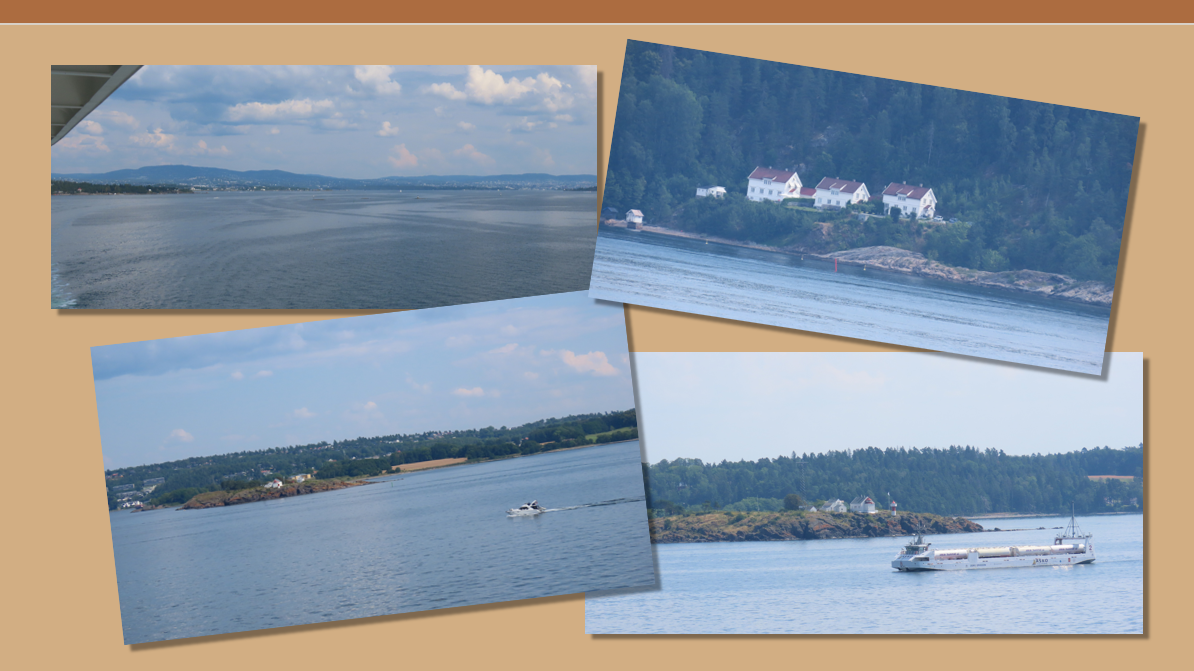
At noon, the ship slipped quietly through the fjord toward the open sea. The water was unbelievably calm as we moved past small islands, scattered boats, shoreline houses, and quiet farms.
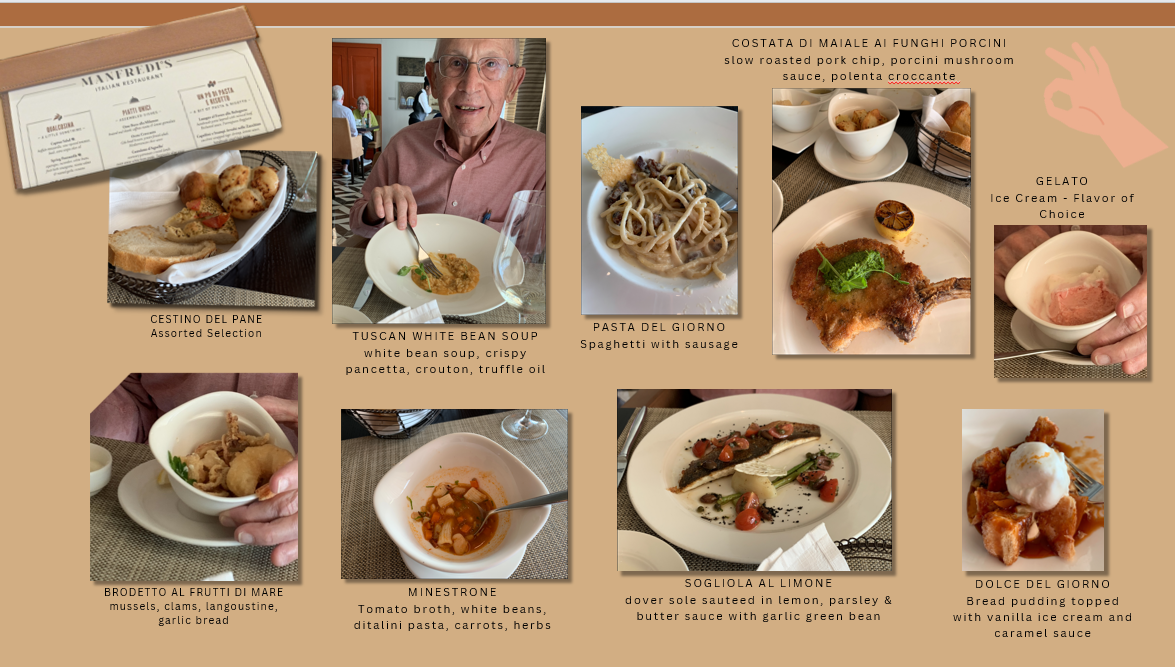
That evening, we dined at Manfredi’s, one of the ship’s specialty restaurants. With help from our waiter, we chose a wonderful meal—fresh bread, appetizers, soup, pasta, and our main courses. Dessert was simple and satisfying. The food was excellent, and it was the perfect way to end the day.
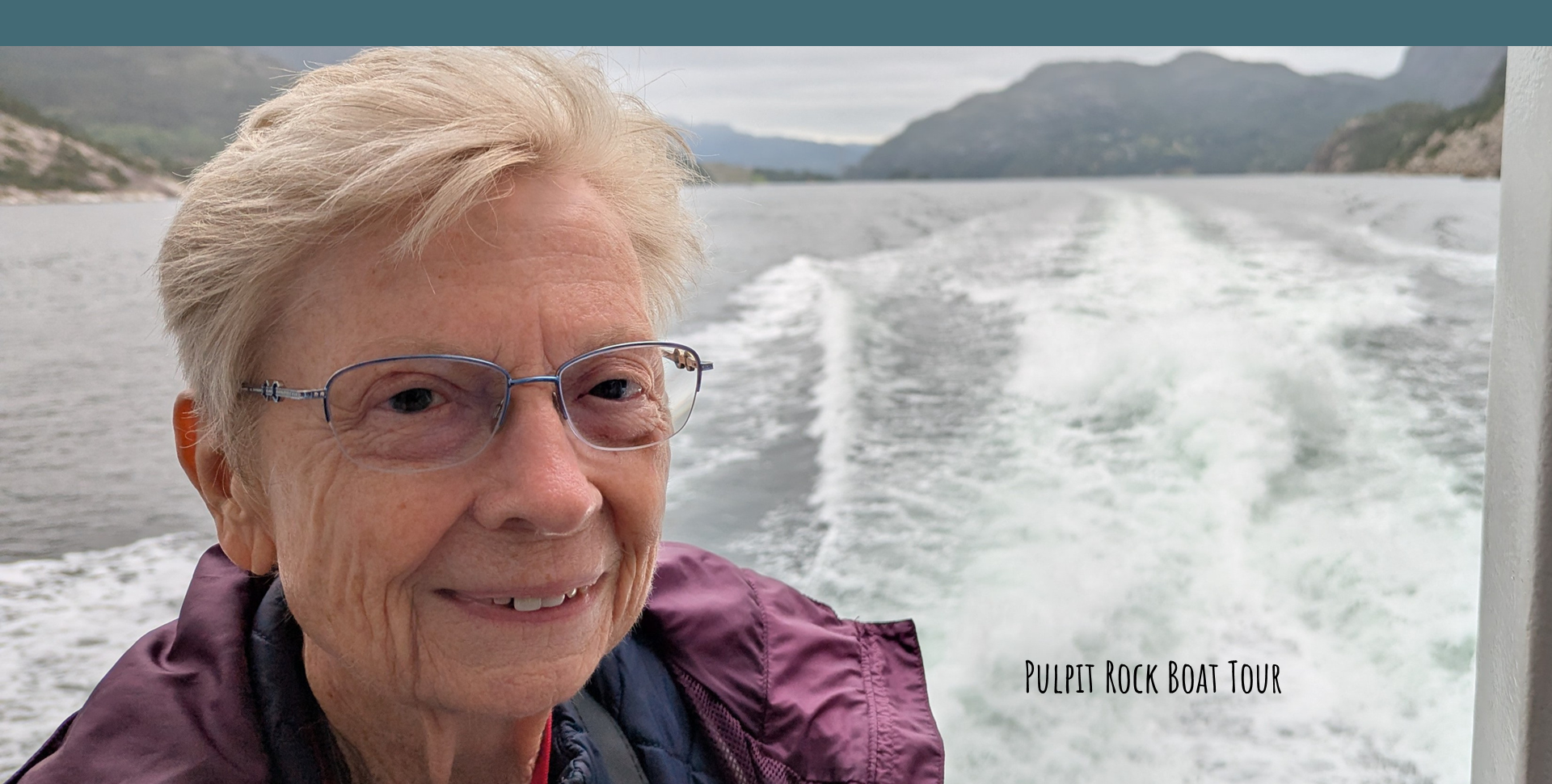
Stavanger, Norway - A Misty Day on the Fjord
The Viking Saturn arrived in Stavanger just in time for our Pulpit Rock boat tour. Clouds clung to the mountains and mist filled the air, but we were hoping for clearer skies. Bundled in layers, we headed into the fjord, ready for whatever the day would bring.
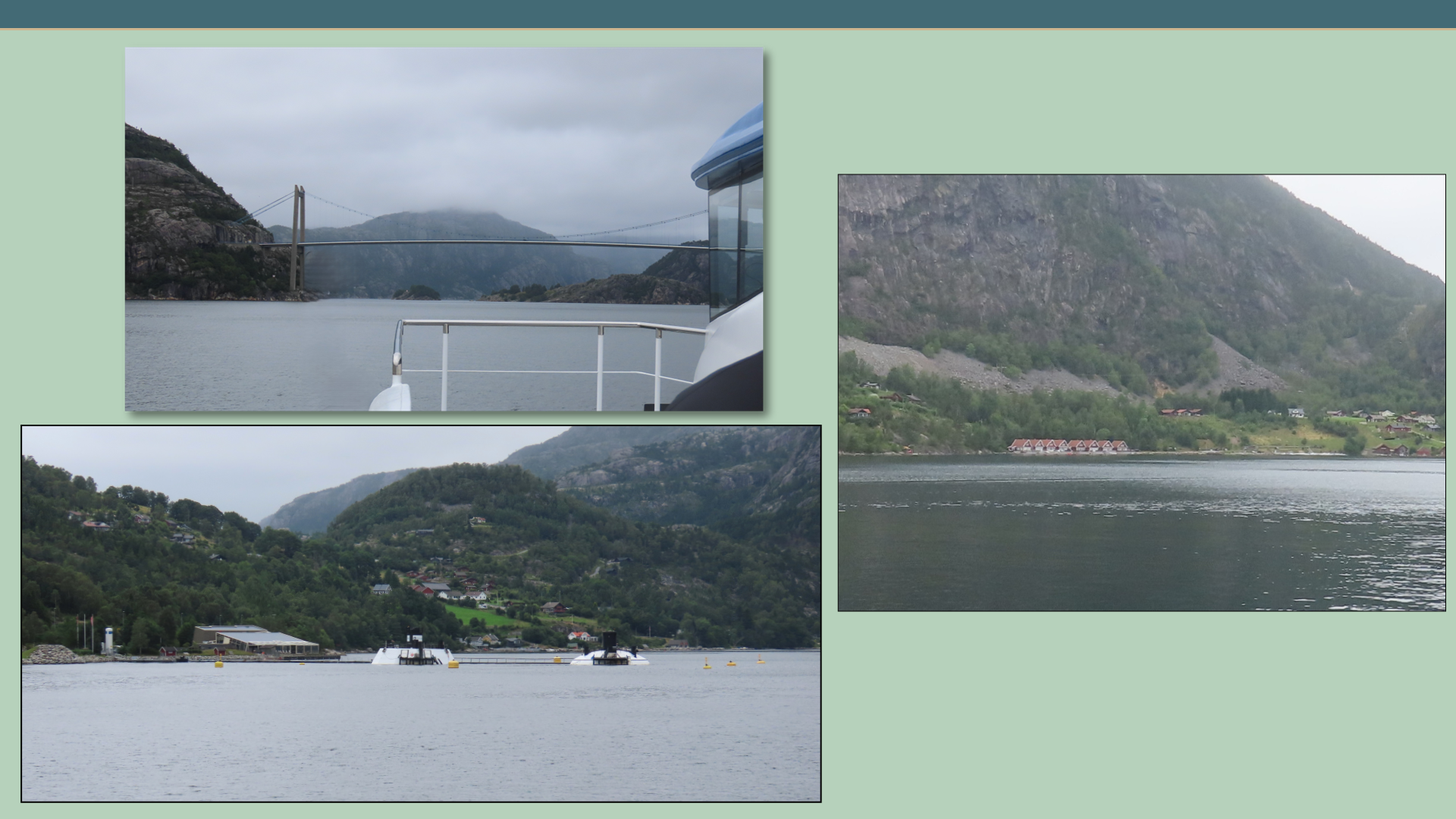
Fish farms dotted the fjord, where salmon were being raised in recirculating aquaculture systems. Further along, the boat slipped under the Lysefjord Bridge, its cables stretching high above. Homes appeared along the shoreline, tucked into the hills, and a row of vacation rentals beside the water offered peaceful days and breathtaking views. What a stunning place to call home — or escape to for a while
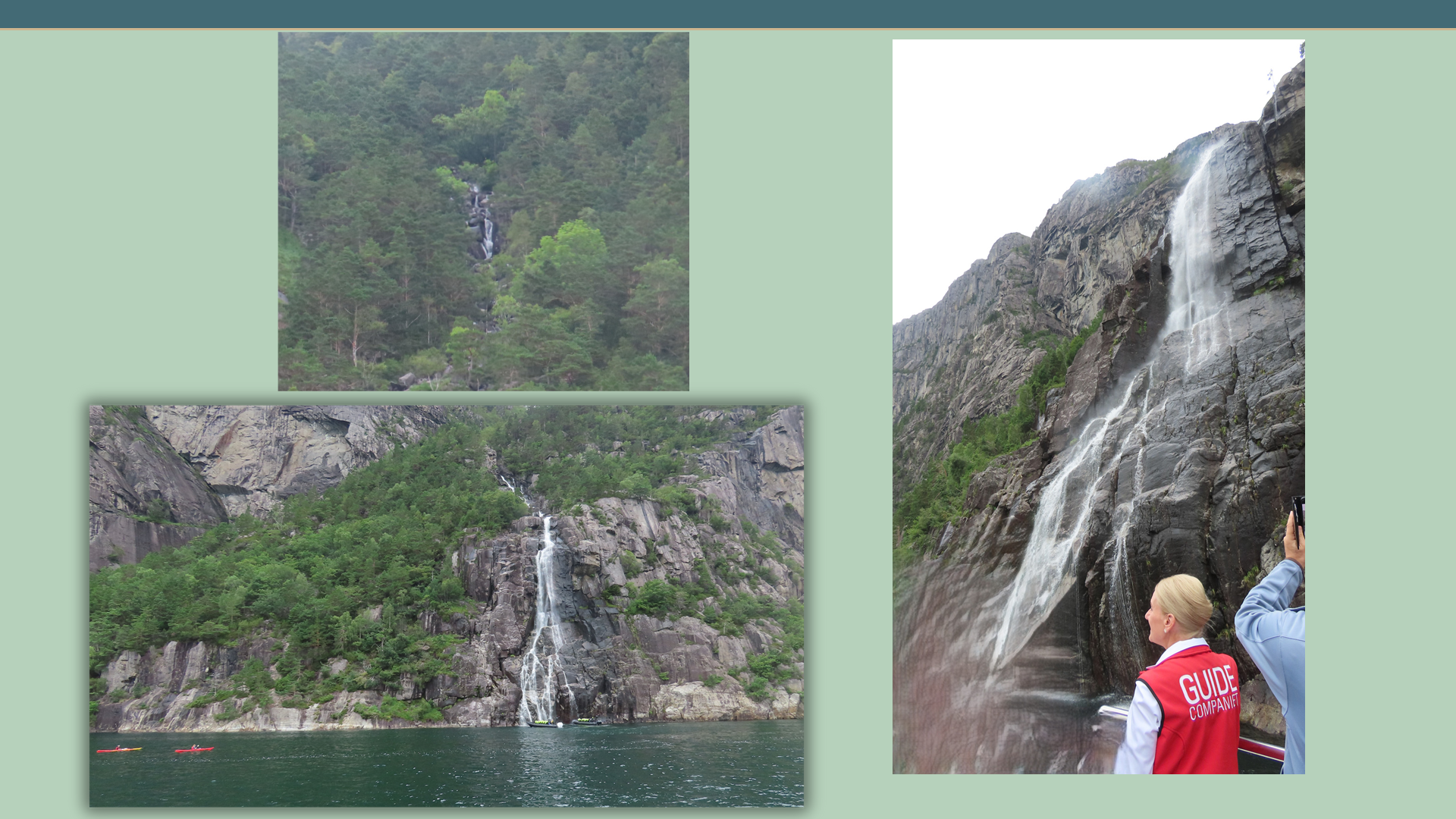
Cliffs towered above as the boat cruised deeper into the fjord, their sheer faces disappearing into mist. The dramatic landscape made us feel small in the vastness of nature. Narrow inlets cut into the cliffs, and waterfalls appeared one after another — some tumbling from high in the mountains, others spilling directly into the fjord. The captain eased in close to one of them, so close that mist drifted across our faces. It was an exhilarating experience.
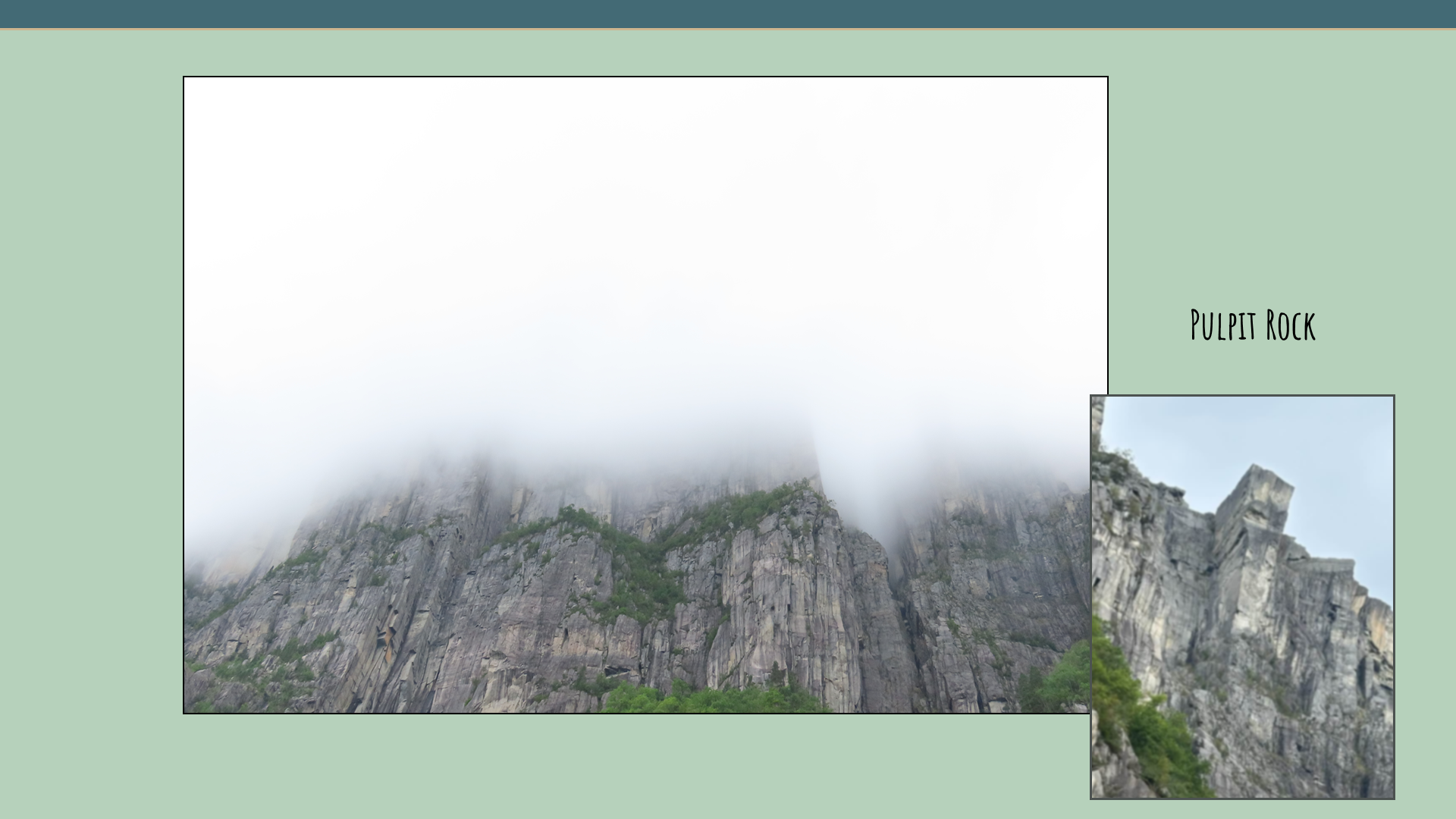
Pulpit Rock should have been the highlight of our tour. But clouds shrouded the cliff, hiding the famous rock from view. Our captain made two stops there, hoping the skies would clear — but it wasn’t to be. We’ll have to be content with photos from those lucky enough to visit on a sunny day.
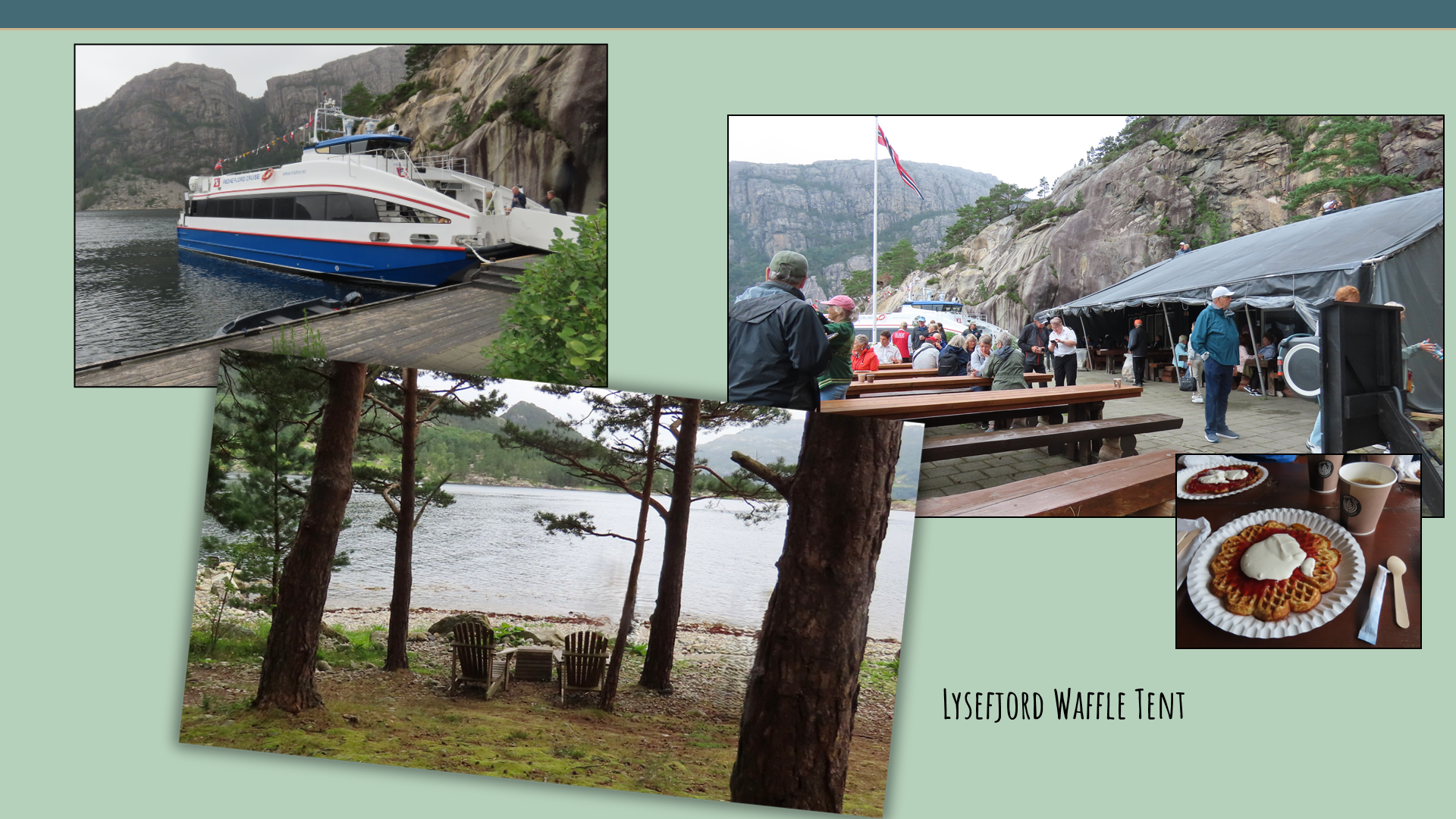
Before heading back to Stavanger, we made a stop at the Lysefjord Waffle Tent, nestled right by the water — a spot for summer tourists. The waffles, served with strawberry jam and sour cream, were a delightful twist from what we’re used to at home. And the coffee was a welcome warm‑up. The setting was lovely, with chairs beneath the trees and a peaceful view of the fjord. It looked like the perfect place to relax — but not that day; we had more adventure ahead.
A Stroll Through Stavanger's Old Town
After the boat returned to Stavanger, there was still time to explore the old town before our ship’s departure.
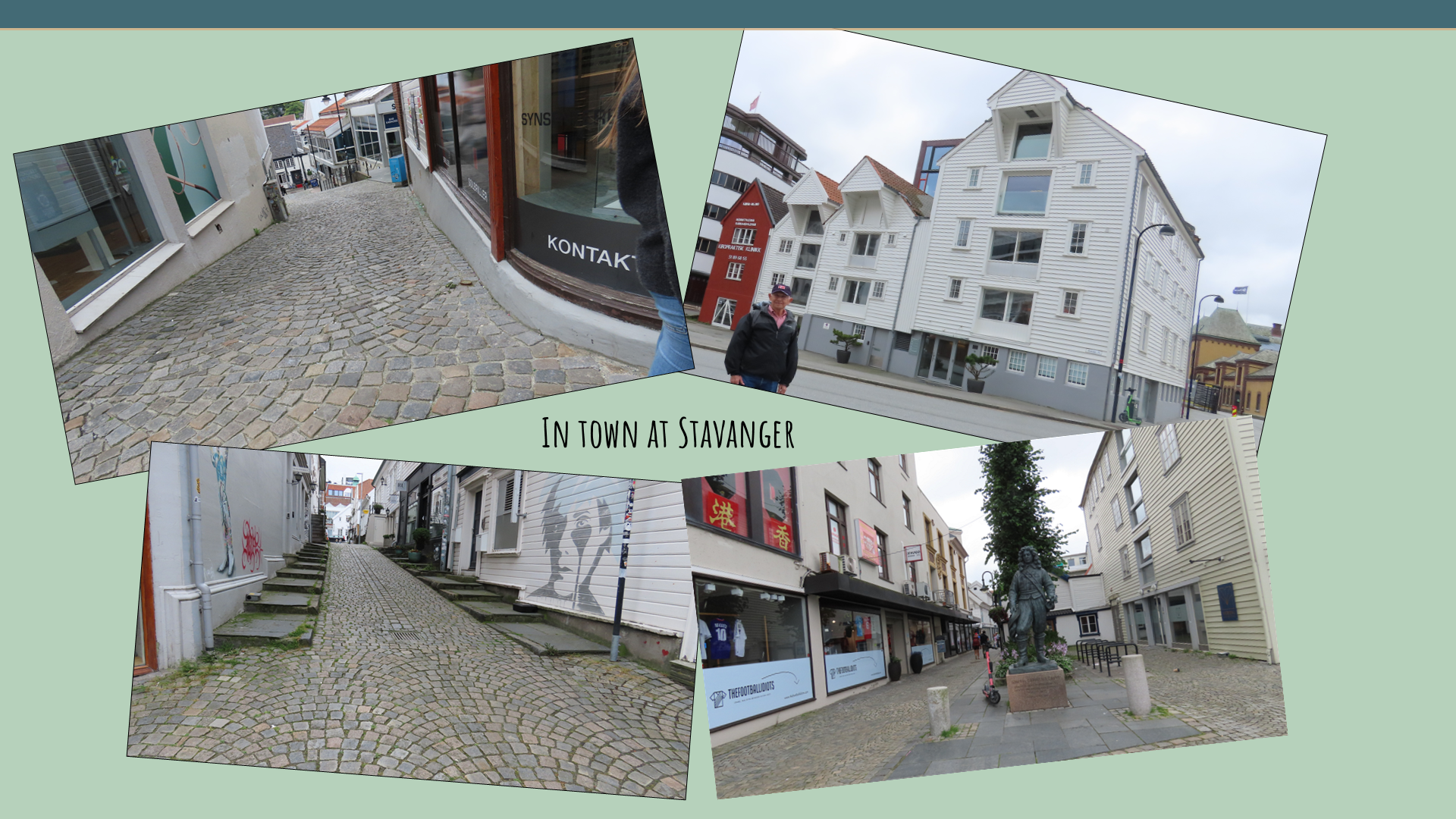
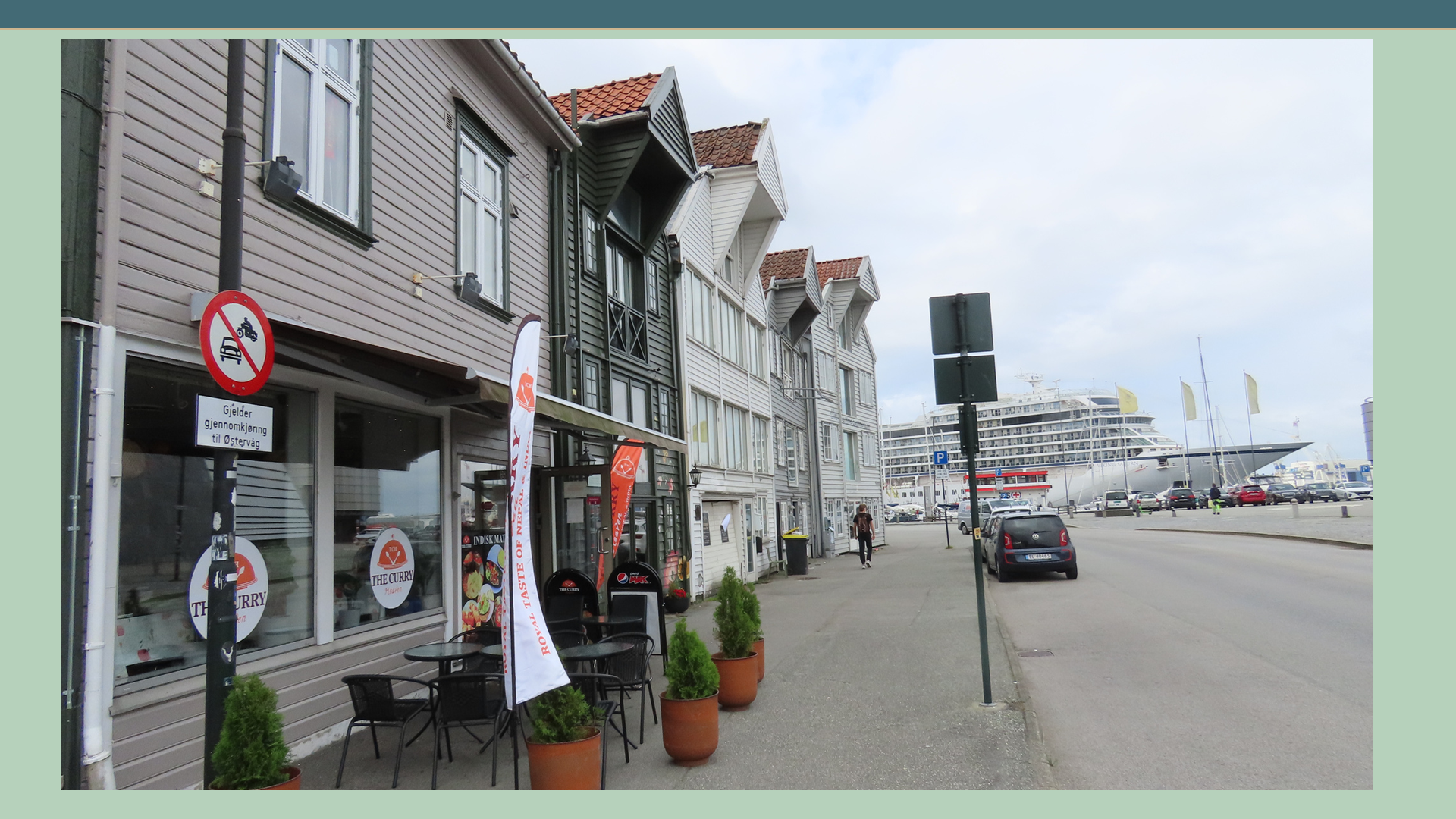
Stavanger’s old town offered a quiet charm — narrow cobbled streets, stairways climbing the hillside, and a small statue tucked along the way. It was a simple, unhurried glimpse of everyday life.
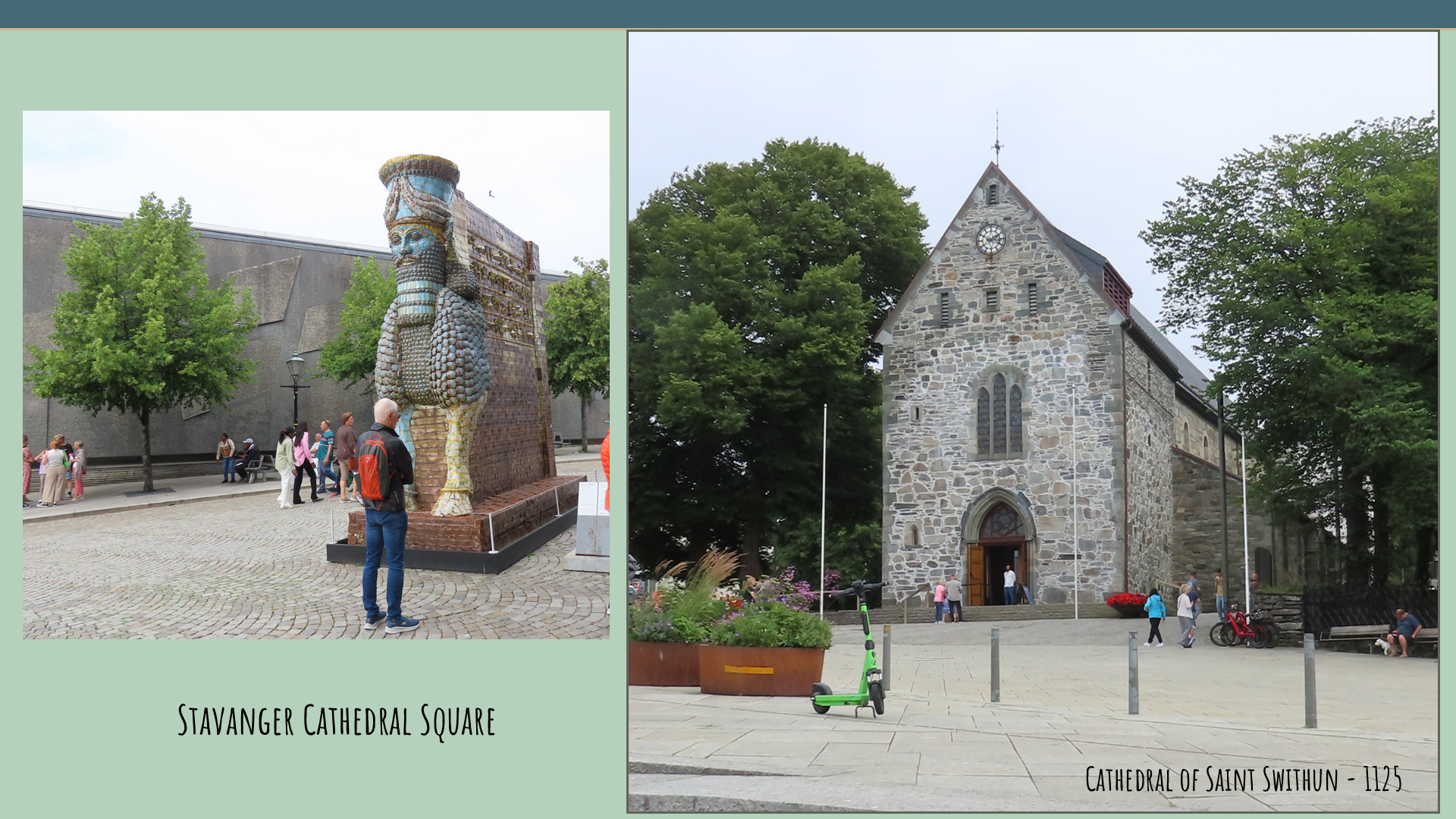
In the central square, Stavanger Cathedral was an imposing sight. It’s the oldest cathedral in Norway, dating back to the early 12th century. Although Stavanger was affected by World War II, the cathedral remained largely unscathed. A statue honoring a sculpture destroyed in Iraq now stands in the same square, a sharp contrast to the historic cathedral and the modern buildings around it.”
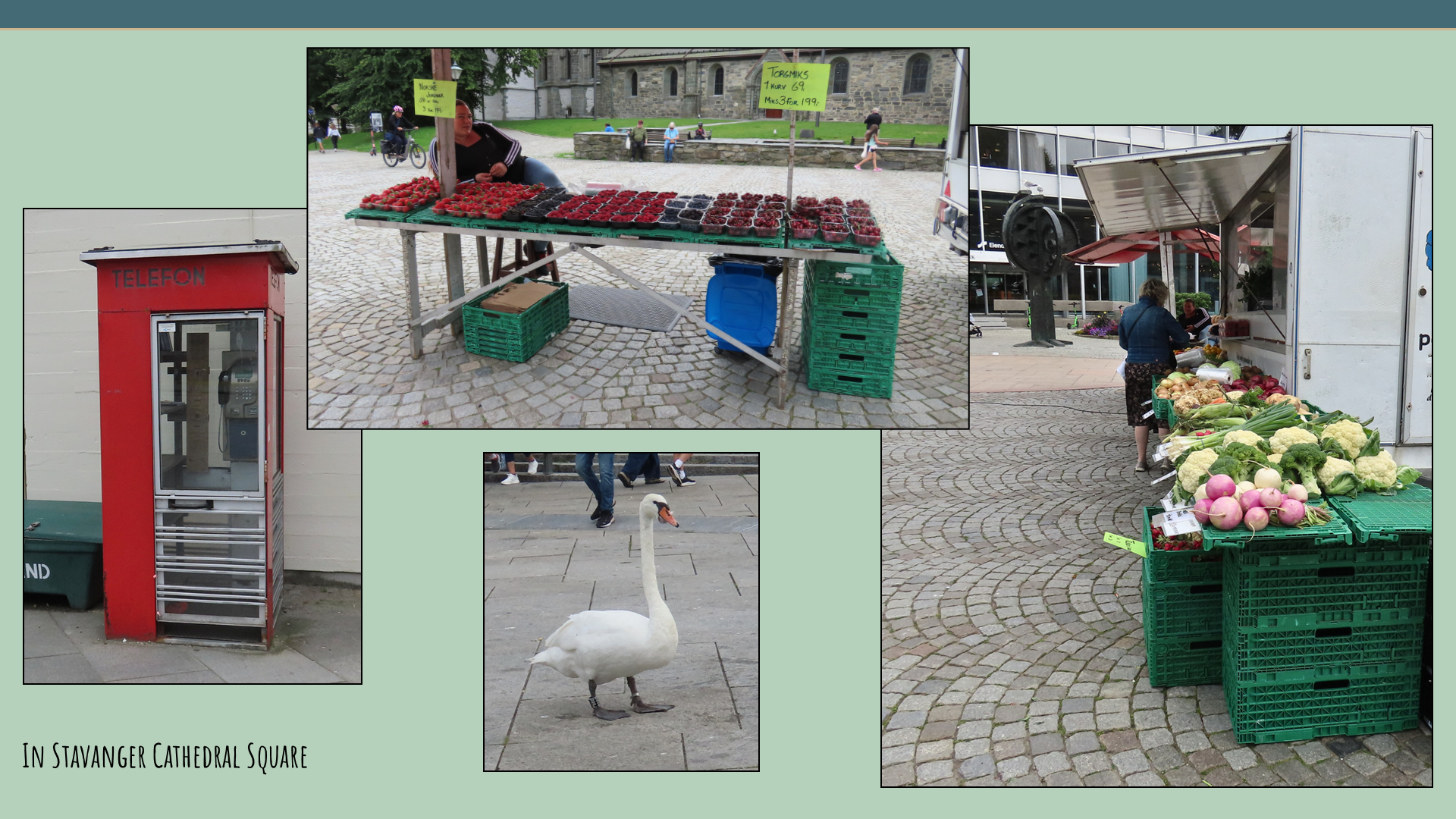
In the town square, a small outdoor market offered berries and vegetables. In another corner of the square, a friendly goose wandered about, clearly hoping for a handout. A working telephone booth stood nearby — an unexpected sight in our age of mobile phones. And nearby, the cathedral rose above it all.
Stavanger was a lovely town where we would have liked to spend more time, but our ship awaited at the end of the street, preparing for a 5:00 pm departure. We made our way back toward the dock, ready to unwind and prepare for more adventure in another town the next day.
Eidfjord, Norway - A Day of Trains and Waterfalls
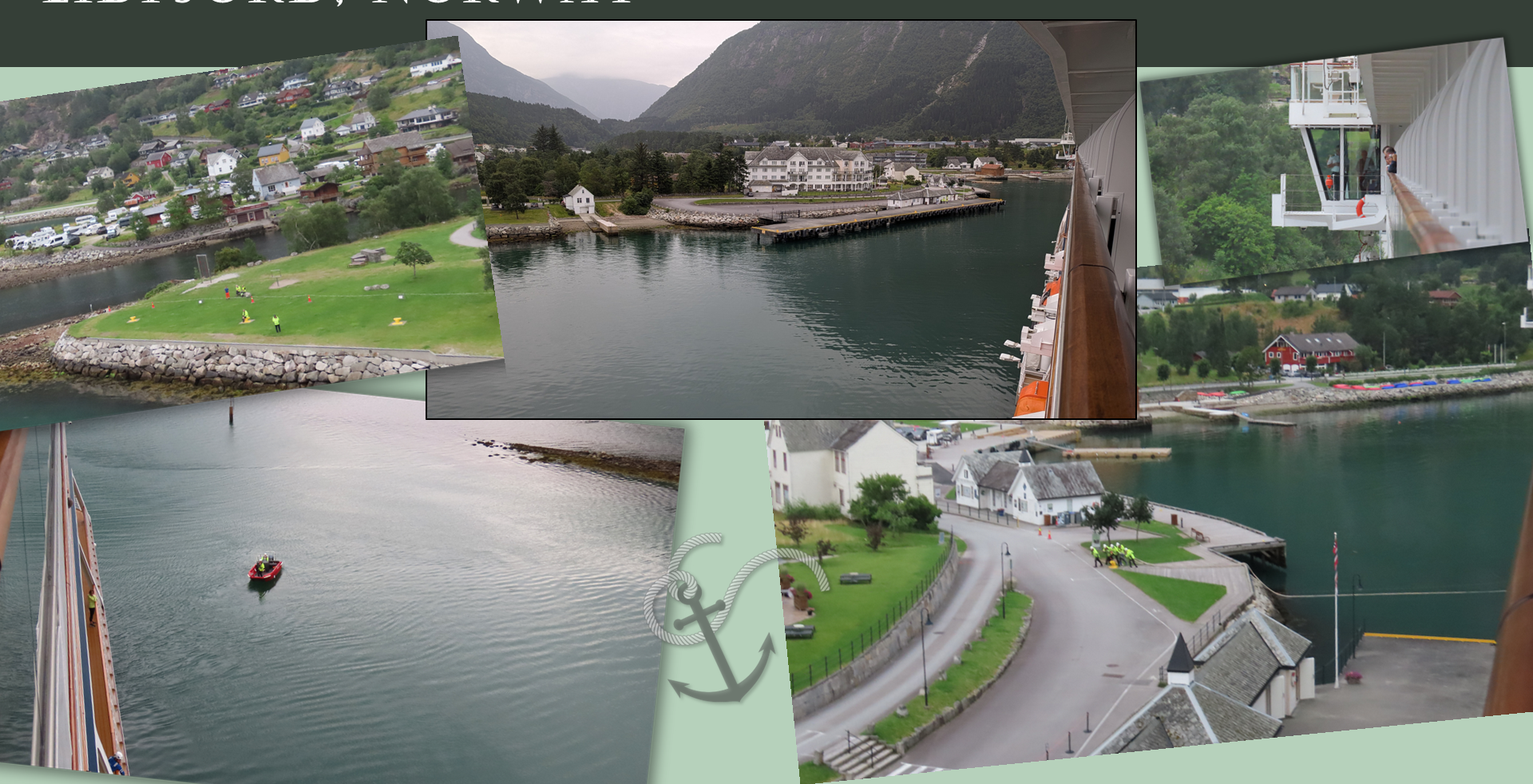
The Viking Saturn sailed into Eidfjord at 7:00 AM. As we drew closer, the dock looked impossibly small for a ship of our size. It took a coordinated effort to secure the vessel. On a grassy flat beside the bow, men waited as heavy ropes were ferried over to them by two crewmen in a small boat. The lines were hauled in and tied fast, while at the stern another team worked to secure the ship’s rear. High above, the captain watched from the bridge, overseeing every step to ensure his vessel wasn’t going anywhere.
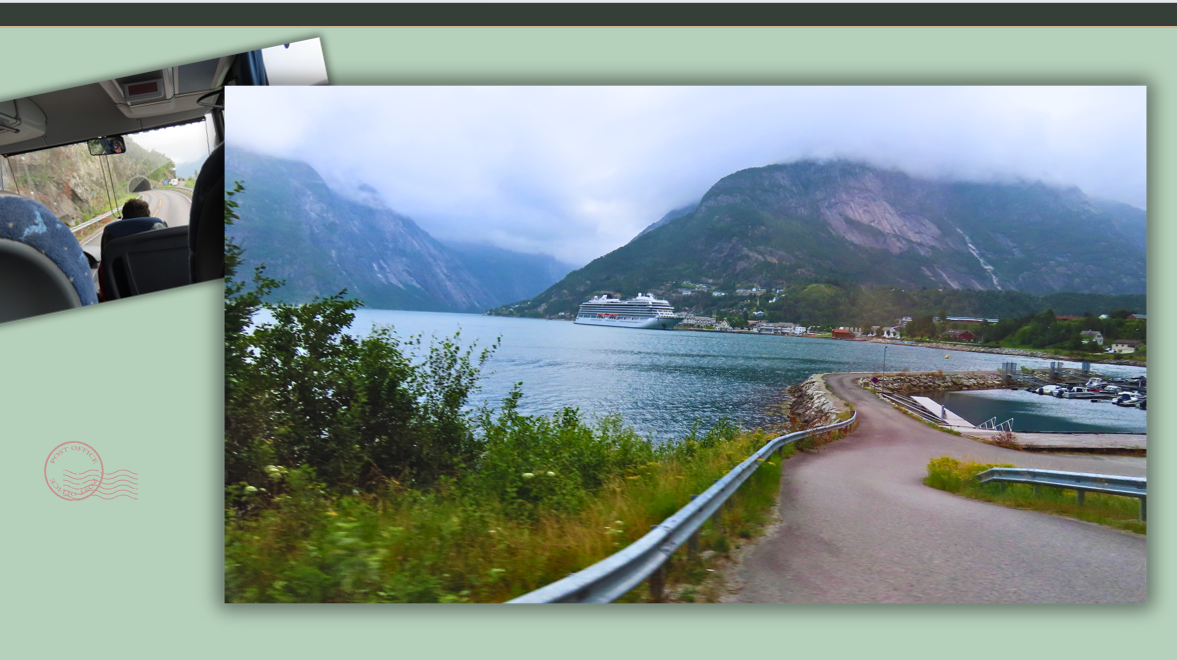
By 9:30, the ship was secure, breakfast was behind us, and we were off on the day’s excursion — the Flåm Railway. As we left Eidfjord, the Viking Saturn lay at the dock, framed by the fjord and mountains shrouded in mist — a scene so Norwegian it could have been lifted from a postcard (or a Viking ad).
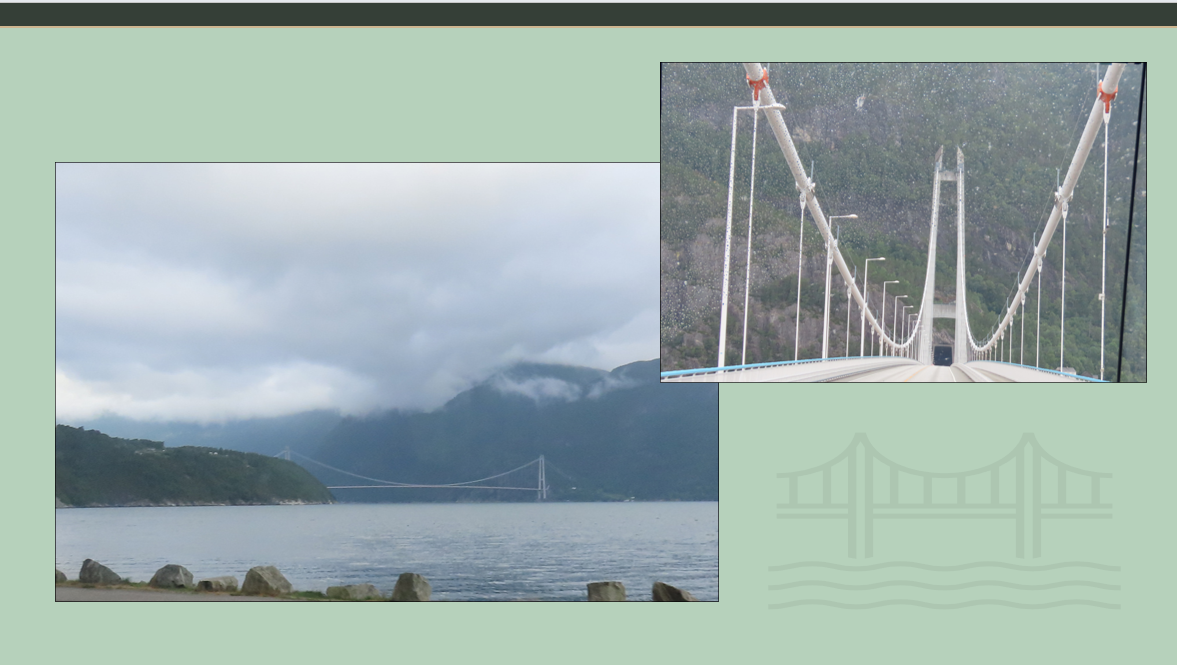
In the distance, we spotted the Hardanger suspension bridge, its span stretching from one tunnel directly into another. Later, as we drove past, we caught sight of the dark mouth of one of those tunnels, framed by the bridge’s arc.
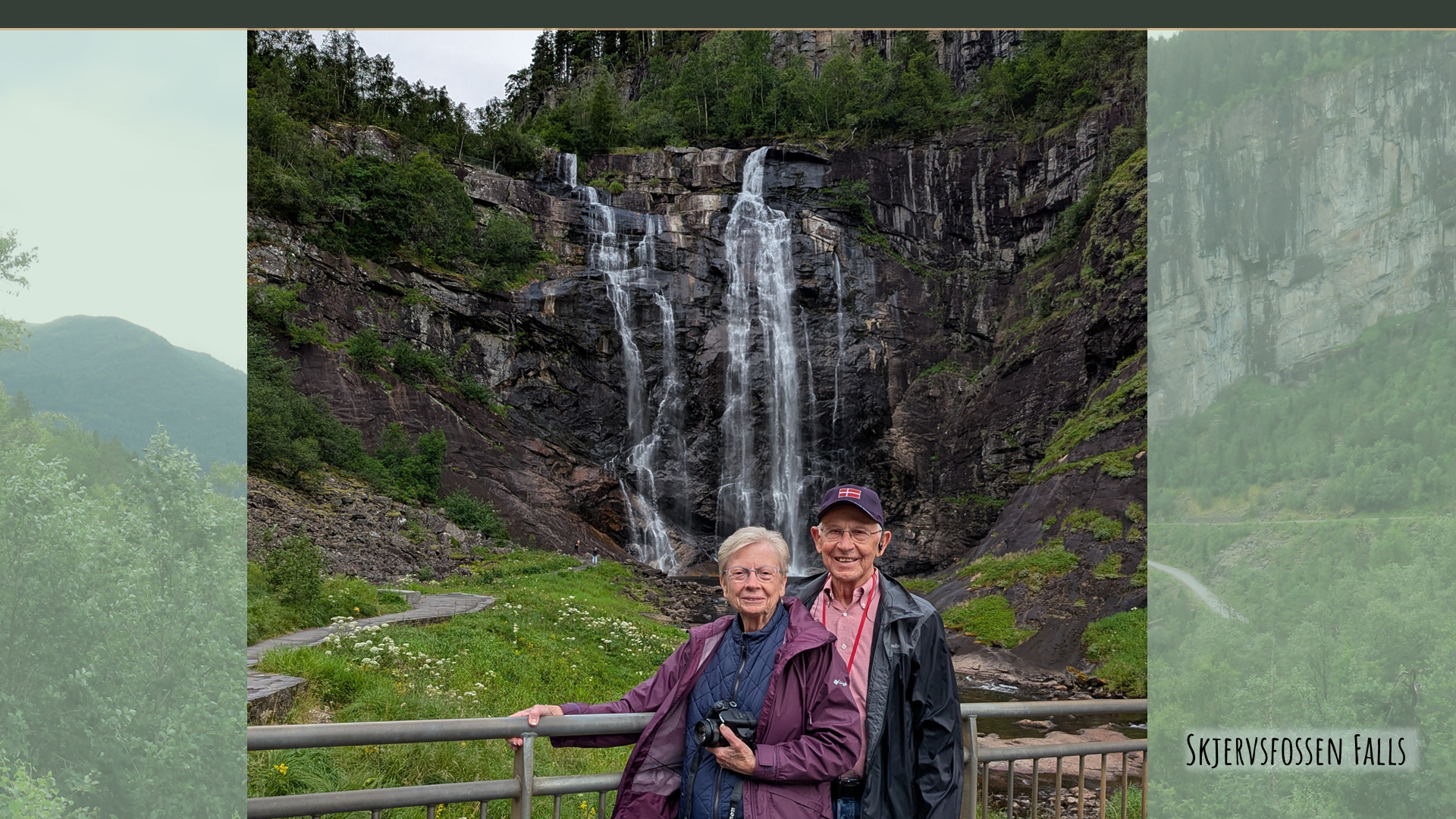
Our first stop was Skjervsfossen Falls, a graceful double cascade tucked into a steep, green valley. The path leading down toward the lower viewpoint looked inviting, but with only a short stop we chose to stay at the top and enjoy the view. The cool mist drifting off the falls made it an easy place to pause before continuing deeper into the mountains.
We drove through Voss on our way to the railway station to catch our train to Myrdal and then on to Flåm. Along the way, we spotted Vangskyrkja, a stone church dating back to the 1270s, with its distinctive wooden steeple added in the 1600s. Overhead, gondolas glided across the hillside, carrying vacationers up toward the mountains. The town was bustling, with plenty of people out and about.
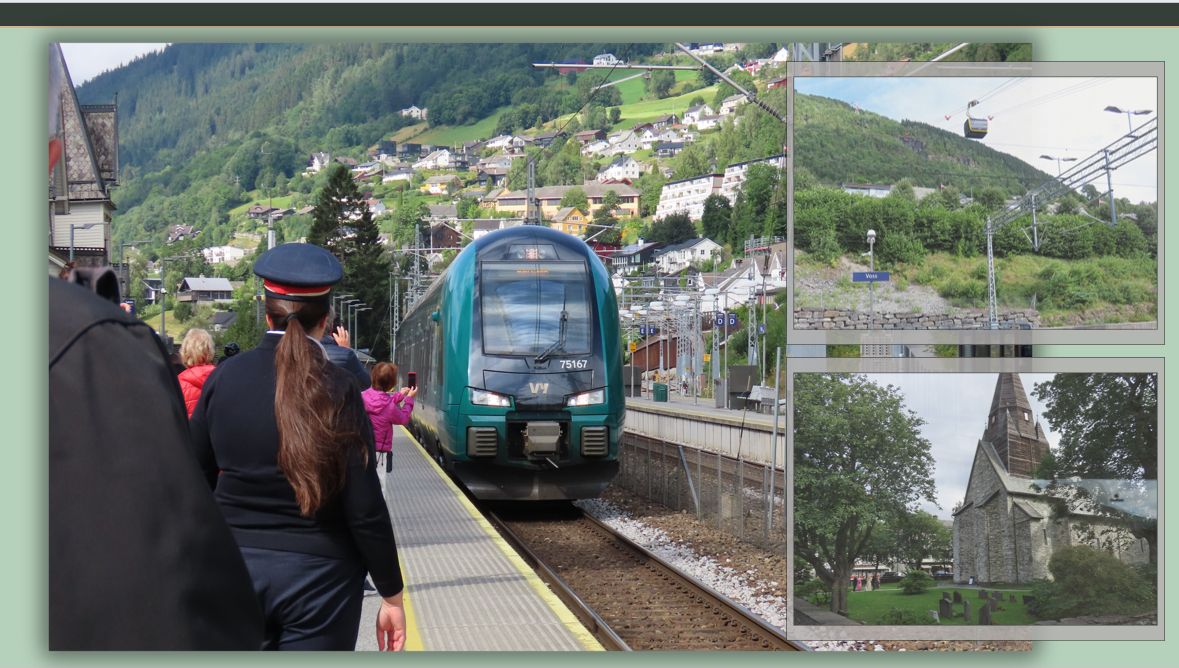
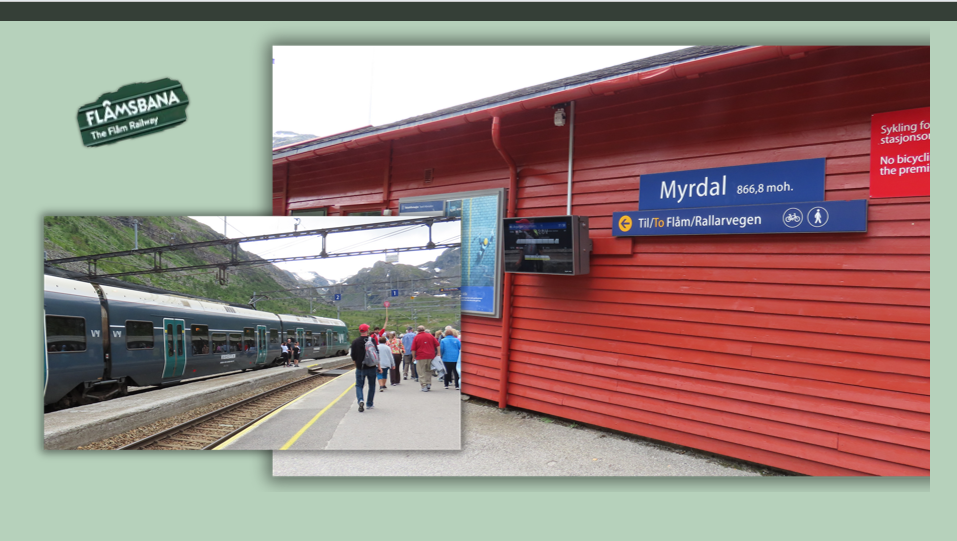
The electric-powered train was quiet and smooth as it climbed the mountain, winding through villages, farmland, and valleys. We stepped off the Bergen Line at Myrdal station. Within minutes, our guide had us aboard the Flåm Railway, ready for the descent from the mountain.
The scenery was beautiful, but taking photos through the windows was tricky. Catching a view between bridge railings took perfect timing (and a bit of luck), but even with the challenges, the landscape was worth photographing.
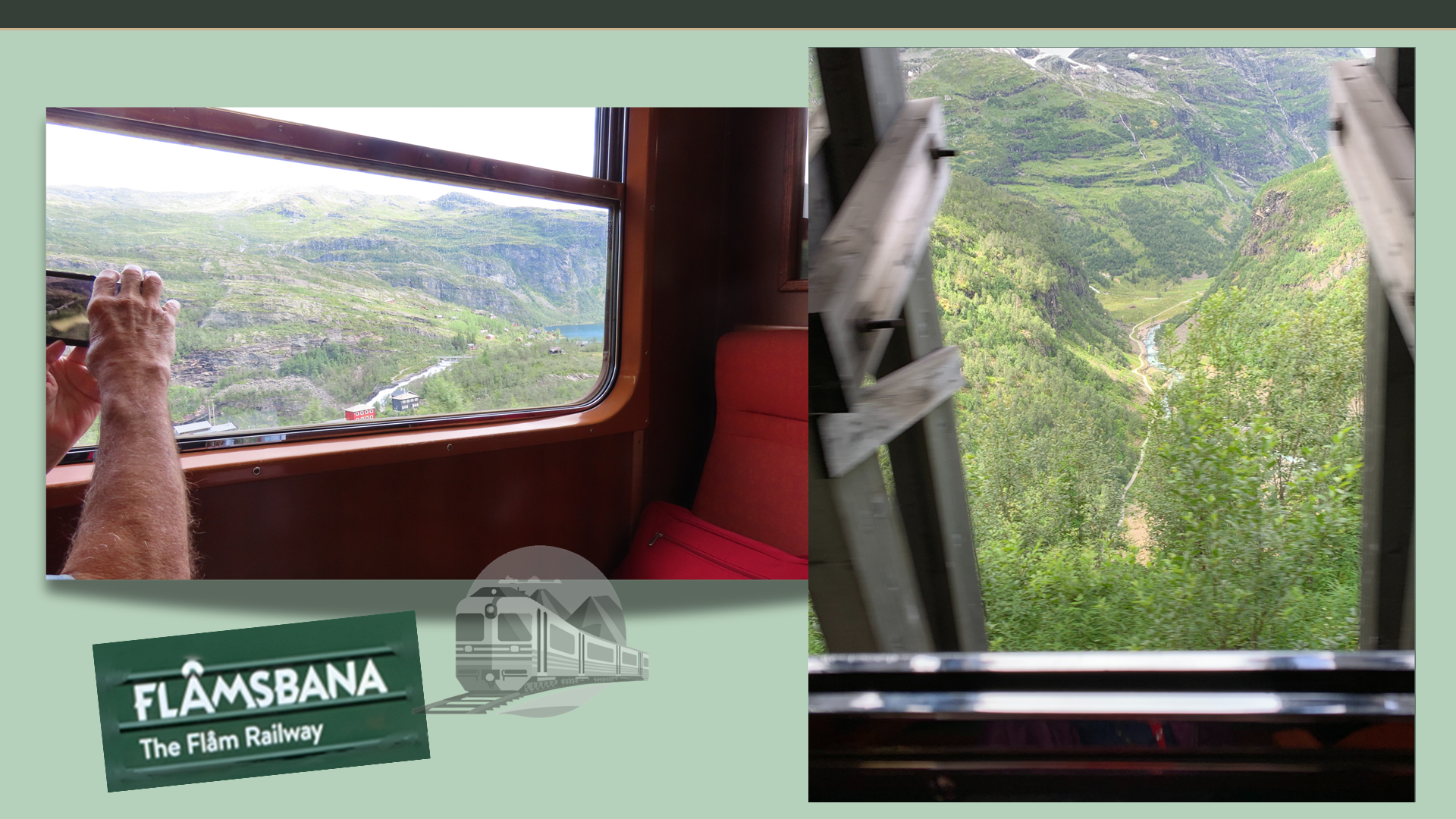
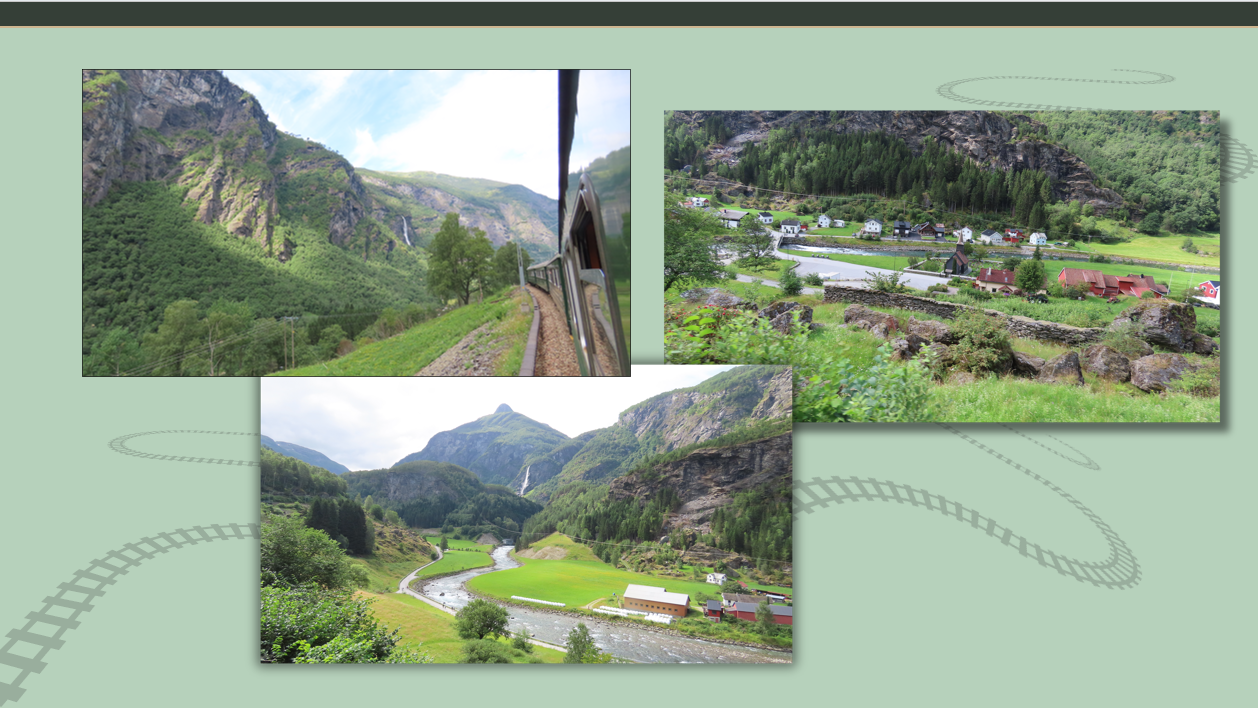
As the train rolled along, we eased into more and more beautiful scenery. A quiet valley and a far-off waterfall whispered of what was to come. There were villages nestled in the valleys, alongside crystal-clear streams fed by countless waterfalls. We passed farms, winding streams, and almost always we could spot a waterfall somewhere.
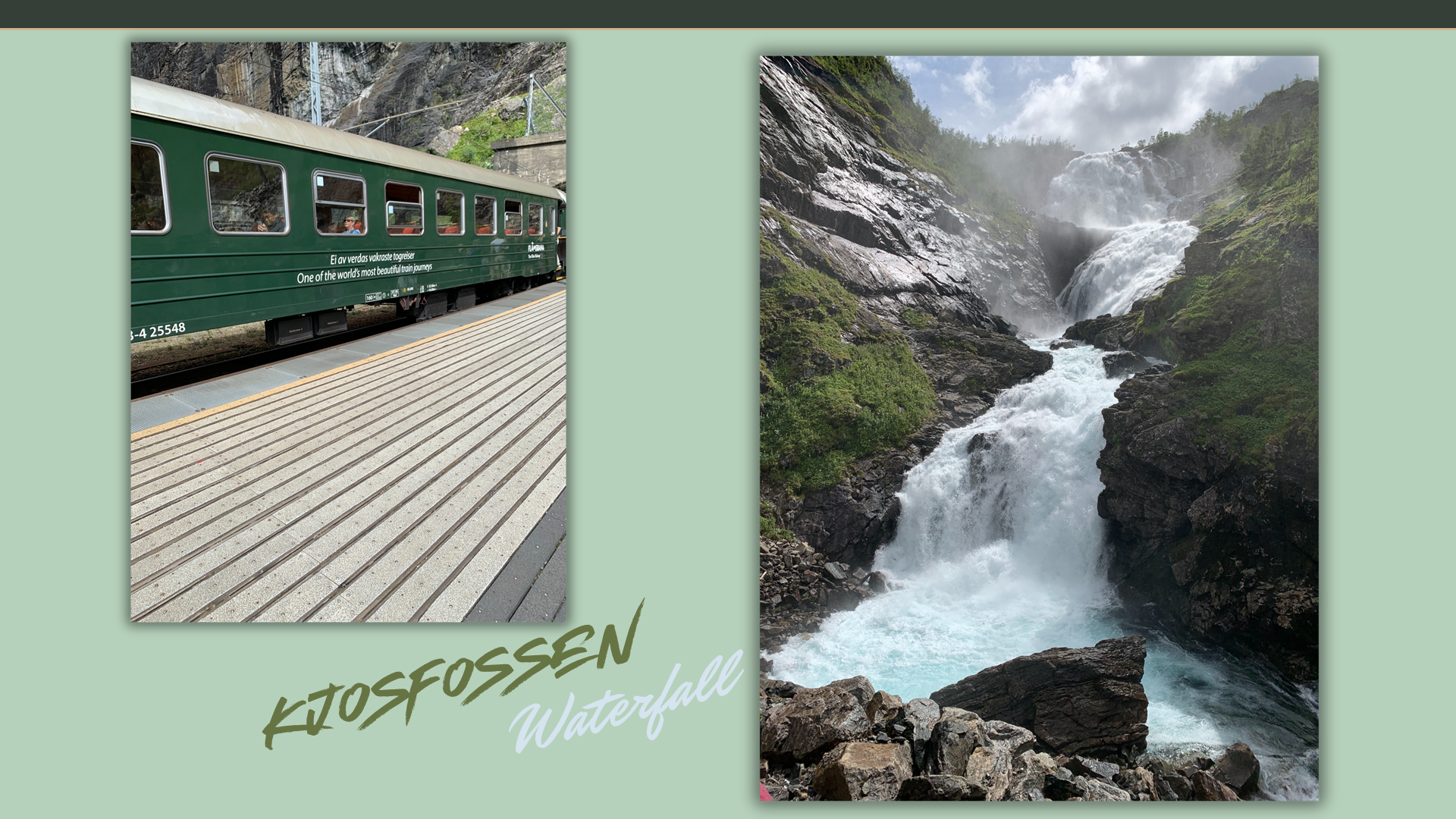
The train stopped right beside the Kjosfossen Waterfall, giving passengers time to step off and take photos of the beautiful falls. Water thundered down its 738‑foot drop, spraying a fine mist across the platform. It was even prettier once the crowd reboarded the train. Dorothy lingered a moment longer, taking in the view, and had to scramble to hop back on just before it pulled away.
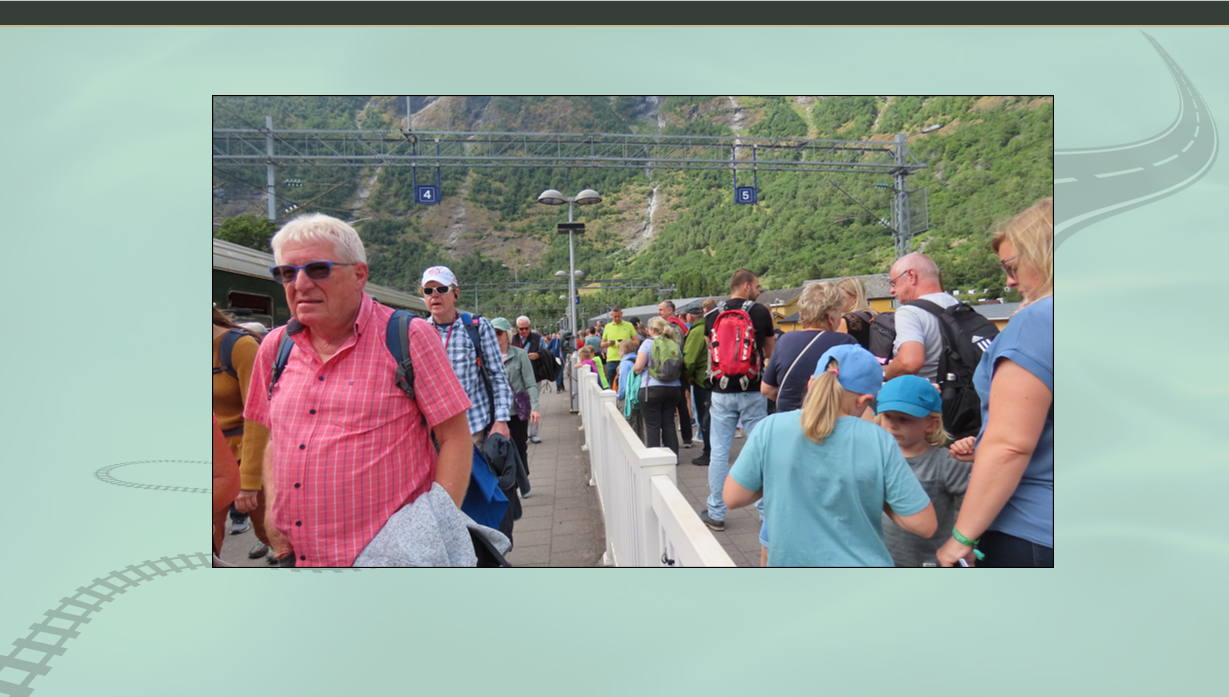
In Flåm, we left the train to continue our journey by motorcoach. A crowd was lined up, eagerly waiting for the ride back up the mountain. The Flåm Railway is one of Norway’s most popular tourist attractions, and now we know why.
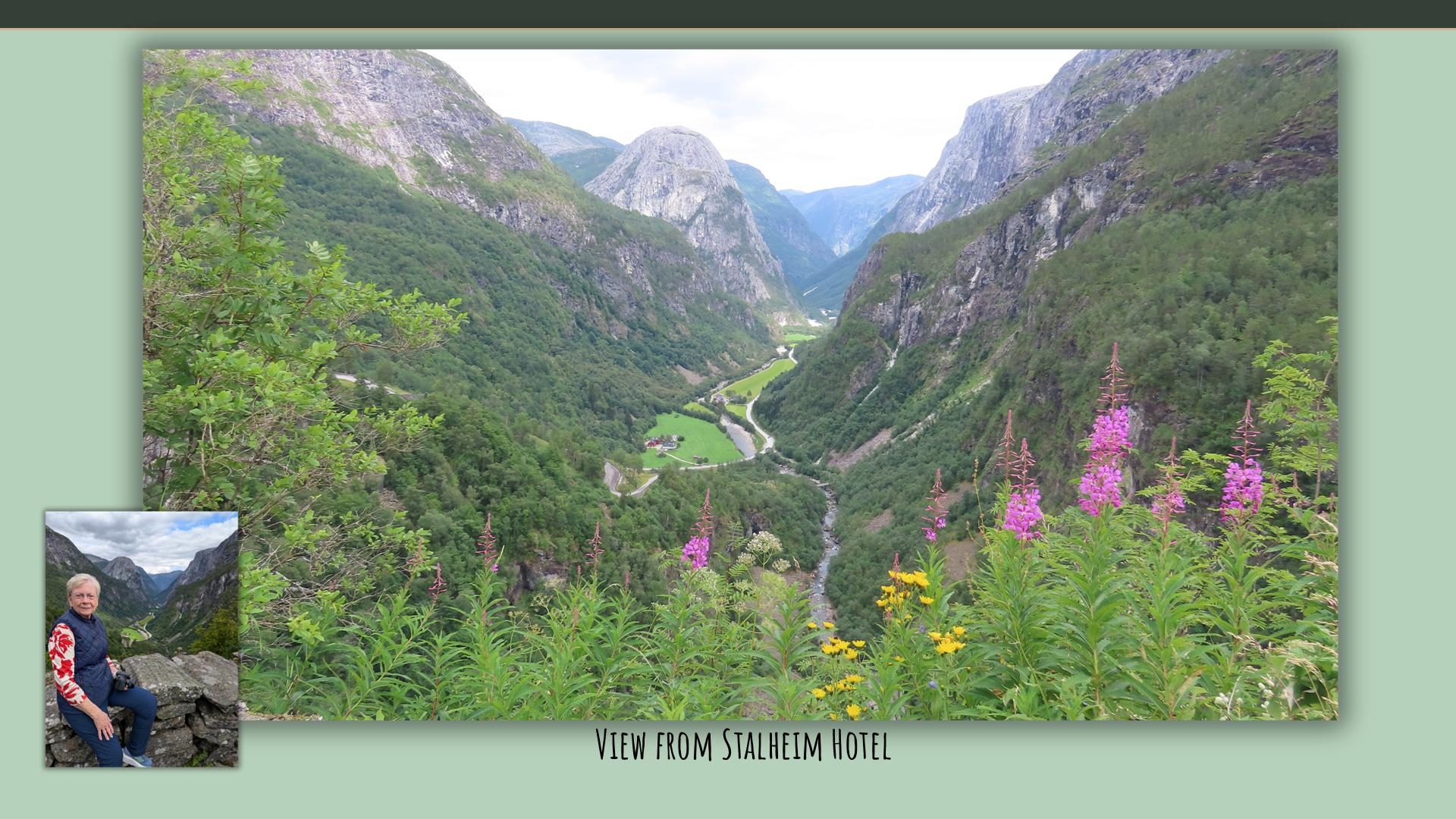
A late lunch at the Stalheim Hotel was a welcome break. The entrées were satisfying and desserts that were truly fantastic. A short stroll afterward led us to a viewpoint where the scene was breathtaking. It was one of those “Oh, my!” moments.
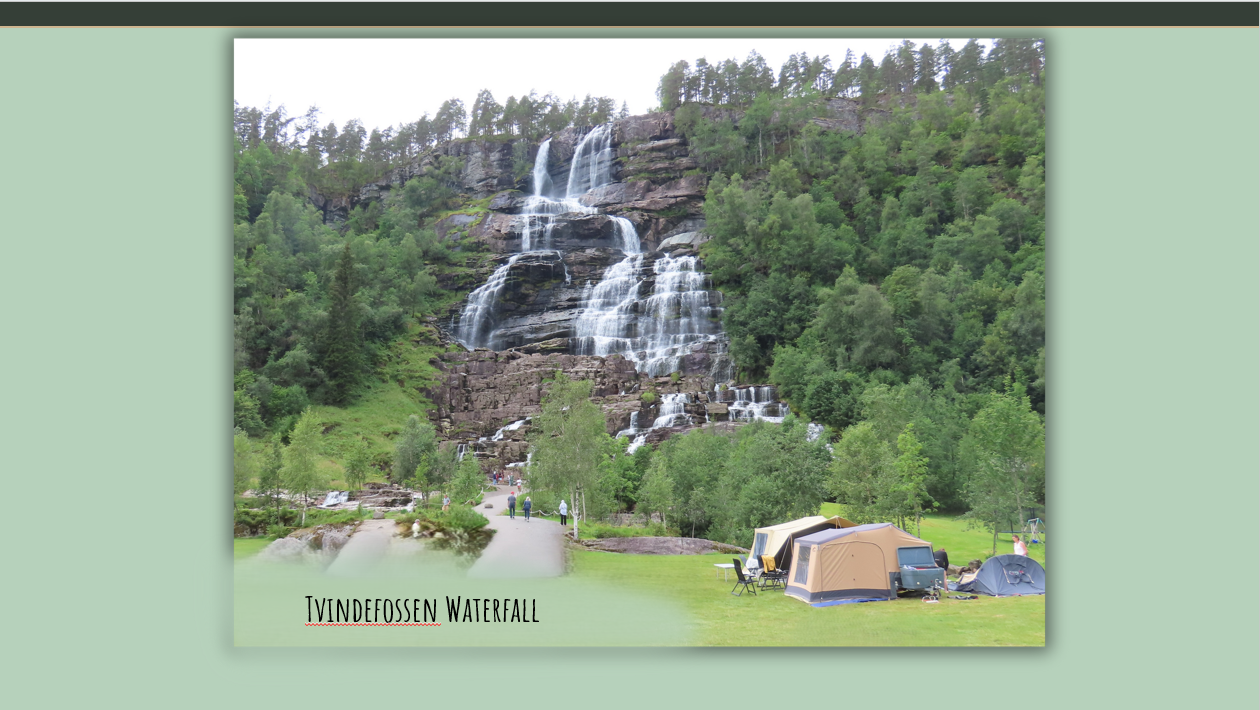
Just when we thought the day had offered all the scenery it would, our motorcoach stopped at another beautiful spot — the Tvindefossen Waterfall. Its tiered cliffside and lush greenery looked like the perfect spot for the campers we saw there. It was a fitting finish to a journey filled with trains, valleys, and waterfalls.
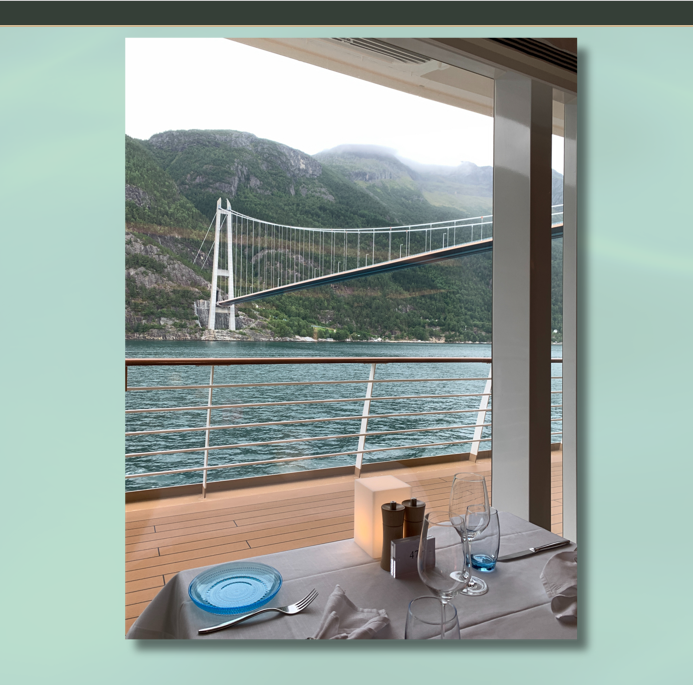
That evening, we had a lovely dinner in the Restaurant as the ship sailed out of Eidfjord, passing beneath the Hardanger Bridge we had seen earlier in the day. Such a nice way to end the day.
Bergen, Norway - Day One: Around Town and Out to the Farm
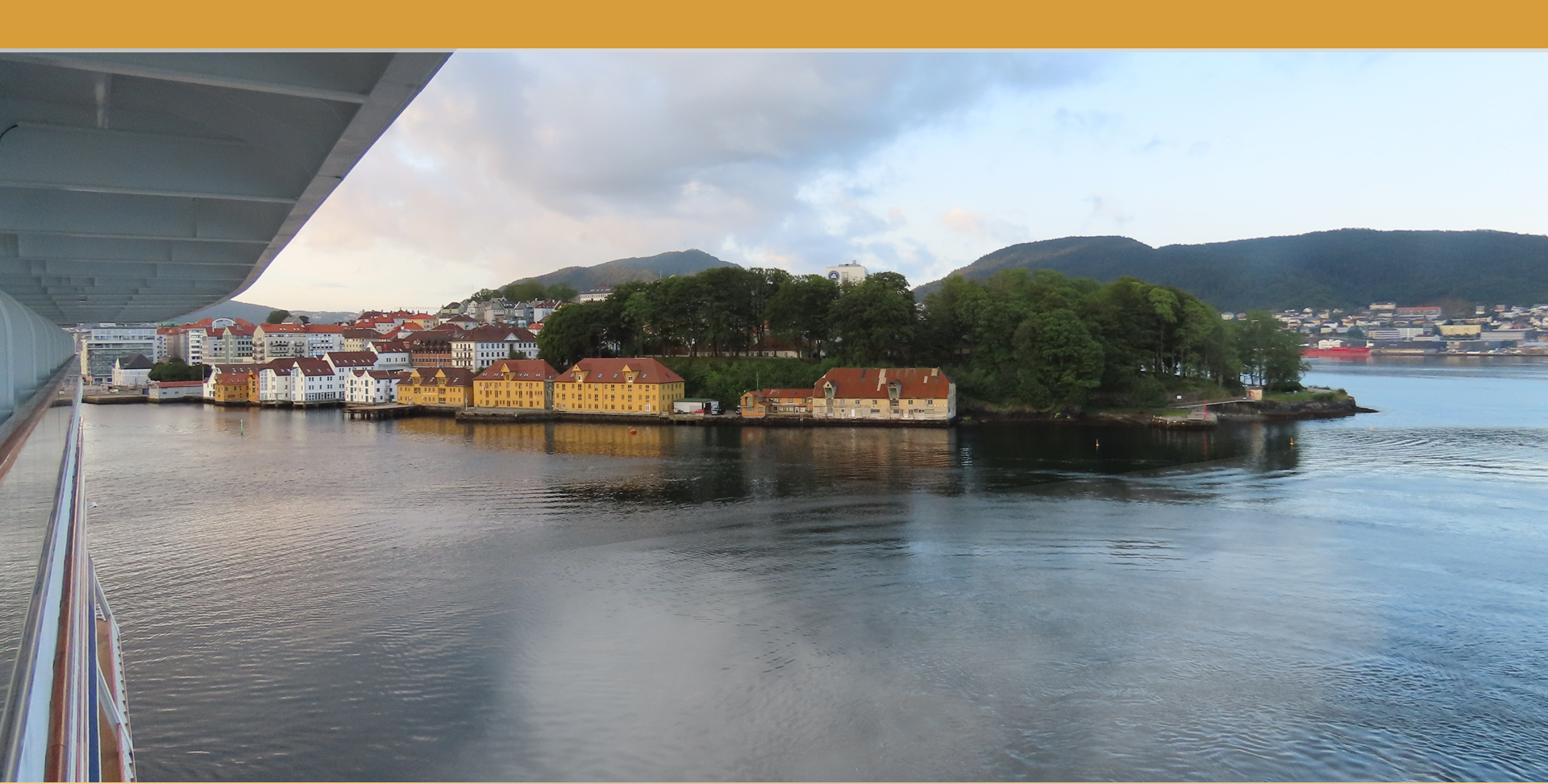
Bergen was a beautiful sight when we sailed in at 7:00 am. With a full day ahead, we were eager to discover all it had to offer.
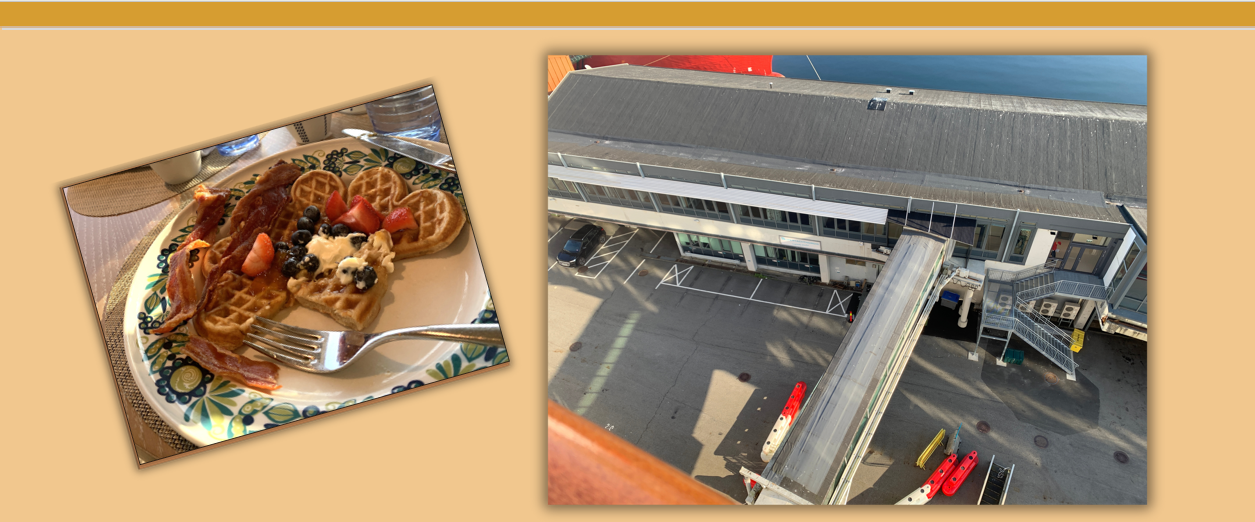
We started the day with breakfast at Mamsen’s—Norwegian waffles with sour cream, berries, and bacon. Afterward, we made our way down the covered gangway and through the terminal to board our motorcoach for the 9:30 excursion. Given Bergen’s frequent rain, the canopy was probably a practical addition—but not something we needed that morning.
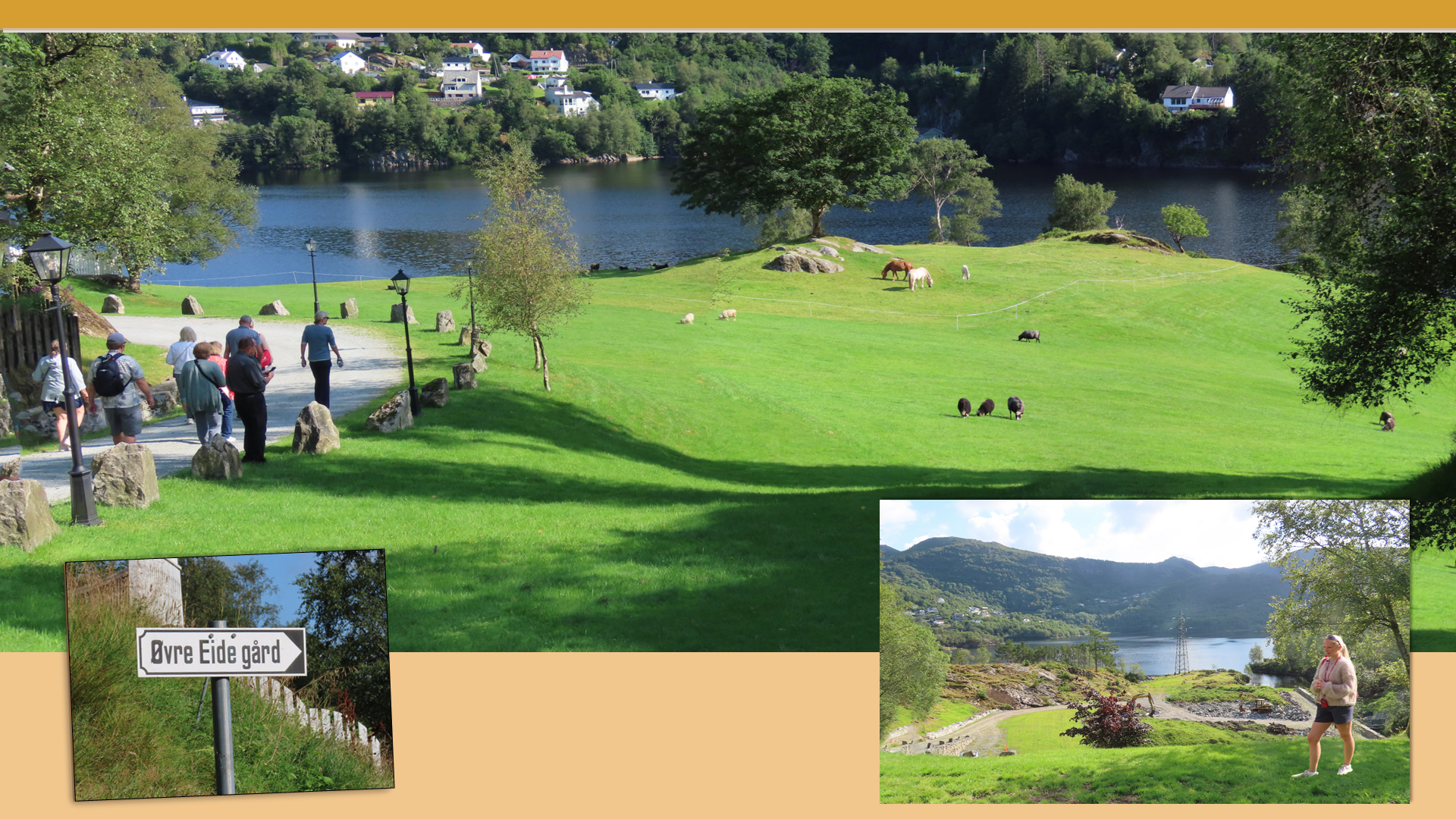
After a ride down curving roads—not meant for buses—we arrived at Øvre-Eide Gård, where our guide brought the farm’s rich history and daily life alive. The short walk from the motorcoach to the farm was peaceful, with horses and sheep grazing quietly and the landscape unfolding around us.
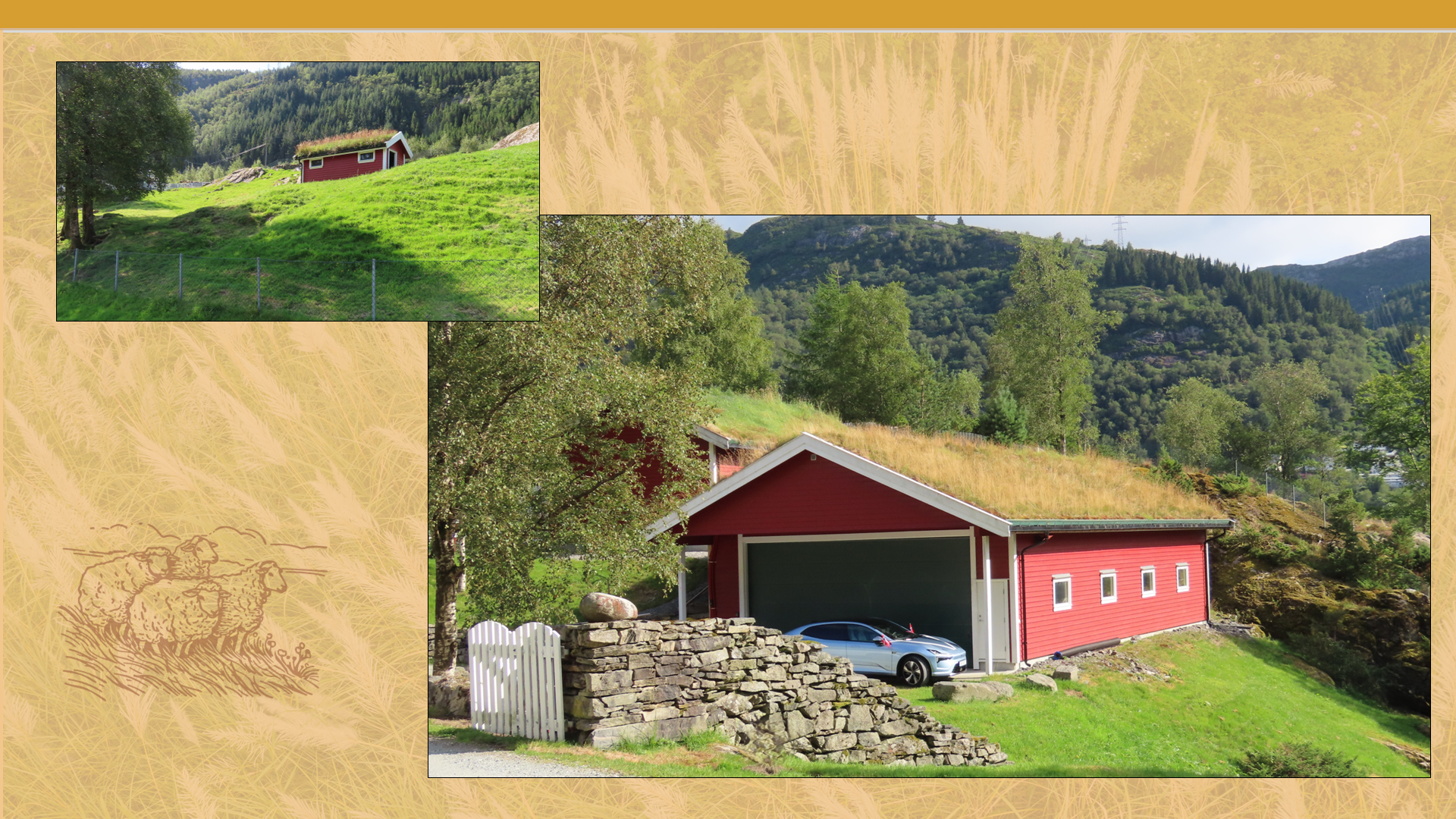
Some of the farm buildings had living roofs, covered in lush grass—some neatly “mowed” by grazing sheep, others left wild. Beneath the growing grass lay layers of birch bark or plastic, providing waterproof insulation.
There were horses of ancient breeds. Sheep came when called and were tame enough to pet. Chickens roamed freely. And above it all, the Norwegian flag flew proudly.
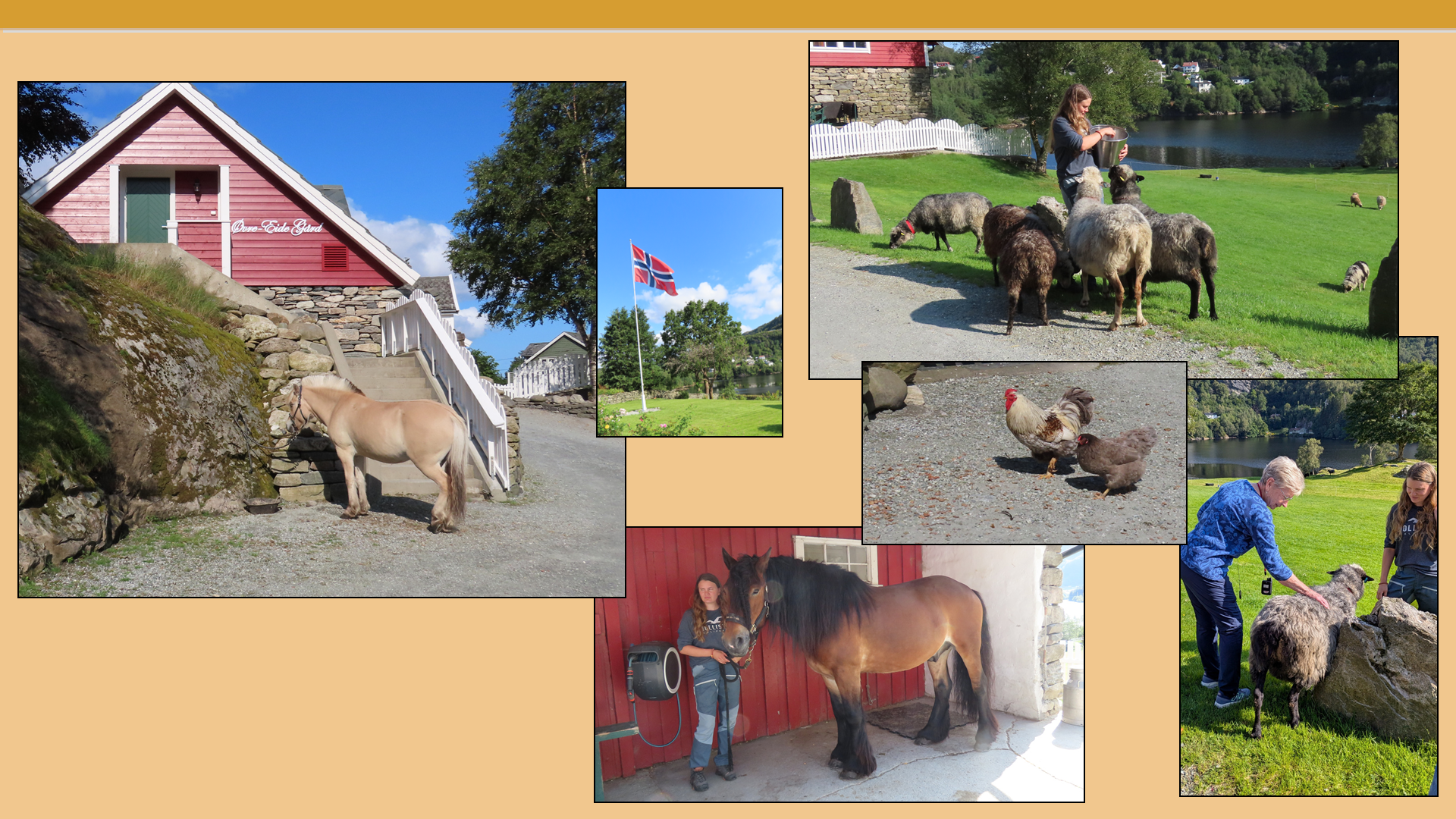
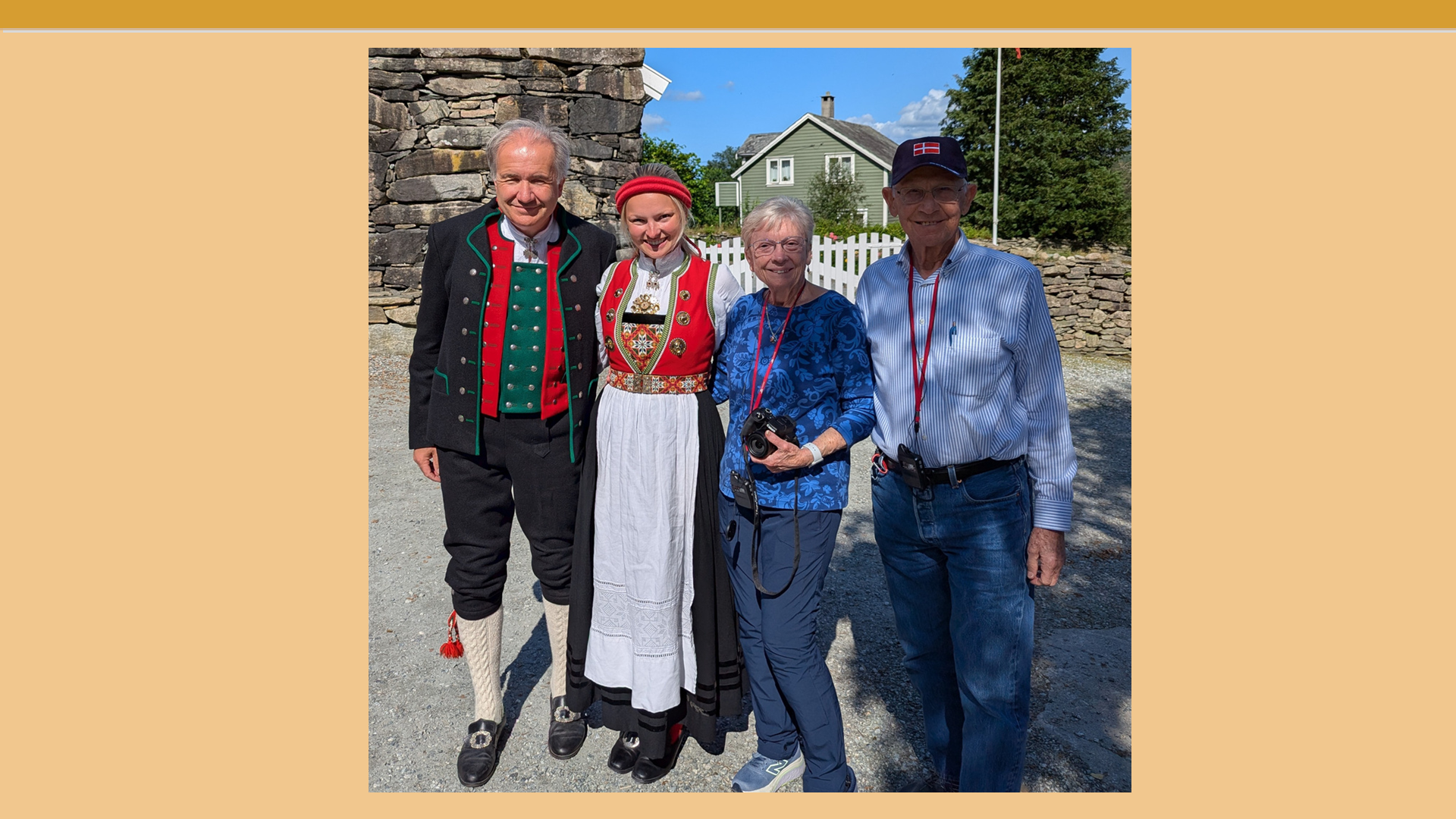
After tea and Norwegian entertainment in the farmhouse, we posed for a photo with the owner and our guide in their beautiful traditional dress. It was a gracious end to a visit that had been both welcoming and memorable.
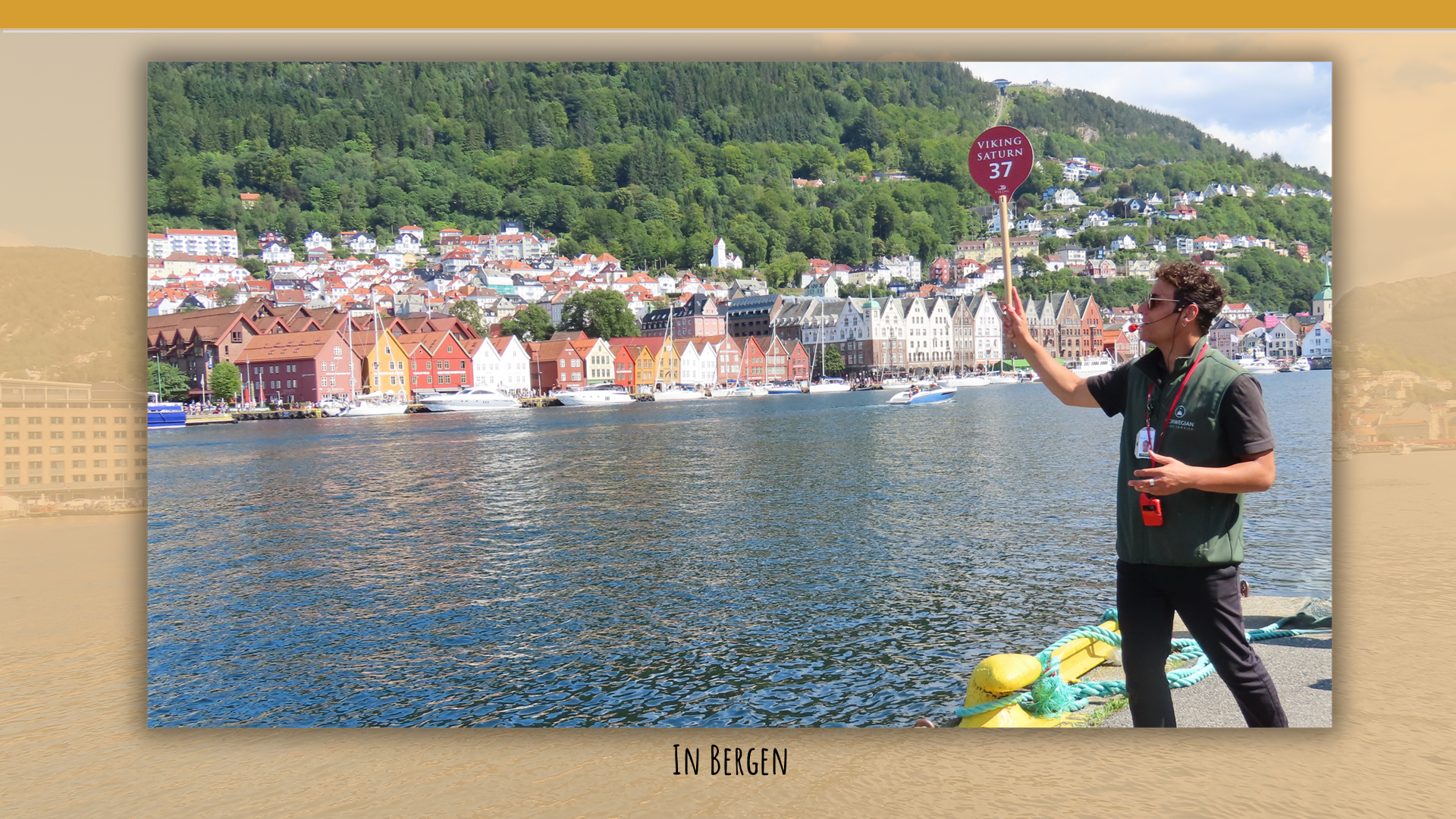
After a quick lunch on board the Viking Saturn, we boarded another motorcoach for a panoramic tour of Bergen. Our first stop was Nordnes, where we admired sweeping views over Bergen Harbor. From there, our guide pointed out the colorful buildings lining the historic Bryggen wharf.
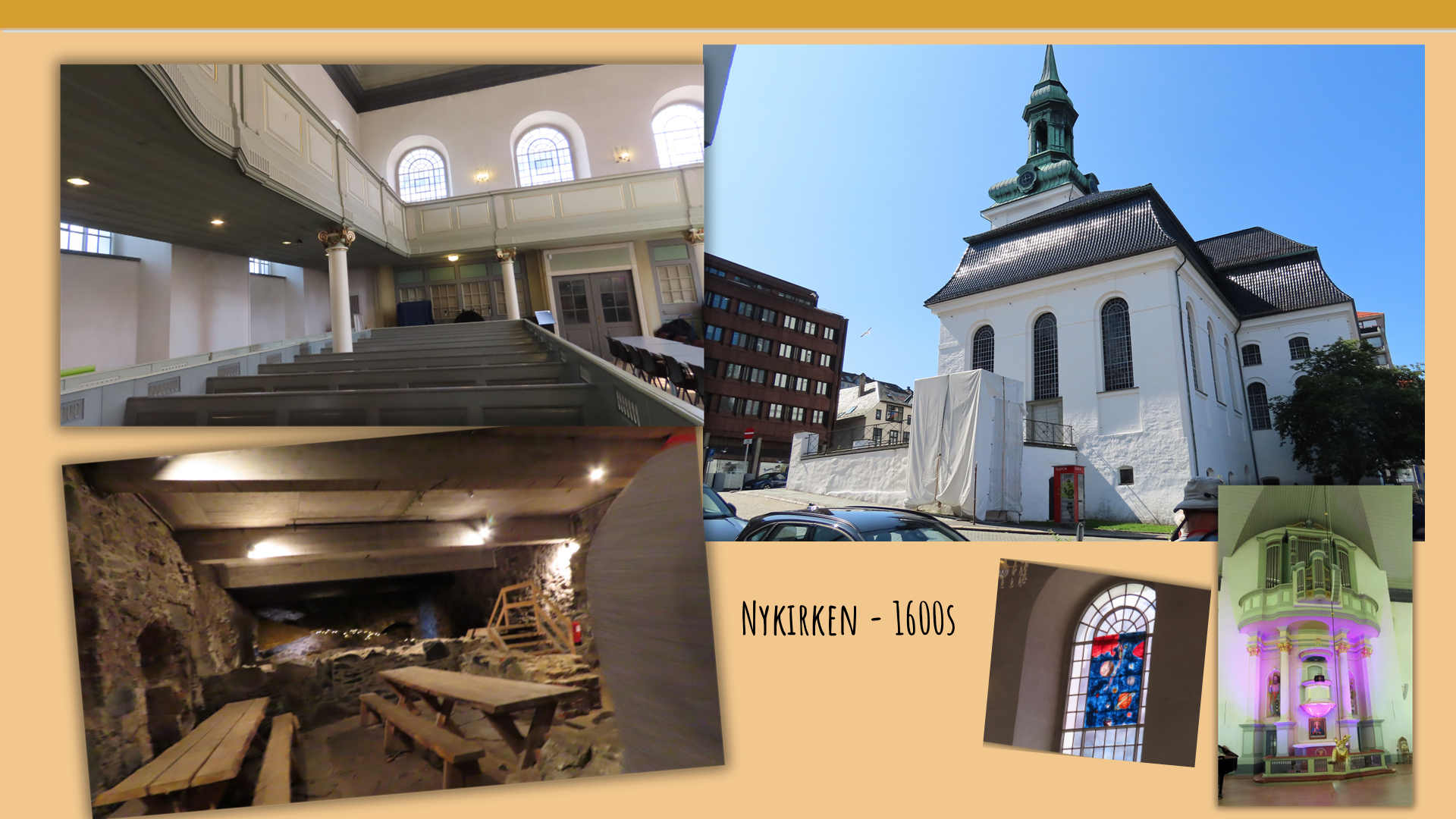
Next, we visited Nykirken. It has been rebuilt several times after fires and damage from a German ship explosion in the harbor. Today it is part of Bergen’s historic cathedral parish. Our visit began in the basement, where 13th‑century stone ruins gave the space a stark, dungeon‑like feel. Upstairs, the church’s plain Lutheran interior was softened by the glowing altar and the lowered baptismal angel. Known as “The Children’s Church,” it featured colorful window panels and artwork created by young visitors.
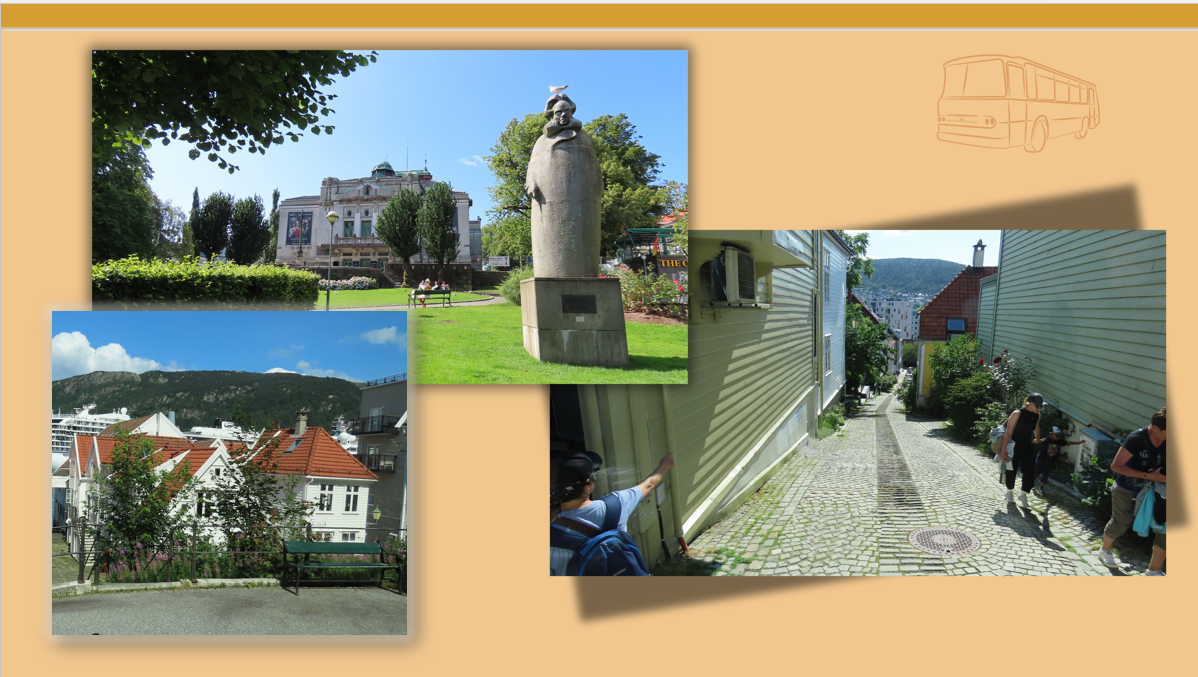
As our tour continued, we drove through one of Bergen’s protected wooden‑house neighborhoods, a historic harbor community of white wooden homes and red‑tiled roofs. We passed Bergen’s National Theatre, where a statue of Henrik Ibsen stood with a bird perched neatly on his head—a small reminder that nature pays no attention to fame. Farther along, our guide pointed out a street where the center stones were rougher than those on the sides, giving horses better footing in wet or icy weather. Later, we found they helped us, too.
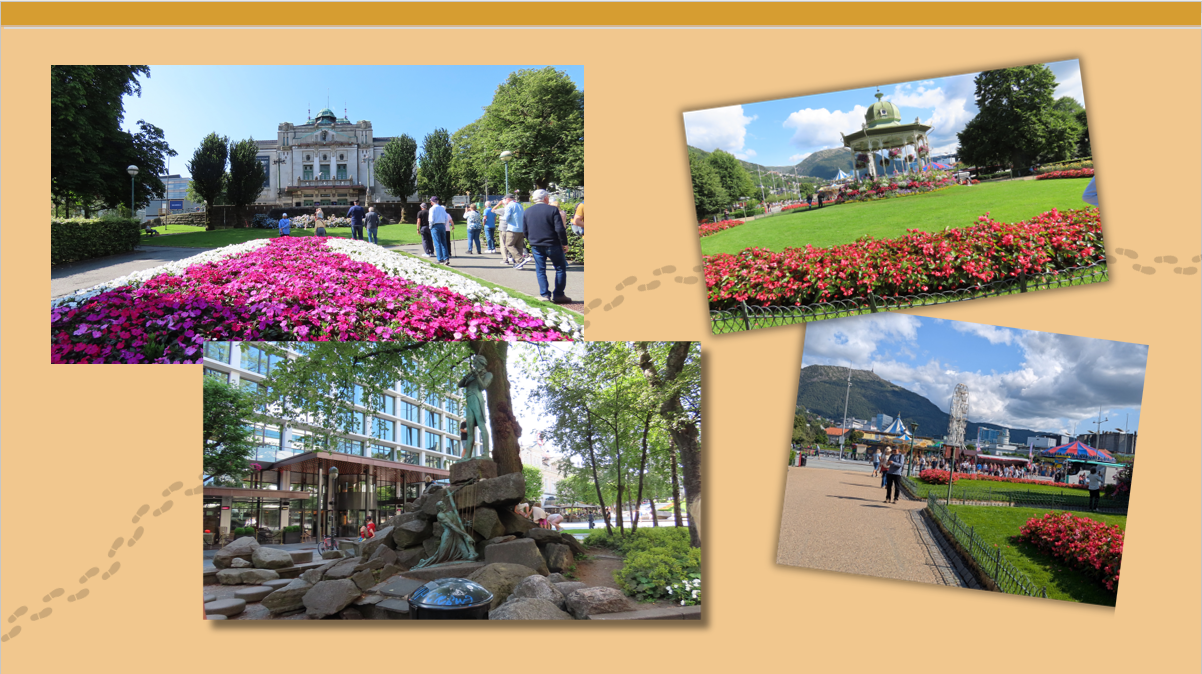
Soon after leaving the motorcoach for a short walk through Byparken, we passed Den Nationale Scene again—this time on foot and from a different angle. The flowers out front were beautiful, and the building looked even more impressive up close. We continued on to the Ole Bull statue, where children were climbing and playing on the rocks around the base. The statue shows him with his violin, surrounded by figures from Norwegian folklore, with Hotel Norge rising behind it. It was a fun surprise to learn we would be staying there. Just down the street, a gazebo overflowed with blooming plants, their colors vivid in the sunshine, while the sounds of children laughing and shouting drifted over from the nearby amusement park. The whole area felt alive—a beautiful place to be.
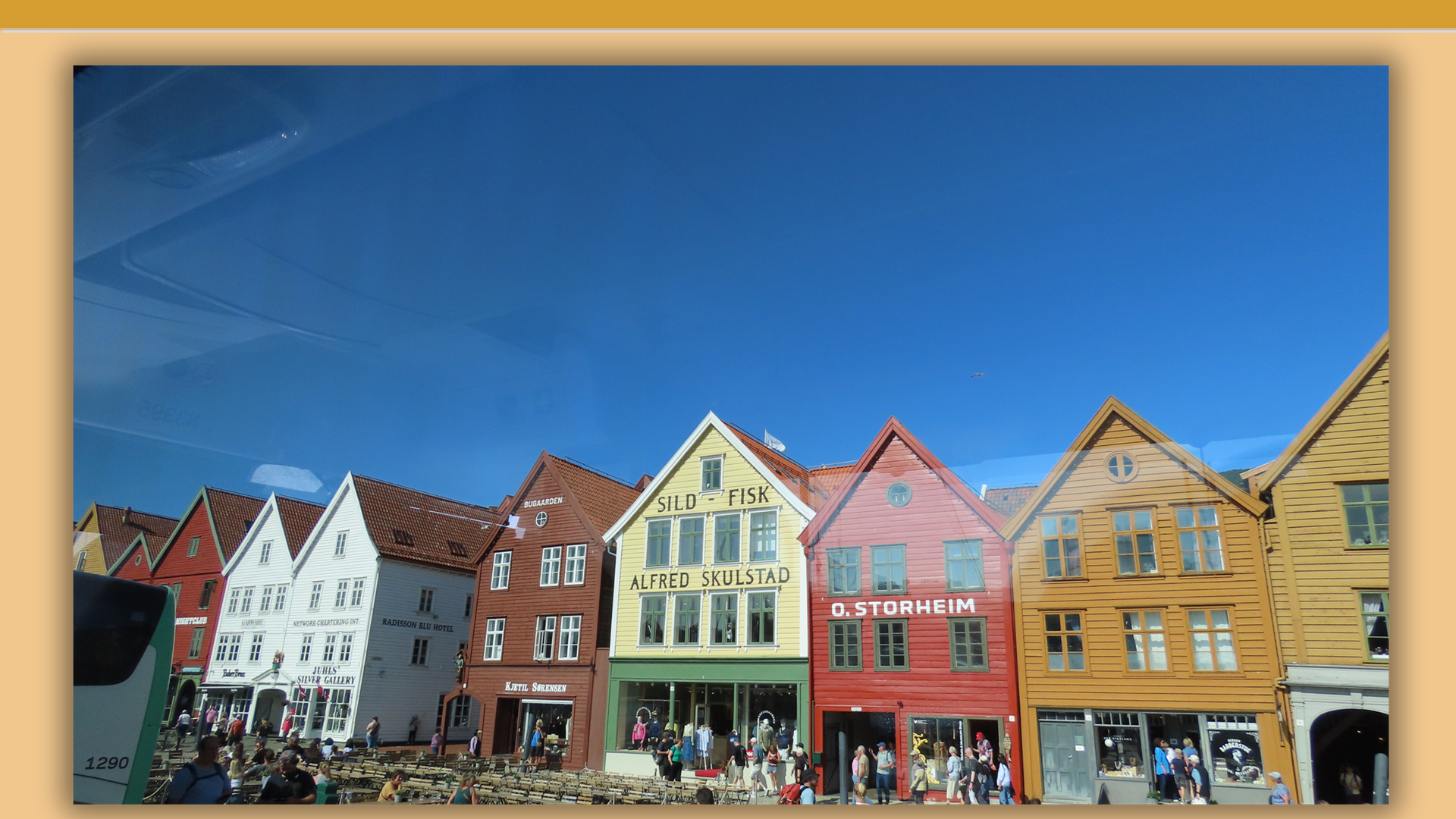
As our motorcoach made its way back to the ship, we passed the colorful buildings of Bryggen, their bright wooden facades lined with shops and cafés. As we rolled by, Dorothy took one look and knew she’d be back. We had two more days in Bergen.
Bergen, Norway - Day Two: Ship to Shore
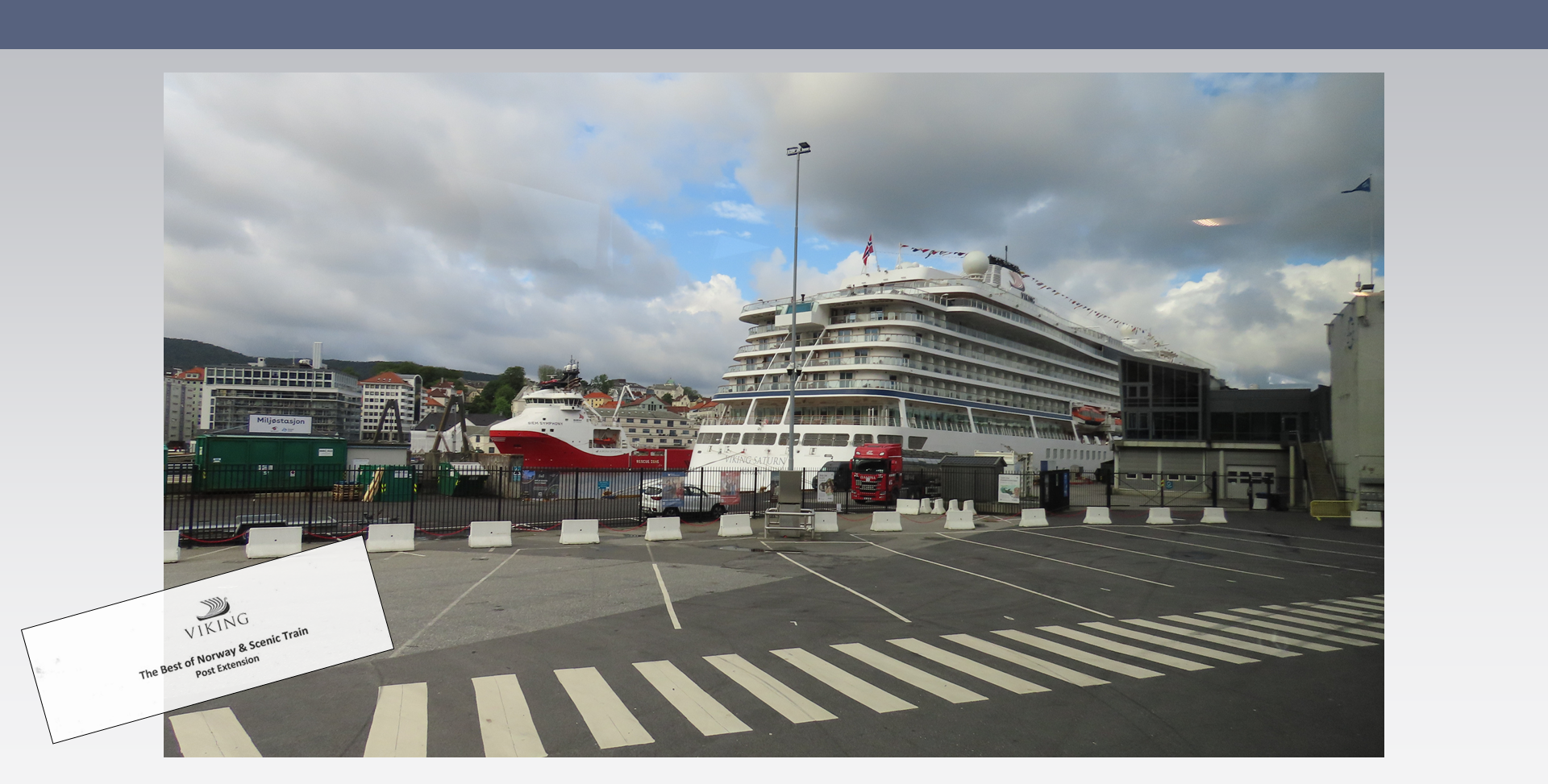
Our next day brought a quiet farewell to the Viking Saturn. After one last glance from our balcony, we gathered the last of our things and left our stateroom for the final time. Though the cruise was ending, our Scandinavian adventure was not. With new experiences ahead, we boarded a waiting motorcoach and began our Post‑Extension: The Best of Norway & Scenic Train.
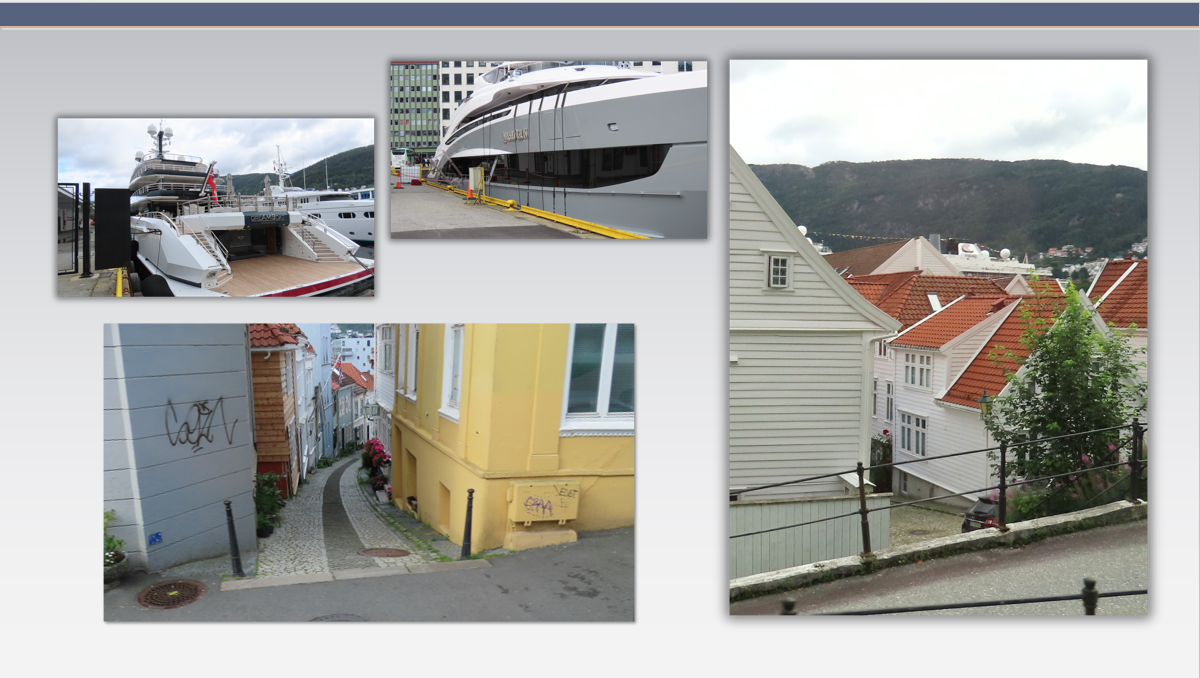
Since hotel rooms wouldn’t be ready before noon, Viking arranged a panoramic tour to pass the time. We drove past Bryggen—a UNESCO World Heritage Site with 14th‑century wooden buildings, rebuilt over the centuries using traditional medieval methods. We returned to the Bergen harbor, where luxury yachts were moored. The Dreamboat and the Silver Fast both boasted spas, cinemas, multiple lounges, and even helipads—a lifestyle enjoyed by a fortunate few. The narrow cobblestone streets we passed later were a sharp contrast.
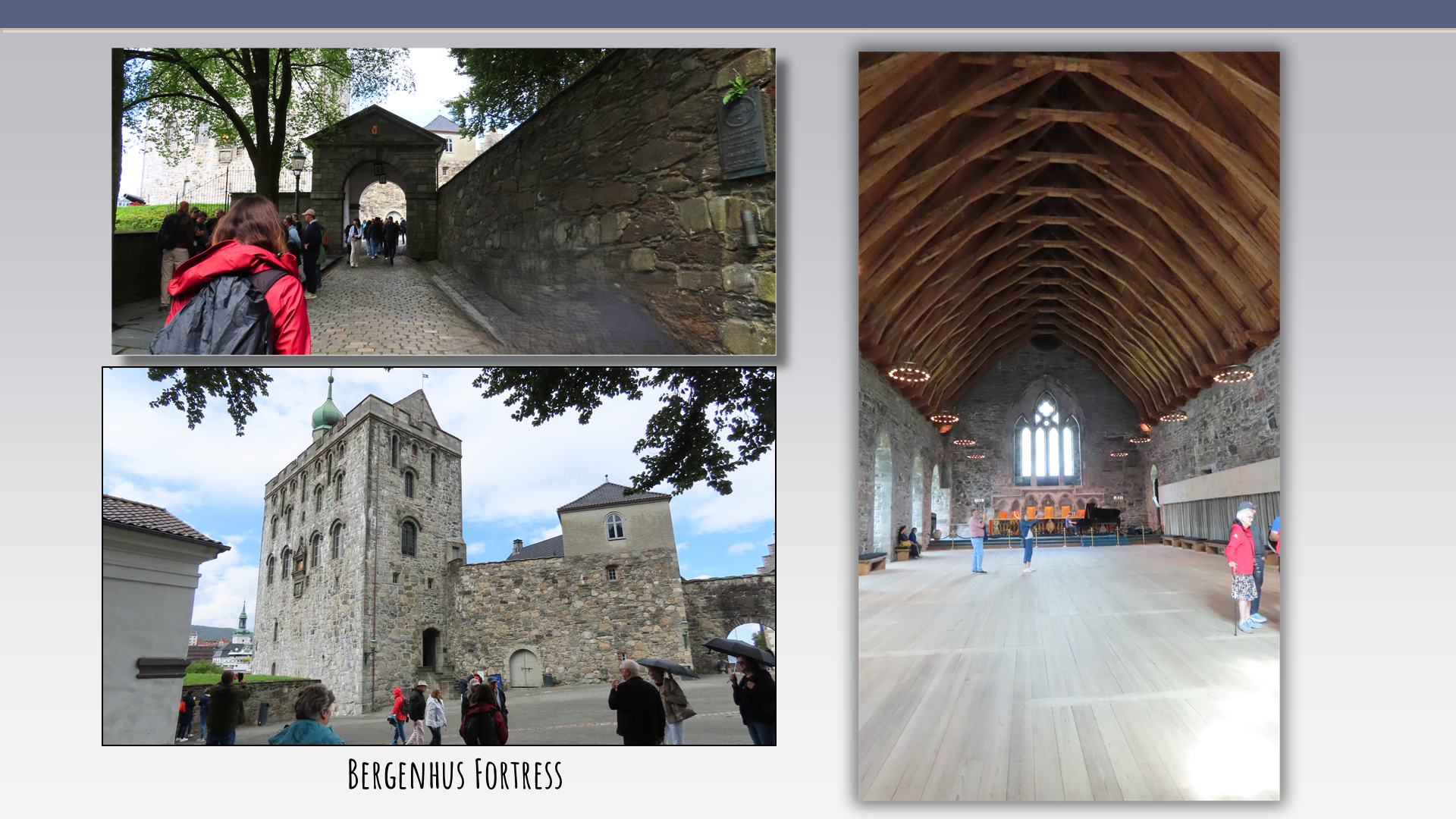
Rain was on the horizon as we approached Bergenhus Fortress, one of Norway’s oldest and best‑preserved fortifications. With umbrellas and jackets in hand, we walked through the stone archway into a complex that once housed kings and bishops. Inside the walls, we paused at Rosenkrantz Tower before entering Haakon’s Hall. The tall windows were striking, but the smaller rooms felt bleak and dim—hard to imagine as settings for royal gatherings. The banquet hall, however, was spectacular. Its soaring stone walls, arched windows, and timber ceiling created a bright, spacious interior, and a young pianist played softly on stage, giving the hall a quiet elegance. Luckily the rain held off, and we made it back to the motorcoach dry and ready for the short ride to our hotel.
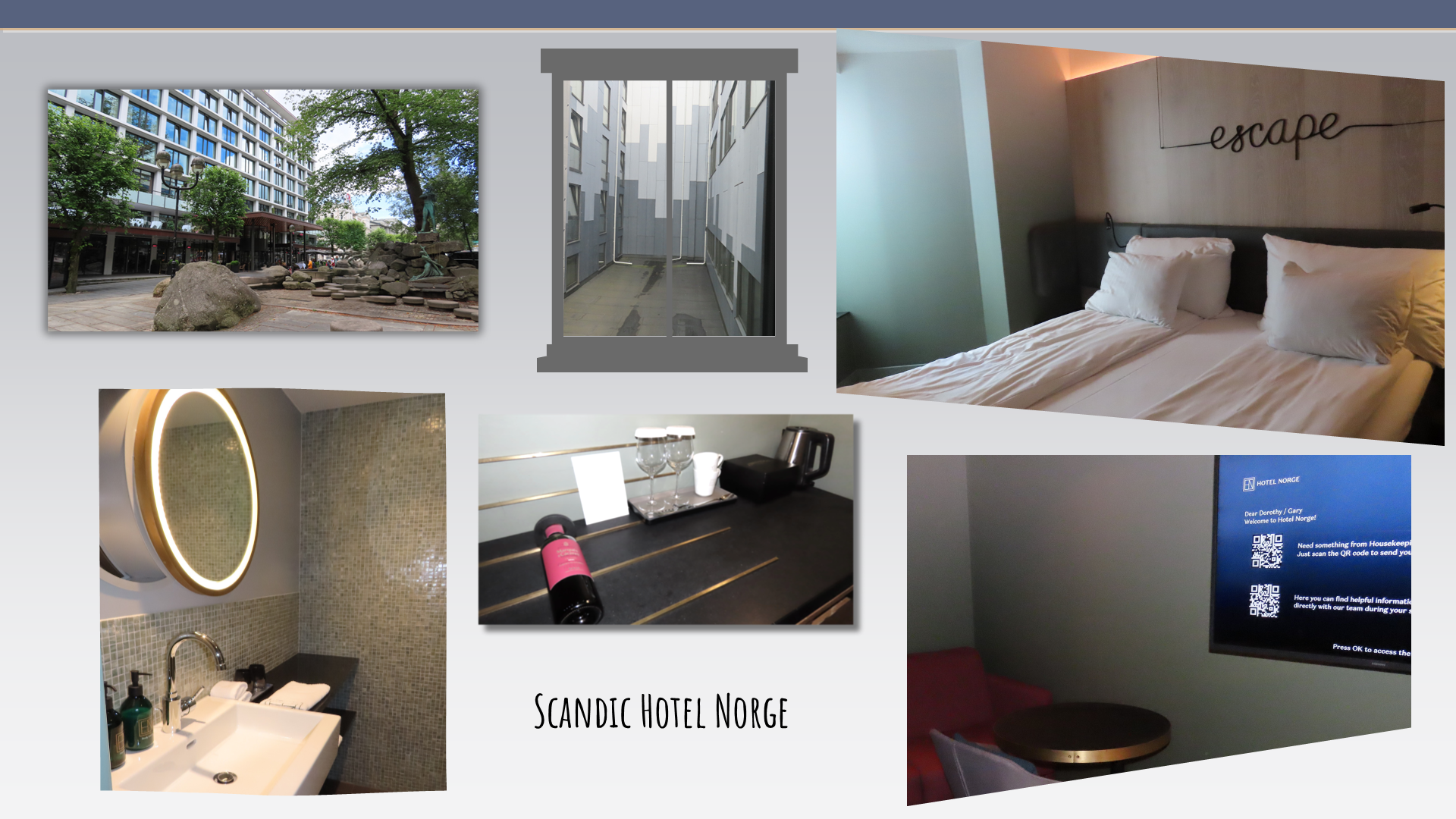
Our room at the Scandic Hotel Norge was small, with a single modest window overlooking an interior roof. It held a bed, a compact alcove with a sofa, and a bathroom with a quirky mirror set slightly off‑center beside a window into the bedroom. Just outside the bathroom was a small bar area with drinks in the mini‑fridge and on the counter, all clearly marked on a price list—a noticeable shift from Viking, where everything had been included. At least the coffee and tea beside the kettle were complimentary. The space worked well enough for a short stay, and we were excited to be in Bergen.
Bergen, Norway – Day Three: A Mountain, Some Fish, and a Sweater
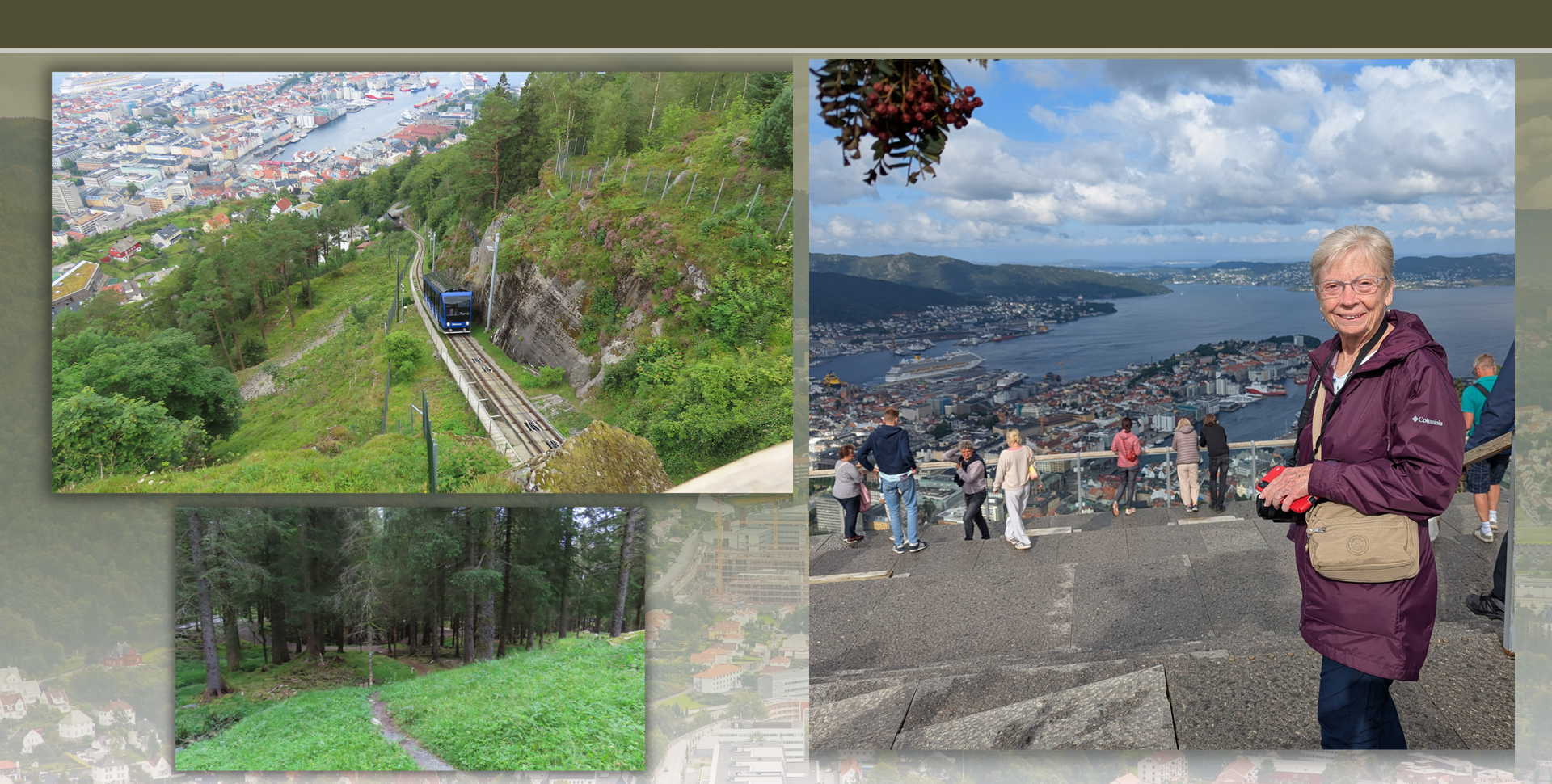
After breakfast we were off for a day of exploring Bergen. Our walk to the Fløibanen ticket office was uneventful, and thanks to Google Maps, we didn’t get lost even once—a rarity for us. Arriving early meant no line, and within minutes we were at the top of Mount Fløyen with Bergen stretched out beneath us. The wind was brisk, but the with the view we hardly noticed the chill.
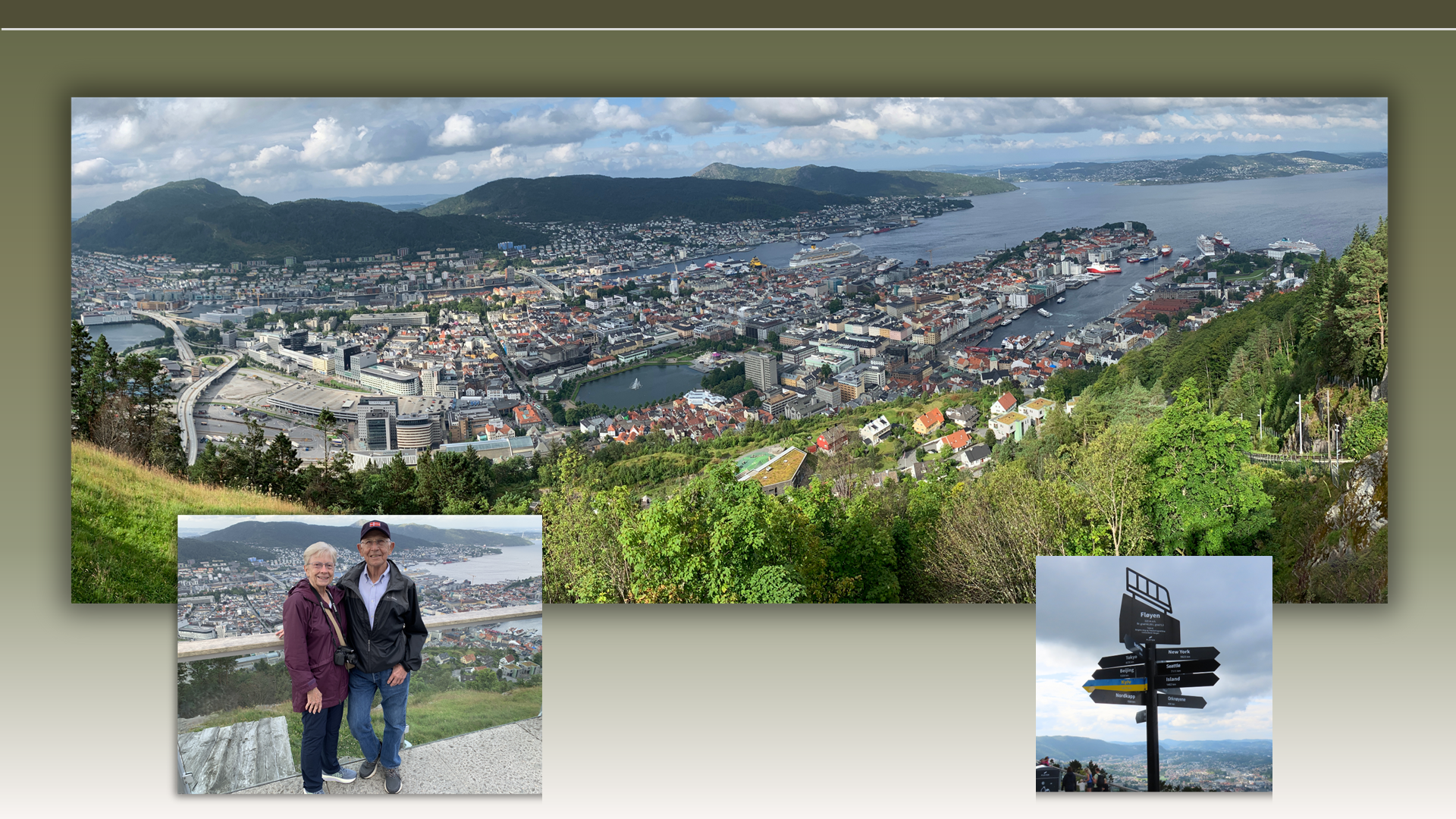
We spent a few minutes trying to spot places we recognized. The Viking Saturn, which we had sailed on a couple of days earlier, was still docked near the fortress. The colorful houses sat just below along the harbor, but without a map, it was hard to tell what was what. But that didn’t keep us from enjoying the view. A couple of friendly strangers were kind enough to snap our picture with Bergen spread out behind us. Nearby, a sign reminded us just how far we were from Pflugerville.
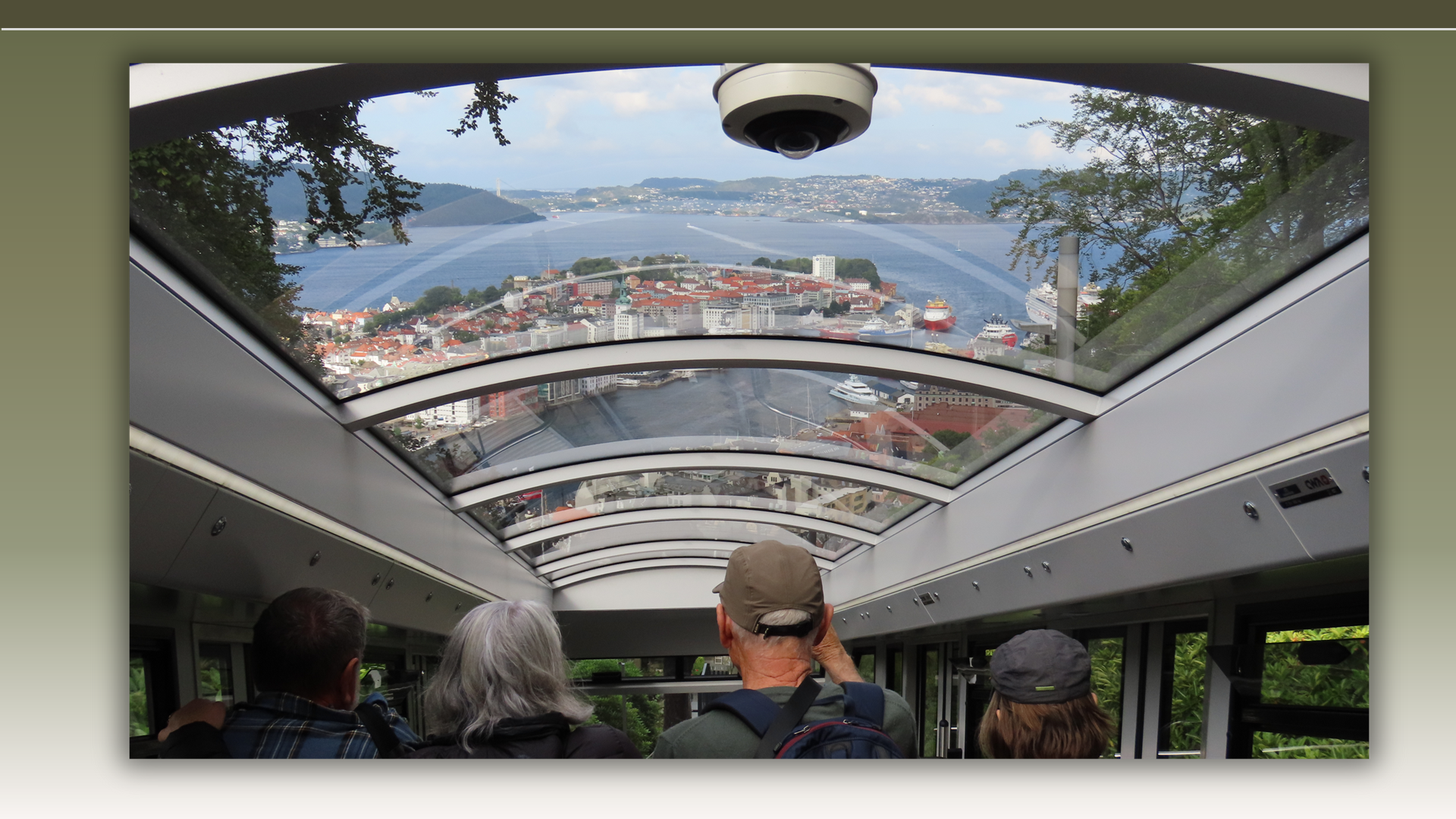
The ride down the mountain was interesting. The grade was so steep that we could watch the city grow nearer through the windows above as the train made its descent.
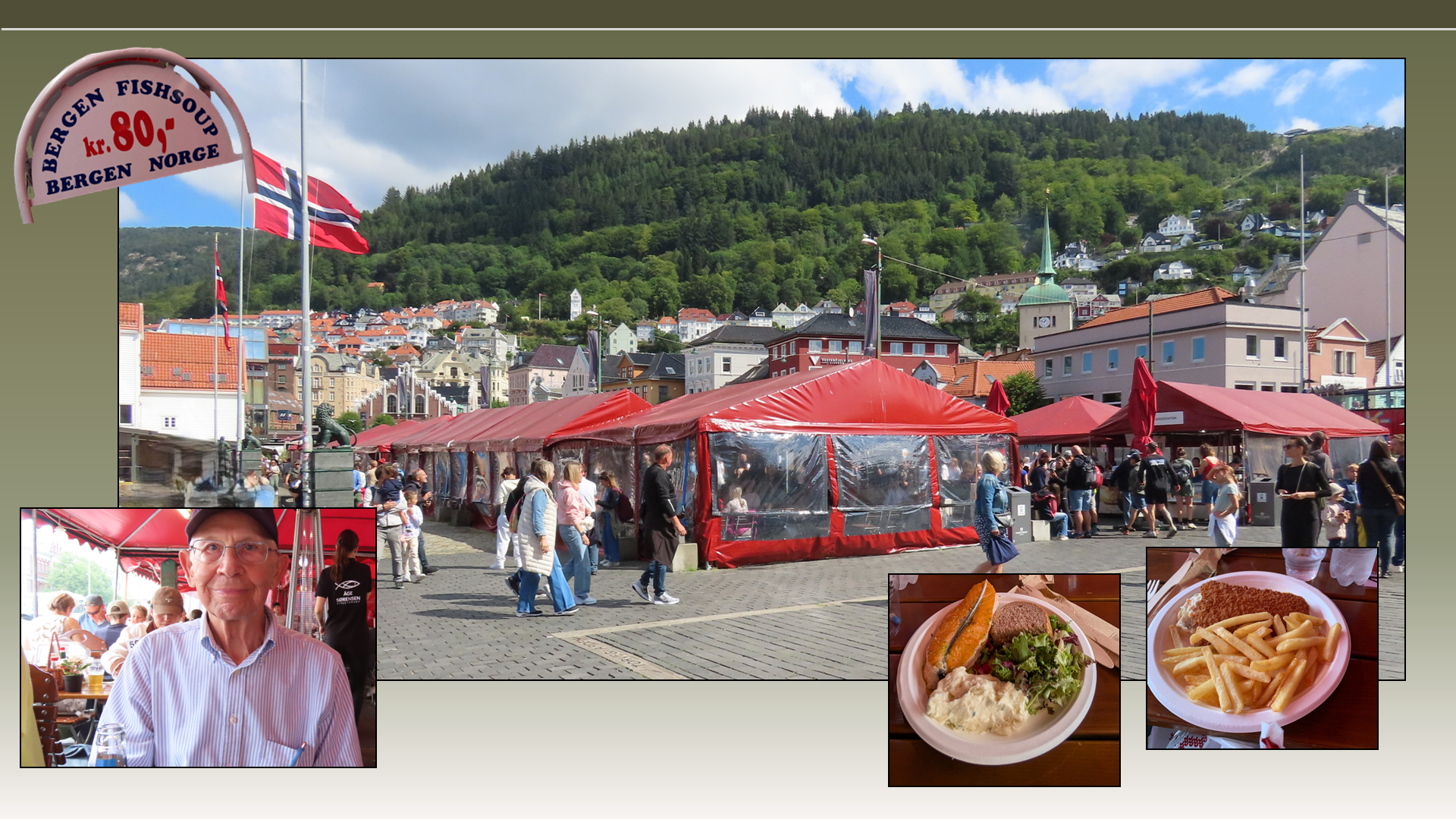
Next on the agenda was lunch at Bergen Fish Market, a seafood restaurant on the harbor that expands with tents during tourist season. It was extremely busy, but we were seated fairly quickly—though we did share a table. The food was very good, much better than Friday’s the day before, and did not cost any more. Dorothy had fish and chips; Gary had salmon with fixings.
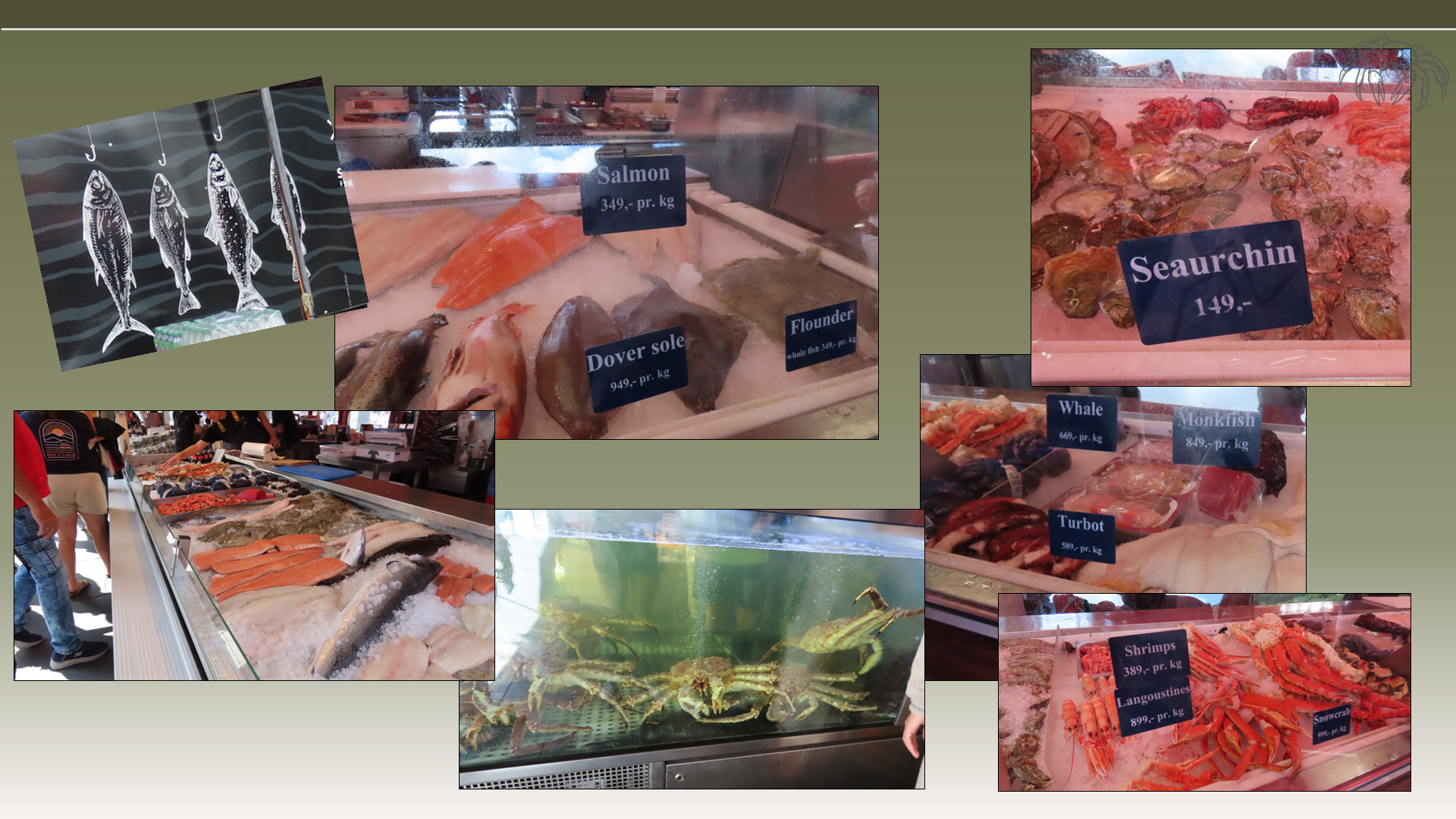
Besides restaurants, the Fish Market offered every imaginable kind of seafood—some familiar, some we’d never heard of, and a few we didn’t even know were edible. Snow crabs in tanks, sea urchins, and whale aren’t exactly staples back home. It would’ve been fun to have a kitchen to try some of it… then again, maybe not. We were on vacation.
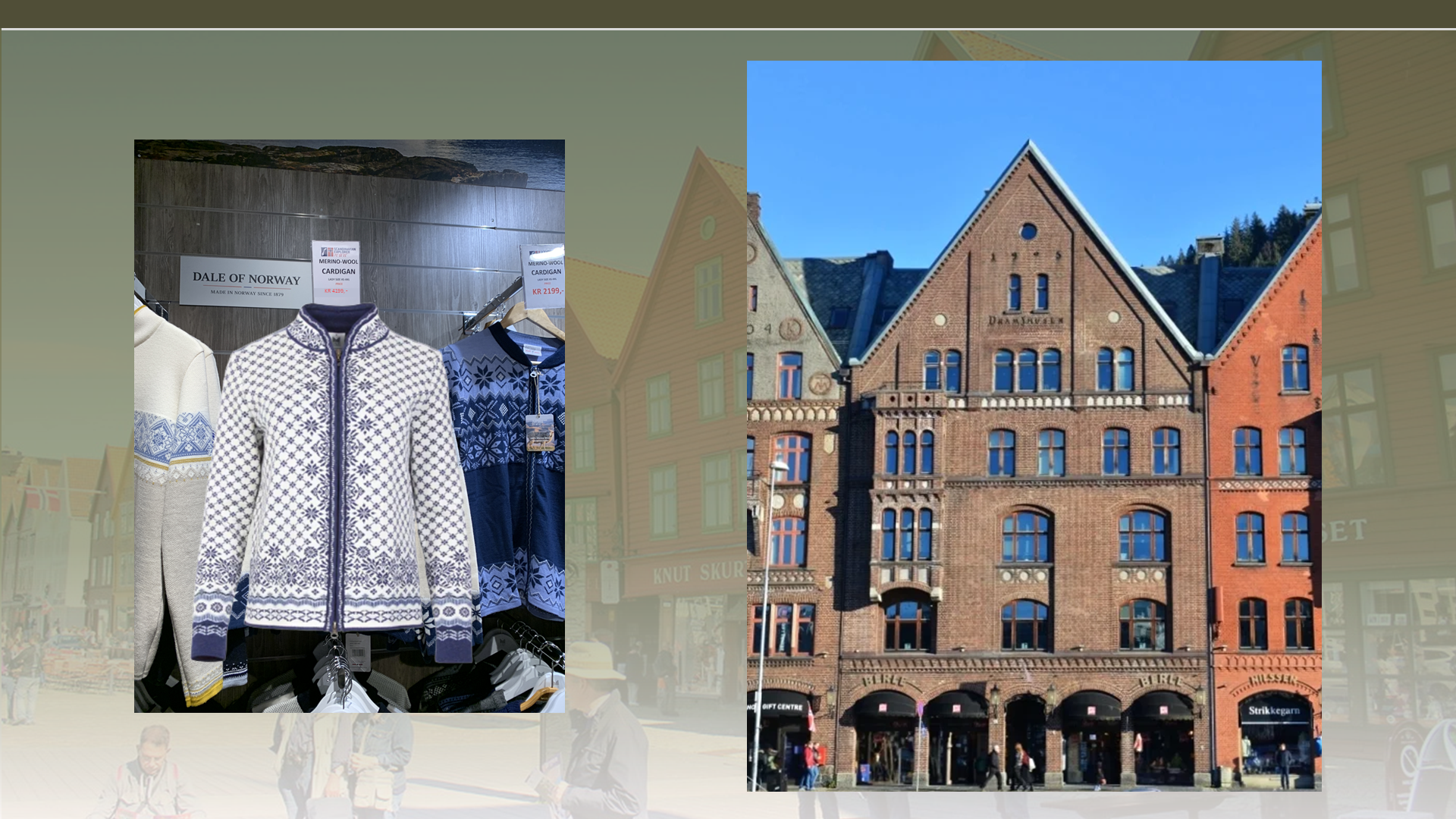
Next was a shopping spree in the colorful buildings we had passed by the day before. After visiting virtually every shop that carried Dale of Norway sweaters, Dorothy finally found one that was just right. When she’ll wear it in Texas is anyone’s guess—but it’s a lovely souvenir of Norway all the same. It would have been nice to spend more time seeing the historical district, but it had been a long day—and we had tired feet. They were even more tired by the time we reached the hotel. Dinner was in the hotel restaurant was followed by preparation for the next day's trip to Oslo. It had been a wonderful day.
Oslo, Norway - Day Two: Seeing Oslo Again
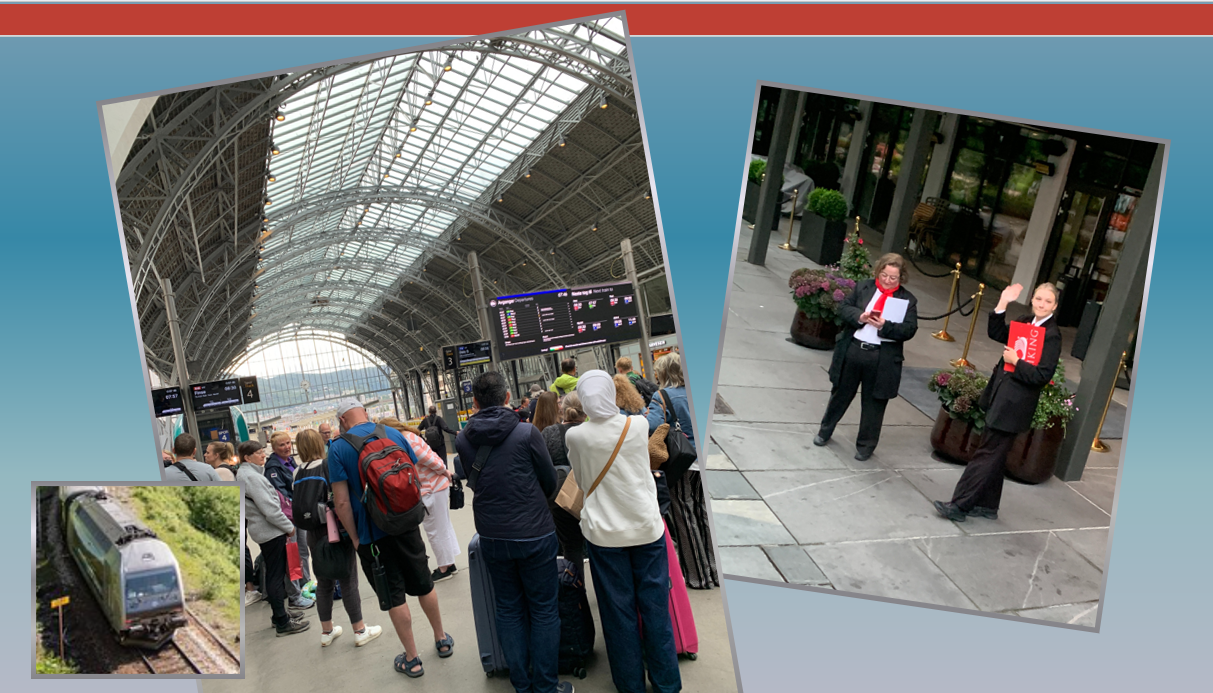
Immediately after breakfast, we boarded a motorcoach, bid our Viking hosts farewell, and headed to the Bergen train station. The station was crowded, but our guide led us through smoothly, and before long we were settled in with cameras ready and on our way across the mountains to Oslo.
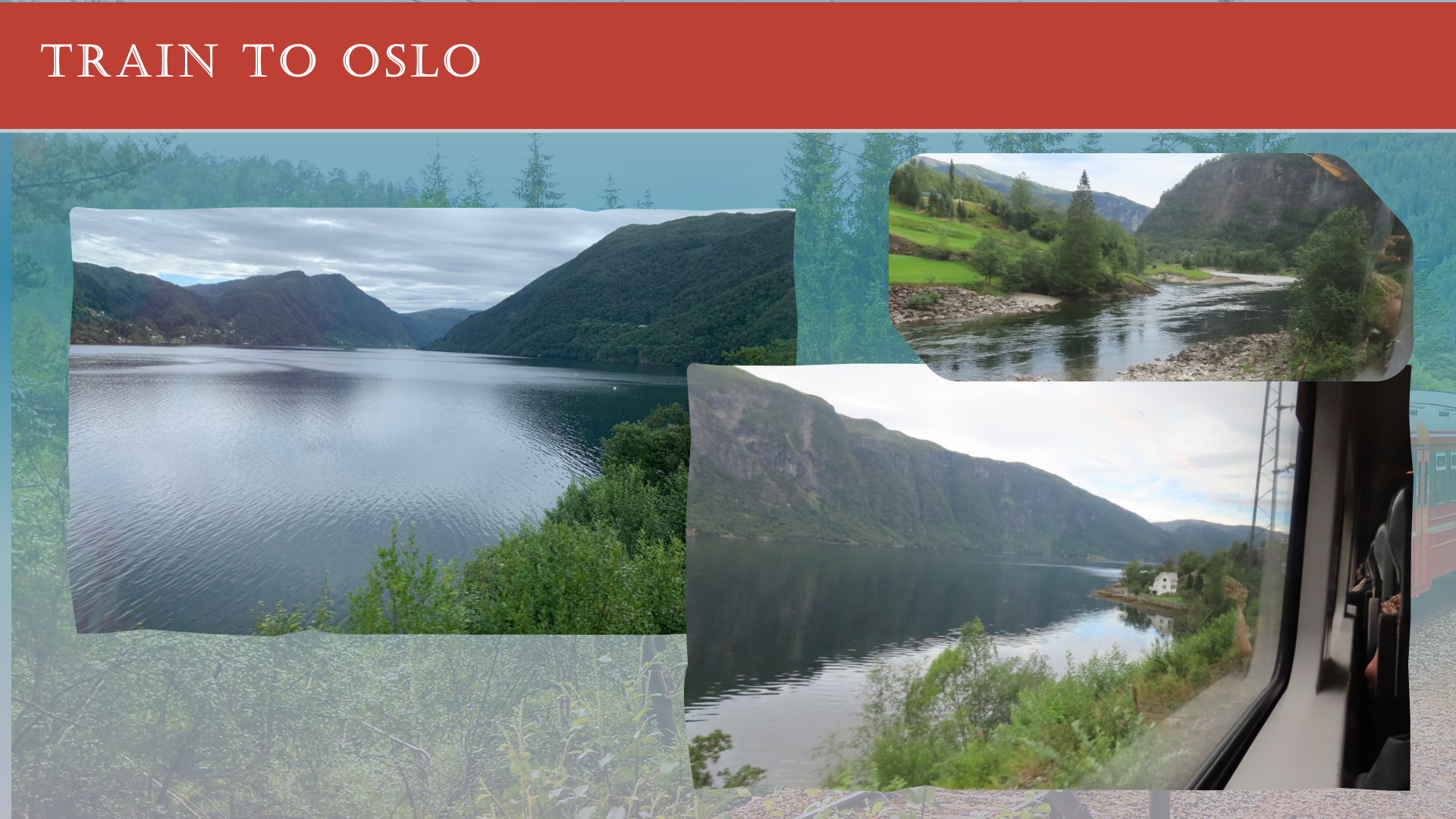
As we trundled along, the view out the train windows was ever-changing. We passed countless bodies of water—some wide and still, others tucked between green hills—each adding its own layer of beauty to the journey.
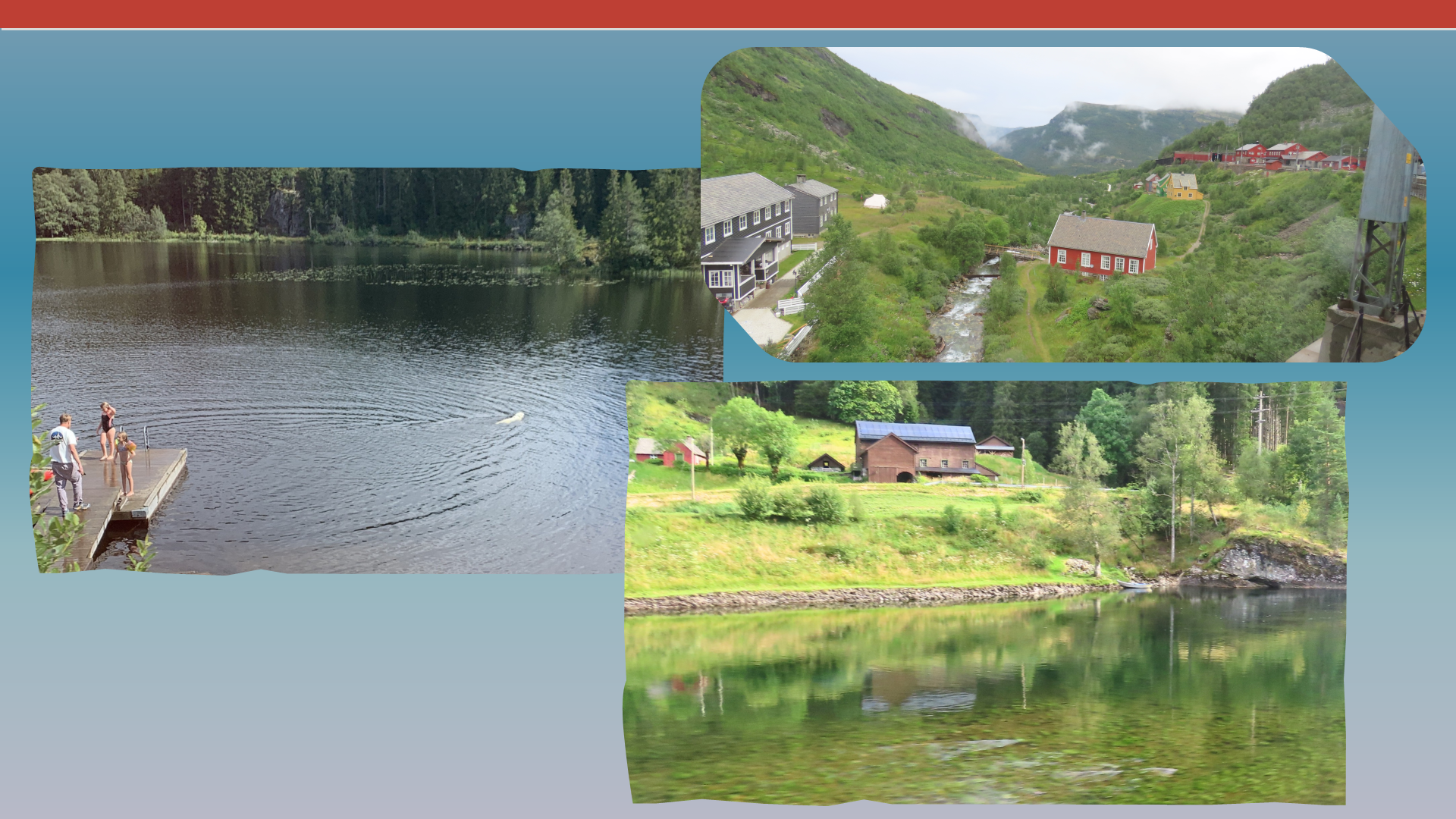
Not all the pretty views were in remote areas. Many appeared in small villages and rural homes. We saw kids on docks, their dog leaping in to retrieve whatever was thrown. A stream flowed gently under a small bridge and through a village, set in a scene just as we had pictured Norway. Boats and canoes rested along the banks of lakes and rivers—the canoe at the lower right looked like it was waiting for us.
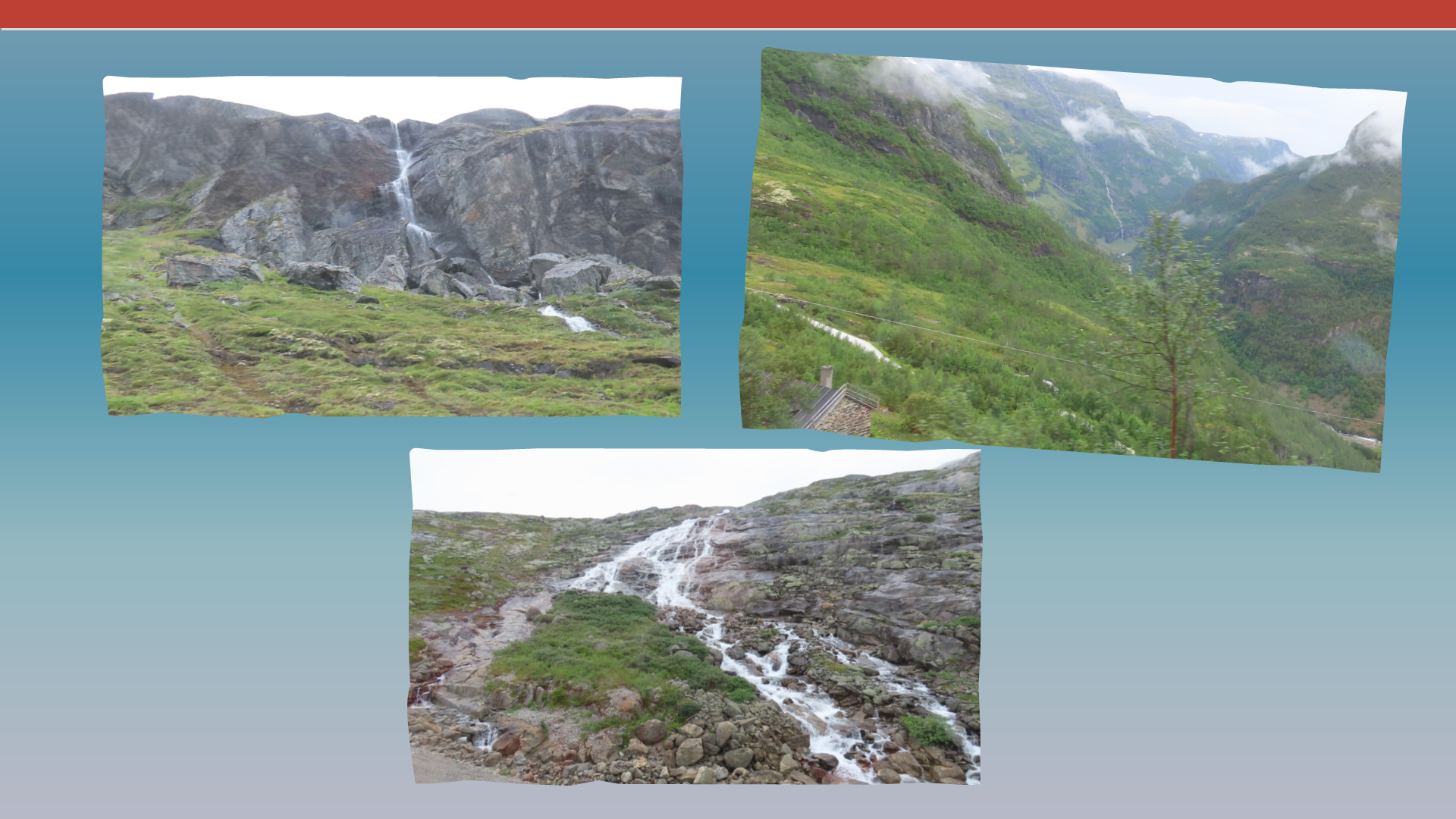
Waterfalls seemed to be everywhere—some in the distance appeared to trickle down the mountainside, though they were likely gushing powerfully to be visible from so far away. Closer views showed water rushing over rocks. The falls varied in size and force, but all were beautiful in their own way.
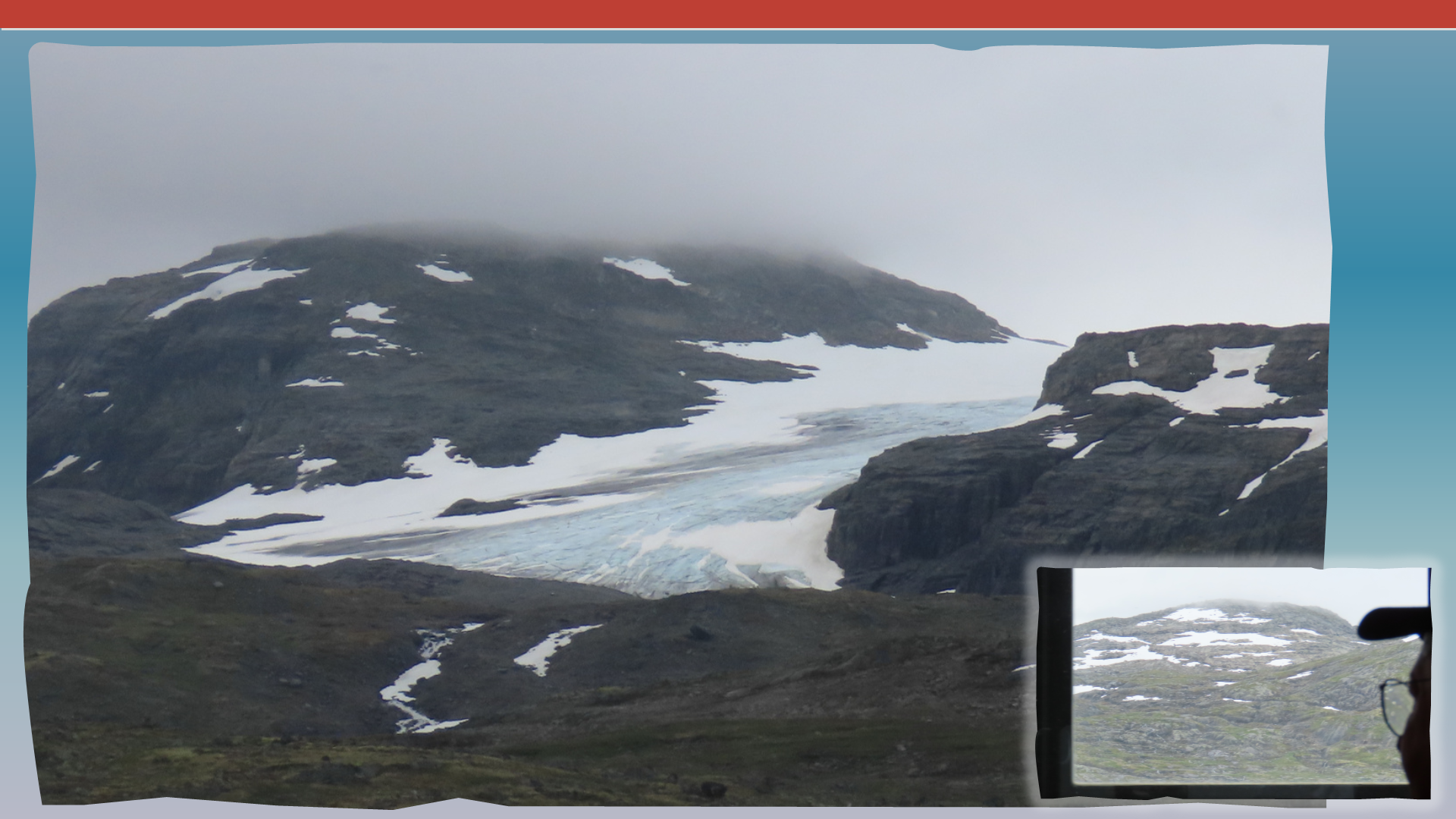
At higher altitudes, patches of snow dotted the landscape. The Hardangerjøkulen glacier came into view as we passed— clearly visible against the rocky terrain. Photos taken from the opposite side of the train do not do justice to its scale. It was dramatic as it was and must be breathtaking when the mountains are fully covered in snow.
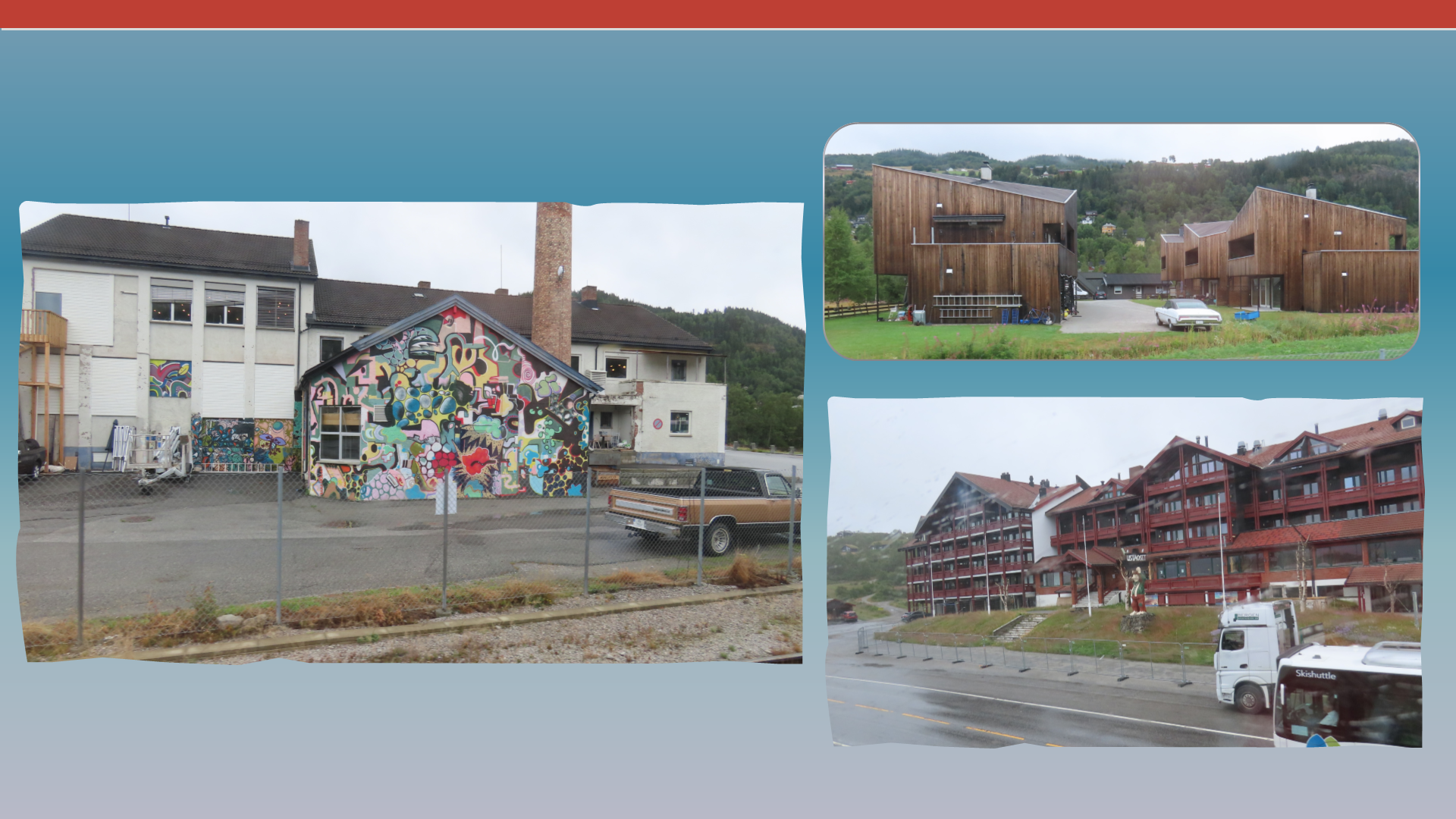
We passed few interesting buildings along the way—a resort in Ustaoset, an apartment complex with Scandinavian design, and one that really stood out. The purpose of the colorful structure wasn’t clear. Part of it was covered in graffiti, and one of the few pickups we saw on the trip was parked out front.
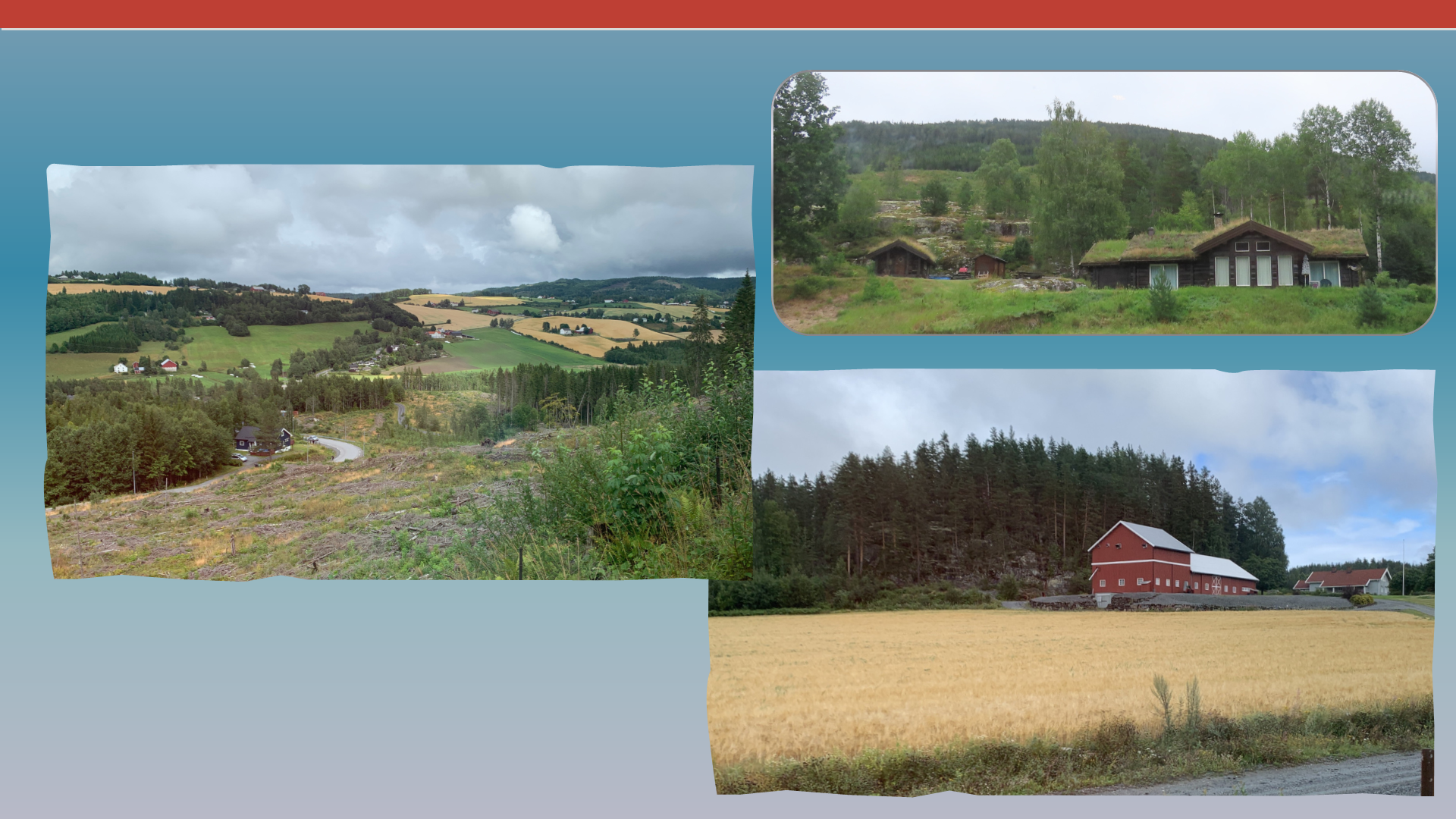
As we left the mountains and drew closer to Oslo, the landscape changed. Farmland and villages became more common. One house had a growing roof that looked like it needed a goat to mow it.
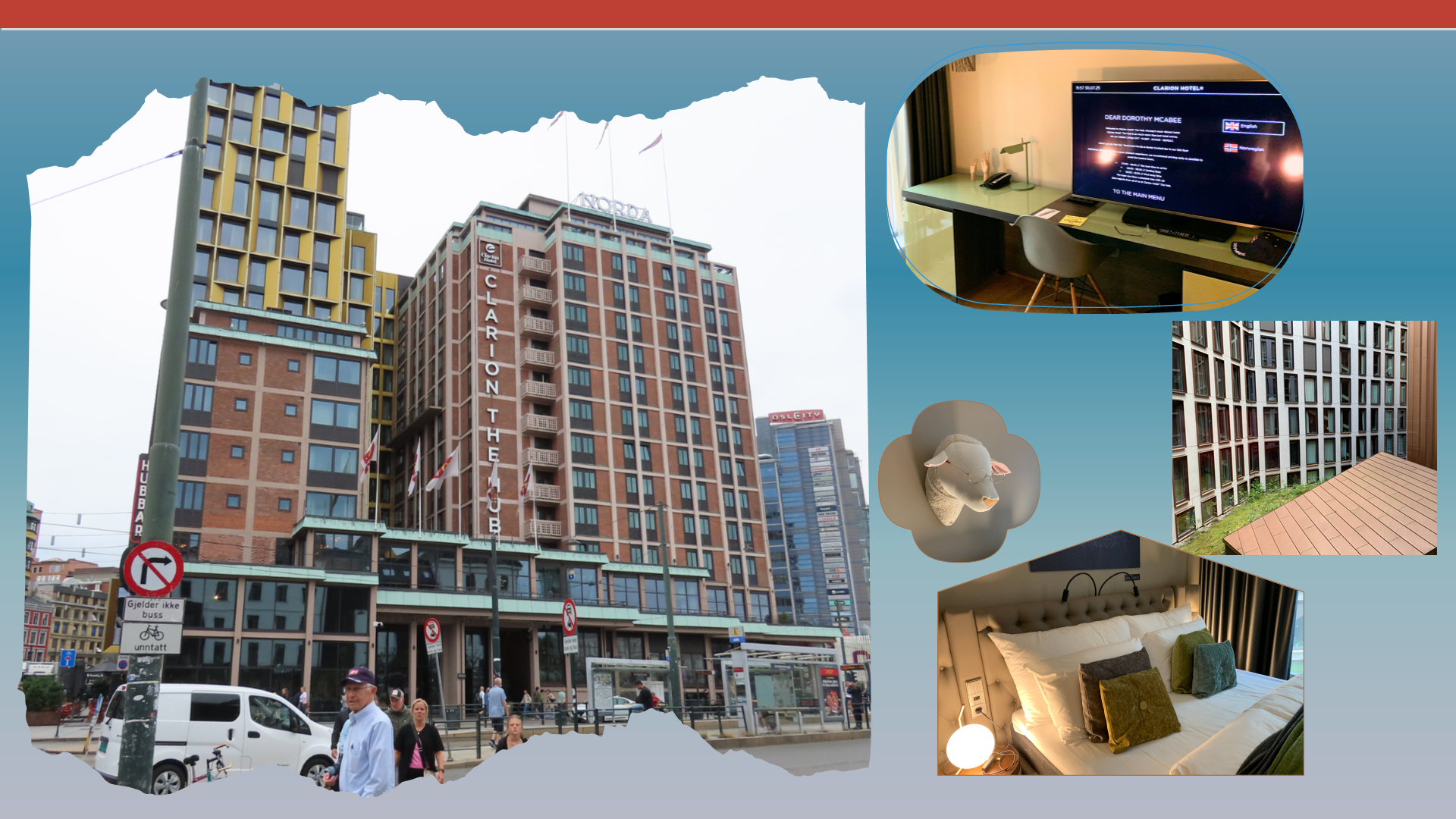
In Oslo, we walked from the Central Station across the street to Clarion the Hub, where a welcome message greeted us on the TV. The room wasn’t any larger than the night before, but it felt a little brighter, with bigger windows facing another inner courtyard. Funky touches—like the movable hand figures on the desk and a sheep with glasses by the bed—were hard to explain. After settling in, a relaxing dinner at the hotel ended another great day.
Oslo, Norway - Day Two:
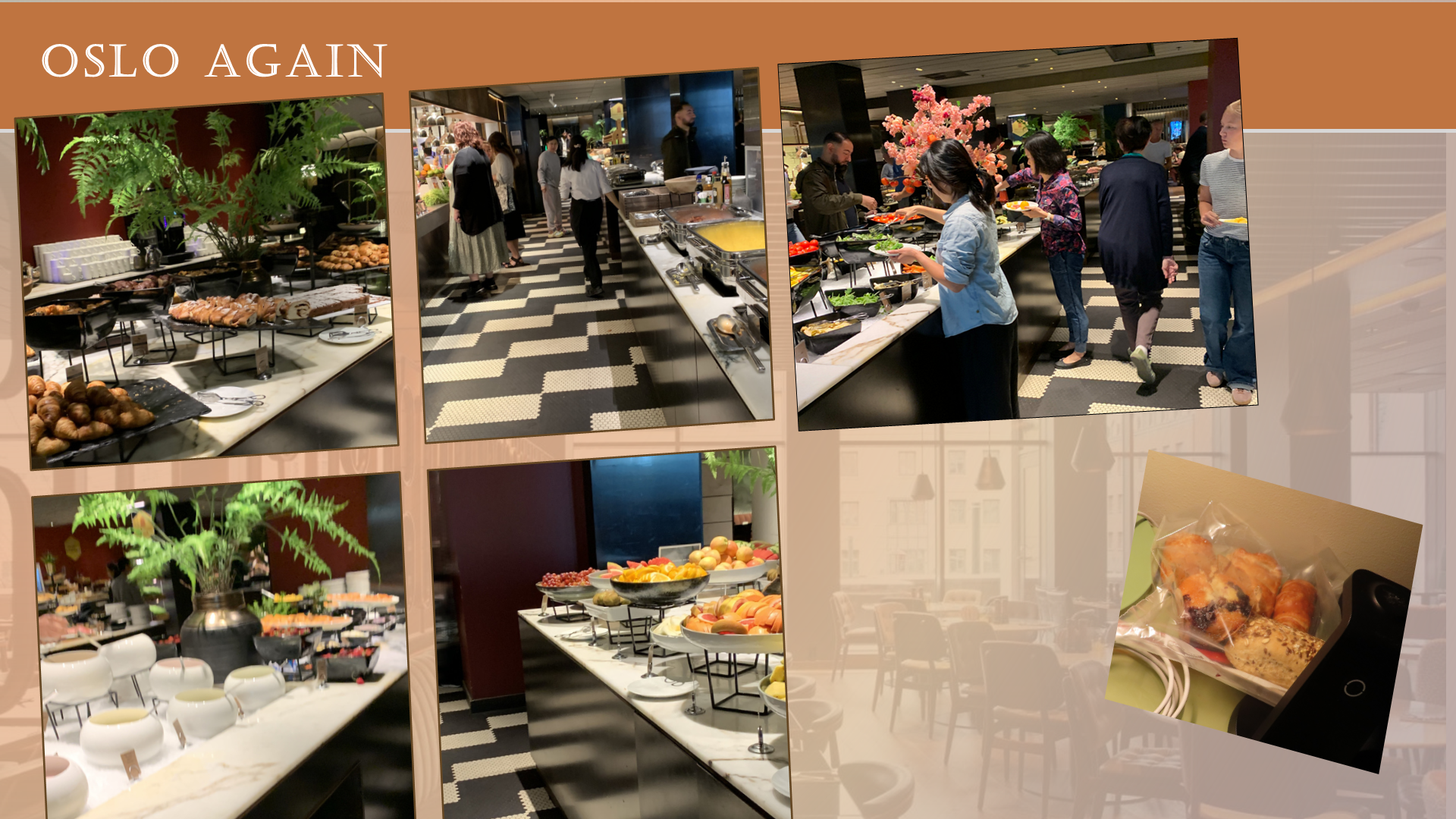
Our day in Oslo began with breakfast at the hotel. It was the largest buffet we had ever seen. There were four aisles of food, plus an alcove for breads and another for pastries. Coffee and juice stations were scattered throughout the dining room. I can’t imagine anyone wanting something that wasn’t there. The bread and pastries were exceptional—so good that Dorothy spoke with the manager to arrange extras for our 3:00 am breakfast the next morning.
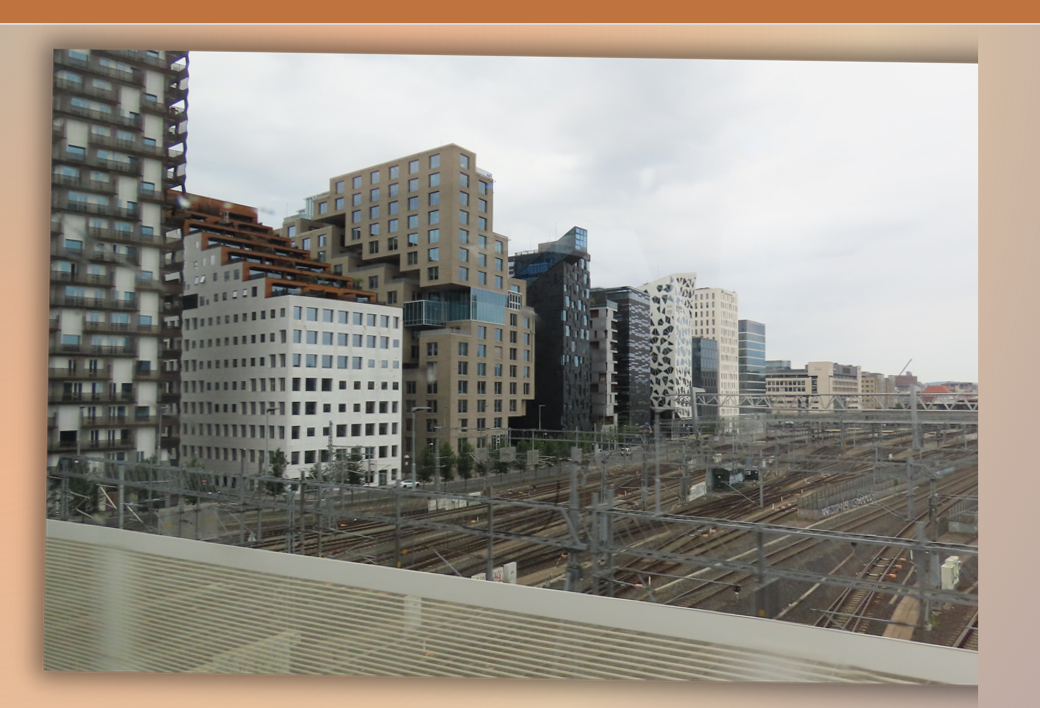
Later, on the dreary, drizzly morning, we boarded a motor coach to explore Oslo. Our route crossed a rail yard with a tangle of tracks leading into Central Station. In the background, Oslo’s modern architecture rose in clean lines and glass, a striking contrast to Old Town, where buildings date back to medieval times.
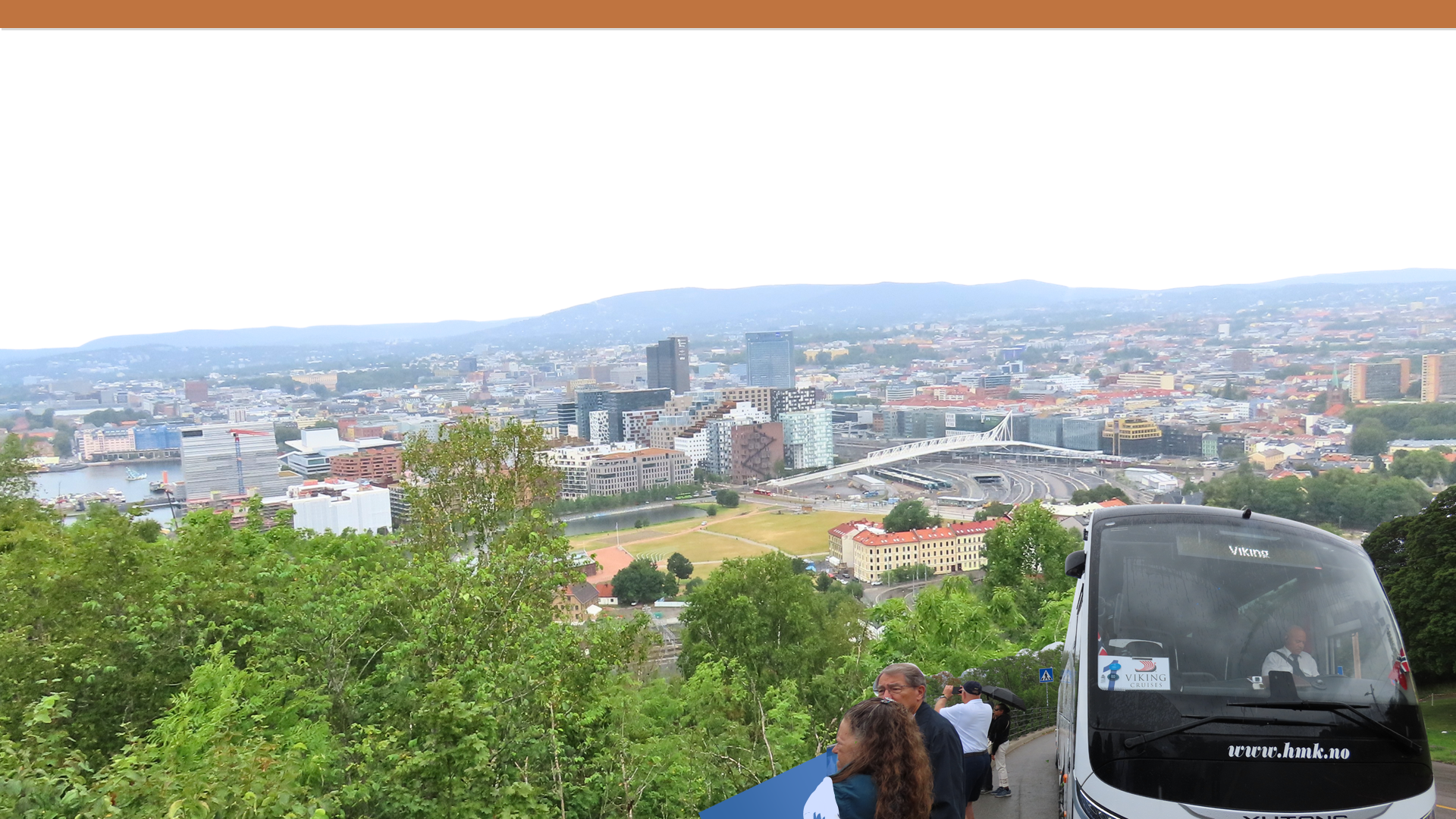
Our first stop was a hillside lookout point above the city. Oslo stretched across the valley as far as we could see.
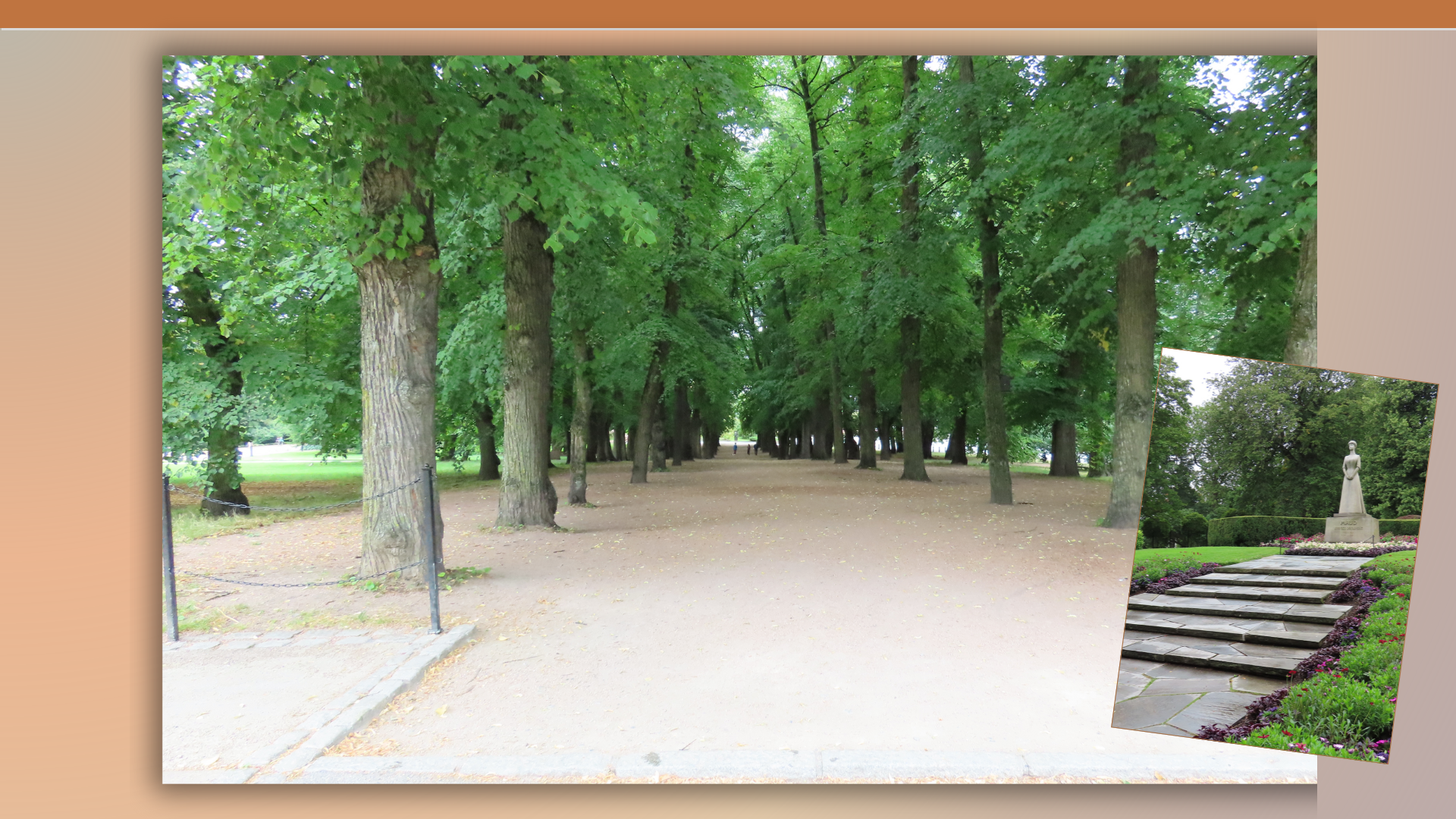
At Slottsparken Park we left the motor coach and trudged up a hill toward the Royal Palace.
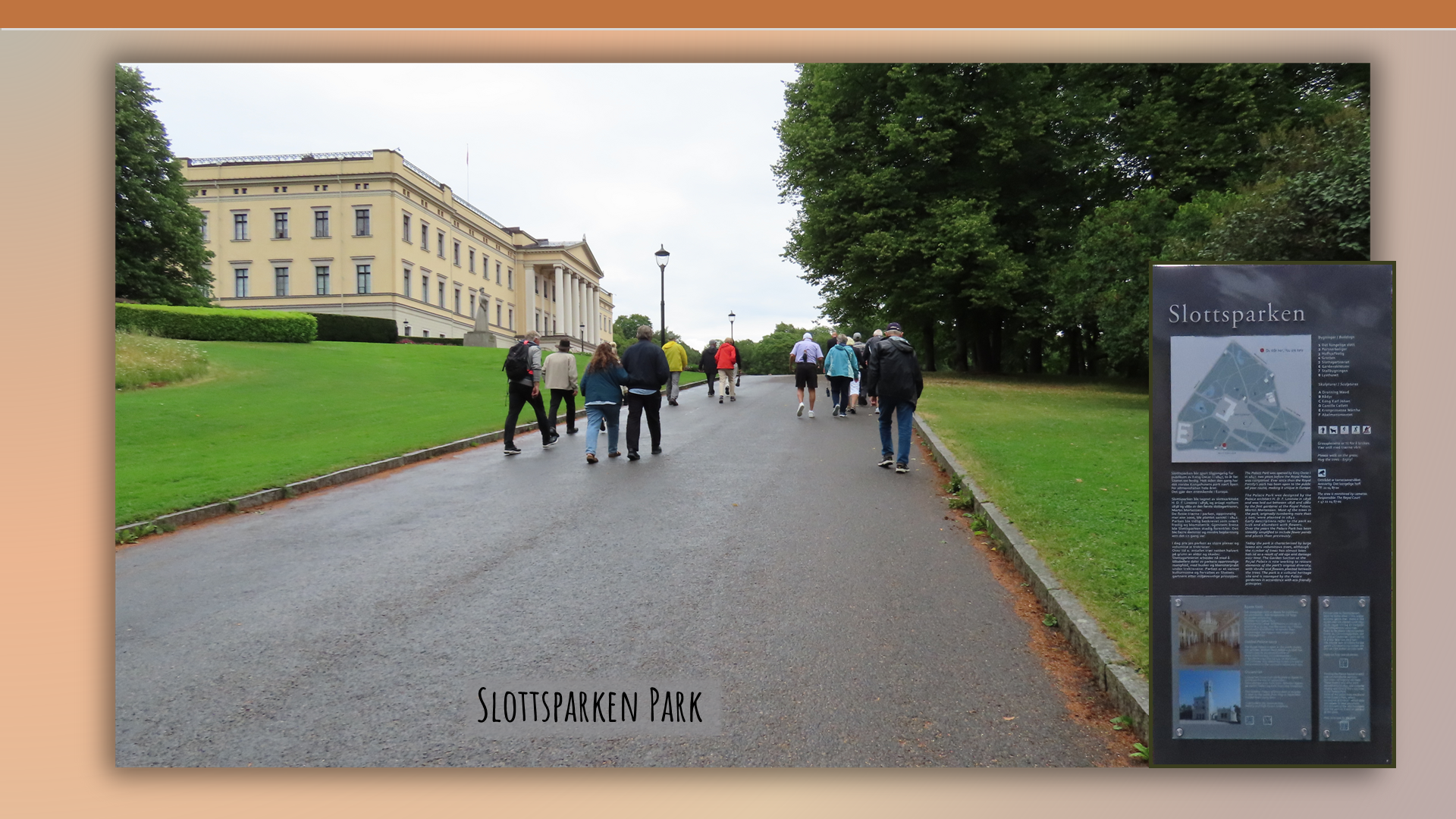
The grounds surrounding the Palace were calm and peaceful—a beautiful place. Blooming plants around the statue of Queen Maud, Norway’s first queen crowned in 1905, added a splash of color.
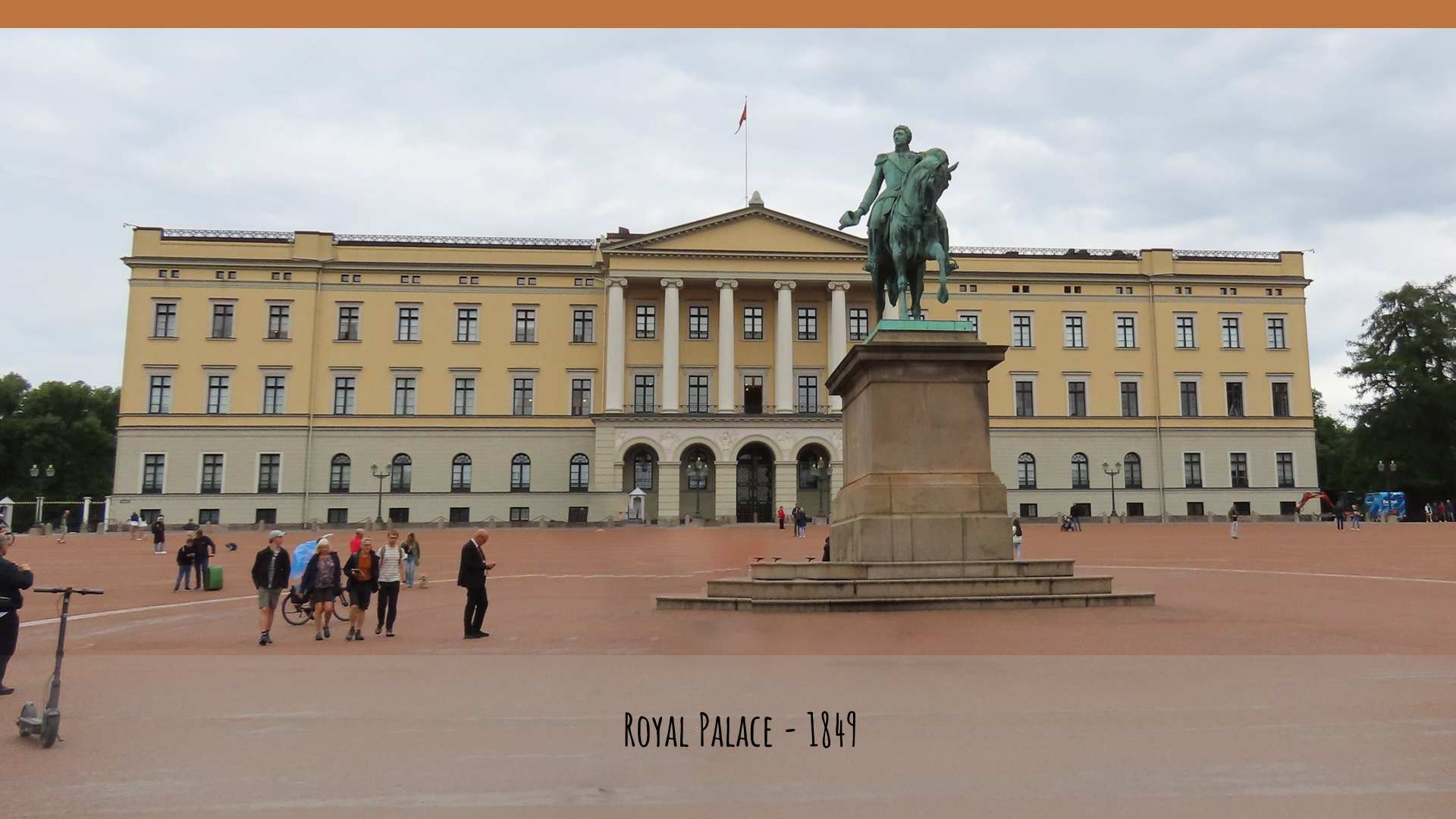
The Royal Palace, built in 1849, was beautiful. The red flag flying above means the King is in residence—though our guide said it really just means he’s somewhere in Oslo.
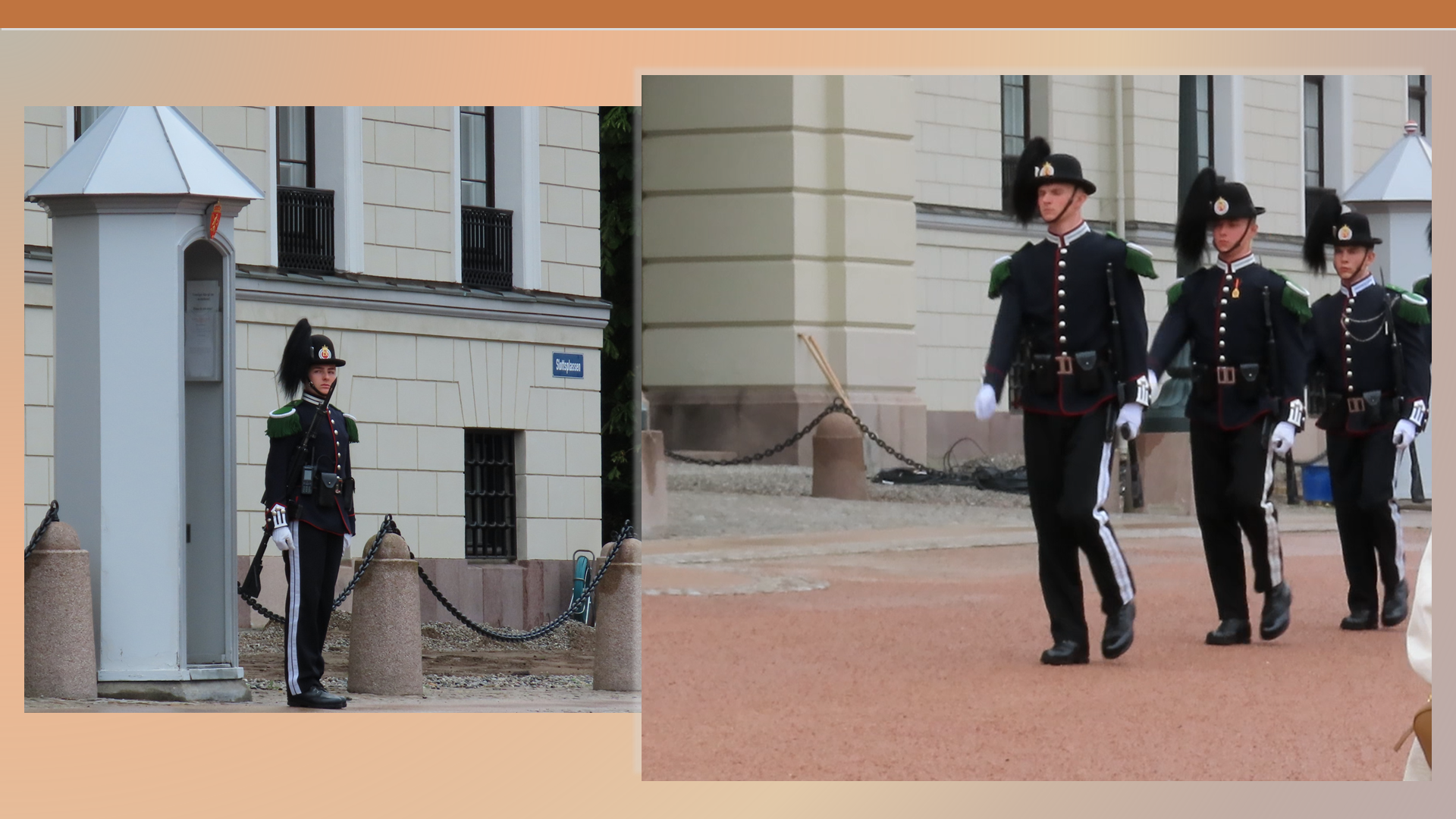
Guards are stationed at the Palace 24/7, and the Changing of the Guard happens at scheduled times during the day. While we didn’t see the full ceremony with military band and formal inspection, we did see guards marching near the Palace - an impressive sight in its own right.
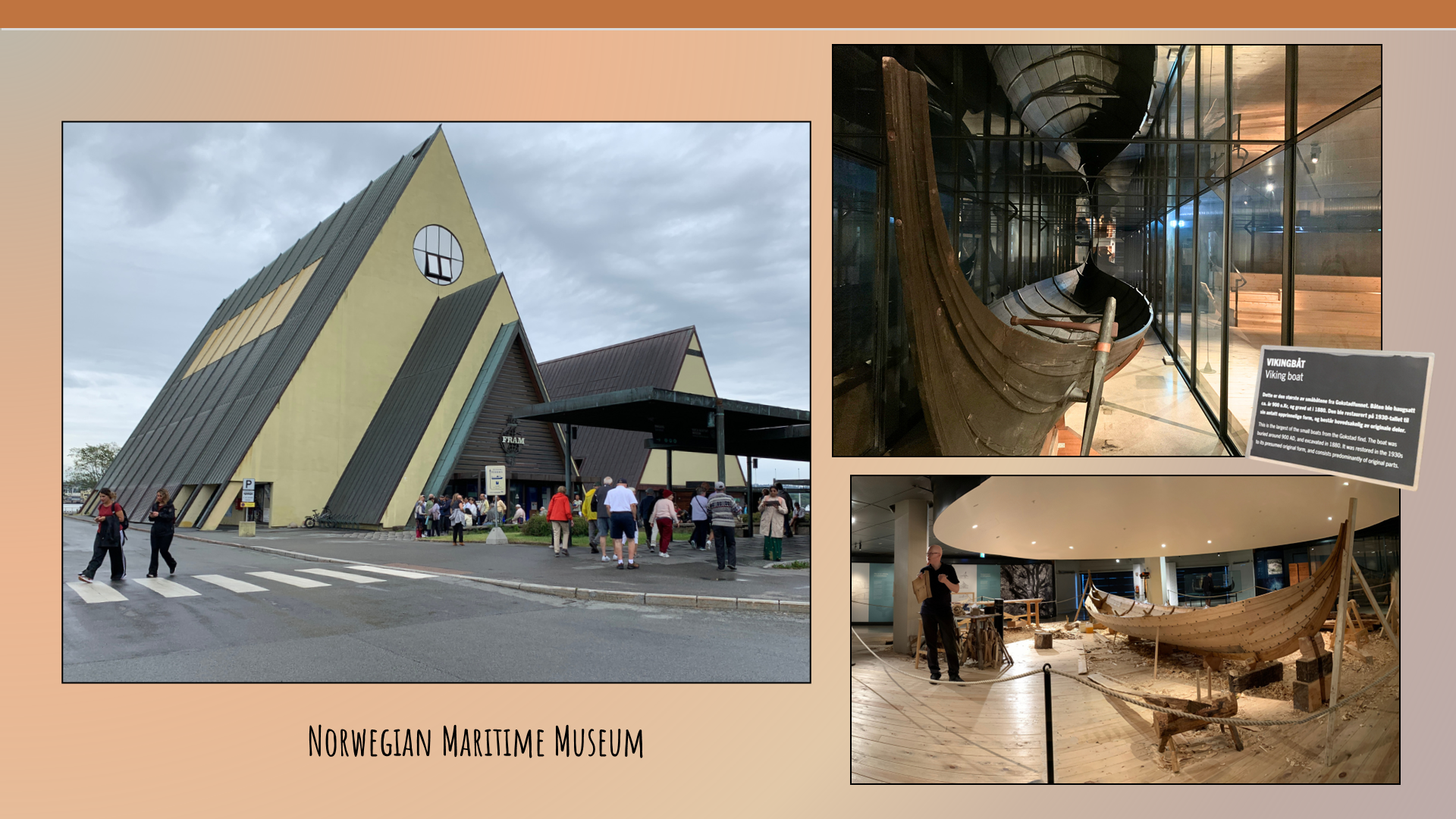
Next, we visited the Norwegian Maritime Museum, where we saw a Viking boat that had been buried around 900 AD and excavated in 1880. It was restored in the 1930s using predominantly original parts. Today, archaeologists and experimental historians are building a replica of the vessel to better understand Viking shipbuilding techniques.
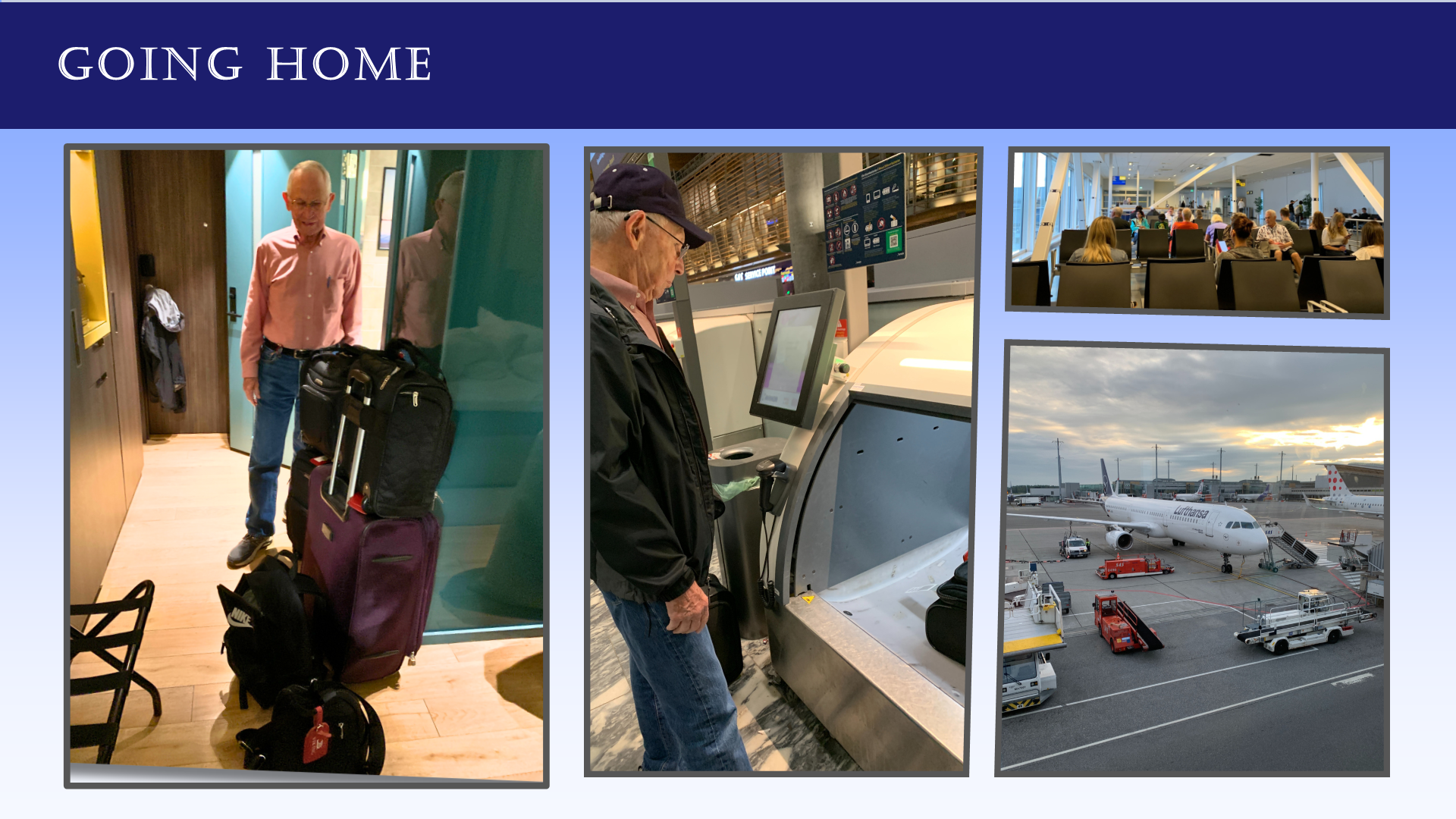
That evening, we had dinner at Egon, a cozy spot recommended by the hotel staff. Outdoor seating was available, but it was too chilly for us. The interior décor mimicked a train dining car—fitting, since it’s located just outside Central Station. Overhead racks held luggage and umbrellas, adding to the theme. It was a fun place with great food. Back at the hotel, we packed for our 3:30 AM departure and settled in for our last night in Oslo.
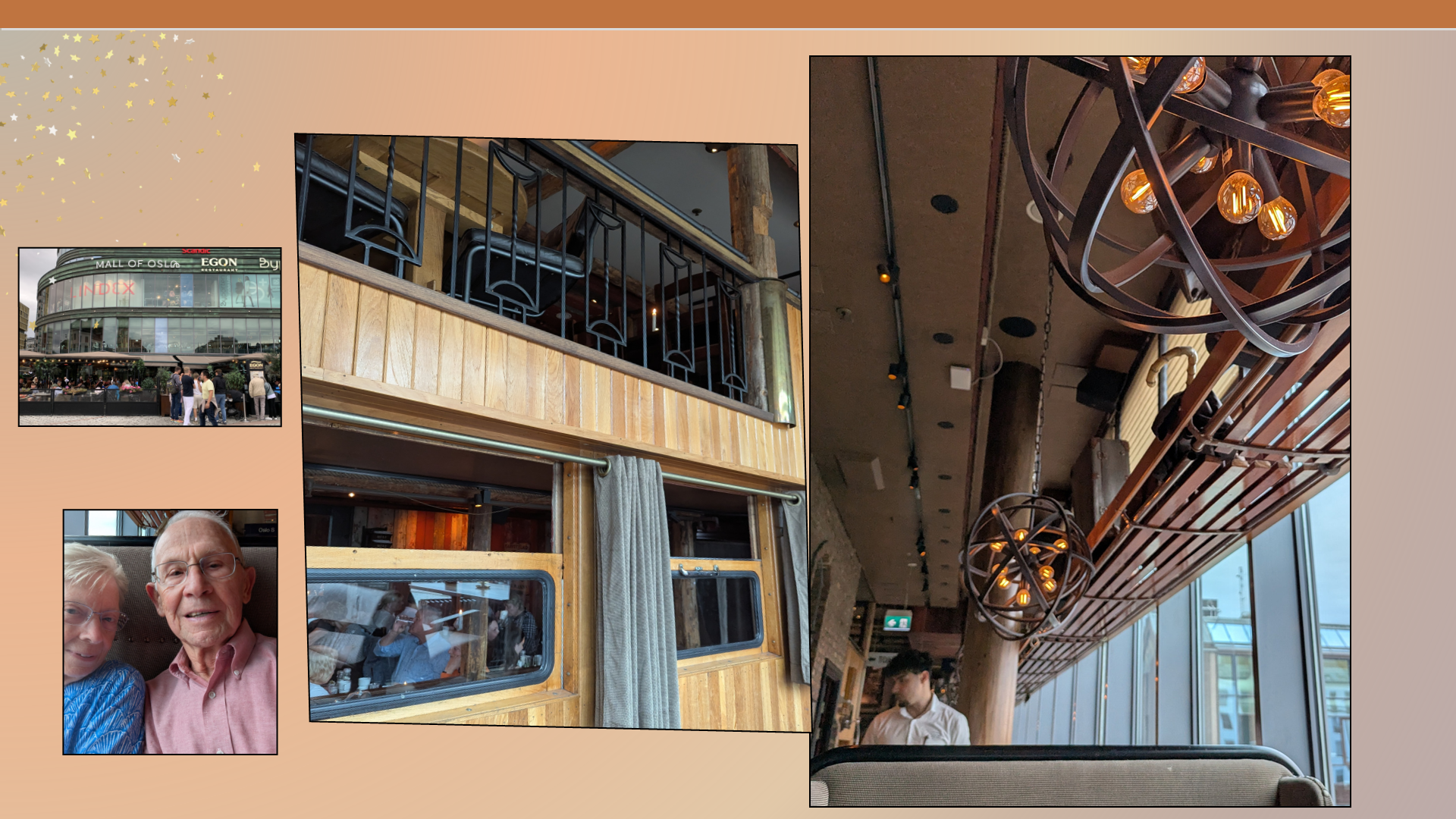
That evening, we had dinner at Egon, a cozy spot recommended by the hotel staff. Outdoor seating was available, but it was too chilly for us. The interior décor mimicked a train dining car—fitting, since it’s located just outside Central Station. Overhead racks held luggage and umbrellas, adding to the theme. It was a fun place with great food. Back at the hotel, we packed for our 3:30 AM departure and settled in for our last night in Oslo.